Why Is My Cat Not Using the Litter Box?
It can be very upsetting when your cat starts peeing or pooping outside the litter box. This is a common problem for many cat owners. You might feel frustrated, but your cat is not doing it to be bad. Often, it’s a sign that something is wrong. This article will help you find out why your furry friend is avoiding the box and how to help them feel better.
Is The Litter Box Itself The Real Problem Here?
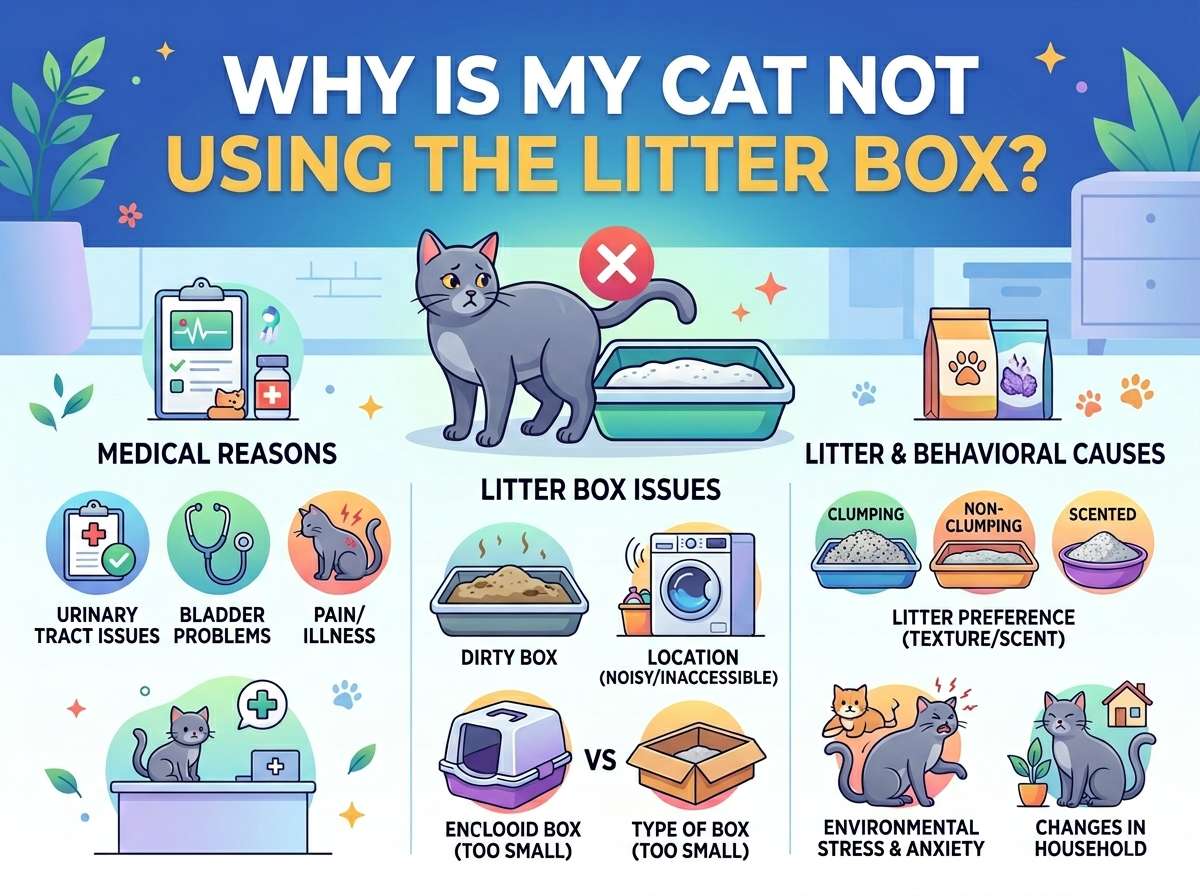
Think about the size of your cat’s litter box. Is it big enough for them? A small box can make a cat feel cramped. They might not have enough room to turn around or dig properly. A bigger box gives your cat more space and comfort.
Next, look at the type of litter box you have. Some boxes have covers, while others are open. Many cats do not like covered boxes. They can feel trapped or the smell might build up inside. An open box can feel safer and more inviting to some cats.
Also, consider if you use litter box liners. Some cats hate these liners. Their claws can get caught in the plastic. This makes using the box uncomfortable. Take out the liner and see if that helps your cat.
Your Cat Demands A Spotlessly Clean Litter Box
Cats are very clean animals. They do not like to use a dirty bathroom. If the litter box is not scooped often, it can become a smelly mess. Your cat will look for a cleaner spot to go, even if it’s your carpet.
You should scoop the litter at least once a day. Some very picky cats might need scooping more often. A fresh, clean box makes your cat much happier. This simple step can solve many litter box problems.
Beyond daily scooping, you need to dump all the old litter and wash the box completely. Do this every one to two weeks. Old smells can stay in the plastic, even with fresh litter on top. A deep clean keeps the box truly fresh.
The Wrong Litter Type Can Drive Your Cat Away
Cats have sensitive paws. The texture of the litter matters a lot to them. Some cats dislike rough litter. Others might not like very dusty litter. Try a fine-grain, soft litter to see if your cat prefers it.
Many cats also hate scented litter. Their noses are much more powerful than ours. Strong perfumes in the litter can be very irritating. Always use unscented litter to avoid upsetting your cat’s nose.
The amount of litter in the box is also important. Cats like to dig. If there is too little litter, they cannot cover their waste. If there is too much, it can be hard to walk through. Aim for about two to three inches of litter.
Location, Privacy, And Number Of Boxes Matter
Where is your cat’s litter box placed? If it is in a noisy, busy part of the house, your cat might avoid it. Cats like quiet and peace when they go to the bathroom. Move the box to a calm spot.
Cats also value privacy. A box out in the open can make them feel unsafe. They might feel exposed to other pets or people. Find a spot that offers some cover, but still allows them an easy escape route.
Do you have more than one cat? The general rule is one litter box per cat, plus one extra. So, two cats need three boxes. This helps prevent territorial disputes and gives all cats options. Many boxes mean more places to go.
Is A Hidden Medical Condition To Blame For This?
Peeing outside the litter box is often a sign of a health problem. It’s not usually your cat being naughty. Your pet might be in pain or feel unwell. This means a trip to the vet is very important.
Common medical issues include urinary tract infections (UTIs) or bladder problems. These conditions make peeing very painful. Your cat might connect the pain with the litter box itself. So, they try to go elsewhere.
Other illnesses can also cause litter box issues. Kidney disease or diabetes can make a cat pee more often. Arthritis can make it hard to get into a high-sided box. These conditions need a vet’s help.
Pain Or Illness Can Make Litter Box Use Difficult
Older cats can suffer from arthritis or joint pain. It hurts them to jump into or out of a litter box, especially one with high sides. A low-entry litter box can make it easier for them. This lets them step in without pain.
Digestive problems also cause issues. Diarrhea or constipation can make going to the bathroom urgent or painful. Your cat might not make it to the box in time. Or, they might avoid the box because of past pain there.
Any illness can make a cat feel weak or tired. They might not have the energy to reach the litter box. If your cat seems unwell and is avoiding the box, see your vet right away. Their health comes first.
Stress And Anxiety Often Lead To Inappropriate Potty
Cats can get stressed out just like people. When they feel anxious, they might change their bathroom habits. Peeing outside the box can be a way they show stress. They might be trying to tell you something is wrong.
Many things can cause stress for a cat. A new pet in the house, a new baby, or even loud noises can upset them. Moving to a new home is a big stressor. These changes can make your cat feel unsafe.
When a cat is stressed, they might spray urine on vertical surfaces. This is different from normal peeing. It’s a sign of anxiety or insecurity. Finding the source of stress can help your cat feel calm again.
Recent Home Changes Upsetting Your Cat’s Routine?
Cats love a predictable routine. They feel safe when their world stays the same. Any big change in the home can upset your cat. This can make them act differently, including not using their litter box.
Think about any recent changes. Did you get new furniture? Is there a new person living with you? Did your work schedule change, meaning you are home at different times? Even small shifts can bother a sensitive cat.
Try to keep your cat’s environment as calm and steady as possible. Give them a sense of security. A consistent feeding schedule and playtime can help them feel more at ease. This helps them adapt to new things.
Is Your Cat Engaging In Territorial Marking Behavior?
Sometimes, a cat is not just peeing, but marking their territory. This is usually a small amount of urine sprayed on a wall, furniture, or door. They do this to leave their scent and claim an area.
Cats mark for several reasons. They might feel insecure about their space. This can happen in homes with multiple cats. Or, they might feel threatened by outdoor cats they see through a window. It’s their way of saying “this is mine.”
Spaying or neutering your cat often helps reduce marking behavior. This surgery can lower their urge to spray. If your cat is already spayed or neutered, other reasons like stress or feeling unsafe might be the cause.
How To Work With Your Vet To Solve The Litter Puzzle
The first step when your cat stops using the litter box is always to call your vet. Do not wait. It is very important to rule out any health problems. Your vet can do tests to check your cat’s health.
When you talk to your vet, tell them everything you have noticed. When did the problem start? Where does your cat pee or poop outside the box? How often does it happen? Every detail helps your vet figure it out.
Your vet can offer solutions once they know the cause. This might be medicine for an infection or pain. They can also give you tips for changing the litter box setup or reducing stress. Working together helps your cat get back on track.
Finding out why your cat is not using the litter box can take some detective work. Remember, it’s not about them being naughty; it’s about a problem they are facing. Start by talking to your vet to check for health issues. Then, look at their litter box setup, location, and daily life for possible stress. With patience and care, you can help your beloved cat feel safe and comfortable using their box again.
Hi, I’m Mary, the founder of PetGadgetPro.com. I’m a passionate pet lover with a special place in my heart for dogs and cats. I share practical advice and honest insights on pet gear to help pet parents make better choices. My dedicated research team studies products in depth, and our writers create reviews using trusted, authentic sources—so you can feel confident choosing the best for your pets.