Why Does My Cat Pee Outside the Litter Box?
If you’ve ever walked into your bedroom and discovered a wet spot on your carpet, or found a puddle next to the litter box, you know the sinking feeling that comes with cat urine accidents. Your cat is peeing outside the litter box, and you’re wondering what went wrong. Don’t worry—you’re not alone. This is one of the most common problems cat owners face, and the good news is that it’s usually fixable.
When your cat starts going to the bathroom outside their box, it’s trying to tell you something. Cats don’t eliminate in the wrong spots just to be mean or stubborn. There’s always a reason behind the behavior. Sometimes it’s a medical issue. Other times it’s something about the box itself. Your cat might be stressed, unhappy with the litter, or reacting to changes in your home. Let’s dig into the real reasons why this happens and what you can do about it.
Medical Issues: The First Thing to Rule Out
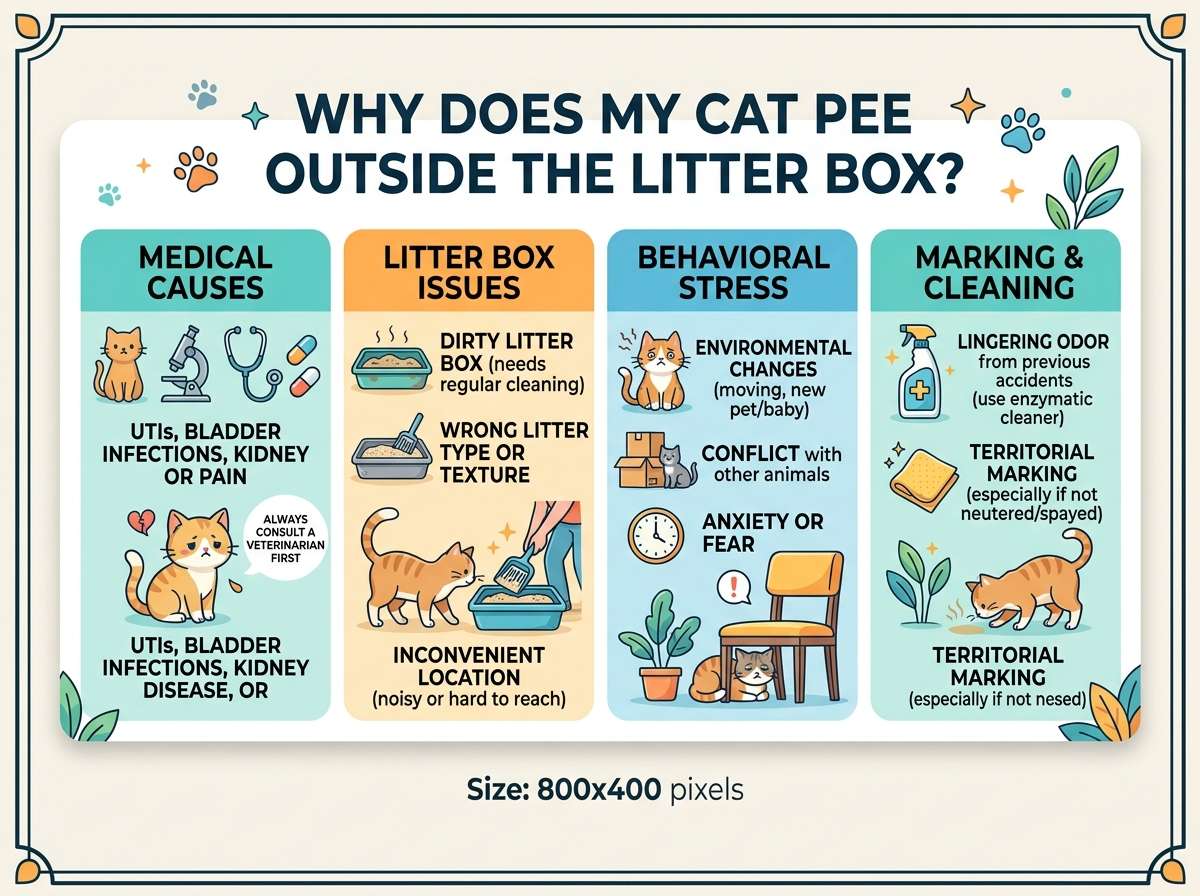
Before you blame your cat’s behavior on laziness or attitude, schedule a visit with your veterinarian. Medical problems are responsible for a huge chunk of litter box issues. Your vet can run tests and check your cat’s health to make sure nothing serious is going on.
Urinary tract infections are super common in cats and often cause them to pee outside the box. When your cat has a UTI, going to the bathroom hurts. Your cat might feel like it needs to pee all the time, or the urge might hit suddenly. Your cat starts to connect the litter box with pain, so it avoids the box and goes elsewhere. Cats with UTIs also pee more often and produce smaller amounts of urine each time.
Kidney disease and other kidney problems make cats drink tons of water and pee constantly. If your older cat suddenly starts peeing everywhere, kidney disease could be the culprit. Senior cats are especially prone to kidney issues. You’ll notice your cat drinking way more water than usual and needing to urinate much more often.
Diabetes also causes increased thirst and frequent urination. Your cat might not be able to hold urine as long as before, so accidents happen. This disease often strikes middle-aged and older cats, especially those carrying extra weight.
Feline lower urinary tract disease (FLUTD) includes several conditions that affect your cat’s bladder and urethra. Cats with FLUTD experience pain during urination and feel the urgent need to pee. They start avoiding the litter box because they associate it with discomfort.
Hyperthyroidism is very common in senior cats and causes increased appetite, hyperactivity, and yes, frequent urination. Your cat’s metabolism speeds up, and so does the need to pee.
Don’t skip the vet visit just because your cat seems healthy otherwise. Some medical problems have no obvious symptoms until they’re serious. A simple urine test can reveal a lot about your cat’s health.
Problems With the Litter Box Itself
Your cat might be trying to tell you that something about the box itself is wrong. Cats are picky about their bathrooms, and they have strong preferences about what they want.
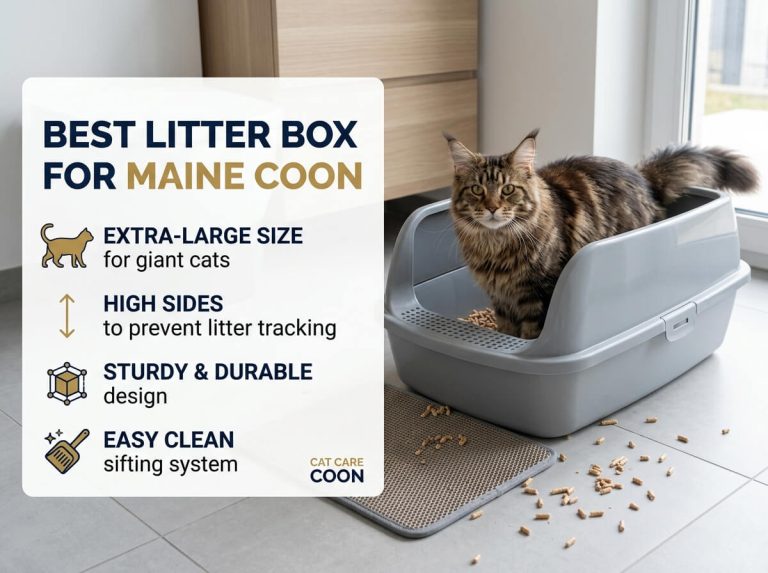
Box size matters more than you’d think. Your litter box should be about one and a half times as long as your cat from nose to tail. If the box is too small, your cat can’t stretch out comfortably. Some cats refuse to use a box where they can’t turn around or assume their normal posture. Getting a larger box often solves the problem immediately.
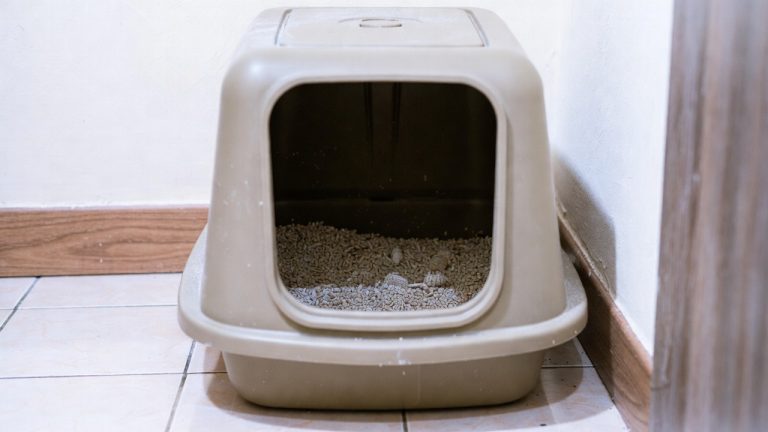
The type of box can be an issue too. Some cats hate covered boxes. They feel trapped inside and get stressed. Others love the privacy that a covered box provides. Your cat might reject a box that’s too high-sided or too low, or one with a entrance that’s too narrow. You might need to try different boxes to find what your cat prefers. Older cats sometimes struggle with boxes that have high sides because climbing in and out hurts their joints.
Box cleanliness is huge. Most cats won’t use a dirty box. If you haven’t scooped recently, your cat might decide to go elsewhere. Cats don’t like walking through their waste any more than you would. Scoop at least once daily, ideally twice. Wash the entire box regularly with hot water, not harsh chemicals that smell strong. Cats dislike strong odors in their bathroom area.
The litter itself is another major factor. Cats can be super particular about litter type. Some like clay litter. Others prefer clumping litter. Some cats want fine, sandy litter. Others like larger pellets. If you recently switched litter brands or types, your cat might reject it. This is a common cause of litter box avoidance. Try going back to the old litter, or experiment with different textures.
How much litter you’re using also plays a role. Your box should have about two to three inches of litter. Too little litter and your cat doesn’t feel secure. Too much and cats get annoyed digging through it. Some cats also hate stepping on litter that’s wet or soiled, so they choose carpet or tile instead where everything is clean and dry.
The location of the box matters too. If the box is in a noisy, busy spot, your cat might feel unsafe using it. Cats want privacy when they do their business. Place the box away from high-traffic areas, loud appliances, or anywhere your cat might feel cornered. Put it in a quiet spot where your cat can see the approach and escape if needed.
Multiple cats need multiple boxes. The rule is simple: one box per cat, plus one extra. If you have two cats and one box, expect accidents. Cats don’t like sharing bathrooms, and dominant cats might block access to the only box. If your household has multiple cats, get multiple boxes and spread them around different areas of your home.
Stress and Environmental Changes
Cats are creatures of habit who really dislike change. When something disrupts your cat’s routine, stress levels spike. A stressed cat often starts peeing outside the box as a way of dealing with anxiety.
Moving to a new home is traumatic for cats. Everything is unfamiliar. Your cat might cope by marking territory with urine. Even moving furniture around in your home can stress your cat out. After you move, set up a safe room with your cat’s litter box, bed, and toys. Let your cat adjust gradually before exploring the rest of the house.
Adding new people to your home causes stress. A new baby, roommate, or partner changes your cat’s routine and territory. Your cat might start peeing around the house to mark territory and feel secure.
New pets are another major stressor. Bringing a new cat, dog, or other animal into your home threatens your resident cat’s sense of security. Your cat might respond by marking territory with urine. Introduce new pets slowly in separate spaces, and give your cat time to adjust.
Loud noises and construction make cats anxious. Thunder, fireworks, or home renovations can trigger stress-related litter box problems. Provide a quiet safe space where your cat can retreat.
Changes to your work schedule also affect cats. If you suddenly spend much less time at home, your cat feels abandoned and stressed. Cats thrive on routine. Try to keep feeding times and playtime consistent, even when life gets hectic.
Conflict with other household pets causes ongoing stress. If your cat is being bullied by another pet or constantly chased, the stress builds up. Your cat might avoid the litter box if getting to it means facing a scary situation. Provide separate litter boxes in different areas, and work on improving the relationship between your pets.
Litter Box Aversion and Preference Issues
Some cats develop strong dislikes for their litter boxes and specific preferences for where they pee. Understanding your cat’s preferences is key to solving the problem.
Litter box aversion happens when your cat learns to associate the box with something negative. Pain during urination is a big cause. Once your cat connects the box with discomfort, even after medical treatment, your cat might still avoid it. You might need to get a new box in a new location to break the association.
Substrate preference refers to what your cat likes to pee on. Some cats prefer soft substrates like carpet or soil. Others prefer hard surfaces like tile or concrete. If your cat is peeing on carpet or in the bathtub, your cat is telling you something about what it likes. You might solve this by switching to a softer litter like sand or pellets, or by using a softer litter substrate altogether.
Location preference is also real. Some cats develop a favorite spot for elimination. If your cat keeps peeing in the same corner, your cat has decided that corner is a bathroom. You can try placing the litter box in that spot. Once your cat starts using the box there, you can gradually move it to a better location.
Marking behavior is different from regular elimination. When cats mark with urine, they usually spray on vertical surfaces or leave small amounts of urine in different locations. This is territorial marking, not full bladder elimination. Cats do this to feel secure and establish their territory. Intact male and female cats mark more than neutered or spayed cats, though fixed cats mark too. Stress often triggers marking behavior.
Behavioral and Psychological Factors
Sometimes the cause is purely behavioral or psychological. Your cat’s mind is powerful, and emotions affect bathroom behavior.
Attention-seeking can drive some cats to pee outside the box. If your cat discovered that peeing outside the box gets your attention (even negative attention like scolding), your cat might repeat the behavior. Cats would rather have negative attention than no attention.
Territorial displays happen when cats feel their territory is threatened. Multiple cats in the home, new animals nearby, or changes to the environment can trigger this. Your cat marks territory with urine to feel more secure.
Aging cats sometimes develop cognitive dysfunction similar to dementia in humans. Older cats might forget where the box is or become confused about using it. They might have accidents because they simply can’t make it to the box in time.
Arthritis and mobility issues make it hard for cats to reach or climb into litter boxes. Older cats and cats with joint pain need easy access boxes with low sides. Ramps or steps can help cats reach a raised box.
What Not to Do
Now that you know the reasons, let’s talk about what doesn’t work.
Never punish your cat for accidents. Scolding, yelling, or rubbing your cat’s nose in urine makes the problem worse. Your cat becomes scared of you and of the litter box. Your cat might start hiding to pee, making the problem even harder to solve. Punishment damages your relationship with your cat and doesn’t fix the underlying issue.
Don’t ignore the problem thinking it will go away. Litter box issues rarely solve themselves. The longer you wait, the more entrenched the behavior becomes. Your cat needs help figuring out how to use the box again.
Avoid using ammonia-based cleaners on accidents. Urine contains ammonia, so ammonia cleaners smell like pee to your cat. This actually encourages your cat to pee in the same spot again. Use enzymatic cleaners specifically designed to break down urine and eliminate the smell completely.
Don’t move the litter box suddenly without helping your cat adjust. If you must move it, do it slowly, moving it a few inches at a time so your cat can track where it goes.
Solutions That Actually Work
Once you’ve identified the cause, you can fix the problem. Here are proven strategies.
Start with the vet if you haven’t already. Rule out medical issues first. They’re the most common cause, and treating them quickly saves your cat from suffering.
Get more boxes. Seriously, get more than you think you need. Spread them around your home in different locations. This gives your cat options and prevents competition between multiple cats.
Clean accidents thoroughly with enzymatic cleaners. These break down urine at a molecular level so the smell is completely gone. Regular cleaners don’t work—your cat can still smell urine that you can’t.
Experiment with different litters. Try several types and see what your cat prefers. You might need clay, clumping, crystal, pine, or paper-based litter. Every cat is different.
Get larger boxes. Most litter boxes sold in stores are too small. Cats prefer room to move around. A storage container with an entrance cut in the side often works better than a traditional litter box.
Upgrade to a covered box or remove the cover, depending on what your cat wants. Try both and see which your cat prefers.
Place boxes away from food and water. Cats don’t want to eat where they pee. Keep the box in a separate area from the food and water bowls.
Reduce litter box competition. If you have multiple cats, provide separate boxes in separate rooms. Cats need their own bathroom space.
Add litter box covers with large entry holes or use open boxes. Some cats hate the feeling of being trapped inside a covered box.
Use enzymatic litter box cleaners inside the box to remove odors between scoops. This keeps the box fresh and inviting.
Scoop daily, ideally twice. The more often you scoop, the more likely your cat will use it. Clean boxes are simply more appealing.
Wash the box regularly with hot water. Use unscented soap, not strong chemicals. Every few weeks, do a deep clean.
Change boxes if your cat has aversion to the current one. Sometimes starting fresh with a new box in a new location breaks the cycle.
Create a safe, calm environment. Minimize stress through consistent routines, quiet spaces, and predictable schedules. Use pheromone diffusers like Feliway if stress is high.
Use pain relief and medication if your vet diagnoses a medical condition. Once pain goes away, your cat will be more willing to use the box again.
When to Call Your Vet Again
Some situations need veterinary attention beyond the initial visit.
If your cat isn’t improving after you’ve ruled out medical issues and made environmental changes, call your vet. Your cat might need a behavioral medication to reduce anxiety. Anti-anxiety meds can help cats that are stressed or marking territory.
If your cat is peeing very frequently, straining to pee, or producing bloody urine, get to the vet immediately. These signs point to serious urinary tract problems.
If your normally healthy adult cat suddenly starts having accidents, something has changed. Either your cat’s health has changed, or the environment has. Your vet can help you figure out which.
The Bottom Line
Your cat peeing outside the litter box isn’t a sign that your cat hates you or is being spiteful. It’s always communication. Your cat is telling you that something isn’t right—whether that’s a health problem, a litter box issue, or stress in the environment.
Start by scheduling a vet visit to rule out medical problems. Then look at the litter box itself. Is it clean? Is it big enough? Is the litter the right type? Is the location peaceful and private? Do you have enough boxes for all your cats? Make changes and give your cat time to adjust.
Stay patient and positive. Fixing litter box problems takes time, but it works. Your cat wants to use the box. You just need to figure out what’s preventing it and remove that obstacle.
Pay attention to your cat’s behavior and preferences. Every cat is unique. What works for one cat might not work for another. Through observation and experimentation, you’ll find the solution that works for your specific cat.
Your home will be cleaner, your cat will be happier, and you’ll have peace of mind knowing your cat is using the litter box correctly. You’ve got this!
Hi, I’m Mary, the founder of PetGadgetPro.com. I’m a passionate pet lover with a special place in my heart for dogs and cats. I share practical advice and honest insights on pet gear to help pet parents make better choices. My dedicated research team studies products in depth, and our writers create reviews using trusted, authentic sources—so you can feel confident choosing the best for your pets.