5 Best Aquarium Gravel Cleaner In 2026
If you keep a fish tank for long enough, you will notice the gravel at the bottom slowly turning dirty. Little bits of uneaten food, fish waste, dead plant matter, and dust settle between the stones, and over time they form a brown layer called mulm. Mulm does more than look ugly. It can release ammonia and nitrates into the water, which stresses fish and can make your whole tank feel off balance.
A good aquarium gravel cleaner pulls that gunk out without sucking up all your gravel along with it. The trick is finding a tool that matches your tank size, your gravel type, and how much time you want to spend on cleaning day. In this guide, we look at five popular options: a Tetra gravel siphon, a Natural Rapport no-vacuum waste reducer, a Laifoo 5 ft siphon vacuum, a Luigi’s hand siphon designed for turtle and reptile tanks, and a 36W electric vacuum from Suness.
Each review covers what the product is, who it suits best, the features that matter in daily use, the good and bad points, and whether it offers fair value. At the end, you will find a buying guide, a section on who should buy each product, common mistakes to avoid, and a final verdict to help you decide.
Why a Gravel Cleaner Is Worth Having
Before we get into the products, it helps to know what a gravel cleaner actually does. Most beginners think water changes are the main job in tank care, and water changes do matter. But water changes only remove so much. Waste that sits in the substrate keeps breaking down, and that breakdown uses oxygen and creates compounds your fish do not want. Stirring the gravel by hand can help a little, but it rarely gets to the buildup underneath.
A gravel cleaner gives you a direct way to lift that waste out of the substrate while you change some of the water. Most of these tools work on the same basic idea. Water flows through a tube, creates suction at the bottom, and carries loose debris up and out into a bucket. The gravel stays in the tank because it is heavier than the waste, so it falls back down while the lighter particles get pulled away.
That simple idea works well, but the details matter. A tool that is too strong can pull up small gravel, sand, or even tiny fish and shrimp. A tool that is too weak will leave the grime behind. A tool with a long hose is handy for big tanks, while a short one is easier to control in a small setup. The products below handle these trade-offs in different ways.
Quick Comparison at a Glance
Here is a simple overview to help you get your bearings before reading the full reviews.
| Product | Type | Power Source | Best For | Hose or Length |
|---|---|---|---|---|
| Tetra Gravel Siphon | Manual siphon | None, water pressure | Standard freshwater tanks up to 55 gallons | Tube-style siphon |
| Natural Rapport No-Vacuum Reducer | Liquid waste reducer | None | Reducing buildup between cleanings | Not a vacuum |
| Laifoo 5ft-S Siphon | Manual siphon | None, hand-started | Medium tanks, budget cleaning | 5 ft hose |
| Luigi’s Hand Siphon | Manual siphon | None, hand-started | Turtle tanks, reptile tanks, sand | Hand siphon hose |
| Suness 36W Electric Vacuum | Electric vacuum | Electric plug-in | Large tanks, frequent cleaning, multi-use | Adjustable length |
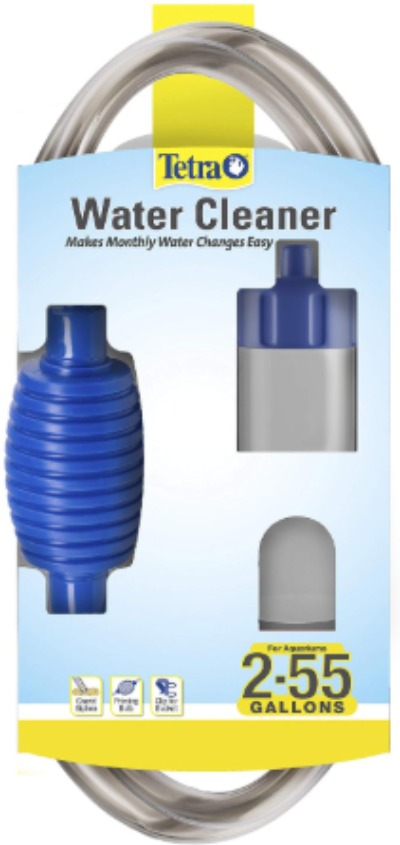
1. Tetra Water Cleaner Gravel Siphon for Aquariums Up to 55 Gallons
Product Description
The Tetra Water Cleaner Gravel Siphon is a simple, no-frills tool. It is built for freshwater aquariums, and the listing says it works for tanks up to 55 gallons. You place the wide end over the gravel, start the flow, and let the water carry debris up through the tube and into a bucket. The design is familiar to most hobbyists because Tetra has been making this style of tool for a long time.
Tetra is one of the best-known names in fish keeping, and this siphon sits in the same budget-friendly category as many traditional gravel vacuums. You do not need batteries, a wall plug, or any special setup. It is one of the first tools many beginners pick up, and it remains popular for good reason.
Best Use Cases
This siphon fits best in a standard community tank with gravel. Think of a 20, 29, or 40-gallon setup with tetras, guppies, or similar fish. It also works well for people who want a quick, reliable way to do partial water changes every week or two. If you have a large tank, the listed range means it can still handle the job, though it will take longer.
It is also a good pick if you want a tool that never runs out of power, because it runs on gravity and water pressure alone. Power outages do not matter, and there is nothing to charge.
Key Features Explained Simply
The main feature is the siphon design itself. You start the flow, usually by filling the tube with water and letting gravity do the work. Once the water moves, it keeps flowing as long as the bucket sits lower than the tank. That is the basic physics behind it.
The wide mouth on the cleaning end covers more gravel at once, which saves time. The tube is flexible enough to reach corners and behind decorations, though you will still need to move some objects around in most setups.
Control is the other key feature. You can slow the flow by partly pinching the hose or by lifting or lowering the tube. This lets you keep the gravel where it belongs while you work.
Real-Life Usage Insight
In daily use, this kind of siphon takes some practice. The first time you use it, you may suck up a little more gravel than you wanted. That is normal. After a few cleanings, most people learn to keep the mouth just above the surface and to move it in slow, overlapping passes. Hover the tip over the gravel rather than pushing it into the bottom, and you will pull up more waste and less sand.
Another useful habit is to clean one section at a time. Work in small areas, and you will see exactly what the tool is picking up. Many people also find it easier to remove the fish or move them to a holding container for larger tanks, but that is not always needed in a calm setup.
Pros
- Simple design that is easy to understand
- No electricity or batteries required
- Works well for standard gravel tanks
- Affordable compared with electric options
- Good control over flow speed
- Long track record with hobbyists
Cons
- Requires a bucket and a steady starting technique
- Can pull up gravel if used too aggressively
- Slower on large tanks than electric alternatives
- Not ideal for very fine sand, which can get drawn up easily
Performance Discussion
For a basic siphon, performance is solid. It removes loose debris well from gravel that is not packed too tightly. Settled waste near the surface and between stones comes up without much trouble. The tool does not dig deep into the substrate, so it will not remove waste buried far below the surface. That is a limit shared by most siphons, not a unique weakness.
Its strength is consistency. Once you get the technique down, each cleaning session tends to go the same way, which makes weekly maintenance feel routine.
Ease of Use
Ease of use depends on your patience. The learning curve is short, but it is real. For a beginner who has never used a siphon, the first session may take longer and feel a bit messy. After that, it becomes an easy part of the routine. No cords, no charging, and no buttons to fuss with.
Value for Money
This is one of the better values in the category. You get a dependable tool at a low price, and it will last for years with normal care. If you keep a standard gravel tank and want a no-nonsense solution, it is hard to beat for the money.
2.Natural Rapport Aquarium Gravel Cleaner, No-Vacuum Waste Reducer, 16 oz

Product Description
The Natural Rapport product takes a different approach from the others on this list. It is not a vacuum or a siphon. Instead, it is a 16 oz product sold as a no-vacuum waste reducer. The idea is to help cut down on the buildup that normally settles in the gravel, so you need to clean it less often. Because it is not a physical cleaning tool, it works best as a helper alongside regular maintenance rather than a full replacement for a siphon.
Since product formulas and directions can vary, read the label and the listing carefully before you use it. Follow the dosing instructions exactly and check that it suits your tank setup, including whether you have live plants, shrimp, or other sensitive animals.
Best Use Cases
This product suits people who want to reduce how often they need to deal with dirty gravel. It may fit well in a lightly stocked tank, or in a setup where you already do regular water changes but want extra help between sessions. It is also a possible option for someone who finds siphoning difficult, such as a person with limited hand strength or mobility, though it should never replace the basic care your tank needs.
It is not the right choice if your tank has a serious waste problem or if you need to remove visible debris right away. In those cases, a physical cleaner is still necessary.
Key Features Explained Simply
The main feature is the product itself, which is designed to be added to the water as a treatment. Its purpose is to help manage waste so it does not build up as quickly. The 16 oz size gives you a reasonable supply, and the bottle format makes it easy to measure and pour.
The big selling point is convenience. There is no hose, no bucket, and no hard work. You simply follow the directions and let the product do part of the job over time.
Real-Life Usage Insight
In real use, the results of a treatment like this depend on many factors: how much you feed, how many fish you keep, your filtration, and how much water you change. A product that works well in one tank may do less in another. Expect gradual changes, not instant results, and keep watching your water parameters.
A common mistake is to treat this kind of product as a shortcut that removes the need for any cleaning at all. That expectation usually leads to disappointment. Use it as one part of your routine, and keep doing your normal water changes and gravel checks.
Pros
- Easy to use with no tools or hose needed
- Useful as a supplement between regular cleanings
- Good option for people who find siphoning hard
- Simple to measure and add to the water
- No risk of sucking up gravel or fish during use
Cons
- Does not physically remove waste from the tank
- Results vary widely between setups
- Cannot replace water changes or regular siphoning
- Requires careful reading of directions to avoid overdosing
Performance Discussion
Performance is the hard part to judge fairly. This product works in a different way from every other item in this review, so it should not be compared directly to a siphon on cleaning power. A siphon removes waste you can see. A waste reducer aims to limit how much waste builds up. Those are two separate jobs.
If your goal is to lift debris out of the gravel, this is not the tool for the task. If your goal is to slow down the buildup so your regular cleanings are easier, it may have a role to play.
Ease of Use
This is the easiest product on the list to use. You read the directions, measure the amount, and add it to the tank. There is no physical effort. The main skill is patience, because you need to watch results over time rather than expecting a quick visible change.
Value for Money
Value depends on what you expect. If you think of it as a physical cleaner, it will look expensive for what it does. If you see it as a supplement that helps reduce buildup, it may feel more reasonable. Compare the cost per dose with the time and effort it saves in your routine before you decide.
3. Laifoo 5ft-S Aquarium Siphon Vacuum Cleaner for Fish Tank Cleaning Gravel
Product Description
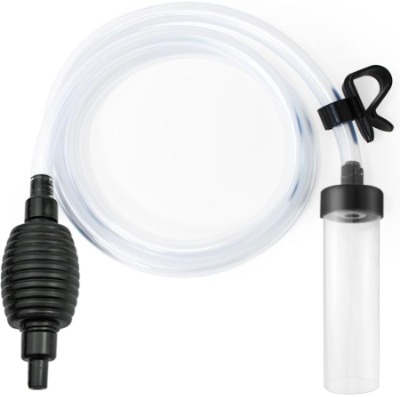
The Laifoo 5ft-S is a manual siphon vacuum with a 5-foot hose. It is designed for fish tank cleaning and gravel removal, and its longer hose gives you a little more reach than a short siphon. Like most products in this category, it works with water flow rather than electricity. You start the siphon, guide the cleaning end across the gravel, and let the water carry debris into a bucket.
The 5-foot length matters. It gives you room to work with tanks that sit on a stand or in a room where the bucket cannot be placed right beside the glass.
Best Use Cases
This siphon fits well in medium-sized freshwater tanks with gravel. It is a good match for people who want a longer hose without paying for an electric unit. It also suits situations where the bucket needs to sit on the floor away from the tank, or in a corner where space is tight.
It is a handy tool for regular weekly or biweekly water changes. It is less ideal for very fine sand, which can rise into the water quickly if the flow is strong.
Key Features Explained Simply
The 5-foot hose is the feature that stands out. More length means you can position the bucket where it suits your space, not where the tube forces you to put it. The cleaning end works the same basic way as a standard siphon, and the flow is controlled by how you hold the tube and how deep you place the mouth.
The design is straightforward, with few parts to lose or break. For a manual tool, that simplicity is a plus.
Real-Life Usage Insight
Longer hoses take a little more care to start. You need to make sure the tube is full of water and that there are no air pockets, or the siphon will stop or sputter. Once it is running, it works smoothly. Many users find that a slow, steady approach gives the best results, especially near the glass and decorations.
Keep the bucket lower than the tank to maintain flow. If the bucket is too high, the water will stop moving. This is a simple point, but it trips up beginners often.
Pros
- Long hose gives extra reach and flexible bucket placement
- No electricity or batteries needed
- Simple design with few moving parts
- Affordable for a manual siphon
- Good for medium tanks and regular maintenance
Cons
- Longer hose can be harder to start without practice
- Can disturb fine sand or light substrate if pushed too hard
- Requires careful control to avoid sucking up small items
- Manual effort is needed throughout the cleaning
Performance Discussion
Performance is steady and predictable. For standard gravel, the Laifoo 5ft-S handles loose waste well and does a fair job across the tank floor. Its performance will vary with your technique more than with the tool itself. Users who take their time usually get cleaner results.
On a large tank, you will spend more time moving the cleaning end around. That is not a flaw, just a reality of manual siphoning.
Ease of Use
Ease of use is moderate. Starting the siphon takes a few tries for some people. Once it runs, the work is simple, but it does require steady hands and attention. The longer hose adds a bit of extra handling compared with a short tool.
Value for Money
This is a good budget choice for people who want a manual siphon with extra length. It delivers reasonable performance for the price, and the extra reach can save you from needing a second setup. For many home aquarists, it offers solid value.
4. Luigi’s Fish Tank Cleaner for Turtle Tanks, Gravel Vacuum, and Hand Siphon Hose
Product Description
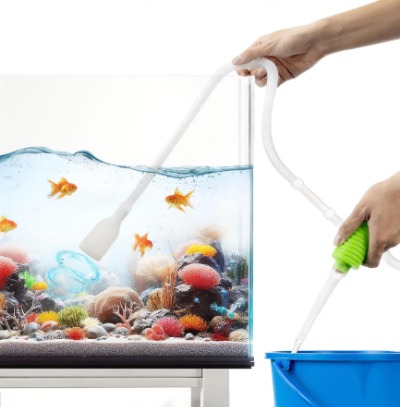
Luigi’s Fish Tank Cleaner is a hand siphon hose sold for turtle tanks, aquariums, and similar setups. The listing mentions removing and changing water or sand in a short time, and that wording suggests it is meant for quick, practical cleaning jobs. It is a simple siphon at heart, aimed at people who keep aquatic turtles or other tanks that tend to produce heavier waste.
Turtle tanks are a special case. Turtles eat messy, produce a lot of waste, and often have a mix of water, rocks, and sometimes sand. A tool built with that kind of tank in mind can be useful, especially if you need to move a lot of water and debris quickly.
Best Use Cases
This tool suits turtle tanks, reptile setups with a water area, and any aquarium with a heavy bioload that produces lots of waste. It also works for sand substrates, though you need to be gentle. Use it for quick water changes and for clearing out debris from places that are hard to reach with a basic siphon.
It can also serve as a general aquarium siphon if your tank is not too large or too delicate.
Key Features Explained Simply
The main feature is the hand siphon hose, which lets you move water and debris by starting a flow and guiding it where you need it. Its design puts the focus on speed. You can clear waste from the bottom quickly, which is useful in a turtle tank where the mess builds fast.
Because it is built for multiple uses, it also works in sand. The listing’s mention of sand suggests that the tool is meant to handle lighter substrates as well. Still, you need to control the flow closely, since sand moves more easily than gravel.
Real-Life Usage Insight
In a turtle tank, this kind of siphon earns its keep. The waste from turtles is heavy, and a quick pass with a siphon can clear a lot in one go. Keep an eye on the turtle while you work, since animals may move around the tank and get in the way.
With sand, be patient. Hover the tip just above the surface and let the flow lift loose particles. Dragging the tip through the sand will stir up more mess and may pull sand into the bucket. Many users find it helpful to work in smaller sections.
Pros
- Designed with turtle and reptile tanks in mind
- Fast for clearing heavy waste
- Usable with sand and gravel
- No electricity needed
- Simple to start and control with practice
Cons
- Strong suction can pull up sand or small items
- Not built for delicate tanks with very small fish or shrimp
- Requires careful control and attention during use
- Hand effort is needed for the full job
Performance Discussion
Performance is strong for rough, messy jobs. In a turtle tank or a sand-based setup, it moves waste out quickly. The trade-off is control. Speed is great, but in a delicate tank with small fish, you need to be more careful, or you may pull up creatures you did not want to remove.
For standard gravel in a community tank, it works, though a longer or more controllable siphon may be a better fit for careful work.
Ease of Use
Ease of use is good once you get the feel for the flow. Starting the siphon takes a few tries for most people. The hand-based control is intuitive, but it does require attention. Expect a short learning curve.
Value for Money
This is a good value for people who need a quick, workhorse siphon, especially for turtle tanks. It is priced in a range that works for budget-minded keepers, and it covers a lot of messy jobs. If you run a large or heavy waste setup, the time it saves can be worth more than the purchase price.
5. Suness 36W Aquarium Vacuum Gravel Cleaner, 8-in-1 Electric Fish Tank Cleaner
Product Description
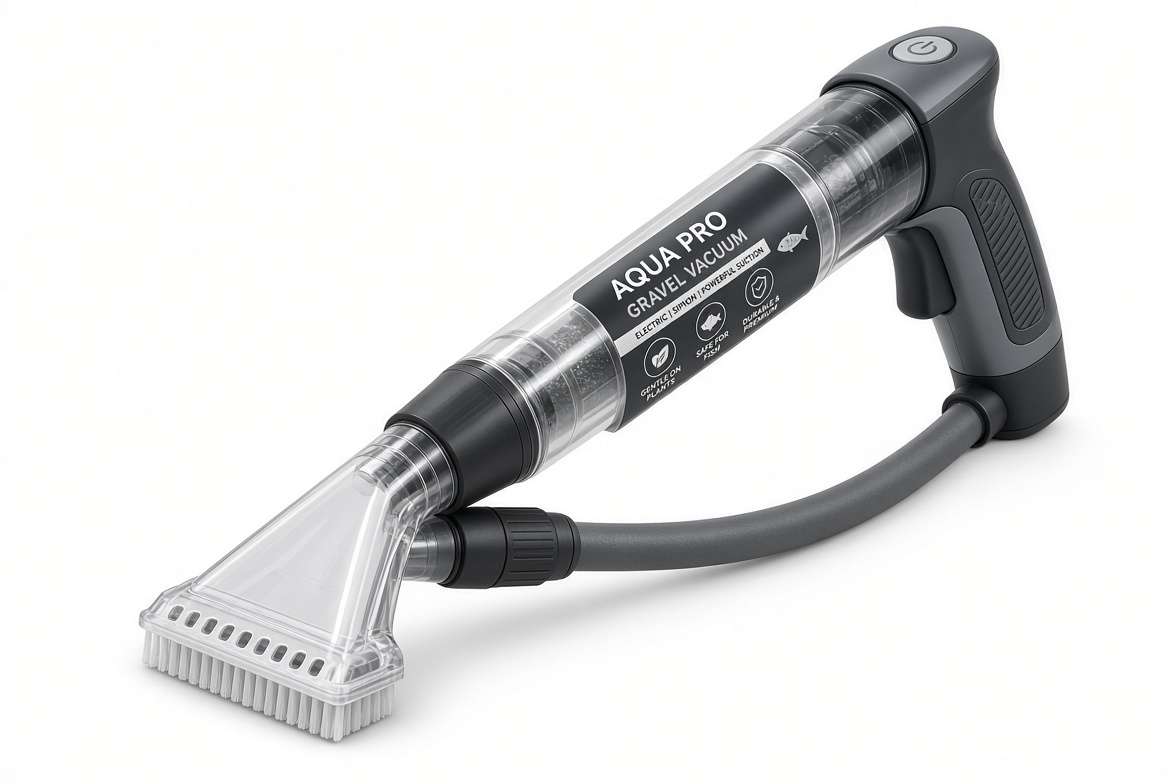
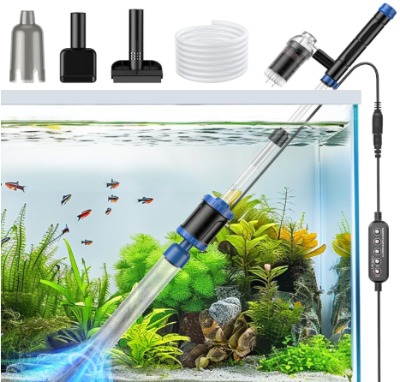
The Suness 36W Aquarium Vacuum is an electric gravel cleaner sold as an 8-in-1 multifunctional tool. The listing names several uses: gravel cleaning, water change, sand washing, water filtration, glass cleaning, adjustable length, and a timed off feature. The product is sold under the Suness brand, which you can explore on the brand page at Suness on Amazon.
Unlike the manual siphons on this list, this one runs on electricity. That changes how it works, how it feels to use, and how you should think about setup and safety. Electric tools offer convenience but bring extra steps, such as keeping the power source away from water and checking that all connections are dry.
Best Use Cases
This electric cleaner suits larger tanks, people who clean often, and anyone who wants more than one job done with one tool. Its water change and sand washing features may help in a sand-based tank. The glass cleaning and filtration features may be useful in some setups, though many keepers will still use separate tools for those jobs.
It is also a good match for people who find manual siphoning tiring. The electric motor does much of the work, which can cut down cleaning time.
Key Features Explained Simply
The main feature is the electric motor, which creates suction without you needing to start a siphon by hand. This makes the tool easier to begin and often easier to control over a large area.
The adjustable length helps you reach different parts of the tank and fit the tool into your space. The timed off feature lets you set how long the unit runs, which can help you avoid over-cleaning or running the motor too long.
The “8-in-1” label covers several uses. Some are central to gravel care, like water change and substrate cleaning. Others, like glass cleaning, are more secondary. Treat the extra functions as bonuses, and judge the tool mostly by how well it handles the basic cleaning job.
Real-Life Usage Insight
In daily use, an electric cleaner makes big tanks feel much less like work. You guide the head across the gravel, and the motor pulls debris into the container. The timed off feature is useful when you want a consistent routine.
Be careful with power. Keep the plug and power connections well above the water line and dry. Turn the unit off and unplug it before handling it in the tank. Check the cord and body for damage before each use. Electric tools need more respect than manual ones.
Also expect some noise. Electric motors make sound, and that can matter if the tank sits in a quiet room or near a bedroom.
Pros
- Electric power reduces hand effort on large tanks
- Adjustable length helps with reach
- Timed off feature supports consistent use
- Multiple functions in one tool
- Useful for sand washing and water changes
Cons
- Requires a power source and careful electrical safety
- Motor noise can be noticeable
- Multi-function features may be more basic than dedicated tools
- Strong suction may pull up sand or fine substrate if not controlled
- More parts to clean and store than a simple siphon
Performance Discussion
Performance is one of this tool’s main strengths on larger tanks. The electric motor keeps flow steady, so you can clean a wide area faster than with a manual siphon. For gravel and general debris, it does a solid job.
The “8-in-1” promise should be read with some realism. The water change and gravel cleaning features are the most relevant for most tank owners. The glass cleaning and filtration functions may be helpful in a pinch, but they will not replace dedicated tools or a proper filter. Expect the core function to be the best part of the experience.
Ease of Use
Ease of use is good for a powered tool. There is no hand siphoning to start, and the controls are simple. The main extra step is handling power safely, which takes a little attention. Once you have a routine, the process becomes quick and smooth.
Value for Money
Value depends on your tank size and how often you clean. For a small tank cleaned once in a while, a manual siphon may be the better deal. For a large tank, a sand bed, or a setup that needs frequent cleaning, the time and effort saved can make the price feel fair. The multi-function design adds some extra value, though it is best to think of those extras as a bonus rather than the main reason to buy.
Comparison Insights
Looking at all five products side by side reveals a clear pattern. The tools fall into three groups: manual siphons, a waste reducer, and an electric vacuum. Each group serves a different kind of keeper.
The Tetra siphon and the Laifoo 5ft-S are the most similar. Both are manual, budget-friendly, and built for standard gravel tanks. The Tetra suits tanks up to its listed size with a simple, familiar design. The Laifoo offers more hose length, which helps with reach and bucket placement. If you have a tight space or want more flexibility, the Laifoo has the edge. If you want a classic, easy starter tool, the Tetra is hard to overlook.
The Luigi’s hand siphon sits in a different spot. It is aimed at turtle tanks and heavy-waste setups, where speed matters more than gentle control. In a messy turtle tank, it can save a lot of time. In a delicate community tank, it may be too strong for careful work.
The Natural Rapport product is not a true cleaner. It belongs in a separate category because its job is to help reduce buildup, not remove it. Using it alongside a siphon is a smarter approach than expecting it to replace one. Keep that in mind when you compare price and performance.
The Suness electric vacuum is the most powerful and most convenient option on the list, but it also asks the most from you in terms of setup and safety. For a large tank or a sand bed, it can be a real time saver. For a small tank with light cleaning needs, it may be more than you need.
In general, the more you clean, the more the convenience of an electric tool starts to matter. The less you clean, the more a simple manual siphon makes sense.
Buying Guide: What to Look for in an Aquarium Gravel Cleaner
Picking the right tool is easier when you know what to check. Here are the main factors to think about before you buy.
Tank Size
Start with your tank size. A small tank does not need a large, heavy-duty tool. A big tank, especially one of 55 gallons or more, benefits from a longer hose or an electric unit. Many manual siphons list a size range, so check that before buying.
Substrate Type
Gravel and sand behave differently. Gravel is heavy and stays put under gentle suction. Sand is light and can rise into the water fast. If you have sand, look for a tool with adjustable flow or a gentle mode, or plan to work slowly. Some tools are better for sand than others, so read the listing carefully.
Flow Control
Good control is one of the most important features. You want to be able to slow the flow when you work near delicate plants, small fish, or shrimp. A siphon with easy flow control is a safer choice for beginners.
Hose Length
Hose length affects how easily you can position the bucket and reach different parts of the tank. A longer hose gives you more freedom, but it can be a little harder to start. A shorter hose is simpler, but it may force you to work in awkward positions.
Power Source
Manual siphons need no electricity, which keeps things simple and safe. Electric tools save effort but need a power outlet and careful handling near water. Weigh your comfort with electrical safety against how much hand work you want to avoid.
Noise and Maintenance
Electric units make noise, and they have more parts to rinse and store. Manual siphons are quiet and easy to clean. Think about where the tank sits and how much time you want to spend on cleanup after each session.
Your Cleaning Goals
Be clear about what you want the tool to do. If the main goal is weekly gravel cleaning and water changes, a basic siphon will likely do the job. If you want to clear heavy waste fast, a stronger tool is useful. If you want to reduce buildup between cleanings, a waste reducer may help, though it should be a supplement.
Budget
Manual siphons are generally the most affordable. Electric tools cost more, and their extra features do not always add value for every tank. Set a budget that fits how often you clean and how large your tank is.
Who Should Buy Each Product
Every tool suits a certain kind of keeper, so here is a simple guide.
The Tetra Water Cleaner Gravel Siphon is a good pick for beginners and anyone with a standard gravel tank in the listed size range. It is reliable, simple, and cheap to run.
The Natural Rapport No-Vacuum Waste Reducer suits people who want to reduce how much buildup they deal with, or who need a low-effort option alongside regular cleaning. It is not a replacement for a siphon.
The Laifoo 5ft-S Siphon Vacuum suits people with medium tanks who want extra hose length without going electric. It is a practical choice for flexible bucket placement.
The Luigi’s Fish Tank Cleaner suits turtle tank owners, reptile keepers, and anyone with heavy waste or sand who wants fast, hands-on cleaning. It is less suited to delicate community tanks.
The Suness 36W Electric Vacuum suits large tank owners, sand bed keepers, and anyone who cleans often and wants to cut down on hand effort. It is worth it for frequent, bigger jobs, but it is not necessary for small, lightly stocked tanks.
Common Mistakes to Avoid
Even a good tool can cause problems if it is used the wrong way. These are the mistakes beginners make most often.
Sucking Up Too Much Gravel
Pushing the cleaning end into the gravel is the most common error. It pulls up stones, which may end up in the bucket and occasionally back in the tank during rinsing. Keep the mouth just above the surface and work gently.
Cleaning the Whole Tank at Once
Trying to clean everything in one go can stress your fish and leave you rushed. Work in sections, and give the tank time to settle between passes.
Removing Too Much Water
Large water changes can shift the temperature and water chemistry too quickly, which stresses fish. A common rule is to change a moderate portion of the water, not the whole tank. Always match the new water’s temperature to the tank.
Using Tap Water Without Treatment
Tap water often contains chlorine or chloramine that harms fish. Treat new water with a suitable conditioner before adding it to the tank.
Ignoring Power Safety
Electric tools need careful handling. Keep the plug dry, unplug before handling the unit in the tank, and check the cord for damage before every use.
Expecting a Waste Reducer to Do Everything
A product that reduces buildup does not remove the need for water changes or physical cleaning. Treat it as one part of your routine.
Forgetting the Bucket Height
For a siphon to work, the bucket must sit lower than the tank. If the bucket is too high, the flow stops. This is a simple point, but it is easy to overlook.
Rinsing Tools With Soap
Avoid soap, detergent, or harsh cleaners on aquarium tools. Residue can harm fish. Rinse with plain water and let everything air dry or rinse well before the next use.
Final Verdict
There is no single best gravel cleaner for everyone. The right choice depends on your tank size, your gravel or sand type, how often you clean, and how much effort you want to put in.
For most beginners with a standard gravel tank, the Tetra Water Cleaner Gravel Siphon is an easy recommendation. It is simple, affordable, and dependable. It gets the job done without complicated parts or electrical concerns.
If you need extra reach and flexible bucket placement, the Laifoo 5ft-S Siphon Vacuum is a practical step up. It keeps the manual approach while giving you more room to work.
For turtle tanks, reptile setups, and heavy-waste jobs, the Luigi’s Fish Tank Cleaner is a strong workhorse. Use it with care in delicate tanks, but it can save a lot of time where mess is the main problem.
If you have a large tank, a sand bed, or you clean often, the Suness 36W Electric Vacuum is worth a close look. Its powered design takes much of the hard work out of cleaning, though you should respect its electrical needs.
The Natural Rapport No-Vacuum Waste Reducer does not belong in the same category as the others. Use it as a helper to slow the buildup between cleanings, not as a replacement for siphoning or water changes. Read the directions carefully, watch your water, and set realistic expectations.
Whatever tool you pick, consistency matters most. A simple siphon used every week will do more for your fish than an expensive gadget used once in a while. Start with the tool that fits your tank today, keep up with regular water changes, and let the gravel stay clean one session at a time.
Frequently Asked Questions
How often should I clean aquarium gravel?
Most keepers clean gravel during regular water changes, often every one to two weeks, depending on tank size, number of fish, and feeding habits. Heavier tanks may need more frequent attention.
Can a gravel cleaner remove fish waste completely?
No tool removes every bit of waste. A gravel cleaner removes loose debris and much of the buildup near the surface. Waste that is deep in the substrate may need gentle stirring and repeated cleaning over time.
Will a gravel vacuum suck up my fish?
Small fish and shrimp can be pulled into a strong siphon, especially if the flow is high or the mouth is placed too close to them. Keep an eye on your fish, move slowly, and use a gentle flow in tanks with small or young animals.
Is an electric gravel cleaner better than a manual siphon?
It depends on your needs. Electric models reduce hand effort and can clean large areas faster, but they need careful electrical handling and may be noisy. A manual siphon is simpler, quieter, and often more affordable.
Can I use a gravel cleaner in a sand tank?
Yes, but be gentle. Sand moves easily, so use a low flow and hover the tip above the surface. Some tools handle sand better than others, so check the listing and go slowly.

Hi, I’m Mary, the founder of PetGadgetPro.com. I’m a passionate pet lover with a special place in my heart for dogs and cats. I share practical advice and honest insights on pet gear to help pet parents make better choices. My dedicated research team studies products in depth, and our writers create reviews using trusted, authentic sources—so you can feel confident choosing the best for your pets.