
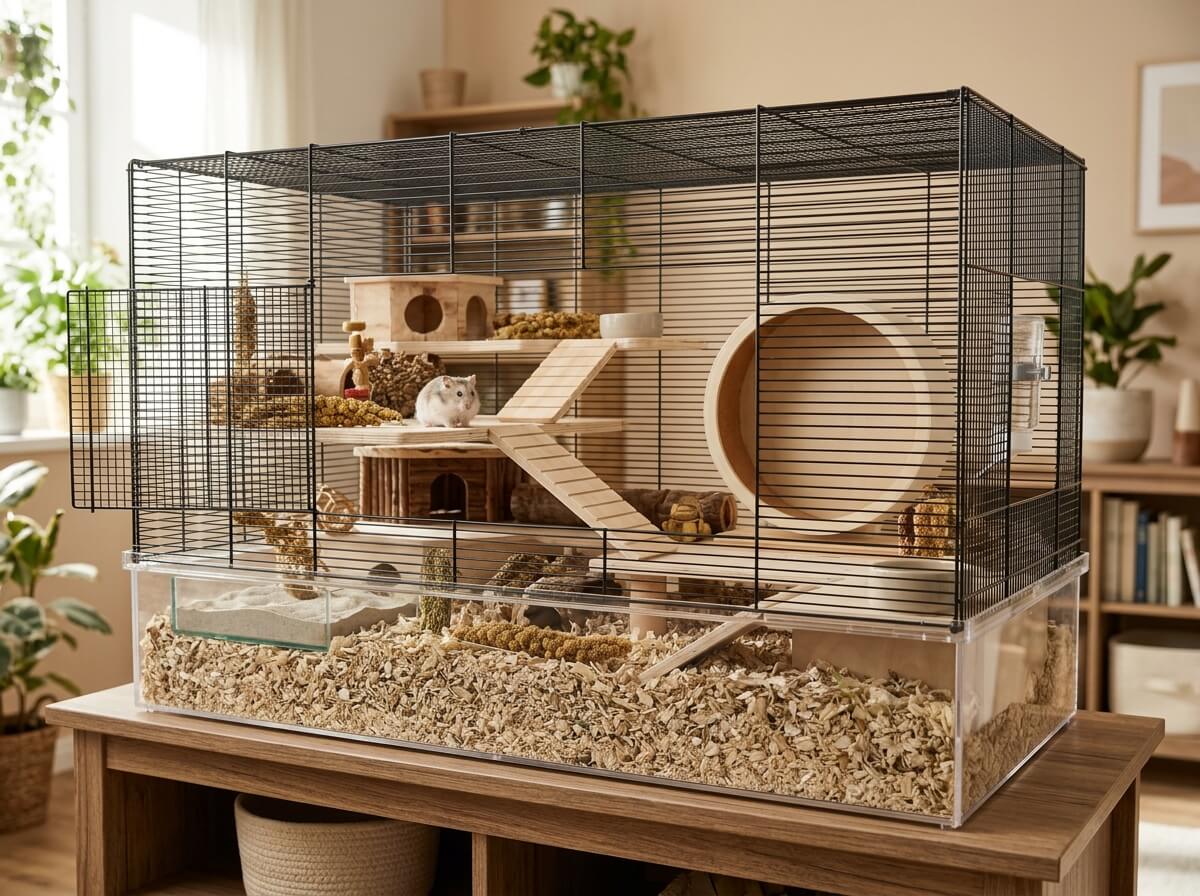
5 Best Hamster Cage for Ventilation In 2026
Good airflow is one of the most overlooked parts of hamster care. Many new owners focus on size, colors, or cute accessories, then wonder why the cage smells sharp or why their pet seems restless. A hamster cage needs to do more than hold your pet. It needs to move fresh air through the space, keep moisture and waste gases from building up, and still feel safe and cozy for a small animal that loves to dig and hide.
In this roundup, we look at five popular hamster cages that get attention for their ventilation features. We go through each one in plain language, explain what it does well, point out where it falls short, and share what to check before you buy. Because product listings can be a bit confusing, we also show you how to read the details on your own so you can make a confident choice.
Let’s get into it.
Why Ventilation Matters More Than You Might Think
Hamsters are small, but they produce a surprising amount of waste for their size. Urine breaks down into ammonia, and ammonia has a strong smell that can irritate the eyes and lungs of both your pet and you. When air does not move well through a cage, that ammonia hangs around. Over days, it can lead to respiratory problems, which often show up as sneezing, wheezing, or a runny nose.
Moisture is another issue. Bedding gets damp from droppings, food, and water spills. If the damp air stays trapped inside, bedding grows stale faster, mold can form in corners, and the whole enclosure feels heavy and musty. Good airflow helps dry things out and keeps the air fresher between cleanings.
Ventilation also affects temperature. Hamsters are happiest in a steady range that is comfortable for people, and they can get stressed when it runs too hot or too stuffy. A cage that breathes well helps balance the warmth that builds up from your pet’s body heat and from nearby electronics or sunlight.
That said, more airflow is not always the answer. A cage with huge openings might let in drafts, and drafts can chill a small animal quickly. The goal is steady, gentle airflow that moves through the enclosure without blowing directly on your hamster. This balance is the key idea behind every product in this guide.
Quick Look at Our Top Picks
Before we dive into each product, here is a short overview of the five cages. Keep in mind that listing details can change, so always check the current specs before you order.
| Product | Main Material (per listing) | Size | Standout Ventilation Feature |
|---|---|---|---|
| FUFUZOOIE 39.4″ Syrian Hamster Enclosure | Wood and acrylic mix | 39.4 x 19.7 x 19.7 in | Open panel design with ventilated sides |
| 32″ Bamboo Hamster Enclosure | Bamboo | 32 in | Natural slat spacing for airflow |
| FUFUZOOIE 39″ Large Metal Hamster Cage (Green) | Metal | 39 in | Three-sided ventilation with front top access |
| Vilanpaw 24″ Wooden Hamster Cage with Warm Light | Wood with clear panels | 24 in | Openable breathable top |
| 32″ Large Wooden Hamster Cage | Wood | 32 in | Multi-species design with open vents |
Individual Product Reviews
1. FUFUZOOIE 39.4″ Syrian Hamster Enclosure

This is a large enclosure with a long floor plan, which makes it a strong choice for Syrian hamsters that need room to run, dig, and explore. The listing title mentions both wood and acrylic, and it also uses chew-proof wording. Because the description mixes materials, you should confirm exactly which panels are wood and which are clear before you buy. This matters for airflow, because solid panels block air while open panels allow it to pass through.
Best use cases: This cage works well for a single adult Syrian who needs lots of floor space. It also suits owners who want a tall-ish enclosure with plenty of room for a multi-level setup or a few tunnels.
Key features explained simply: The big footprint is the main feature. A larger cage gives air more space to circulate, so the smell builds up more slowly than in a tight tank. The sides are designed with openings that let fresh air come in and stale air leave. The listing also notes compatibility with dwarf hamsters, guinea pigs, and gerbils, though you should always match your setup to the specific animal’s needs.
Real-life usage insight: Large cages can feel heavy and awkward to clean at first. Most keepers find that once the bedding is set up in one corner and the food and water are in another, cleaning becomes a quick routine. Expect to spend a few extra minutes wiping down the base each week. Keep the cage away from direct sunlight and drafty windows, since open sides can let in cold air during cool nights.
Pros:
- Generous floor space for active Syrians
- Open panels help air move through the enclosure
- Easy to set up with a wide base for bedding
- Works for several small animal types
Cons:
- The mixed material description can be confusing
- Wood sections may be chewed over time, so check them often
- Large size requires a dedicated spot on a sturdy table or stand
Performance discussion: In terms of ventilation, the open sides do a good job of moving air. The key is placement. A spot with gentle room airflow, but no direct wind, gives the best results. If your room gets stuffy, add a small fan across the room rather than pointing it at the cage.
Ease of use: Assembly is usually straightforward, but read the instructions and tighten every connection before you add bedding. Loose joints can wobble, and a wobbly cage can stress your hamster.
Value for money: For the size, this cage offers good value. You get a lot of room for the price, which helps your pet stay active. The main trade-off is that you may need to replace worn wood sections over time.
2. 32″ Bamboo Hamster Enclosure for Syrian Hamsters
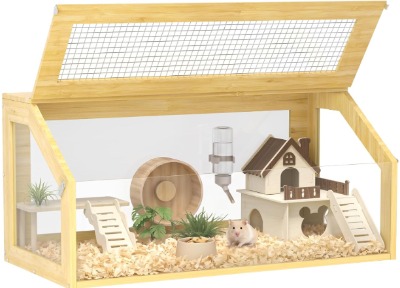
Bamboo has a natural, warm look that many owners enjoy. This 32-inch enclosure is made for Syrian hamsters, and its bamboo build gives it a calm, earthy feel that blends well with living rooms. Bamboo is strong for its weight, but it still needs care because hamsters can chew on it.
Best use cases: This cage suits people who want a natural look and a medium-sized home for one Syrian hamster. It also works for owners who like to decorate with plants, cork, and other natural items.
Key features explained simply: The bamboo slats create small gaps that let air pass through the walls. This gives the cage a breathable structure without needing large openings. The size is big enough for regular exercise, though it is not as roomy as the largest cages on this list.
Real-life usage insight: Bamboo cages tend to look beautiful for a long time, but they need regular checks. Look for small splinters or chewed edges every week. If you spot one, smooth it with fine sandpaper or cover it with a safe guard. Keep the bedding deep enough for digging, and avoid cedar or pine shavings, which can release oils that irritate the lungs.
Pros:
- Natural look that fits home decor
- Slatted walls allow steady airflow
- Medium size works well for a single Syrian
- Lightweight enough to move for cleaning
Cons:
- Hamsters can chew bamboo, so it needs close watching
- Gaps between slats must be checked for escape risks
- Less floor space than the larger cages in this list
Performance discussion: Airflow is good for a bamboo build, but the gaps are the main factor. Wider gaps mean more ventilation and a higher chance of drafts. Narrow gaps block drafts but also limit air movement. Place the cage in a room with steady air rather than right beside a vent or door.
Ease of use: Bamboo is easy to wipe clean, but avoid soaking it. Water can warp the wood and leave a musty smell. Use a damp cloth and dry the surface right away.
Value for money: This is a mid-range pick. You pay for the natural material and look rather than extra space or features. It makes sense for owners who put appearance high on their list.
3. FUFUZOOIE 39″ Large Metal Hamster Cage (Green)
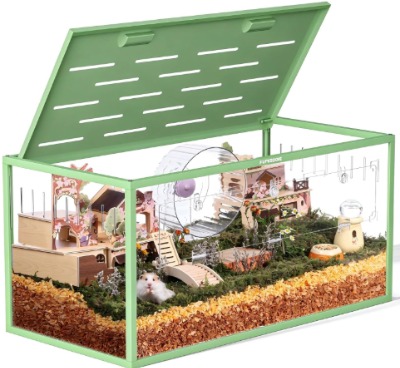
If ventilation is your top priority, this metal cage stands out. The listing highlights three-sided ventilation, a front top access door, and a clear 360-degree view. Metal walls are sturdy and resist chewing much better than wood or bamboo, which is a big plus for hamsters that like to gnaw.
Best use cases: This cage is ideal for Syrian hamsters, especially for owners who want a long-lasting enclosure with excellent airflow. It also works well for people who want an easy-clean setup with a large deep-bedding area.
Key features explained simply: Three sides with ventilation means air can enter and leave from several directions. Front top access makes it easier to reach your pet without lifting the whole roof. The clear viewing area lets you check on your hamster without opening the cage, which reduces stress for shy animals. The deep bedding space gives digging hamsters room to tunnel.
Real-life usage insight: Metal cages are great for airflow, but they can feel cooler than wood. Add a snug hide with plenty of bedding inside, and keep the cage away from cold drafts. The wire spacing is important. Check the bar gaps to make sure a young or small hamster cannot squeeze through. Also watch for any rust after cleaning, especially on the base or corners.
Pros:
- Excellent airflow from three sides
- Metal resists chewing better than wood
- Front top access makes handling and cleaning simpler
- Clear viewing helps you monitor your pet
- Deep bedding area supports natural digging
Cons:
- Metal can feel colder than wood
- Bar spacing needs careful checking for small hamsters
- Can be noisy if the hamster climbs the bars at night
- Wire surfaces may collect dust that needs regular wiping
Performance discussion: For ventilation, this is one of the strongest options here. Air moves freely through the walls, which keeps ammonia and moisture from settling. The clear view gives you a good look at the enclosure, but it also means light and heat can reach the inside more easily. Keep it out of direct sun, and use a towel over part of the cage at night if the room gets very bright.
Ease of use: The front top door makes daily tasks faster. You can refill food and water, check bedding, and spot clean without pulling the hamster out of its favorite corner. Setup is mostly simple, though you should double-check that all clips and connectors are secure.
Value for money: For the features, this cage delivers strong value. The combination of metal durability, great airflow, and easy access is hard to beat at a similar price point. Many owners see it as a long-term investment, since it holds up well to chewing and daily use.
4. Vilanpaw 24″ Wooden Hamster Cage with Warm Light
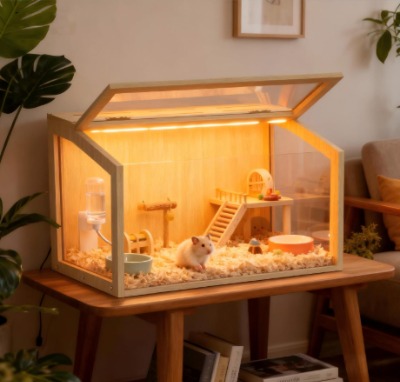
This smaller cage takes a different approach. It combines wood framing with clear panels, and it includes a warm light feature. The listing also mentions an openable, breathable top. The compact 24-inch size makes it a good fit for smaller spaces, but it also means you need to plan the setup carefully.
Best use cases: This cage suits dwarf hamsters, or owners with limited space who still want a comfortable home. It can also work for a Syrian in a short-term or temporary setup, though a larger cage is better for long-term living.
Key features explained simply: The breathable top is the key ventilation feature. Air can flow through the top area, which helps move warm, stale air upward and out. The clear panels let you watch your hamster easily. The warm light adds a soft glow, which can help the space feel cozy in the evening. However, lights can produce heat, so the setup needs watching.
Real-life usage insight: Smaller cages fill up quickly. Once you add a wheel, food bowl, water bottle, and hides, the floor space shrinks fast. Keep the layout simple. Put the wheel on one side and the food and water on the other. Also be careful with the warm light. Keep it on a timer that matches a normal day and night cycle, and avoid leaving it on all the time, since hamsters need darkness to rest. Check the temperature near the light regularly so the cage does not overheat.
Pros:
- Compact size fits smaller rooms
- Breathable top helps air move upward
- Clear panels make it easy to watch your pet
- Warm light adds a cozy look
- Good option for dwarf hamsters
Cons:
- Limited floor space for active Syrians
- Clear panels can trap heat and reduce airflow along the sides
- Warm light needs careful timing to avoid overheating
- Smaller size means more frequent cleaning
Performance discussion: Ventilation depends on how much the top opens and how the clear panels are placed. Clear sides can reduce side airflow compared to mesh or slatted walls, so the top becomes the main path for fresh air. If you notice condensation or a stuffy smell, open the top a bit more and check that nothing blocks the vents. Avoid placing the cage near a heater, radiator, or sunny window.
Ease of use: Opening the top is simple, which makes adding items and cleaning easy. The lid can feel light, so make sure it locks or sits firmly so your hamster cannot push it open.
Value for money: This cage offers good value for smaller setups. The extra features, like the light and clear viewing, add charm. Just remember that space is limited, so it is not the best long-term pick for a large adult Syrian.
5. 32″ Large Wooden Hamster Cage (Multi-Species)

This wooden cage is listed for hamsters, rats, and guinea pigs. It offers a 32-inch footprint, which gives a fair amount of room for most small pets. Wood gives a warm, homey look and holds heat better than metal. The main question for ventilation is how the wood panels are built and whether there are enough vents or open sections.
Best use cases: This cage works for owners who want one enclosure that can handle a single hamster now and perhaps other small animals later. It also suits people who prefer a warm, wooden look in their living spaces.
Key features explained simply: The wooden build offers natural insulation, so the cage stays warmer in cool rooms. The 32-inch size allows space for bedding, play areas, and a wheel. Vent openings, when present, let air move through the enclosure. The multi-species label means the cage is built to handle some chewing and general wear, though no wooden cage is fully chew-proof.
Real-life usage insight: Wood tends to absorb moisture over time, especially near the water bottle and in corners where droppings collect. Check the base and walls for dampness each week. Wipe spills right away, and let the cage dry fully before adding fresh bedding. Many keepers also add a small plastic tray under the bedding area, which helps protect the wood from moisture and makes cleaning easier.
Pros:
- Warm, natural look
- Good insulation for cooler rooms
- Spacious enough for a single Syrian
- Multi-species design adds flexibility
- Vent openings support steady airflow
Cons:
- Wood can absorb moisture and odor over time
- Hamsters may chew the panels, so regular checks are needed
- Ventilation depends heavily on the vent design, which needs confirming
- Heavier than metal or acrylic options, which makes moving it harder
Performance discussion: Wooden cages hold warmth well, which is nice in winter-like cool rooms, but this also means they can trap humidity if airflow is poor. Make sure the vent openings are not covered by furniture or walls. A quick airflow check is simple: hold a thin strip of tissue near the vent and see if it moves gently. If the tissue barely shifts, air is not flowing well enough, and you may need to move the cage or open more space around it.
Ease of use: Assembly can take a little longer than with simpler metal or plastic models. Take your time, follow the instructions, and tighten all connectors. Cleaning is manageable if you keep bedding dry and remove soiled areas quickly.
Value for money: Wooden cages often cost less than premium metal or acrylic options, which makes this one appealing for budget-minded owners. The trade-off is more maintenance and closer checks for moisture and chewing.
Comparison Insights
Looking at all five cages side by side makes a few patterns clear.
For the strongest airflow, the metal cage with three-sided ventilation comes out ahead. Air moves through multiple walls, and the metal structure does not soak up moisture. It is also the most chew-resistant option in this list, which means its airflow stays consistent over time.
For a natural look with good breathability, the bamboo cage is a nice middle ground. Its slats allow steady air movement, and it fits well in a living room. It does need closer checks for chewing.
For the most floor space, the 39.4-inch Syrian enclosure gives your hamster the most room to run and dig. Since larger cages let air spread out more, this can also help keep smells lower between cleanings.
For small spaces, the 24-inch Vilanpaw cage fits well on a desk or shelf. Its breathable top helps, but the clear panels mean you should watch heat and drafts more closely.
For warmth and budget, the 32-inch wooden cage is a good pick. Wood holds heat, which helps in cooler rooms, but it needs more moisture management than metal.
No single cage wins in every category. The best option depends on your room, your hamster’s type, your cleaning routine, and how much time you can spend on maintenance.
Buying Guide: What to Look for in a Ventilated Hamster Cage
Shopping for a cage can feel overwhelming because listings use many words that sound alike. Here is a simple way to check any product for good airflow.
Look at the wall design first. Mesh, slats, and open bars allow air to move. Solid panels block it. A cage with at least two ventilated sides usually does a better job than one with only a small top vent.
Check the top. A breathable or openable top can help warm air escape. Make sure the top locks or sits firmly so your hamster cannot push it open.
Measure the room spot. A cage placed against a wall or inside a cabinet may lose airflow. Leave a few inches of space around the sides when possible.
Confirm the bar or slat spacing. Gaps must be small enough to stop escapes, especially for dwarf hamsters. For Syrians, the gaps are usually less of a concern, but you should still check them carefully.
Think about the material. Metal resists chewing and moisture. Wood holds warmth but can absorb odors and needs closer checks. Acrylic and clear panels show your pet clearly but can reduce side airflow. Bamboo offers a natural look but requires attention to chewing.
Plan for floor space. Hamsters need room for a wheel, a hide, a food bowl, a water bottle, and digging. A cramped cage traps smells and stresses your pet. Larger is generally better for Syrians.
Think about cleaning access. Front doors, top openings, and removable trays make weekly cleaning faster. Easy access also means you are more likely to keep the cage fresh.
Read the listing carefully. Product descriptions sometimes mix materials or include general claims. If a listing says “chew-proof” or “breathable,” ask yourself how that is supported. Check photos, dimensions, and material details before you buy.
Test the airflow once it is set up. Use a thin strip of tissue near the vent. If it moves gently, air is flowing. If it does not move at all, reposition the cage or open more space around it.
Who Should Buy These Cages
Syrian hamster owners who want lots of room will do well with the 39.4-inch wooden and acrylic enclosure or the large metal cage. Both give active Syrians space to run and dig, and both offer decent airflow.
Owners who prioritize airflow above all should look at the 39-inch metal cage with three-sided ventilation. Its open walls and front top access make it a strong pick for people who worry about ammonia and stale air.
People who want a natural look will enjoy the 32-inch bamboo cage. It suits living rooms and offers good breathability, as long as you check it often for chewing.
Owners of dwarf hamsters or those with limited space may prefer the 24-inch Vilanpaw cage. It fits smaller areas and includes a breathable top, but it is best for dwarfs or short-term use with a Syrian.
Budget-minded owners who are comfortable with regular moisture checks may like the 32-inch wooden cage. It offers warmth and a good size at a friendly price, though it needs more maintenance.
Families with multiple small pets may find the multi-species wooden cage useful, though you should always research each animal’s needs before housing different species together. In many cases, separate enclosures are safer.
Common Mistakes to Avoid
Blocking the vents. Placing the cage against a wall, under a shelf, or behind a curtain can cut off airflow. Leave some room around the cage.
Putting the cage in direct sunlight. Sun can overheat a small enclosure quickly, especially with clear panels. Heat stress is serious for hamsters, so keep the cage in a shaded, steady spot.
Placing the cage near a draft. Open windows, air conditioning vents, and doors can send cold or fast-moving air straight at your pet. Gentle room airflow is good, but direct drafts are not.
Using cedar or pine bedding. These woods release strong oils that can irritate the respiratory system. Aspen shavings or paper-based bedding are safer choices.
Overfilling the cage with bedding. Too much bedding can trap moisture and smell, especially in a poorly ventilated area. Use enough for digging, but do not pile it so high that air cannot move.
Skipping spot cleaning. Waiting a full week to clean soiled corners lets ammonia build up. Remove wet or smelly bedding every day or two.
Ignoring chewing damage. Wood and bamboo can develop gaps and splinters. Check the walls and corners often and repair or replace damaged parts.
Forgetting to check the bar gaps. A gap that looks fine for a Syrian may let a dwarf hamster escape. Measure before you assume.
Using a fan that blows directly on the cage. A fan can be helpful across the room, but aiming it straight at your hamster can chill and stress the animal.
Assuming “breathable” means perfect airflow. Listing claims can be broad. Test the airflow yourself with a tissue strip and watch for signs of stuffiness or condensation.
Final Verdict
If ventilation is your main concern, the 39-inch metal cage with three-sided ventilation is the strongest all-around choice in this roundup. Its airflow is excellent, its metal build resists chewing, and its front top access makes daily care easier. It is a practical pick for most owners who want fresh air, easy cleaning, and long-term durability.
The 39.4-inch Syrian enclosure is a great runner-up for owners who want the most floor space. Its open sides help air move, and its size gives your hamster plenty of room to explore. Just confirm the material layout before you buy, since the listing mixes wood and acrylic.
The 32-inch bamboo cage suits people who want a natural look and good breathability. It needs more attention to chewing, but it fits well in a living room. The 32-inch wooden cage is a budget-friendly option that holds warmth well, though it asks for more moisture checks. The 24-inch Vilanpaw cage works best for dwarf hamsters or tight spaces, and its breathable top helps, but its clear panels and limited floor space make it less suited to long-term Syrian living.
Whatever you choose, remember that airflow is only one part of a healthy setup. Pair your cage with fresh aspen bedding, regular spot cleaning, a steady room temperature, a balanced diet, and plenty of enrichment. A well-ventilated cage that is also roomy, clean, and calm will do much more for your hamster than any single feature on a product page.
Frequently Asked Questions
How much ventilation does a hamster cage really need?
A cage should move air gently through the enclosure without creating direct drafts. Test it with a thin strip of tissue near the vent. If the tissue moves softly, airflow is working well.
Is a metal cage better than a wooden one for airflow?
In most cases, metal allows more consistent airflow and resists moisture better. Wood holds warmth well but can absorb odors over time, so it needs more regular care.
Can I use a glass tank instead of a cage?
Glass tanks usually have poor airflow because the solid walls trap air. If you use one, you will need a secure mesh top and extra cleaning to keep the air fresh.
How often should I clean a ventilated hamster cage?
Spot clean daily or every other day to remove wet bedding and droppings. Do a full cleaning about once a week, and check the walls and corners for damage or moisture.
Does a warm light help with ventilation?
A warm light does not improve airflow. It adds heat and light, which can affect comfort and sleep. If you use one, keep it on a timer and monitor the temperature near it.
What bedding works best with a well-ventilated cage?
Aspen shavings and paper-based bedding are good choices. Avoid cedar and pine, since their oils can irritate the lungs. Keep the bedding dry and change soiled areas quickly.
Can a dwarf hamster live in a large Syrian cage?
Yes, as long as the bar or slat gaps are small enough to prevent escapes. Check the spacing carefully before you set up the cage.
Should I cover the cage at night?
A partial cover can help block bright light and reduce noise, but do not cover so much that airflow is cut off. Leave the vents and top area open.