5 Best Rabbit Water Bottle In 2026
Fresh water is one of the most important parts of rabbit care, yet it is also one of the easiest things to get wrong. A bottle that leaks onto the bedding, a nozzle that clogs with dried food, or a mount that sags under the weight of a full bottle can turn a simple daily task into a frustrating one. This roundup looks at five popular rabbit water bottles so you can see how each one works in real homes, where the strengths lie, and which bunny setup each bottle suits best.
Every product here comes with a clear description, a look at its best use cases, a breakdown of the main features, and an honest list of pros and cons. You will also find notes on ease of cleaning, value for money, and common mistakes that many new owners make. The goal is simple: help you pick a bottle that keeps your rabbit hydrated and keeps your cage dry.
Why Water Bottle Choice Matters for Rabbits
Rabbits drink a lot of water every day. The exact amount depends on their size, diet, temperature, and how much fresh greens they eat. A rabbit that eats plenty of leafy vegetables gets some moisture from its food, but it still needs a steady supply of clean water. Dehydration can become serious quickly, so the water source needs to work every single day.
Many owners use a bowl, a bottle, or both. Bowls are easy to fill and easy to see, but rabbits tend to flick bedding, hay, and pellets into them. A bowl can turn soggy and dirty within a few hours. A bottle keeps the water cleaner for longer because the nozzle stays above the floor and most debris stays out. Bottles also save floor space, which matters in smaller cages.
Bottles have their own problems, though. The nozzle can get sticky or clogged, the tube can grow a film if you do not clean it well, and some bunnies never figure out how to use one. A good bottle reduces these issues. A poor one creates new ones. That is why the design details in this roundup matter as much as the size.
How We Evaluated These Bottles
To keep this review fair and useful, each bottle was judged on the same main points: capacity, nozzle design, leak resistance, mounting method, cleaning ease, durability, and suitability for different animals. We also looked at common customer feedback patterns, such as complaints about drips, nozzle clogs, or mounts that loosen over time. Where a product has a clear limitation, such as a small capacity or a mount designed for one type of cage, that limitation is explained plainly.
This review does not claim long-term lab testing or scientific measurements of water flow. Instead, it focuses on what the product design suggests, what the specifications confirm, and what buyers commonly report in day-to-day use. Product details can change over time, so always check the current listing for exact dimensions, materials, and included parts before you buy.
Quick Look at the Five Bottles
Before we dive into each product, here is a short overview to help you see the main differences at a glance.
| Bottle | Capacity | Best For | Mount Style | Main Strength |
|---|---|---|---|---|
| Choco Nose No-Drip | 10.2 fl oz | Guinea pigs, small rabbits, hamsters | Clip-style mount | Compact, leak-resistant nozzle |
| Vannon Top-Fill | 15 oz | Small rabbits, hamsters, guinea pigs | Standard cage mount | Easy top filling |
| Gray Non-Drip 17 oz | 17 oz | Small to medium rabbits and small pets | Standard cage mount | Good capacity for the price |
| Lixit All-Weather 64 oz | 64 oz | Large rabbits, groups, outdoor setups | Heavy-duty mount | Large capacity and durability |
| Lixit 32 oz Weather Resistant | 32 oz | Rabbits and ferrets | Heavy-duty mount | Balanced size with a sturdy mount |
With that overview in mind, let us look at each product more closely.
Product Reviews
1. Choco Nose No-Drip Small Animal Water Bottle (10.2 fl oz, C128)
Product Description
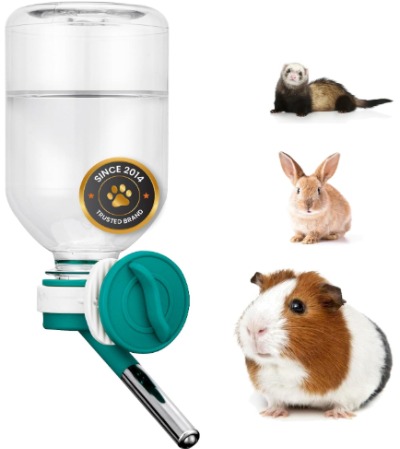
The Choco Nose No-Drip bottle is a compact water dispenser sized for smaller pets. It holds 10.2 fluid ounces and uses a patented nozzle designed to stay closed until a pet drinks from it. The listing names guinea pigs, rabbits, ferrets, and hamsters as suitable users. It is made without BPA, and it includes a mounting clip that attaches to the side of a cage.
This bottle is one of the smallest options in the roundup. That size is both its main appeal and its biggest limitation.
Best Use Cases
This bottle makes the most sense for a single small rabbit, a dwarf breed, or a guinea pig or hamster that shares a cage setup with a rabbit. It also works well as a backup bottle. Some owners keep a small bottle in a travel carrier, a play pen, or a temporary holding area, so the animal never goes without water during a move or a short stay elsewhere.
It is less suitable for large rabbits or for households with several animals drinking from the same supply. A bigger breed can empty a 10-ounce bottle faster than you might expect, especially in warm weather or after a day of heavy activity.
Key Features Explained Simply
The main feature is the nozzle. A spring-loaded or valve-style nozzle is designed to stay sealed when no animal is drinking. This helps reduce drips onto bedding and the floor. The bottle also has a clip-style mount, which lets you attach it to the cage wall without drilling or adding hardware.
The BPA-free label tells you the plastic is made without bisphenol A, a chemical some people prefer to avoid in products that touch food or drink. Always check the listing for the full material details, since these can change between production runs.
Real-Life Usage Insight
In practice, a small bottle like this needs to be checked more often than a large one. A tiny capacity means you may need to refill it once or twice a day, depending on the animal and the weather. Many people set a simple habit of filling the bottle at the same time as the morning hay refresh, so they never forget.
The clip mount works best on flat, sturdy cage bars. On thin wire or unusual cage shapes, the clip can feel loose. Try the fit before you fill the bottle, and give it a gentle tug to make sure it stays in place.
Pros and Cons
Pros
- Compact size fits small cages and tight spaces
- Nozzle is designed to limit drips when not in use
- Clip mount is easy to install without tools
- BPA-free construction according to the listing
- Good backup option for travel or temporary setups
Cons
- Small capacity means frequent refills
- Not ideal for full-grown rabbits or multiple animals
- Clip may not fit every cage style securely
- Smaller nozzles can be harder to clean thoroughly
Performance
For a small pet, performance is generally solid. The nozzle holds back water well when it is set correctly and free from debris. The main performance concern is consistency of flow. If the nozzle gets a little dried food or hair stuck in it, the flow can slow down, and the animal may get frustrated. Regular rinsing solves most of these issues.
Ease of Use
Setup is quick. Clip the bottle on, fill it through the top, and check that the nozzle sits at a comfortable height for your animal. Cleaning is a bit fiddlier because the nozzle is small. A thin brush or pipe cleaner helps remove residue from the tip. Rinse the bottle with warm water and let it dry fully before the next refill.
Value for Money
This bottle is inexpensive for what it offers, especially if you have a small animal and only need one bottle. It is not a great value for large rabbits, because you may end up buying a bigger bottle anyway. Think of it as a practical, low-cost option for smaller setups rather than a long-term solution for a big bunny.
2. Vannon Water Bottle for Small Animals (15 oz Top-Fill Dispenser, Blue)
Product Description
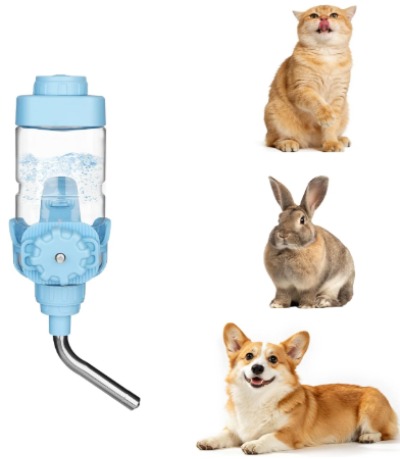
The Vannon bottle is a 15-ounce top-fill dispenser in blue. The top-fill design means you pour water in from the top of the bottle, and the nozzle sits at the bottom. This type of design keeps the filling process simple, since you do not need to remove the whole bottle from the cage to refill it. The product is aimed at small animals such as rabbits, guinea pigs, and hamsters.
Best Use Cases
This bottle works well for small to medium rabbits, especially in cages where you want a moderate capacity without the bulk of a large dispenser. It is a good middle choice for owners who want more water per refill than a 10-ounce bottle provides, but who do not need a massive reservoir.
It also fits well in setups with several small pets that share a space, as long as each animal has access and you refill regularly. Many people use this type of bottle in guinea pig and rabbit combinations, but you should watch closely to make sure every animal drinks well.
Key Features Explained Simply
The biggest feature is the top-fill opening. Filling from the top is easier than pulling the bottle out, especially if you have a cage with a tight door or a bottle mounted in a corner. The 15-ounce size strikes a balance between capacity and weight, so the bottle stays manageable when full.
The blue color is a cosmetic choice, but it can help you spot the bottle quickly in a busy cage. Some owners find that a colored bottle stands out better than clear plastic, which can blend into the background.
Real-Life Usage Insight
Top-fill bottles save time, and that matters on busy days. You can top off the water without disturbing your rabbit or taking the bottle off the cage. Just be sure to check the level through the side of the bottle if the body is opaque, so you do not let it run dry.
The one habit to build is a regular rinse. When the bottle sits for many hours, residue can collect near the nozzle. A quick rinse with warm water each time you refill helps prevent buildup.
Pros and Cons
Pros
- Top-fill design makes refilling quick and convenient
- Moderate capacity offers a good balance of size and water supply
- Simple structure with fewer parts to clean
- Blue color helps the bottle stand out in the cage
Cons
- Capacity may not be enough for large or very active rabbits
- Top-fill openings can collect dust or debris if left uncovered
- Mounting hardware may vary in how firmly it holds on different cage walls
Performance
The Vannon bottle performs well for its class. Water flows steadily when the nozzle is clean and the bottle is positioned at the right height. The main performance point to watch is the nozzle level. If the nozzle is too high, a short rabbit may struggle to reach it. If it is too low, debris from bedding can get pushed into it more easily.
Ease of Use
Installation is straightforward. Attach the mount, slide or hook the bottle in place, fill from the top, and check the nozzle height. Cleaning involves removing the bottle, rinsing it, and running water through the nozzle to clear any residue. Because the design is simple, most owners find the routine easy to keep up with.
Value for Money
The Vannon bottle offers good value for a 15-ounce dispenser. You get a practical size, an easy refilling method, and a simple design. It is a sensible choice for owners who want something reliable without paying extra for features they may not need.
3. Pet Water Bottle for Cage Crate, 17 oz Non-Drip Water Dispenser (Gray)
Product Description
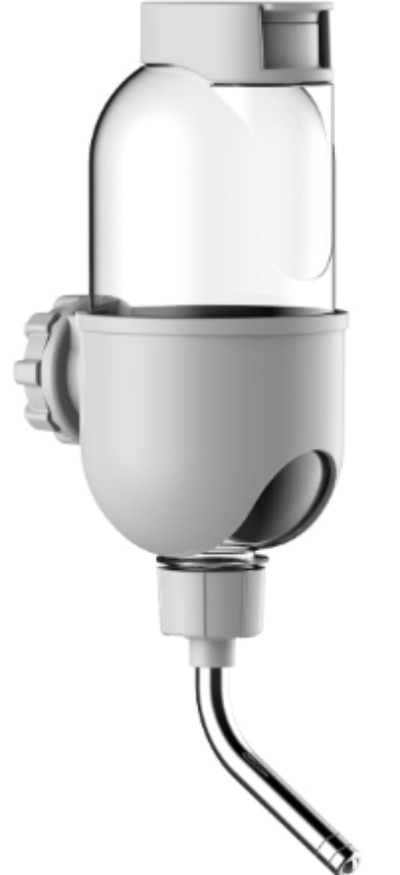
This gray 17-ounce water bottle is marketed as a non-drip dispenser for small animals. The listing names rabbits, bunnies, guinea pigs, chinchillas, ferrets, squirrels, and hedgehogs among the suitable users. It has a larger capacity than the first two bottles in this roundup, and it is designed to fit standard cage crates.
The gray color is more neutral than bright blue or white, which may suit owners who prefer a discreet look in the living room.
Best Use Cases
This bottle fits well for medium-sized rabbits and for owners who want a bit more water than a 15-ounce bottle provides. It also suits mixed-pet setups where several small animals drink from the same supply, as long as you monitor the water level carefully.
It can work in crate setups, travel crates, or temporary housing, but the best results come from a stable cage wall with enough room for the bottle to hang straight.
Key Features Explained Simply
The non-drip feature is the headline claim. In general, this means the nozzle is designed to stay closed when not in use, so water does not dribble out onto bedding or the cage floor. The 17-ounce capacity gives a longer gap between refills compared with smaller bottles.
The bottle is designed for easy installation on cage walls, using a standard mount that clips or hooks into place. The overall shape keeps the bottle from sticking out too far, which helps in tight cages.
Real-Life Usage Insight
Non-drip claims are only as good as the nozzle quality and the mounting angle. If the bottle hangs at a slight tilt, water may pool near the tip and create a small drip after the animal stops drinking. Level the bottle before filling, and wipe the nozzle dry after each refill to keep the area clean.
Many owners notice that a larger bottle needs a slightly stronger mount. A full 17-ounce bottle has more weight than a small one, so check the mount after the first day to make sure it has not shifted.
Pros and Cons
Pros
- 17-ounce capacity offers a longer time between refills
- Non-drip design helps keep bedding drier
- Neutral gray color blends into most home settings
- Fits standard cage crates and wall mounts
- Suitable for a wide range of small animals
Cons
- Non-drip performance depends on correct mounting angle
- Heavier when full, so the mount needs to be secure
- The broad list of suitable animals means you should check the bottle size against your specific pet’s needs
- Nozzle can be harder to reach for cleaning in some designs
Performance
Performance is solid for an everyday bottle of this size. The water flow is steady, and the nozzle does a good job of limiting drips when the bottle is level. The main limitation is the same as with any bottle: if the nozzle clogs with hay dust or food residue, flow drops quickly. Regular cleaning keeps it working well.
Ease of Use
Setup takes a few minutes. Hang the bottle, fill it, and check the nozzle height so your rabbit can reach it comfortably without stretching or standing on its back legs. Cleaning is manageable, but you should rinse the nozzle thoroughly every few days and do a deeper clean each week with a long brush or a bottle cleaning tool.
Value for Money
The gray bottle offers a good amount of water for a modest price. It is a practical option for owners who want more capacity without moving up to the larger bottles in this roundup. The value depends on whether the non-drip feature works well in your specific cage, so check the fit before committing.
4. Lixit All-Weather Rabbit Water Bottle (64 oz Widemouth Cage Water Bottle, White)
Product Description
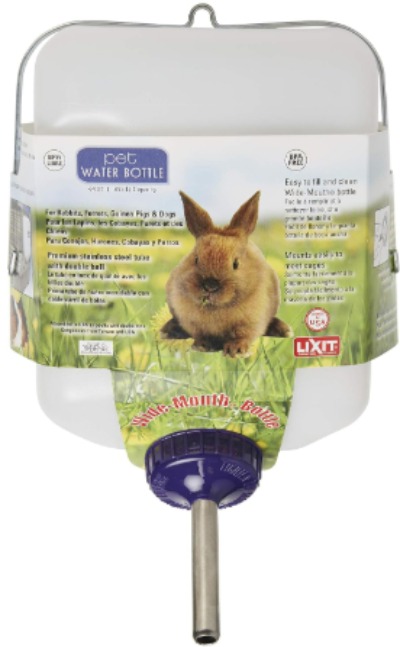
The Lixit All-Weather rabbit water bottle is a large 64-ounce widemouth bottle in white. Lixit is a well-known name in small animal and livestock water products, and the All-Weather line is built to handle a wider range of conditions, including outdoor use. The widemouth opening makes it easier to fill, scrub, and clean than a narrow bottle. The listing names rabbits, ferrets, guinea pigs, rats, and other small animals as suitable.
This is the biggest bottle in the roundup, and it is designed for owners who need a lot of water with minimal refilling.
Best Use Cases
This bottle suits large rabbits, groups of rabbits, and owners who want to go several days between refills in some setups. It is also a strong choice for outdoor hutches or sheltered runs where weather can change quickly. The durability and heavy-duty design help it handle temperature shifts better than lightweight plastic bottles.
It is not a great fit for small cages with limited wall space or for owners who want a compact bottle. The size and weight need a strong mount and enough room in the enclosure.
Key Features Explained Simply
The widemouth opening is the main practical feature. It lets you pour in water quickly and gives you room to scrub inside with a brush. Many owners find that a wide opening makes cleaning less of a chore, since you can reach the inside walls easily.
The All-Weather label suggests the bottle is built to resist harsher conditions, such as cold, heat, and sun exposure. The heavy-duty construction also helps the bottle stay intact under regular handling and daily use.
Real-Life Usage Insight
A 64-ounce bottle changes the rhythm of daily care. You fill it less often, which is great for busy schedules, but you need to check the nozzle and tube carefully. Larger reservoirs can sit longer between cleanings, so it is important to rinse the bottle thoroughly and let it dry before refilling.
Because the bottle is heavy when full, mount it on a sturdy surface. A loose mount can lead to spills or even a fall that cracks the bottle or injures your rabbit. Test the mount with a light push before you fill it to the top.
Pros and Cons
Pros
- Large 64-ounce capacity reduces how often you refill
- Widemouth opening makes filling and cleaning easier
- Built for durability and suitable for outdoor-style setups
- Sturdy design handles regular daily use well
- Good option for multiple rabbits or heavy drinkers
Cons
- Large size may not fit small cages
- Heavy when full, so it needs a strong mount
- Higher upfront cost than smaller bottles
- Widemouth design may allow more bedding or debris to enter if the bottle is not positioned well
Performance
Performance is strong for a bottle of this size. Water flows steadily, and the large reservoir keeps the supply consistent over a long period. The main performance factor is placement. If the bottle sits too low or too high, the rabbit may struggle, and if it is tilted, the nozzle can leak after use. Set it up carefully and check the level each day.
Ease of Use
Installation requires more effort than with smaller bottles. Use the heavy-duty mount, make sure it is firmly attached, and confirm the nozzle height suits your rabbit. Filling is quick thanks to the wide opening. Cleaning is easier than with a narrow bottle, although the larger size means more water and more residue to rinse out.
Value for Money
The Lixit All-Weather bottle is a solid investment for owners who need capacity and durability. It costs more than the smaller bottles in this roundup, but you may save time and money over the long run if you refill less often and replace the bottle less frequently. For a single small rabbit in a compact cage, it may be more bottle than you need.
5. Lixit 32 oz Weather Resistant Water Bottle with Heavy Duty Mount (Rabbits)
Product Description
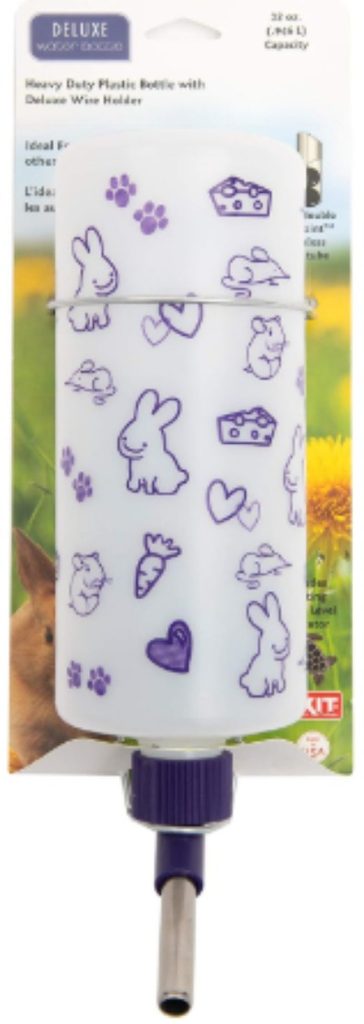
The Lixit 32-ounce weather resistant water bottle is a mid-sized option designed for rabbits and ferrets. It comes with a heavy-duty mount, which sets it apart from many smaller bottles that rely on simple clips. The weather-resistant design makes it suitable for indoor cages as well as sheltered outdoor areas, depending on the setup.
This bottle sits between the smaller 15- and 17-ounce bottles and the large 64-ounce model. It is a balanced choice for many single-rabbit households.
Best Use Cases
This bottle works well for average-sized rabbits, especially in cages where a heavy-duty mount is needed for stability. It is also a good match for ferret owners, since ferrets are active and can knock lighter bottles loose. The 32-ounce capacity gives enough water for most single rabbits, with refills needed about once a day in warm weather or with a large animal.
It is also a sensible upgrade for owners who found that smaller bottles ran dry too quickly or that clip-on mounts did not hold well.
Key Features Explained Simply
The heavy-duty mount is the most important feature for many owners. It holds the bottle more securely against the cage wall, which helps prevent wobbling and tipping. The weather-resistant design means the bottle can handle temperature changes better than basic plastic bottles, which can warp or crack in heat or cold.
The 32-ounce size is easy to manage. It holds enough water for a day or more for most single rabbits, but it is not so large that it becomes awkward to fill or clean.
Real-Life Usage Insight
In everyday use, the heavy-duty mount reduces the small annoyances that come with cheaper bottles. You are less likely to see the bottle swing when your rabbit bumps the cage or when you open the door. Stability also means the nozzle stays at the right height, which helps your rabbit drink without struggling.
Ferret owners should pay extra attention to the mount and cage setup. Ferrets can pull, chew, or push objects, so check the bottle daily to make sure nothing has come loose.
Pros and Cons
Pros
- Heavy-duty mount provides stable, secure placement
- 32-ounce capacity balances size and refill frequency
- Weather-resistant build handles temperature changes well
- Suitable for both indoor and sheltered outdoor setups
- Good option for active pets like ferrets
Cons
- Mount may require more time to install than basic clips
- Heavier than smaller bottles when full
- Not as large as the 64-ounce model for big groups
- Mount fit depends on cage wall thickness and material
Performance
Performance is consistent and dependable. The water flow is steady, and the mount keeps the bottle in place even when the cage gets busy. The weather-resistant build also helps the bottle maintain its shape over time, which can be an issue with cheaper plastic that softens or warps under heat.
As with any bottle, nozzle cleaning is the key to performance. Dried food or bedding dust can slow the flow, so check the nozzle at least a few times a week.
Ease of Use
Installation is a little more involved than with clip-on bottles. Tighten the heavy-duty mount firmly, hang the bottle, fill it, and test the stability before you walk away. Cleaning involves removing the bottle, rinsing it, and running a brush through the nozzle. The moderate size makes this routine easy to keep up with each week.
Value for Money
This Lixit bottle offers good value for owners who want reliability without moving up to the largest size. The heavy-duty mount and weather-resistant build add durability that many budget bottles lack. For a single rabbit or a ferret, it is a practical and balanced choice.
Comparison Insights
Once you look at all five bottles side by side, a few patterns become clear.
The first pattern is capacity. The Choco Nose at 10.2 ounces is the smallest, followed by the Vannon at 15 ounces, the gray bottle at 17 ounces, the Lixit 32-ounce model, and the Lixit All-Weather at 64 ounces. Capacity affects refill frequency, weight, and the space the bottle needs on the cage wall. Smaller bottles suit small pets and tight spaces, while larger ones suit big rabbits and longer gaps between refills.
The second pattern is mounting. Some bottles use simple clips, while the Lixit models use heavier-duty mounts. A clip works well for light bottles on thick bars, but a heavier bottle needs a firmer hold. If your cage has thin wire or uneven bars, a heavy-duty mount is usually the safer choice.
The third pattern is durability. The Lixit bottles stand out for their sturdier construction and weather-resistant design. These qualities matter most for outdoor setups or for owners who want a bottle that will last through many seasons of daily use. Budget bottles can work well indoors, but they may show wear sooner under heavy use.
The fourth pattern is cleaning. Widemouth designs, like the Lixit All-Weather, are easier to scrub than narrow-neck bottles. Top-fill designs, like the Vannon, make refilling convenient, but they still need regular rinsing inside. Small nozzles, such as those on the Choco Nose, can be the hardest part to clean, so a thin brush is a worthwhile purchase.
Finally, there is the question of who each bottle fits best. The Choco Nose suits small pets and backup use. The Vannon fits small to medium rabbits who need a moderate supply. The gray 17-ounce bottle suits medium rabbits and mixed-pet homes. The Lixit 32-ounce model fits average rabbits and ferrets who need a stable mount. The Lixit All-Weather is the choice for large rabbits, groups, and outdoor-style setups.
Buying Guide: What to Look For in a Rabbit Water Bottle
A good rabbit water bottle does more than hold water. It needs to deliver a steady supply, stay clean, stay in place, and fit your enclosure. Here are the main factors to think through before you buy.
Size and Capacity
Start with your rabbit’s size and drinking habits. A small dwarf breed may do well with a 10- to 15-ounce bottle, while a large breed may need 32 ounces or more. Consider the weather too. Hot days and heavy eaters drink more, so a slightly larger bottle gives you a margin of safety. Remember that a full bottle is heavy, so the mount must be able to hold the total weight.
Nozzle Design and Height
The nozzle is the part your rabbit uses every day, so it deserves close attention. Look for a nozzle that is easy to reach and comfortable for your rabbit to use. The tip should sit at about the height of your rabbit’s head when it is sitting normally. If the nozzle sits too high, the rabbit may stretch or stand awkwardly. If it sits too low, bedding and droppings are more likely to get into the spout.
Also consider how easy the nozzle is to clean. Some nozzles pull apart, and others are fixed. A nozzle you can reach with a brush makes maintenance much simpler.
Leak Resistance
Many bottles claim to be leak-proof or non-drip. In practice, leak resistance depends on how well the nozzle seals when it is not in use and how level the bottle hangs. Even a good nozzle can drip if the bottle is tilted. Check the bottle after the first few refills to see whether any water collects under the nozzle.
Mounting Method
Mounts vary a lot. Clip-style mounts are quick to install and work well on flat bars, but they can slip on thin or uneven wire. Heavy-duty mounts take more time to set up, but they hold larger bottles more securely. Measure your cage wall thickness before you buy, and make sure the mount fits your enclosure.
Material and Build Quality
Plastic is the most common material for rabbit water bottles, and many good options are made from it. Look for clear information about the material, such as BPA-free labeling, and check whether the bottle is designed to handle temperature changes. Sturdy construction matters more for outdoor setups and for owners who want a bottle that lasts for years.
Ease of Cleaning
Cleaning is where many owners run into trouble. A bottle that is hard to rinse, scrub, or dry can grow residue quickly. Widemouth designs are easier to clean, and simple nozzles are easier to clear. Factor cleaning time into your decision, because you will repeat this task often.
Cage Fit
Measure the space where the bottle will go. Check the height from the cage floor, the distance from the wall, and whether the door or other accessories will get in the way. A bottle that sits too close to a door may be hard to reach, and one that sticks out too far may get bumped by your rabbit.
Who Should Buy These Products
Different owners have different needs, so here is a quick guide to who might benefit most from each bottle.
If you have a small or dwarf rabbit, a travel crate, or a second small pet, the Choco Nose is a practical choice. Its compact size and nozzle design make it a good fit for tight spaces and temporary setups.
If you want a bottle that is easy to fill and manage, the Vannon top-fill bottle makes sense. It suits owners who refill often and want a simple, moderate-capacity option for a small to medium rabbit.
If you have a medium-sized rabbit or a mixed group of small pets, the gray 17-ounce bottle offers a good balance of capacity and price. It works well for everyday use as long as the mount fits your cage and the nozzle is kept clean.
If you own a larger rabbit, a ferret, or an active pet that might knock a bottle loose, the Lixit 32-ounce model with its heavy-duty mount is worth considering. It offers stability and durability without the bulk of the largest bottle.
If you have several rabbits, a large breed, or an outdoor hutch, the Lixit All-Weather 64-ounce bottle is the most capable option in this roundup. It holds enough water for a longer period and handles tough conditions well.
Common Mistakes to Avoid
Even a great bottle can cause problems if it is used incorrectly. These are some of the most common mistakes that rabbit owners make.
Skipping regular cleaning. This is the biggest mistake. Water sitting in a bottle for a long time can grow bacteria and algae, and residue can clog the nozzle. Rinse the bottle and nozzle at least every few days, and do a deeper clean weekly.
Setting the nozzle at the wrong height. A nozzle that is too high or too low makes drinking uncomfortable. Watch your rabbit drink for a minute after setup. If it stretches, stands awkwardly, or struggles, adjust the height.
Ignoring the mount. A loose mount can lead to a fallen bottle, spilled water, or an injured rabbit. Check the mount every few days, especially with heavier bottles or active pets.
Assuming the bottle is enough on its own. Some rabbits do not use bottles well, especially older rabbits or those who have never learned to drink from one. Many owners keep a heavy bowl as a backup until they are sure the rabbit is drinking enough. Watch your rabbit’s water intake and check the bottle daily.
Filling the bottle too full before testing it. A bottle that is heavy and unstable can fall and cause a mess. Test the mount with the bottle half full first, then fill it completely once you are confident it is secure.
Forgetting to check the water level. Bottles can run dry quickly in hot weather or when a rabbit drinks heavily. A quick daily glance at the level is a simple habit that prevents dehydration.
Using the wrong size for your rabbit. A bottle that is too small means constant refilling, while one that is too large can be hard to reach or too heavy for the cage. Match the size to your rabbit and setup.
Caring for Your Rabbit’s Water Supply
Beyond choosing a bottle, a few everyday habits help keep your rabbit hydrated and healthy. Change the water every day, even if the bottle looks full. Fresh water tastes better and stays cleaner. Keep an eye on how much your rabbit drinks, since a sudden change can signal a health issue. If your rabbit drinks much more or much less than usual, speak with a veterinarian who knows rabbits.
Pair the bottle with a healthy diet. Good hay should make up most of your rabbit’s food, and fresh leafy greens add moisture and variety. Some rabbits drink less when they get plenty of fresh greens, so the mix of food and water matters.
Finally, keep the area around the bottle clean. Sweep bedding away from the nozzle, and check for droppings or chewed material that can block the spout. A tidy cage makes it easier for your rabbit to drink and easier for you to spot problems early.
Final Verdict
There is no single best rabbit water bottle for every home, because rabbits and cages vary so much. That said, a few clear winners stand out for specific needs.
The Lixit All-Weather 64-ounce bottle is the strongest choice for large rabbits, groups, and outdoor setups. Its size, durability, and widemouth design make it the most capable option in this roundup, although it needs a strong mount and enough space.
The Lixit 32-ounce weather-resistant bottle is a balanced pick for average rabbits and ferrets. Its heavy-duty mount gives it an advantage in stability, and its moderate size keeps daily care manageable.
The gray 17-ounce bottle offers good value for medium rabbits and mixed-pet homes. It gives you a generous amount of water at a modest price, as long as the mount and nozzle fit your cage well.
The Vannon 15-ounce top-fill bottle is a practical choice for owners who want easy refilling and a moderate supply. It works well for small to medium rabbits and suits households that refill often.
The Choco Nose 10.2-ounce bottle is best for small pets, dwarf rabbits, and backup use. It is compact and affordable, but it needs frequent refills and is not ideal for larger animals.
Whichever bottle you choose, the most important steps are matching the size to your rabbit, setting the nozzle at a comfortable height, mounting it securely, and cleaning it regularly. A simple, consistent routine will do more for your rabbit’s health than any single feature on the box.
Frequently Asked Questions
Is a water bottle better than a bowl for rabbits?
Many owners find that bottles keep water cleaner because the nozzle stays off the floor. Bowls are easy to monitor, though, and some rabbits prefer them. Offering both for a while can help you see which your rabbit uses more.
How often should I clean a rabbit water bottle?
Rinse the bottle and nozzle every few days, and do a deeper cleaning each week. Use warm water and a brush, and let the bottle dry fully before refilling.
How do I know if my rabbit is drinking enough?
Check the water level daily and watch for signs your rabbit is drinking regularly. Changes in droppings, energy, or appetite can also signal a problem. A veterinarian can advise you on what a healthy amount looks like for your specific rabbit.
Can a rabbit water bottle be used outdoors?
Some bottles, such as the Lixit All-Weather and the Lixit 32-ounce model, are designed to handle outdoor conditions better than basic plastic. Even so, check the water often in hot or freezing weather, and protect the bottle from direct sun and harsh wind where possible.
What should I do if my rabbit does not use the bottle?
Make sure the nozzle is at the right height and clean. Some rabbits take time to learn how to use a bottle. Offer a bowl as well until you see your rabbit drinking regularly from the bottle. If your rabbit still does not drink, speak with a veterinarian.