How to Choose a Litter Box?
If you have a cat, you know that a good litter box makes all the difference. Your feline friend spends time in there every single day, and the right setup keeps your home fresh and keeps your cat happy. But with so many options out there, how do you pick the best one? Let’s break down everything you need to know to find the perfect litter box for your cat.
Why the Right Litter Box Matters
Before we dive into the options, let’s talk about why this matters. A litter box is not just a box. It’s a bathroom, a comfort zone, and honestly, a reflection of how much you care about your pet’s well-being. Cats are picky creatures. If they don’t like their litter box, they’ll let you know by doing their business somewhere else in your home. Nobody wants that.
The right litter box does several things at once. It gives your cat a clean, safe space to do what cats do. It keeps odors contained. It makes cleaning easier for you. And it lasts long enough to be worth your money. When you get all these things right, both you and your cat stay happy.
Size and Space Considerations
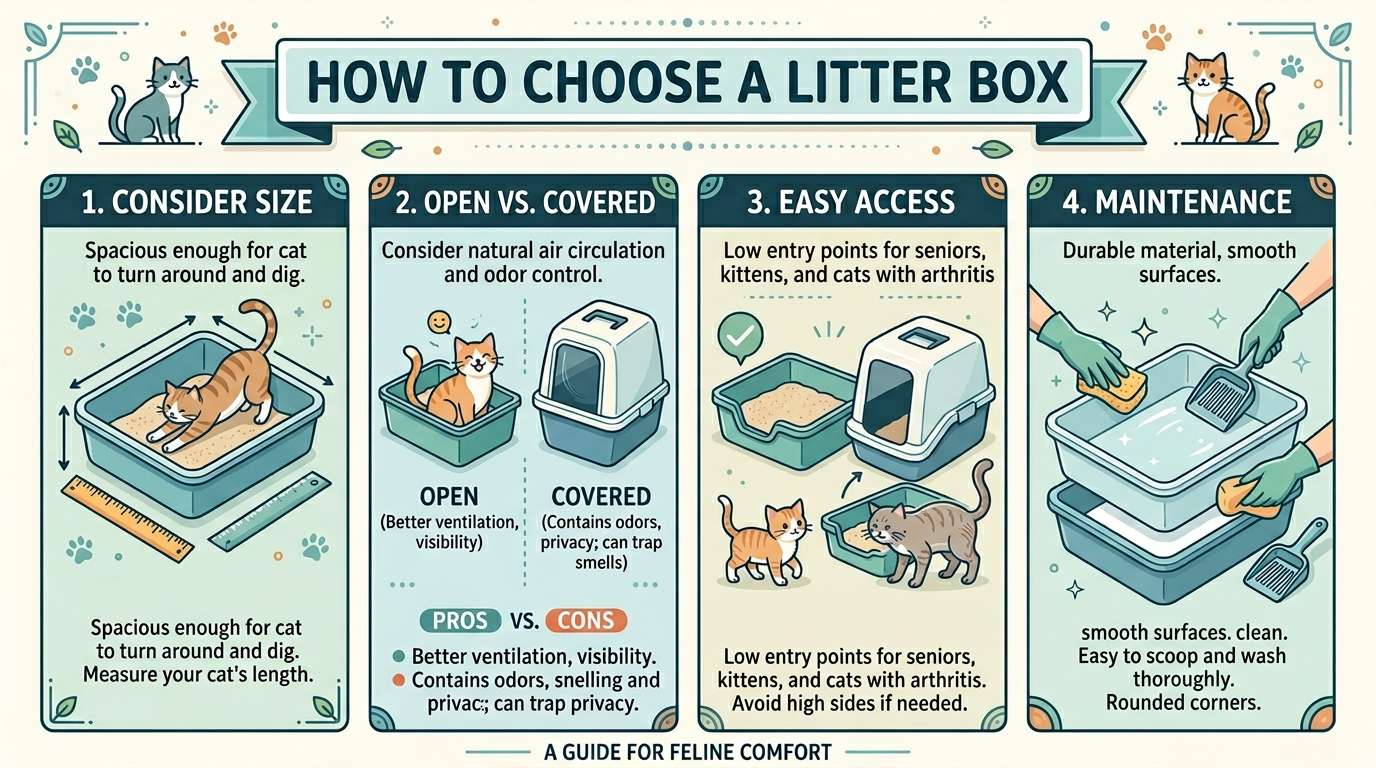
Size is one of the first things to think about when you start looking at litter boxes. You need something big enough for your cat to move around in comfortably. A good rule of thumb is to get a box that’s at least one and a half times the length of your cat’s body. This sounds simple, but many people buy boxes that are way too small.
Why does size matter so much? Cats like to have space to dig and turn around. If the box is cramped, they get frustrated. They might avoid it or refuse to use it. That leads to accidents outside the box, which is the last thing you want. Even if your cat is small, go a bit bigger rather than smaller.
Think about how many cats you have too. For multiple cats, the rule changes. You should have one litter box per cat, plus one extra. So if you have two cats, you really need three boxes. Sounds like a lot, but it keeps peace in the household and reduces stress for everyone.
Space in your home matters too. You need to figure out where you’ll put the box. A corner or against a wall works well. Make sure the location is away from their food and water bowls. Cats are clean animals and don’t like to use the bathroom near where they eat. Find a quiet, low-traffic area where your cat feels safe and secure.
Open vs. Covered Litter Boxes
Now let’s talk about the two main styles: open boxes and covered boxes. Both have fans, and both have drawbacks. Your job is to figure out which one fits your life and your cat’s personality.
Open litter boxes are basic and simple. They look like a large, shallow pan. You can see inside easily, which makes cleaning and monitoring your cat’s health easier. You can spot signs of diarrhea or other issues right away. Open boxes are also cheaper and take up less room. They’re easy to clean because you have full access to every corner.
The downside? Litter kicks out everywhere. Cats dig, and when they dig, litter flies. You’ll find litter on the floor around the box, in hallways, and places you didn’t expect. Some cats also feel exposed in an open box, which can make them anxious about using it.
Covered litter boxes are like little houses for your cat. They have a roof or walls that contain the mess. They trap odors inside, which means your home smells better. If you have guests over, a covered box is more discreet. It also gives your cat a sense of privacy and security.
The catch? Covered boxes limit ventilation. Moisture and odors build up inside. Cleaning is harder because you have to get in there and reach all the corners. Your cat also has nowhere to escape if they feel trapped, which can stress them out. Some cats refuse to use covered boxes for this reason.
Here’s the truth: there’s no perfect answer. You might need to try both to see what your cat prefers. Some cats love the privacy of a covered box. Others feel safer in an open space where they can see what’s happening around them.
Litter Box Types and Designs
Beyond open versus covered, there are other designs to know about.
Rectangular boxes are the standard. They’re usually plastic or ceramic, affordable, and do the job. They come in all sizes, so you can find one that fits your space and your cat.
Corner boxes fit into tight spaces. If you have a small apartment or limited room, these save space. They’re usually triangular and designed to nestle into a corner. Your cat gets the bathroom she needs without eating up square footage.
Drawer-style boxes pull out like a drawer under furniture. Some are built into cabinets or under litter box benches. They hide the box completely, which looks nice in your home. The trade-off is that they’re more expensive and harder to clean.
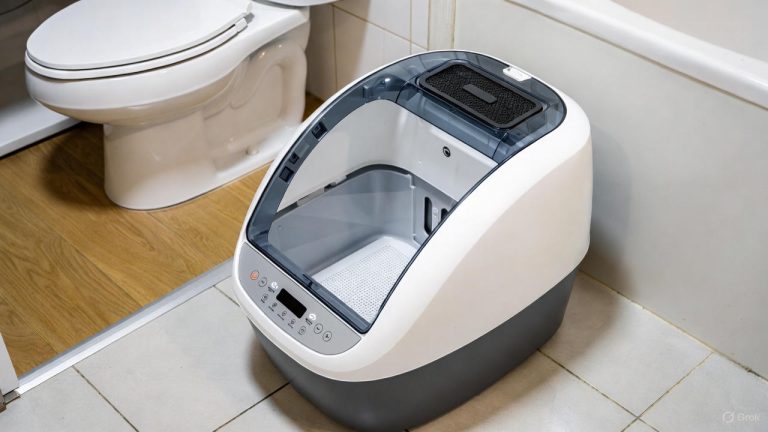
Automatic litter boxes are fancy machines that scoop waste on their own. They save you time and effort. You don’t have to scoop every day. But they’re expensive, they can break down, and many cats are spooked by them at first. They also need electricity and regular maintenance. If you’re willing to spend the money and your cat isn’t easily scared, these can be great.
Top-entry boxes have an opening on the top instead of the front. Your cat jumps in from above. These contain litter really well and look sleek. However, cats with mobility issues, elderly cats, and kittens struggle with top-entry boxes. If your cat has arthritis or joint problems, this style isn’t for you.
High-sided boxes are deeper than standard boxes. They prevent litter from spilling out as easily. They work well for cats that dig a lot or for long-haired cats whose fur kicks up litter. The downside is they can be hard for senior cats or tiny kittens to get in and out of.
Material Choices
What is your litter box made of? This affects durability, ease of cleaning, and price.
Plastic is the most common and most affordable choice. It’s lightweight, easy to wash, and comes in tons of colors and styles. The downside is that plastic gets scratched over time, and bacteria can hide in those scratches. Plastic also stains and can hold onto odors after a while.
Ceramic is heavier and more durable than plastic. It cleans really well and doesn’t stain or smell as easily. Ceramic boxes look nicer too, which is why some people prefer them. They cost more money, though, and they can break if you drop them.
Stainless steel is the high-end option. It’s super durable, cleans like a dream, and never holds smells. You’re paying a premium price for that quality, but the box lasts for years and years.
Fabric inserts are newer. Some covered boxes come with washable fabric liners that catch litter. This keeps the box itself clean. The fabric needs regular washing, so it adds a cleaning step. It works well if you’re willing to put in that effort.
Litter Box Features to Look For
Beyond the basics, certain features make life easier.
High walls or splash guards stop urine from splashing out onto your floor. This matters a lot if you have a male cat or a cat that stands while urinating. Splash guards are simple additions that save you from replacing floors.
Ramps or steps help older cats, kittens, and cats with mobility issues. They make getting in and out easier and less painful. If your cat is young and agile, you don’t need this. But if your cat is older or dealing with joint problems, it’s worth the investment.
Odor control technology is built into some boxes. Some have charcoal filters that catch smells. Others have baking soda layers. These help between your daily scoops, keeping your home fresher.
Non-stick surfaces make scooping easier. Waste doesn’t stick to the sides and bottom as much. This saves time and frustration during cleaning.
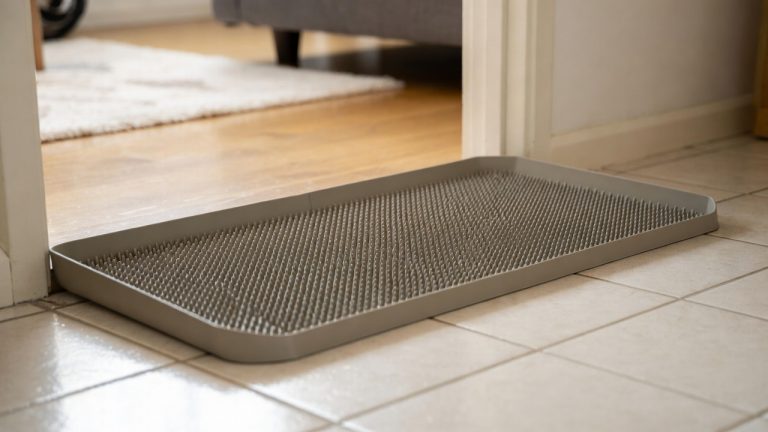
Litter trapping mats sit under your litter box. They have a textured surface that removes litter from your cat’s paws as they leave. This stops litter from spreading across your floors. They’re inexpensive and really helpful if you have a cat that kicks litter everywhere.
Litter Box Placement
Where you put the box matters as much as what you buy. Your cat’s bathroom should be in a quiet, low-traffic spot. A bathroom, laundry room, or spare bedroom works great. Keep it away from noisy appliances and busy areas of your home.
Distance from food and water is crucial. Cats naturally want to separate their eating area from their bathroom. Place the box at least a few feet away from food bowls. If your space is tiny, that might not be possible. In that case, at least put the box in a different room if you can.
Accessibility is key. Your cat needs easy access to the box at all times. Don’t block it with heavy items or put it somewhere your cat has to navigate obstacles to reach. If you have multiple cats, spread the boxes throughout your home. One on each floor of a multi-level house is smart.
Lighting helps your cat find the box and helps you monitor it. A well-lit space is better than a dark corner. Your cat can see where to go, and you can tell when it needs cleaning.
Ventilation keeps odors down and air fresh. Bathrooms with exhaust fans work well. A corner with good air flow is fine too. Just avoid stuffing the box into a tight, airless closet where smells get trapped.
Number of Boxes You Really Need
Let’s be real about this. The golden rule is one box per cat, plus one extra. So if you have one cat, ideally you have two boxes. If you have three cats, get four boxes.
Why? Cats can be territorial about litter boxes. One cat might camp out by the box and prevent other cats from using it. Having extra boxes means no cat gets stuck without access. It also reduces stress and keeps the peace in your home.
If space is a huge issue, go for at least one box per cat, and make sure each box is very clean. Scoop multiple times daily. This isn’t ideal, but it’s better than not having enough boxes.
Budget Considerations
How much should you spend? The answer depends on your situation.
Budget boxes run from fifteen to thirty dollars. These are basic plastic boxes that do the job. They don’t have fancy features, but they work fine for most cats.
Mid-range boxes go from thirty to one hundred dollars. You get better materials, more sizes, and some features like splash guards or odor control.
Premium boxes and automatic systems run from one hundred to over five hundred dollars. You’re paying for durability, design, and technology.
Here’s my honest take: you don’t need to spend a fortune to make your cat happy. A clean, well-maintained basic box beats a fancy, neglected box every single time. Spend what makes sense for your budget. Just promise yourself you’ll scoop regularly, whatever box you choose.
Common Mistakes to Avoid
People make mistakes when they pick litter boxes. Here’s what to watch out for.
Don’t buy a box that’s too small just because it’s cheaper or fits in a tight space. Your cat will hate it, and you’ll regret the purchase. Go bigger.
Don’t assume your cat will like what you like. You might love a beautiful covered box, but your cat might be claustrophobic and refuse to use it. Think about your cat’s personality and comfort, not just your home’s appearance.
Don’t neglect cleaning. Even the best litter box becomes a problem if it’s not kept clean. Scoop daily, replace litter regularly, and deep clean the box weekly.
Don’t put the box in a bad location. A pretty corner that’s noisy or next to the washing machine won’t work. Your cat needs quiet and peace.
Don’t ignore signs that your current box isn’t working. If your cat is peeing or pooping outside the box, something’s wrong. Maybe it’s the box, maybe it’s the location, maybe it needs more frequent cleaning. Figure out the problem and fix it.
Testing Different Options
Here’s a practical approach: start with a basic, good-sized open box from a trusted brand. Keep it clean and in a good location. See how your cat responds.
If it works great, you’re done. You found your answer.
If your cat seems stressed or litter is everywhere, try adjusting. Maybe move the box to a quieter spot. Maybe try a covered box. Maybe get a second box. Change one thing at a time so you know what makes a difference.
If litter mess is the main issue, try a high-sided or corner box. If your cat seems anxious, try a more open design.
This trial-and-error approach takes time, but it leads to the right solution for your specific cat and home.
Cleaning and Maintenance
Whatever box you choose, maintenance keeps it working well.
Scoop daily. Remove clumps and solid waste every single day. This keeps the box sanitary and fresh.
Replace litter regularly. Don’t just keep adding new litter on top of old litter. Dump everything out weekly and start fresh. This prevents odor buildup.
Deep clean the box monthly. Wash it with mild soap and water. This removes bacteria and odor that regular scooping misses.
For covered boxes, wash the litter box liners if they’re removable. Check filters and replace them as needed.
Watch for signs of damage. Scratches, stains, and cracks in plastic boxes give bacteria places to hide. When your box gets really worn, replace it.
Final Thoughts
Finding the right litter box comes down to a few simple things. Get something big enough. Find a quiet location away from food. Keep it clean. Watch your cat’s behavior and adjust as needed.
Your cat’s happiness and health matter. A good litter box is one of the easiest ways to support both. Take your time, try different options if you need to, and remember that what works for someone else’s cat might not work for yours. Trust your cat’s feedback and keep adjusting until you get it right.
A clean, comfortable litter box keeps your cat healthy, keeps your home fresh, and keeps your stress level down. That’s a win for everyone. Now go find the perfect box for your furry friend.
Hi, I’m Mary, the founder of PetGadgetPro.com. I’m a passionate pet lover with a special place in my heart for dogs and cats. I share practical advice and honest insights on pet gear to help pet parents make better choices. My dedicated research team studies products in depth, and our writers create reviews using trusted, authentic sources—so you can feel confident choosing the best for your pets.