Flat collar vs Martingale collar
Finding the right collar for your furry friend is a big deal. It’s not just about looks; it’s about comfort, safety, and making your walks enjoyable. There are many kinds of collars out there, but two popular ones often come up: the flat collar and the martingale collar. Both have their uses, and knowing the differences helps you pick the best fit for your dog.
Let’s dive into what makes each of these collars special, how they work, and when you might want to use one over the other. We’ll break it down simply so you can feel good about your choice.
Getting to Know the Flat Collar
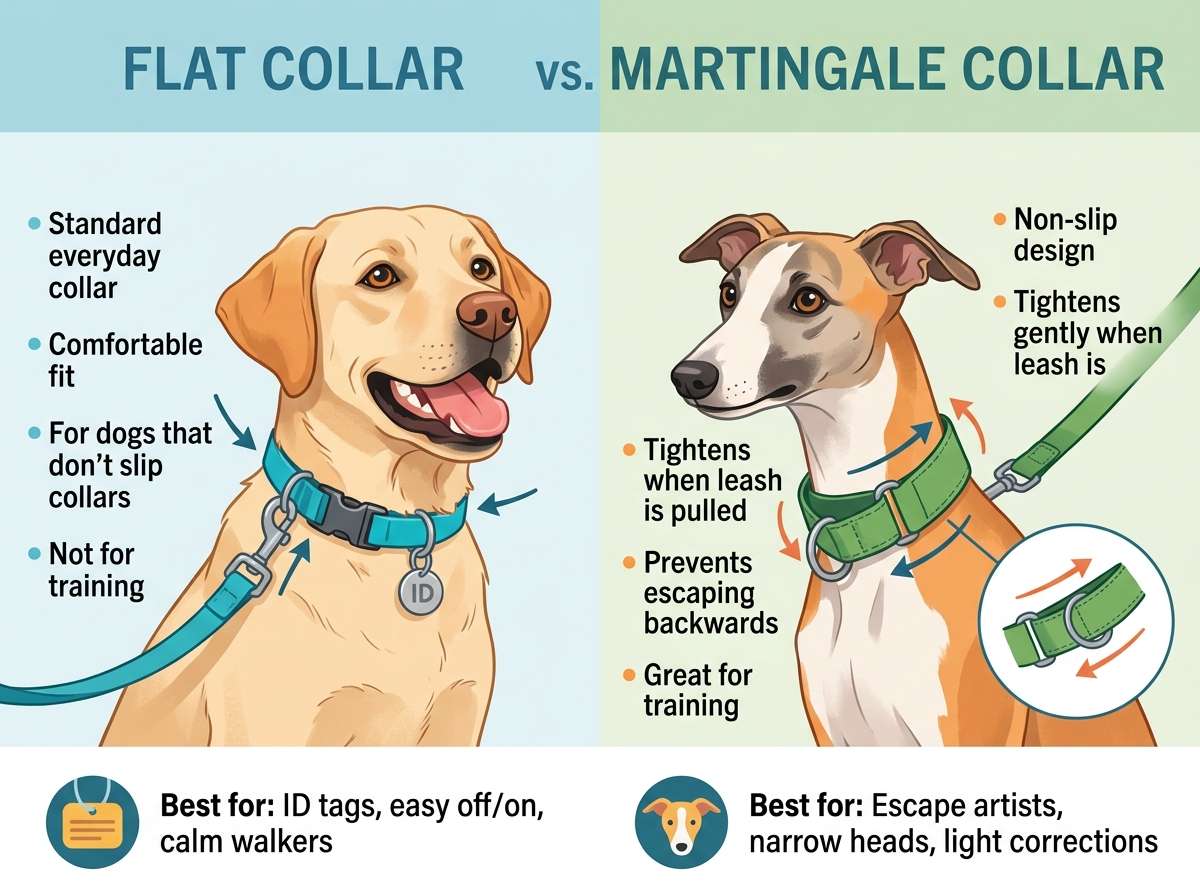
The flat collar is probably what you think of when you hear the word “dog collar.” It’s a simple loop of material, often nylon, leather, or fabric, that goes around your dog’s neck. It has a buckle or clasp to keep it secure and a D-ring where you attach a leash and identification tags.
How a Flat Collar Works
When your dog wears a flat collar, it sits snugly but comfortably around their neck. The collar doesn’t get tighter when there’s tension. So, if your dog pulls on the leash, the pressure stays spread out across their neck. This is why it’s super important for a flat collar to fit just right. If it’s too loose, your dog might slip out. If it’s too tight, it can be uncomfortable or even hurt them.
To check for a good fit, you should be able to slide two fingers comfortably between the collar and your dog’s neck. This ensures it’s not too tight for breathing or movement, but also not so loose that it can slide over their head.
Everyday Uses for Flat Collars
Flat collars are awesome for many dogs and situations.
For Home and ID
Most dogs wear a flat collar almost all the time. It’s a convenient place to keep their ID tags, which should always have your contact information. This is vital in case your dog ever gets lost. It’s a simple way for someone to recognize them as belonging to a family and to help them get back home safely.
For Calm Walkers
If your dog walks nicely on a leash and doesn’t try to back out of their collar, a flat collar works perfectly for walks. It offers a gentle connection to the leash without any extra features. Many well-behaved dogs enjoy walks with just this basic type of collar.
Learning Good Manners
When you’re teaching a puppy or a new dog good leash manners, a flat collar can be a starting point. It helps them get used to the feeling of a collar and a leash. You can then use positive reinforcement to teach them to walk without pulling.
Advantages of the Flat Collar
Flat collars have some clear upsides. They are widely available and come in a huge variety of styles, colors, and materials. You can find one to match any dog’s personality! They are also generally quite affordable. Since they don’t tighten, they are a very gentle option for dogs who don’t pull excessively. Their simplicity is a big part of their appeal.
Potential Downsides of the Flat Collar
While great, flat collars aren’t perfect for every dog.
Escape Artists
Some dogs are really good at slipping out of a flat collar, especially if they get scared or excited and pull backward. Their neck might be wider than their head, allowing them to wriggle free. This can be super dangerous, especially near busy roads or unfamiliar places.
Pulling Challenges
If your dog is a strong puller, a flat collar might not give you enough control. Dogs can learn to ignore the pressure on their necks, making walks frustrating for both of you. Serious pulling can also put strain on their neck and throat over time.
Choking Risk
If a fit isn’t right, or if a dog gets caught on something, there’s a small risk of the collar snagging and causing a choking hazard. This is why it’s important to monitor collars, especially when dogs are unsupervised or playing roughly.
Getting to Know the Martingale Collar
A martingale collar looks a bit different from a flat collar. It’s also a loop of material, but it has a special extra loop built into it. This smaller loop is often made of chain or fabric, and it’s where the leash attaches. When your dog pulls, this small loop tightens the main collar loop evenly around their neck.
How a Martingale Collar Works
Think of it like this: the main part of the martingale collar sits comfortably around your dog’s neck, much like a flat collar. But if your dog tries to back out or pulls hard, the smaller loop tightens the main collar just enough to keep it from slipping over their head. It stops tightening once it’s snug around their neck, preventing too much pressure. It’s designed to give a gentle but firm cue, letting your dog know they are pulling, without choking them.
Because of this design, many people call them “limited-slip” collars. They tighten just enough to prevent escape and give a gentle reminder, then loosen again when the pressure stops.
History of the Martingale Collar
Martingale collars were first used for sighthounds like Greyhounds and Whippets. These dogs have necks that are often wider than their heads, making it easy for them to slip out of a regular flat collar. The martingale design was a clever solution to keep these speedy dogs secure on their leashes. Over time, people realized their benefits for many other dog breeds too.
When to Consider a Martingale Collar
Martingale collars are fantastic for a number of reasons and many types of dogs.
For Escape Artists
If your dog is a master of slipping out of collars, a martingale is a game-changer. The way it snugs up when they pull backward makes it much harder for them to escape. This gives peace of mind during walks and makes them a safer choice for dogs who know how to Houdini their way out of a flat collar.
For Breeds with Unique Neck Shapes
As mentioned, sighthounds greatly benefit from martingale collars. Breeds like Greyhounds, Whippets, Salukis, and even some Bulldog types or Alaskan Malamutes, have heads that are smaller than their necks. A martingale offers a secure fit for these anatomies.
For Dogs Who Pull a Bit
While not a magic solution for heavy pullers, a martingale can give you a bit more control than a flat collar. The mild, even pressure around their neck can be a gentle reminder to walk nicely. It’s a gentler alternative to collars that use more direct pressure, like chokers.
For Training Purposes
When you’re working on leash manners, a martingale can be a helpful training tool. The limited tightening gives a clear signal to your dog when they are pulling, without causing discomfort or harm. It allows for a quick, precise correction that lessens as soon as the dog stops pulling.
Advantages of the Martingale Collar
Martingale collars offer great safety and control. They significantly reduce the risk of your dog escaping. They distribute pressure more evenly around the neck compared to some other training collars, decreasing the chance of injury. They come in many attractive styles and materials, just like flat collars. They give you extra peace of mind for walks with dogs who might otherwise be difficult to manage.
Potential Downsides of the Martingale Collar
Martingale collars have very few downsides, but they are important to note.
Proper Fit is Key
Just like flat collars, a martingale must fit correctly. If it’s too loose, it won’t tighten enough to prevent escape. If it’s too tight, it could put uncomfortable pressure on your dog’s neck. You will want to make sure you can still slide two fingers under the tightened collar.
Not for Constant Wear
It’s generally not recommended for dogs to wear a martingale collar around the house all the time, especially if the loop is made of chain. The loose loop can get caught on furniture or other objects, posing a choking risk. These collars are best used specifically for walks and training sessions.
Can Still Pull
While they offer more control than flat collars, a martingale collar won’t magically stop a dog from pulling if they are determined. It’s a tool, and training is always the most effective way to teach good leash manners. Serious pullers might require other training methods or the guidance of a professional.
Making Your Decision: Flat Collar or Martingale Collar?
Now that we’ve looked at both types closely, how do you pick? It really comes down to your dog’s individual needs, their behavior on a leash, and their physical build.
Factors to Think About
Your Dog’s Breed and Neck Shape
If you have a sighthound or a dog with a narrow head and thick neck, a martingale is probably the safer bet for walks. For most other breeds with more proportional heads and necks, a flat collar might be perfectly fine, especially if they are well-behaved.
Your Dog’s Leash Manners
Does your dog walk politely by your side, hardly ever pulling? A flat collar might be all you need. Does your dog sometimes pull, or do they try to slip out of their collar when excited or scared? A martingale collar could be a much better option for safety and control.
Your Comfort Level
Consider what makes you feel most confident and secure during walks. If you’re constantly worried your dog will slip out of a flat collar, that stress takes away from the joy of walks. A martingale offers peace of mind in these situations.
Supervision
Will your dog wear the collar all the time? A flat collar is generally safe for constant wear with ID tags. A martingale, especially one with a chain, is usually best saved for supervised walks and training.
When a flat collar is likely the best choice:
- Your dog has excellent leash manners and never pulls or tries to back out of their collar.
- Your dog’s head is wider than their neck, making escape less likely.
- You want a collar for constant ID tag wear around the house.
- You prefer the simplest, most basic collar option.
- Your dog is comfortable and happy with a flat collar.
When a martingale collar is likely the best choice:
- Your dog is a known escape artist who can slip out of flat collars.
- Your dog has a narrow head and a thick neck (like many sighthounds).
- Your dog occasionally pulls on the leash, and you want a gentle reminder.
- You are actively training your dog on leash manners and need a bit more control.
- You want added security and peace of mind during walks.
Proper Fit for Any Collar
No matter which collar you choose, proper fit is everything. A poorly fitted collar is either uncomfortable, ineffective, or dangerous.
For Flat Collars
Make sure you can fit two fingers snugly between the collar and your dog’s neck. It should sit high up on the neck, not down on the shoulders. It should be tight enough that it can’t slip over their head, but loose enough that it doesn’t chafe or restrict breathing.
For Martingale Collars
With the collar on your dog, pull the small loop (where the leash attaches) until the main loop tightens. When it’s tightened, you should still be able to slide two fingers between the main part of the collar and your dog’s neck. This ensures it won’t choke them. When the collar is not tight, the two metal or fabric slides of the small loop should be at least two to three fingers’ width apart. This spacing ensures there is enough room for the collar to tighten when needed. If they touch, the collar is too big.
Other Considerations
Materials
Both flat and martingale collars come in various materials, each with its own pros and cons.
Nylon
Nylon is very common, affordable, and easy to clean. It’s durable and comes in countless colors and patterns. It’s a great all-around choice.
Leather
Leather collars look classic and become softer and more comfortable over time. They are often more expensive but can last a long time if cared for properly. They need a bit more care to keep them in good shape.
Fabric/Reflective
Some collars are made of soft fabrics or have reflective stitching for nighttime visibility. These can be very comfortable and add an extra layer of safety.
Maintenance
It’s a good idea to regularly check your dog’s collar for wear and tear. Look for fraying, loose stitching, or weak buckles. Clean the collar often, especially if your dog loves to roll in dirt or swim. A clean collar is a comfortable collar and lasts longer.
What About Harnesses?
It’s worth mentioning harnesses as another tool for walking your dog. A harness goes around your dog’s chest and back, taking pressure off their neck completely. These are often great for dogs with neck injuries, very strong pullers, or brachycephalic breeds (flat-faced dogs) who might have breathing issues. A harness can be used instead of or in addition to a collar, depending on your dog’s needs. Many people use a collar for ID tags and a harness for walks.
Final Thoughts
Picking between a flat collar and a martingale collar doesn’t have to be confusing. By thinking about your dog’s unique traits and habits, you can make an informed choice. The goal is always to keep your dog safe, comfortable, and happy during all your adventures together.
Remember, a collar is a tool. No collar can replace good training and a strong bond with your dog. Whichever you choose, ensure it fits well, is in good condition, and helps you and your dog enjoy happy, safe walks. Happy tail wags await!
Is a martingale collar considered harsh?
No, when fitted correctly, a martingale collar is generally not considered harsh. It’s designed to provide gentle, limited tightening pressure around the neck, which is a soft reminder for your dog and prevents them from slipping out. It’s less harsh than traditional choke chains or prong collars, which exert more intense pressure or discomfort.
Can a dog wear a martingale collar all the time?
It’s generally recommended that dogs do not wear martingale collars unsupervised, especially if they have a chain loop. The extra loop can get caught on furniture, crates, or other objects, posing a choking hazard. Flat collars are usually better for constant wear for identification purposes.
How do I know if my dog’s collar is too tight?
For both flat and martingale collars (when tightened), you should be able to comfortably slide two fingers between the collar and your dog’s neck. If you can’t, it’s too tight. If you can slide more than two fingers without effort, it might be too loose.
Will a martingale collar stop my dog from pulling?
A martingale collar can help reduce pulling by giving your dog a gentle reminder when they pull. However, it’s not a magic fix. Consistent positive reinforcement training is the most effective way to teach your dog to walk nicely on a leash. The collar is a tool to support that training, not replace it.
Are flat collars safe for all dogs?
Flat collars are safe for many dogs, especially those who walk politely on a leash and don’t try to back out of their collars. However, they may not be ideal for dogs who are strong pullers, can easily slip out of collars, or those with very narrow heads compared to their necks (like sighthounds).
Can I use a martingale collar for a puppy?
You can use a martingale collar for a puppy, especially if they are a breed prone to slipping out of collars. However, ensure it’s sized correctly and introduced gently as part of positive training. Always prioritize comfort and safety.
What is the main difference in how these collars feel for the dog?
A flat collar provides consistent pressure around the neck if the dog pulls, whereas a martingale collar tightens gently and evenly around the neck when the dog pulls or tries to back out, then loosens again when the pressure stops. This “limited slip” action gives a clear, temporary cue.
Do martingale collars come in different styles?
Yes, martingale collars come in a wide variety of materials, colors, and patterns, much like flat collars. The control loop can be made of chain, nylon, or other fabrics, giving different feels and looks.
Hi, I’m Mary, the founder of PetGadgetPro.com. I’m a passionate pet lover with a special place in my heart for dogs and cats. I share practical advice and honest insights on pet gear to help pet parents make better choices. My dedicated research team studies products in depth, and our writers create reviews using trusted, authentic sources—so you can feel confident choosing the best for your pets.