Are gps dog collars worth it?
It’s a scary thought for any dog owner: your beloved furry friend goes missing. One minute they’re there, wagging their tail, and the next they’re gone. Maybe they got spooked by a loud noise, chased a squirrel a little too far, or found an open gate. When this happens, panic sets in fast. You call their name, search the neighborhood, and your heart races. This fear of losing a pet is very real, and it’s why many people start looking into special gadgets like GPS dog collars.
These clever devices promise to help you find your dog if they ever wander off. But with lots of options out there, you might wonder: are GPS dog collars really worth the money and effort? Let’s dig into what these collars do, how they work, and if they’re the right choice for you and your canine companion.
What’s a GPS Dog Collar Anyway?
Think of a GPS dog collar as a tiny superhero tracker for your pet. GPS stands for Global Positioning System. It’s the same technology your phone or car navigation uses to figure out where you are on a map. A GPS dog collar has a small device attached to it that does just this. It talks to satellites orbiting way up in space to pinpoint your dog’s exact spot down on Earth.
This little device then sends that location information to an app on your smartphone or a special handheld tracker. So, if your dog decides to explore beyond your yard, you can open the app and see exactly where they are on a map, almost in real time. It’s like having a digital leash that stretches for miles.
How Does it Work Its Magic?
The technology inside these collars is pretty cool. Here’s a simple breakdown:
- Antenna: The collar has a small antenna that listens for signals from GPS satellites.
- Receiver: A receiver in the device picks up these signals from many different satellites. By calculating how long it takes for signals to arrive from various satellites, it figures out its own position.
- Data Transmission: Once the collar knows its location, it needs to tell you. Most GPS collars use cell phone networks (like the one your cell phone uses) to send this info to your phone app. This means they often need a small monthly subscription, similar to a phone plan, to cover the cost of the data service.
- App Interface: The location data pops up on a map in your dedicated app. You can see your dog as a little icon moving around, and you can even get directions to their spot.
Some collars use other technologies alongside GPS, like Bluetooth or Wi-Fi, to give even more accurate location info, especially when your dog is indoors or in crowded areas. These extra features refine the tracking a lot.
The Big Benefits: Why People Love Them
The main reason people get GPS dog collars is simple: peace of mind. Knowing you have a way to find your dog if they go missing is a huge relief. But there are other great advantages too.
Finding Your Lost Dog, Fast
This is the number one perk. Imagine your dog makes a break for it. With a GPS collar, you don’t have to wander aimlessly or put up “Lost Dog” posters right away. You can pull out your phone, see their location, and head straight to them. This quick response can be the difference between a happy reunion and days of stress. It can also prevent your dog from getting into dangerous situations, like running into traffic or getting lost in unfamiliar territory.
Setting Up Safe Zones
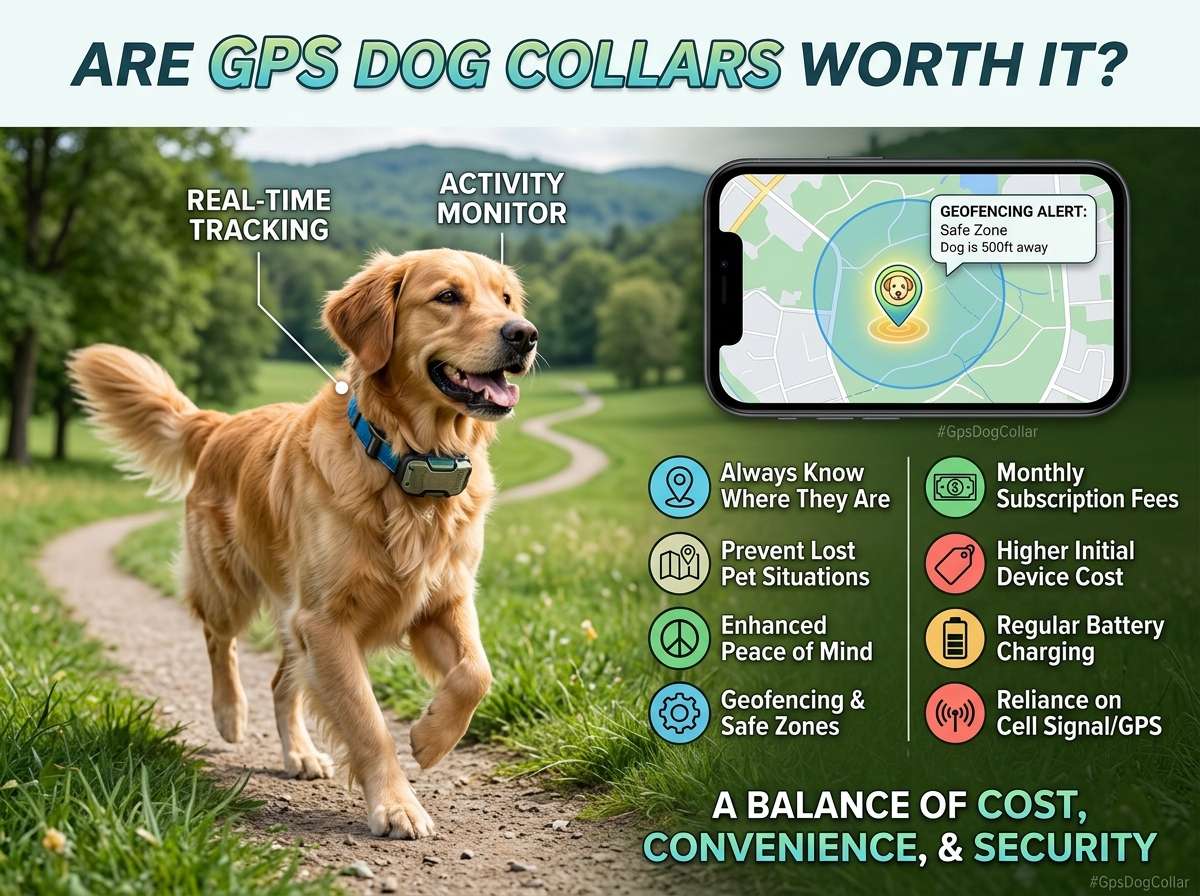
Many GPS collars let you create “virtual fences” or “safe zones” on a map. You draw a boundary around your home, yard, or a park where your dog usually plays. If your dog crosses this invisible line, the collar sends an alert to your phone. This is super helpful if you have an escape artist or if you just want to know when your dog leaves a specific area. It’s a fantastic early warning system.
Tracking Activity and Health
Some advanced GPS collars do more than just track location. They can also monitor your dog’s activity levels. They might count steps, estimate calories burned, or even track sleep patterns. This data can give you a better idea of your dog’s daily exercise and overall well-being. It can help you spot changes in behavior that might indicate a health issue early on. Think of it as a fitness tracker for your furry friend.
Exploring Off-Leash Safely
For dog owners who love taking their pups on hikes, to large parks, or even hunting trips, a GPS collar offers a safety net. You can let your dog roam and explore more freely, knowing you can always find them if they stray too far or get distracted by an interesting smell. This freedom can improve your dog’s quality of life and make outdoor adventures more enjoyable for both of you.
Helping Others If Your Dog Is Found
Some collars allow you to add your contact information directly to the device or through a QR code. If someone finds your dog, they can scan the code or see your details, making it easier for them to get in touch with you quickly. This adds another layer of security in case your dog’s regular ID tag is lost or hard to read.
Potential Downsides to Consider
While GPS collars offer amazing benefits, they aren’t without their drawbacks. It’s important to look at both sides before making a decision.
The Cost Factor
GPS dog collars usually cost more than a basic ID tag or even a microchip. Then, on top of the initial purchase price, many require a monthly or yearly subscription fee for the cellular data service. This ongoing cost can add up, and it’s something to budget for. There are devices that have a one-time purchase, but they often rely on different technology, like radio frequency, which has a shorter range.
Battery Life Can Vary
Like any electronic gadget, GPS collars need to be charged. The battery life can differ a lot depending on the model, how often it updates its location, and how much your dog moves. Some collars might last for several days, others only for a day or less, especially with aggressive tracking settings. Remembering to charge it regularly is key, because a dead battery means no tracking.
Size and Comfort for Your Dog
These devices aren’t tiny, especially if you have a smaller dog. The tracker can be a bit bulky and heavy. You need to make sure the collar itself and the attached device are comfortable for your dog to wear all the time. An ill-fitting or uncomfortable collar can cause rubbing, irritation, or even lead your dog to try and chew it off. Always check the size and weight recommendations for your dog’s breed and size.
Connectivity Issues
Because most GPS collars rely on cellular networks, they need good signal coverage to work properly. In very rural areas, dense forests, or places with poor cell service, the tracking might be spotty or not work at all. This can be a problem if your dog gets lost in one of these “dead zones.” Some systems also struggle in areas with many tall buildings or thick overhead cover.
Durability Concerns
Dogs are tough on their gear. They roll in mud, swim in puddles, play rough, and sometimes chew things. A GPS collar needs to be durable and ideally waterproof or at least water-resistant. Not all collars are built to withstand the adventures of an active dog. If it breaks easily, it won’t be much help when you need it most.
Who Are GPS Dog Collars Best For?
So, after looking at the good and the not-so-good, who really benefits most from a GPS dog collar?
Escape Artists
If your dog is known for their Houdini-like escapes, a GPS collar is almost a necessity. Dogs who bolt through open doors, dig under fences, or are generally very adventurous can be a constant source of worry. With a tracker, you can quickly locate them before they get too far or into trouble.
Dogs With High Prey Drive
Certain breeds have a strong urge to chase squirrels, rabbits, or anything that moves. Once they lock onto a scent or a moving animal, they might not hear you calling them back. A GPS collar helps you keep tabs on these focused hunters, especially if you let them off-leash in open areas.
Hunting Dogs or Working Dogs
Dogs used for hunting, herding, or search and rescue often cover large distances in rugged terrain. GPS collars are incredibly valuable here to monitor their location, ensure their safety, and help guide them if they stray from the group or lose focus. The technology here is very robust.
Dogs in New Environments
Moving to a new home or going on vacation with your dog can be stressful. Dogs can get disoriented in unfamiliar surroundings and might be more prone to wander off. A GPS collar provides an extra layer of security during these transitions.
Dogs Exploring Off-Leash
For owners who enjoy letting their dogs run free in large parks, wilderness areas, or anywhere that allows off-leash activity, a GPS tracker offers immense confidence. It lets dogs enjoy their freedom while giving owners peace of mind.
Dogs with Health Issues (Specific Cases)
While a GPS collar isn’t a medical device, for dogs with certain conditions that might cause them to wander aimlessly or become disoriented (like some forms of canine cognitive dysfunction), a tracker can be very helpful for their safety and owner management.
Alternatives and Important Considerations
Before you jump into buying a GPS collar, remember there are other ways to keep your dog safe and several things to think about.
Microchipping: A Must-Have
A microchip is a tiny device implanted under your dog’s skin. It has a unique ID number linked to your contact info. If your dog is found and taken to a vet or shelter, they can scan the chip and get your details. It’s a permanent form of identification and much cheaper than a GPS collar. Every dog should have one, but remember, a microchip only works after your dog is found. It doesn’t help you actively track them.
ID Tags: Simple and Essential
A good old-fashioned ID tag with your dog’s name and your phone number is still very important. It’s the first thing someone will see if they find your lost dog. It’s quick, easy, and requires no batteries. While it’s not a tracker, it’s a critical piece of the puzzle. Make sure the information is always up to date.
Training: The Best Defense
No gadget can replace solid training. A dog with a strong recall (comes when called), good leash manners, and an understanding of boundaries is far less likely to get lost in the first place. Invest time in training your dog; it’s the most effective preventative measure. Even the best GPS collar can’t prevent every dangerous situation.
Proper Fence and Gate Security
Inspect your yard regularly. Look for holes under fences, loose boards, or gates that don’t latch properly. Many escapes happen due to easily fixed problems in the home environment. Taking simple steps here can prevent a lot of headaches.
Collar Fit and Safety
Make sure any collar, especially one with a device attached, fits your dog correctly. It should be snug enough not to slip over their head, but loose enough for two fingers to fit comfortably underneath. Also, consider breakaway collars for dogs who play roughly, to prevent choking hazards if they get snagged.
Check Reviews and Features
If you decide to get a GPS collar, do your homework. Look at reviews from other dog owners. Compare features like battery life, accuracy, water resistance, subscription costs, and app usability. Some collars offer specific features that might be more useful to you than others, such as better real-time tracking versus activity monitoring. Different brands cater to different needs and budgets.
Making The Decision
So, are GPS dog collars worth it? For many dog owners, the answer is a resounding yes. The peace of mind they offer, especially for pets prone to wandering or those who spend a lot of time off-leash, is invaluable. They provide a modern solution to an age-old problem, significantly increasing the chances of a happy reunion if your dog ever gets lost.
However, they are not a magic bullet and shouldn’t replace basic safety measures like microchips, ID tags, and good training. They are a powerful tool to add to your pet safety toolkit. When balanced with their cost, battery needs, and potential connectivity issues, their benefits often outweigh the negatives, especially for specific types of dogs and owners.
Consider your dog’s personality, their likelihood of getting lost, your lifestyle, and your budget. If you’re someone who often worries about your adventurous pup, or if you frequently take your dog to open spaces, a GPS dog collar could be a worthwhile investment that brings a great deal of comfort and security to your life as a pet parent. It’s about being prepared, and sometimes, technology can really help us be the best guardians we can be for our beloved four-legged family members.

Hi, I’m Mary, the founder of PetGadgetPro.com. I’m a passionate pet lover with a special place in my heart for dogs and cats. I share practical advice and honest insights on pet gear to help pet parents make better choices. My dedicated research team studies products in depth, and our writers create reviews using trusted, authentic sources—so you can feel confident choosing the best for your pets.