Where Should a Litter Box Be Placed?
Your cat needs a bathroom. Just like you, your feline friend needs a clean, quiet, and accessible place to do their business. But finding the right spot for the litter box isn’t as simple as shoving it in a corner and hoping for the best. The location of your cat’s litter box can make the difference between a happy kitty and a frustrated owner dealing with accidents around the house.
Let’s talk about how to find the perfect spot for your cat’s toilet.
Why Litter Box Location Matters So Much
Before we jump into specific locations, let’s understand why this matters. Your cat’s bathroom habits depend heavily on where you put that litter box. Cats are picky animals. They care about privacy, cleanliness, and easy access. Put the box in the wrong spot, and your cat might decide to use your carpet instead.
Proper litter box placement affects your cat’s health and happiness. Cats that feel stressed about using their bathroom tend to hold it in. This can lead to urinary tract infections and other health problems. Some cats get so stressed that they stop eating or become aggressive.
The location also affects your home. A well-placed box keeps odors manageable and makes cleaning easier. A poorly placed box creates smells that spread throughout your house.
The Golden Rules of Litter Box Placement
Before we talk about specific rooms, let’s cover the basic rules that apply everywhere.
Rule One: Keep It Away From Food and Water
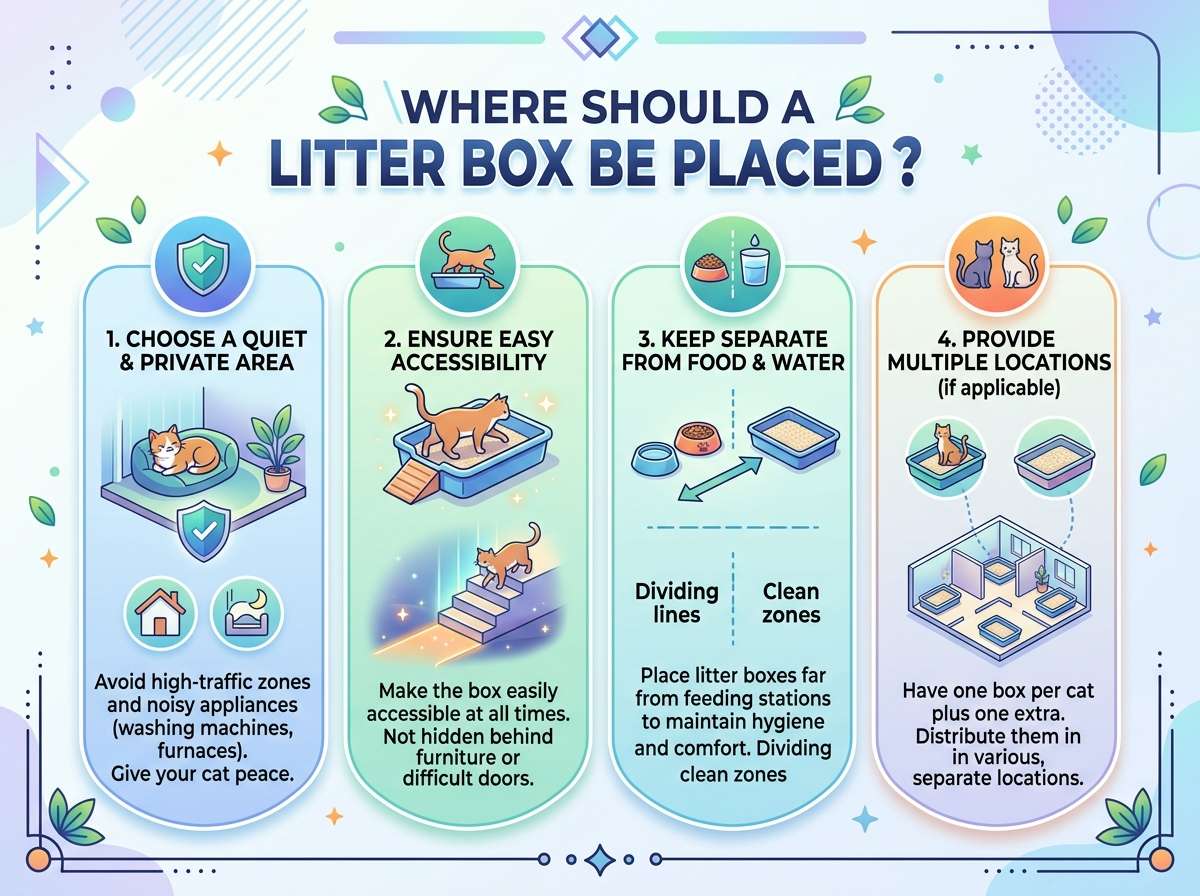
Never put the litter box near your cat’s food bowl or water dish. Cats are clean animals by nature. They don’t like to eat near their bathroom. In the wild, cats would never choose to live this way. Even though your cat can’t tell you why the food is too close to the toilet, they instinctively hate it.
When food sits too close to the litter box, cats sometimes stop eating properly. They’ll eat less or eat from somewhere else in the house. This creates stress for both you and your cat.
Rule Two: Provide Multiple Boxes
Here’s a basic rule that many cat owners miss: you need more than one litter box, especially in larger homes. The standard advice is one box per cat, plus one extra. If you have two cats, get three boxes. If you have one cat, two boxes work better than one.
Why? Cats like options. Some cats prefer one box for number one and another for number two. Some cats just like having backup options. Having multiple boxes also prevents bullying. If you have a dominant cat, a shy cat might avoid the single box because it feels unsafe.
Place these boxes in different areas of your home. Don’t cluster them all in one spot.
Rule Three: Distance From Daily Activities
Your cat needs privacy. Put the box away from high-traffic areas. Don’t place it right next to where your family hangs out. Don’t put it in the kitchen if people cook there all day.
Cats feel vulnerable when they use the toilet. They can’t run away or defend themselves while sitting in the box. This is why they need to feel safe and away from the constant noise and movement of family life.
The Basement: A Classic Choice
Basements work well for litter boxes. Here’s why this location gets points from cat behaviorists.
Basements are usually quiet. They’re separated from where your family spends most of their time. This gives your cat the privacy it needs. The distance also keeps litter dust and smells away from your living areas.
Basements tend to stay cool. Litter boxes work best in cooler environments. Heat speeds up the breakdown of waste, which makes smells worse. A cool basement helps control odors naturally.
One big bonus: basements usually have concrete or tile flooring. These surfaces are easy to clean if litter gets scattered. They’re also less likely to stain or absorb odors compared to carpet.
However, basements have one downside. If your basement is damp, it can create problems. Moisture makes litter clump too much and speeds up odor development. Make sure your basement stays dry. If it tends to get humid, use a dehumidifier or pick a different location.
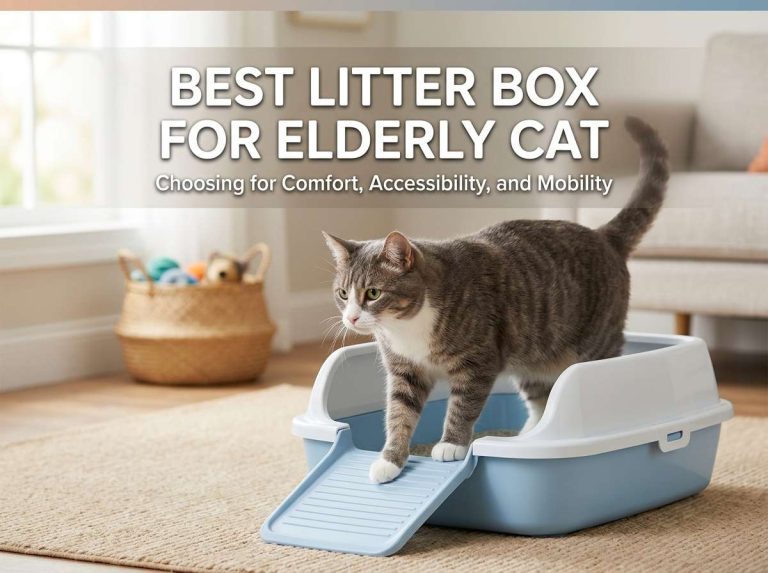
Also think about access. If you have a kitten or senior cat, basement stairs might be too tough to climb. Your cat needs easy access to the litter box at all times. An older cat with arthritis might avoid a basement box because the stairs hurt.
The Bathroom: A Smart Spot
Bathrooms make excellent litter box locations. They’re already designed for waste, so the purpose makes sense.
Bathrooms have several advantages. They’re usually private spaces where your cat won’t be disturbed. They have hard flooring that’s easy to clean. Most bathrooms have good ventilation, which helps with odor control.
The main trick is keeping the litter box away from the toilet and sink. Your cat needs separation between its toilet and your water sources. Even though it’s the same room, they should be on opposite ends if possible.
One concern with bathroom placement: traffic. If people go in and out of the bathroom frequently, your cat might feel stressed. Try to use a bathroom that sees less activity. Guest bathrooms often work better than the main bathroom your family uses multiple times a day.
Also consider whether your cat can reach the bathroom easily. If you close the door often, your cat might not be able to get to its box when it needs to go. Install a pet door or make sure the bathroom door stays open most of the time.
The Laundry Room: Often Overlooked and Great
Many cat owners overlook the laundry room, but it’s actually one of the best spots for a litter box.
Laundry rooms are separate from living spaces, giving your cat privacy. They have hard flooring that resists moisture and stains. Most laundry rooms have good ventilation or even exhaust fans that pull odors out of the house.
The noise of the washing machine or dryer won’t bother your cat. In fact, cats get used to these sounds quickly. The machine’s vibrations don’t cause problems either.
Laundry rooms usually have less foot traffic than kitchens or main bathrooms. Your cat gets the quiet it needs. The room is typically cooler than living areas, which helps control litter box odors.
Make sure your cat can access the laundry room whenever it needs to go. Don’t lock the door. Leave it open at all times or install a pet door.
The Kitchen: Generally Not Ideal
Kitchens seem like logical places because that’s where food-related mess happens. But kitchens are actually poor choices for litter boxes.
Kitchens have too much traffic. People cook, eat, and move through the kitchen constantly. Your cat won’t feel safe or private. Stress from this constant activity can lead to inappropriate elimination.
Kitchens are also where your cat’s food and water should stay. Having the litter box in the same room as eating areas violates the natural instinct to keep these spaces separate.
Health and hygiene matter too. Litter dust gets kicked up when cats use the box. You don’t want that dust floating near where you prepare food. Bacteria from the litter can contaminate cooking surfaces.
If you live in a small apartment and only have kitchen space available, put the litter box in the far corner. Place it behind a low cabinet or screen if possible. Keep good distance between it and any food preparation areas.
Garage Storage Areas: Possible But With Caution
Garages can work for litter boxes, but they come with challenges.
Garages offer privacy and distance from living spaces. They’re usually cool and well-ventilated. The concrete flooring is practical and easy to clean.
The problems start with temperature extremes. Garages get very hot in summer and very cold in winter. Your cat might avoid the box during extreme weather. Pregnant cats especially need moderate temperatures.
Garages also have safety hazards. Car fumes, toxic chemicals, pesticides, and tools can hurt your cat. Even if you think these are stored safely, cats are curious. They get into things.
If you use your garage for parking, exhaust fumes aren’t healthy for any animal spending time there regularly. The smoke and chemicals can cause respiratory problems in cats.
If you want to use a garage, make sure it’s a finished space with climate control. Keep all chemicals and toxins completely sealed and stored away from the litter area. Your cat’s safety matters more than convenience.
The Bedroom: Usually a Bad Idea
Most cat behaviorists recommend against putting litter boxes in bedrooms.
Bedrooms are private spaces where your family sleeps. You don’t want litter dust or smells in your bedroom. Litter particles get tracked onto bedding. The smell can linger even with careful cleaning.
Cats also generally prefer not to use their bathroom near where they sleep. It goes against their natural instincts. In the wild, cats never dig their toilets right next to where they nest.
If litter must go in a bedroom temporarily, use a covered box and change litter daily. A door or screen can create separation from the sleeping area. But this isn’t ideal long-term.
The Living Room or Family Room: Definitely Not
Don’t put litter boxes in spaces where your family spends leisure time.
Living rooms are high-traffic areas. Your cat feels exposed and vulnerable. The constant activity causes stress that leads to behavioral problems.
Odors and dust spread through central living spaces quickly. They circulate through the whole house via your HVAC system. This puts everyone in an unpleasant environment.
Your guests will notice. You’ll feel embarrassed. Your cat will feel uncomfortable. Everyone loses in this situation.
Hallways and Mudrooms: Sometimes Acceptable
Hallways can work if they’re relatively quiet and separate.
A hallway near an outside door, like a mudroom, offers good ventilation if you have a window. The space is between your living area and the outside, creating natural separation.
However, hallways are usually high-traffic areas. If your hallway connects your kitchen to your living room, people walk through constantly. This creates too much disturbance for a comfortable litter area.
A hallway leading to a back exit or guest area works better. It sees less foot traffic and feels more private.
Utility Rooms and Dens: Often Perfect
Utility rooms designed for storage, exercise equipment, or office work make excellent litter box locations.
These rooms are separate from daily living spaces. They’re usually private and quiet. Your cat gets the sanctuary it needs without affecting your daily life.
Utility rooms often have good air circulation. They’re frequently cooler than living areas. The hard flooring is practical for maintenance.
The key is accessibility. Your cat must be able to reach the room whenever it needs to go. If the door stays closed, install a cat door or keep it open most of the time.
Creating the Ideal Litter Box Space
Once you pick a room, set up the space properly.
Distance and Separation
Put the litter box in the corner farthest from the room’s entrance. This gives your cat the most privacy. Cats naturally choose corners for bathroom use because they can see potential threats from multiple angles.
If possible, position the box so your cat can see the entrance while using it. This satisfies the instinct to stay alert while vulnerable.
Environmental Factors
Keep the space cool. Litter degrades faster and smells worse in warm areas. If the room stays warm, use a dehumidifier to reduce moisture.
Ensure good ventilation. Open windows help. Exhaust fans work better. If the area has no windows or vents, the smell will become overpowering.
Good lighting helps your cat find the box and helps you spot problems early. Install a small light if the space is dim.
Space and Box Type
Give the litter box room to breathe. Don’t cramp it into a tight corner with other items. Cats prefer open access and some space around the box.
Some cats love covered boxes for privacy. Other cats prefer open boxes because they feel trapped in covers. Observe your cat’s behavior. If it seems anxious in a covered box, use an open one.
Scoop the box daily. Your cat is more likely to use a clean box. Daily scooping also helps you spot health issues early, like blood in urine or diarrhea.
Understanding Cat Preferences
Different cats have different preferences. Your job is finding what works for yours.
Some cats are social and don’t mind using the litter box near people. Other cats are shy and need complete solitude. Watch your cat’s behavior when it uses the box. Does it seem relaxed or stressed?
Senior cats with arthritis need boxes on the main floor or easily accessible level. Young kittens need boxes on the same floor as their sleeping area while they’re still learning.
Multiple cats sometimes have preferences for different locations. One cat might like the basement. Another might prefer the upstairs bathroom. If you notice one cat avoiding a box, try adding another in a different location.
Avoiding Common Litter Box Mistakes
Many cat owners make the same mistakes with litter placement.
Don’t move the litter box suddenly. Cats learn where their toilet is. If you suddenly move it across the house, your cat might not find it. Move boxes gradually, a few inches at a time, over days or weeks.
Don’t put the box near loud appliances. The washing machine might be fine, but a noisy furnace or sump pump could startle your cat while it’s using the box.
Don’t block access with baby gates or doors. Your cat must reach the box immediately when it needs to go. Barriers cause accidents and stress.
Don’t use strong-smelling cleaning products near the litter area. The harsh chemical smell confuses your cat. It makes the space feel unsafe.
Don’t forget about the litter itself. Even with perfect placement, wrong litter causes problems. Some cats prefer fine-grain litter. Others like larger pellets. Some cats need unscented litter because perfumes irritate their noses.
The Bottom Line on Litter Box Placement
The best location for your cat’s litter box is one that’s private, accessible, away from food areas, and separate from your main living spaces. Basements, laundry rooms, bathrooms, and utility rooms typically work best.
The specific room matters less than consistency. Once your cat learns where the box is, keep it there. Make sure the box is clean, the litter is suitable, and your cat feels safe using it.
Your cat can’t tell you what it needs. But it will show you through its behavior. If your cat is using the box reliably, you’ve found a good spot. If your cat is having accidents elsewhere, the litter box placement might be the problem.
Pay attention to your cat’s bathroom habits. Notice when and where accidents happen. Notice if your cat seems stressed or anxious. These signs tell you whether your current setup is working or needs adjustment.
The time you spend finding the perfect litter box location saves you years of dealing with inappropriate elimination. It keeps your cat healthy and your home clean. It creates a happy relationship between you and your feline friend.
Your cat’s comfort is worth the effort. Think about privacy, distance from living areas, temperature, ventilation, and ease of access. Test different locations if needed. Observe your cat’s responses. Make adjustments as your cat ages and your living situation changes.
The perfect litter box location exists in your home. You just need to know where to look and what your cat needs to feel comfortable and safe. Once you find it, you’ll notice the difference immediately. Your cat will be happier, your home will be cleaner, and your relationship will improve.
Take the time now to set up the right litter box placement. Your cat will thank you by doing its business in the right place, every single time.
Hi, I’m Mary, the founder of PetGadgetPro.com. I’m a passionate pet lover with a special place in my heart for dogs and cats. I share practical advice and honest insights on pet gear to help pet parents make better choices. My dedicated research team studies products in depth, and our writers create reviews using trusted, authentic sources—so you can feel confident choosing the best for your pets.