How to Find the Perfect Dog Harness ?
Your dog pulls on the leash. It chokes. You’re worried about their neck. Sound familiar? A good harness fixes all of this. It keeps your furry friend safe, comfortable, and easier to control. But finding the right one can feel overwhelming with so many options out there.
This guide walks you through everything you need to know about dog harnesses. You’ll learn the different types, how to measure properly, and what factors matter most. Let’s get started.
Why Your Dog Needs a Harness
A collar puts pressure on your dog’s neck. When they pull, all that force goes straight to their throat. This can cause damage over time. It can hurt their windpipe and neck vertebrae.
A harness spreads the pressure across your dog’s chest and back. This is much safer. It protects delicate areas and prevents injury. Dogs with breathing problems benefit most from harnesses.
Harnesses also give you better control. They have attachment points that don’t let your dog slip out. A determined dog can back right out of a collar. That’s dangerous and stressful. A good harness keeps them secure.
Most trainers prefer harnesses over collars for walks. They’re better for your dog’s health and make training easier. Your dog will be happier. You’ll have less stress. Everyone wins.
The Main Types of Dog Harnesses
Different harnesses work for different dogs. Let’s break down the most common styles.
Front-Clip Harnesses
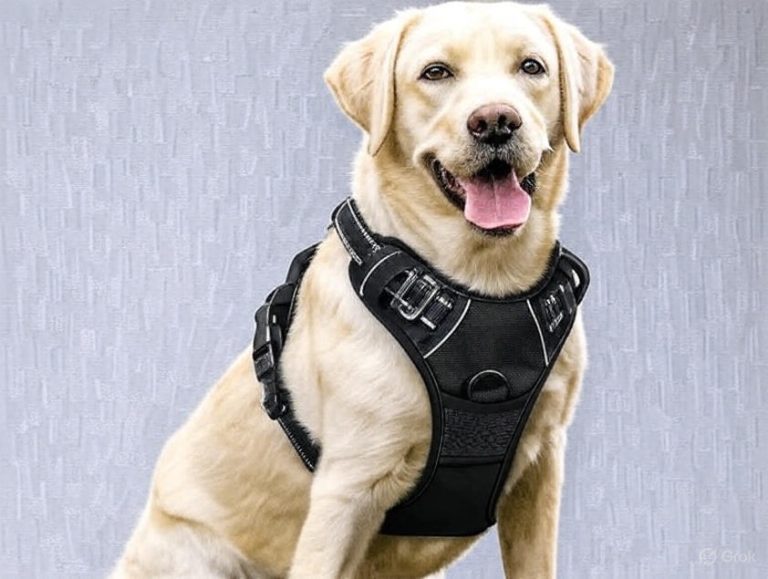
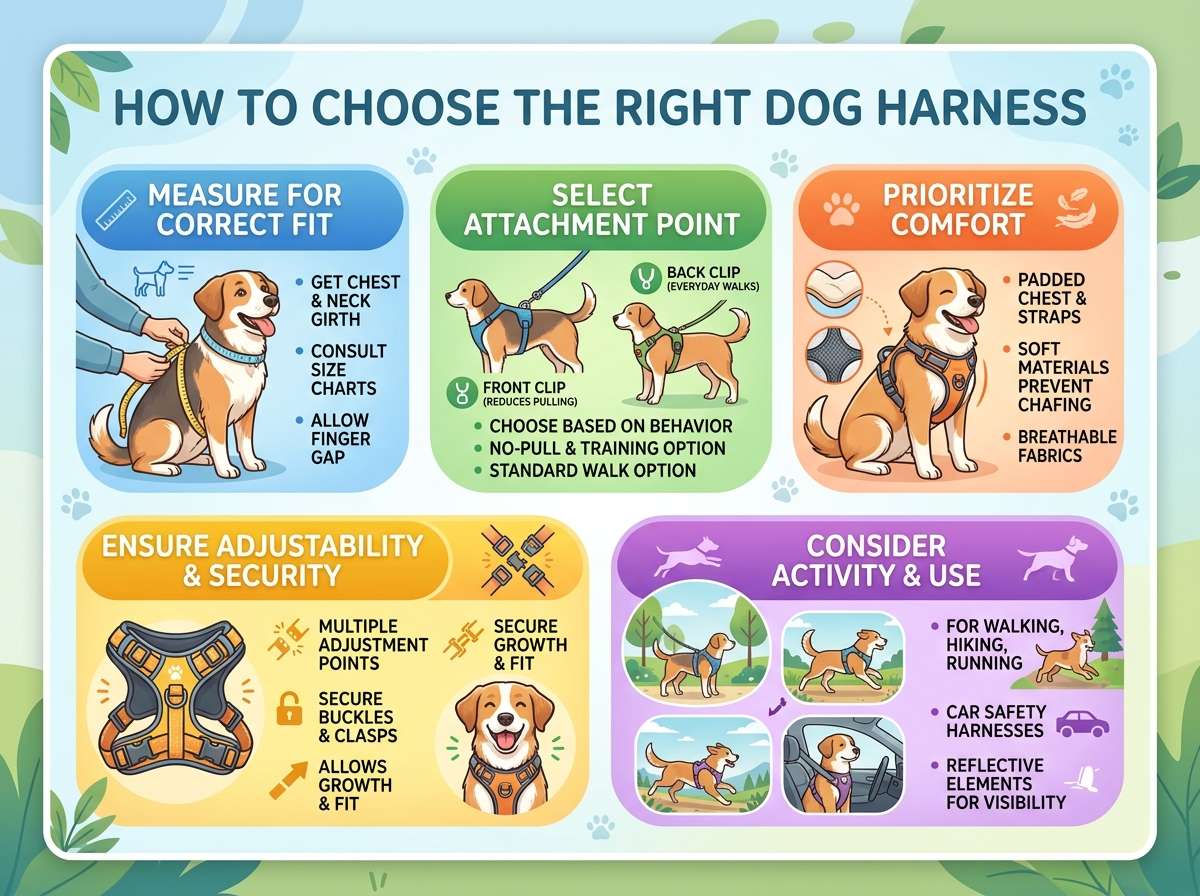
A front-clip harness has the leash attachment on your dog’s chest. When your dog pulls, the harness turns them toward you. This gently redirects their movement. It’s not a punishment. It just makes pulling less rewarding.
These work great for dogs that pull hard. They give you tons of control without a choke collar. Your dog learns that pulling doesn’t work. Over time, they stop doing it as much.
Front-clip harnesses are perfect for training. They’re comfortable for dogs. Many dogs forget they even have them on. Your pup can walk naturally without feeling restricted.
The downside is minor. Some dogs don’t like the chest strap across their body at first. But most adjust quickly. It takes a few days of getting used to.
Back-Clip Harnesses
A back-clip harness has the leash attachment on your dog’s back. These harnesses don’t discourage pulling the same way. When your dog pulls, they just go forward.
But back-clip harnesses shine in other ways. They give your dog more freedom to move. They’re great for dogs with breathing problems. They don’t put any pressure on the chest at all.
These work well for calm dogs that don’t pull much. They’re good for dogs with short faces like bulldogs or pugs. The design keeps their airways clear.
Back-clip harnesses are comfy for many dogs. They feel less restrictive. Your dog can explore and sniff without resistance. It’s a more relaxed walking experience.
Use a back-clip if your dog is already well-trained. Don’t expect it to solve pulling problems. That’s what front-clip harnesses do.
No-Pull Harnesses
No-pull harnesses combine the best parts of front-clip design with extra features. They wrap around your dog’s body in specific ways. This prevents movement that the maker designed to be reduced.
Most no-pull harnesses use a front-clip system. They’re just more aggressive about stopping pulling. They might have extra straps or unique angles. The goal is the same though. Discourage pulling and reward good behavior.
These work fast for strong pullers. Your dog learns quick. But some dogs find them uncomfortable at first. The straps cover more of their body. It takes patience to get them used to it.
No-pull harnesses are excellent for large dogs. They give you maximum control. If your pup is strong, this might be your best bet.
Vest Harnesses
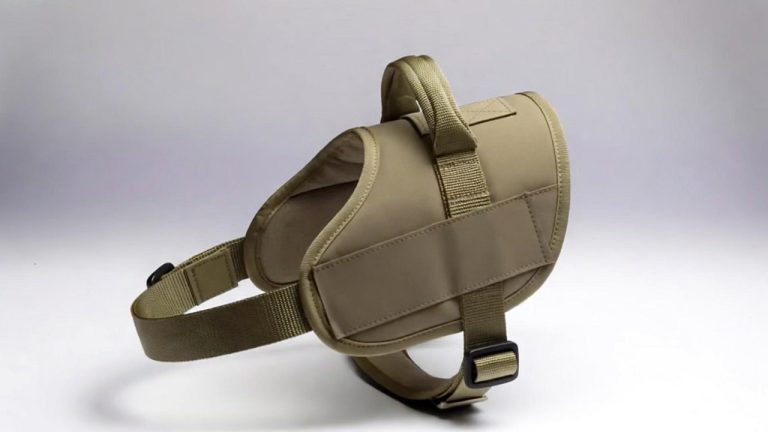
A vest harness covers more of your dog’s body. It looks like a little jacket. These are super comfortable for most dogs. They distribute weight really well.
Vest harnesses are ideal for senior dogs. They have joints that hurt. The extra padding feels nice. It’s gentle on aging bodies.
They work well for dogs with sensitive skin. The design doesn’t rub in one spot. It spreads contact across a wider area.
The drawback is that they can be bulky. Some dogs find them too warm in hot weather. They’re also harder to put on than simpler designs.
Vest harnesses come in front-clip and back-clip versions. Pick based on your dog’s needs and behavior.
Measuring Your Dog Correctly
Getting the right size matters. A too-small harness hurts. A too-large one lets your dog escape. Proper measurements make all the difference.
Start by getting a soft measuring tape. A fabric tape works best. If you don’t have one, string and a ruler work too.
The Chest Measurement
This is the most important one. Wrap the tape around the fullest part of your dog’s chest. That’s usually right behind their front legs. Keep it snug but not tight. You should fit one finger under the tape.
Measure your dog when they’re standing naturally. Don’t pull them into position. Tension changes their body shape. You want their normal chest size.
Write down this number. Different brands have different sizing. You’ll compare this to the harness size chart.
The Neck Measurement
Wrap the tape around your dog’s neck. Again, keep it snug with one finger of space. This helps you find a harness that fits properly around the neck area. Some harnesses are tighter in this spot. You want to make sure it won’t choke them.
The Length Measurement
Measure from your dog’s neck to their tail base. This helps with vest harnesses and some full-body designs. It tells you if a harness will fit their back properly.
Check Multiple Times
Measure your dog a few times over a few days. Dogs change shape with breathing. They move around. Getting consistent measurements helps. If numbers vary, use the larger one. Too loose is better than too tight.
For growing puppies, remeasure every month. They grow fast. A harness that fits today might be too small next month. Plan for growth when buying. Some brands make adjustable harnesses. These work great for puppies.
Comparing Size Charts Across Brands
Different companies size harnesses differently. This drives everyone crazy. A size small in one brand might be size medium in another.
Always check the brand’s size chart. Don’t trust the label alone. Look at their measurements in inches or centimeters. Compare to your dog’s measurements. This is the only way to get it right.
Many websites let you input your dog’s measurements. It recommends the best size. This feature is super helpful. Use it when you shop online.
If you’re between sizes, go larger. A slightly loose harness lets your dog move better. A tight one causes discomfort and skin problems.
Material Matters More Than You Think
What the harness is made of affects comfort and durability. Your dog wears it often. The material touches their skin. Get this right.
Nylon Harnesses
Nylon is popular for a reason. It’s durable, lightweight, and affordable. It doesn’t absorb much water. This matters if your dog gets wet.
Nylon is easy to clean. Just wipe it down or rinse it off. It dries quickly. This is great for active dogs.
The downside is that nylon can rub on some dogs. Sensitive skin gets irritated. Some dogs don’t like the texture. But most dogs tolerate it fine.
Padded Harnesses
Padding adds comfort. It feels softer against your dog’s body. For dogs with sensitive skin, padding helps. It prevents rubbing and chafing.
Padded harnesses cost more. The extra material adds weight. They also take longer to dry. If you live somewhere wet, this matters.
But if your dog has tender skin or gets harness rubs, padding is worth it. Your dog’s comfort is important.
Mesh Harnesses
Mesh material breathes well. Air flows through it. On hot days, mesh keeps your dog cooler. It’s perfect for warm climates.
Mesh is lightweight and soft. Most dogs feel comfortable in mesh harnesses. They dry fast too.
The trade-off is durability. Mesh doesn’t last as long as nylon. It can tear or wear out faster. But for most dogs, it still lasts years.
Leather Harnesses
Leather looks nice and feels premium. It molds to your dog’s body over time. Leather harnesses can last forever with care.
But leather is expensive. It needs maintenance. You have to clean and condition it. If you don’t, it cracks and deteriorates.
Leather isn’t ideal for dogs that swim or play in water. Water damages leather. It takes a long time to dry. Your dog can get uncomfortable quickly.
For show dogs or special occasions, leather shines. For everyday use with active dogs, other materials work better.
Fitting Your Dog’s Harness Properly
You measured and bought the harness. Now comes the important part. Fitting it right.
Step One: Understand the Straps
Every harness has different strap placement. Read the instructions. Figure out where each strap goes. Most harnesses have neck, chest, and belly straps. Some have more.
Put the harness on a flat surface. Lay it out so you can see the design. Trace it with your finger. Understand how it works before putting it on your dog.
Step Two: Getting Your Dog in It
Start with treats. Let your dog sniff the harness. Make it a fun thing. You want them excited, not scared.
Gently put the harness on. Guide their legs through the holes. Don’t force anything. If they resist, take a break. Come back later.
Once it’s on, immediately give treats. Praise them. Make wearing the harness a good experience. Your dog should love the harness, not fear it.
Step Three: Checking the Fit
Now comes the critical part. Your dog is wearing the harness. Check that it fits right.
Run your fingers under each strap. You should fit one or two fingers between the strap and your dog’s body. Not more. Not less.
The harness shouldn’t dig in anywhere. There shouldn’t be red marks after wearing it. If there are, the harness is too tight.
Your dog shouldn’t be able to slip out. Try gently pulling the harness off. If it comes off easily, tighten the straps. If it doesn’t budge, that’s perfect.
Step Four: Test the Attachment Point
Gently tug the leash. Make sure it’s secure. The attachment shouldn’t wiggle or move.
For front-clip harnesses, check that the chest point is really on the chest. If it’s on the shoulder, it won’t work right. Adjust the straps until it sits in the right spot.
Important Fit Issues to Watch For
Some problems show up after your dog wears the harness. Watch for these issues.
Rubbing and Chafing
If your dog gets red marks or rubs, something isn’t right. The harness might be too tight. Or it might be the wrong size. Or the straps might be in the wrong spot.
Remove the harness. Check your dog’s skin. If there are sores, give them a break. Wait a day or two before trying again.
When you refit it, loosen the straps a bit. Make sure the harness covers only where it should. Sometimes moving a strap slightly fixes the problem.
Slipping and Escaping
A harness that’s too loose lets your dog escape. This is scary and dangerous. You need to solve this fast.
First, tighten the straps. Maybe it just needs to be snugger. Try this before buying a new one.
If tightening doesn’t help, the size might be wrong. Your dog might be in-between sizes. In that case, get a smaller size or try a different brand.
Some dogs are shaped in ways that make certain harnesses slip. A harness that works for most dogs won’t work for them. Don’t give up. Try a different style.
Too Much Restriction
Some dogs feel trapped in certain harnesses. They won’t move. They lay down and refuse to walk. This is a sign the harness isn’t right for them.
The harness might be too tight. Or it might be too bulky. Or your dog just doesn’t like that style.
Try loosening it first. If that doesn’t help, it’s probably the wrong harness for your pup. Different dogs like different styles. There’s no universal perfect harness.
Harness Features That Make a Difference
Beyond the basic design, some features make harnesses better. Here are things worth considering.
Reflective Material
This safety feature shines in car headlights. Drivers see your dog easily. If you walk at night or in low light, reflective material is smart.
Reflective material costs a bit more. But safety is worth it. Your dog is precious. Visibility protects them.
Handle on Top
Some harnesses have a handle on the back. You can grab it quickly. This helps if your dog lunges or gets excited.
A handle is super useful for large dogs. It gives you another way to control them. In busy areas, this is great.
Puppies also benefit from a handle. You can guide them gently. It’s less forceful than a leash tug.
Moisture-Wicking Lining
If your dog sweats a lot, this matters. A moisture-wicking lining keeps them dry. It prevents skin problems from sweat buildup.
This feature costs more. But if your dog runs a lot or lives somewhere hot, it’s worth considering.
Multiple Attachment Points
Some harnesses have both front and back clips. You can choose which one to use. This flexibility is handy.
You might use the front clip for training. But on calm days, switch to the back clip. One harness serves two purposes.
Special Situations and Special Dogs
Some dogs need specific harness types. Let’s talk about special cases.
Small Dogs
Small dog harnesses need to be accurate in size. There’s no room for error. A harness that’s even a little too big will slip off.
Look for brands that specialize in small dog harnesses. They understand the sizing challenges. They make harnesses that fit tiny dogs perfectly.
Material matters for small dogs too. Lighter materials feel less heavy. Your tiny pup won’t be weighed down.
Large and Giant Breeds
Big dogs need sturdy harnesses. They pull harder. The harness must handle real force.
Look for reinforced stitching. Check that the hardware is heavy-duty. The attachment points should feel solid.
Big dogs benefit from padded harnesses. They’re more comfortable when worn all day. A sixty-pound dog in a harness without padding will get sore.
Brachycephalic Breeds
These are flat-faced dogs like bulldogs and Frenchies. They have breathing problems. Tight harnesses make it worse.
Front-clip or back-clip harnesses work fine for breathing problems. The key is that they don’t press on the chest or throat. The harness should sit loosely around the neck.
Vest harnesses are often ideal for these dogs. They distribute weight around the body. They don’t put any pressure on the face or throat.
Senior Dogs
Older dogs have aching joints. They move slower. A comfortable harness is essential.
Padded harnesses work great for seniors. They’re gentle and soft. The extra cushioning helps.
Make sure the harness doesn’t restrict their movement. Senior dogs need to move freely. Tight harnesses cause pain.
A harness with a handle is excellent for senior dogs. You can help support their weight when needed. This takes pressure off their joints.
Anxious Dogs
Some dogs freak out when wearing a harness. The sensation terrifies them.
Start slow with anxious dogs. Let them wear it for just one minute at first. Then two minutes the next day. Gradually build up.
Always pair the harness with treats and praise. Create positive associations. Make wearing it feel good.
Some anxious dogs do better in vest harnesses. They feel more secure. The fuller coverage feels like a hug. Try this if a simple harness doesn’t work.
Common Mistakes to Avoid
Learning from others’ mistakes helps. Here are errors that many people make.
Not Reading Instructions
Every harness is different. You might be putting it on wrong. Read the instructions. Watch the videos if the company provides them. Five minutes of reading saves you frustration.
Buying Based on Looks Alone
A pretty harness doesn’t mean a comfortable one. Choose based on function and fit. Beauty comes second.
Ignoring Your Dog’s Preferences
Your dog tells you what they like. If they hate the harness, listen. There’s probably a better option for them.
Keeping a Harness That’s Clearly Wrong
Some people keep a harness that doesn’t fit well. They hope their dog will get used to it. This doesn’t usually work.
If a harness isn’t right after several days of trying, get a different one. Your dog’s comfort matters most.
Using the Wrong Type for Your Dog’s Needs
A back-clip harness won’t fix a pulling problem. A front-clip might be too aggressive for a calm dog. Match the harness type to your dog’s behavior and needs.
Maintenance and Care
A harness lasts longer with proper care. Here’s how to keep it in good condition.
Cleaning Your Harness
Most harnesses can be hand washed. Use cool water and mild soap. Rub gently. Don’t scrub hard.
Let it air dry completely. Don’t use a dryer. Heat can damage the material and attachment points.
For stubborn dirt, soak it first. Let it sit in soapy water for an hour. Then wash and rinse.
Clean your harness monthly or when it gets really dirty. This keeps it fresh and extends its life.
Checking for Damage
Look at the harness regularly. Check the stitching. Feel the straps for weak spots. Inspect the attachment hardware.
If you see a loose thread, tie it off. If you see damage, consider repair. Some harnesses are worth fixing.
Replacing When Needed
Even the best harness eventually wears out. If the stitching is falling apart or the material is tearing, it’s time for a new one.
Don’t wait until it breaks during a walk. Your dog’s safety depends on a working harness.
Budget Considerations
You don’t need to spend a fortune on a harness. But you get what you pay for.
Cheap harnesses ($15-30) work for calm dogs. They don’t last long. The material is thin. But if your dog is small and doesn’t pull, they’re fine.
Mid-range harnesses ($30-80) are solid. They last years. The material is decent. Most people are happy with this price point.
Premium harnesses ($80+) are built to last. The material is top-notch. The design is thoughtful. If you have a large dog or keep your harness for years, this might be worth it.
Factor in how long you’ll use the harness. A growing puppy might outgrow it. An adult dog might wear it for five years. That changes the value.
Making the Final Choice
You’ve learned a lot. Now it’s time to decide.
Think about your dog. What’s their size? Do they pull? What’s their personality? What’s the weather like where you live?
Match your dog’s needs to harness features. A small calm dog in a cool climate has different needs than a large strong dog in a hot area.
Read reviews from other dog owners. They give real-world insights. But remember that every dog is different.
Don’t be afraid to return it if it doesn’t work. Most companies have return policies. One wrong choice doesn’t have to stick.
Buy from a reputable seller. Good customer service helps if you have questions or problems. It’s worth paying a bit more for better service.
Conclusion
Finding the right dog harness takes time. But it’s worth the effort. A good harness keeps your dog safe and comfortable. It makes walks better for both of you.
Start by measuring correctly. Compare size charts carefully. Think about your dog’s needs. Try the harness and check the fit.
Be patient if your dog doesn’t love it at first. Most dogs adjust quickly. Within a week, they’ll forget they’re wearing it.
Your dog will thank you. Well, maybe not in words. But they’ll show it by walking happier and staying more comfortable. That’s reward enough.
Now get out there and find your pup the perfect harness. Your dog is waiting.
Hi, I’m Mary, the founder of PetGadgetPro.com. I’m a passionate pet lover with a special place in my heart for dogs and cats. I share practical advice and honest insights on pet gear to help pet parents make better choices. My dedicated research team studies products in depth, and our writers create reviews using trusted, authentic sources—so you can feel confident choosing the best for your pets.