How to Measure a Dog for a Harness?
Measuring your dog for a harness might seem tricky at first. But it’s actually pretty easy once you know what to do. A well-fitting harness keeps your dog safe, comfy, and happy during walks and outdoor time. Let’s break this down into simple steps so you can get it right the first time.
Why Measuring Your Dog Matters
Getting the right size harness is super important. A harness that’s too big can slip off your dog’s body. A harness that’s too tight can hurt your pup and make walks no fun. When your dog wears a proper fitting harness, you both enjoy your time together way more.
A good harness also protects your dog’s neck. Instead of pulling on their neck like a collar does, the harness spreads the pressure across their chest and back. This is especially helpful if your dog pulls on the leash during walks. Your vet will agree that harnesses are safer than collars for most dogs.
What You’ll Need to Measure Your Dog
Before you start, grab a few things:
A soft measuring tape. This is the best tool for the job. You can find these at fabric stores or online. If you don’t have a measuring tape, a piece of string works too. Then you can measure the string with a ruler later.
A notebook or your phone. Write down all your measurements so you don’t forget them. Take pictures of where you measured too. This helps when you’re shopping online for a harness.
Your dog’s cooperation. Have some treats ready. Keep your pup calm and still while you measure. Most dogs do best when they’re relaxed.
A friend to help (optional). It’s easier when one person holds your dog and another person does the measuring. But you can do it alone if needed.
Where to Measure Your Dog
The Neck Measurement
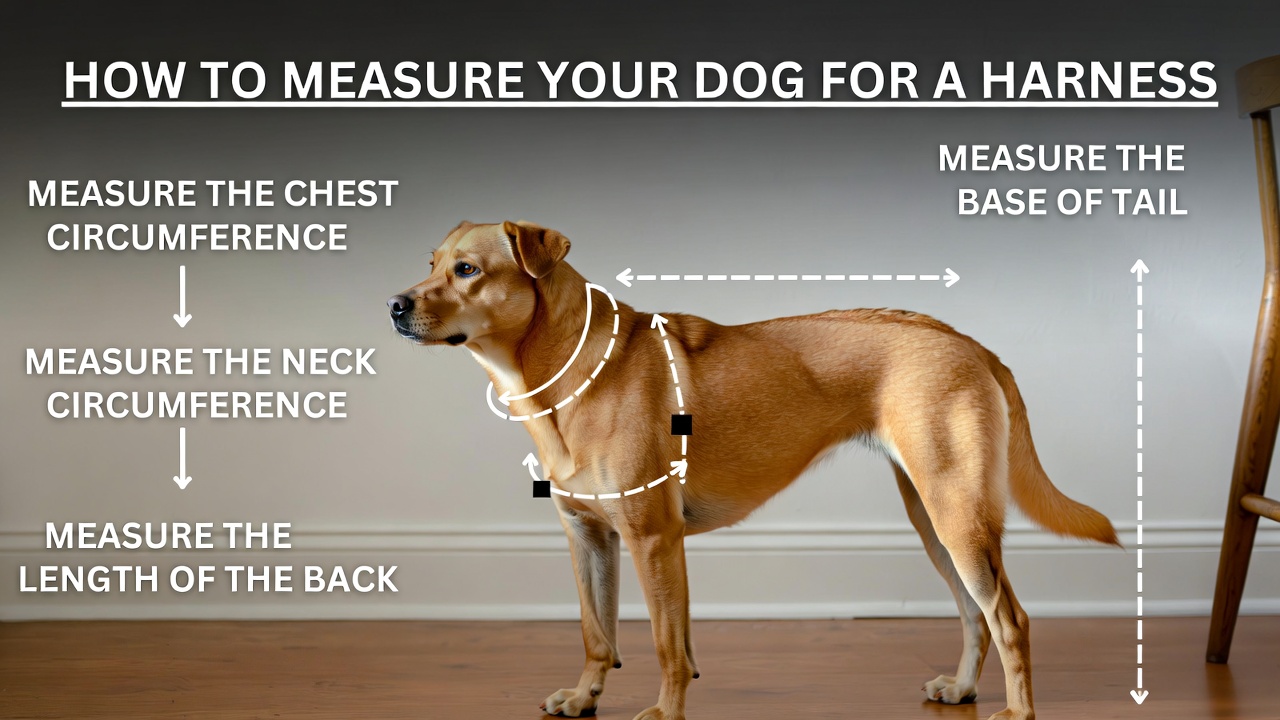
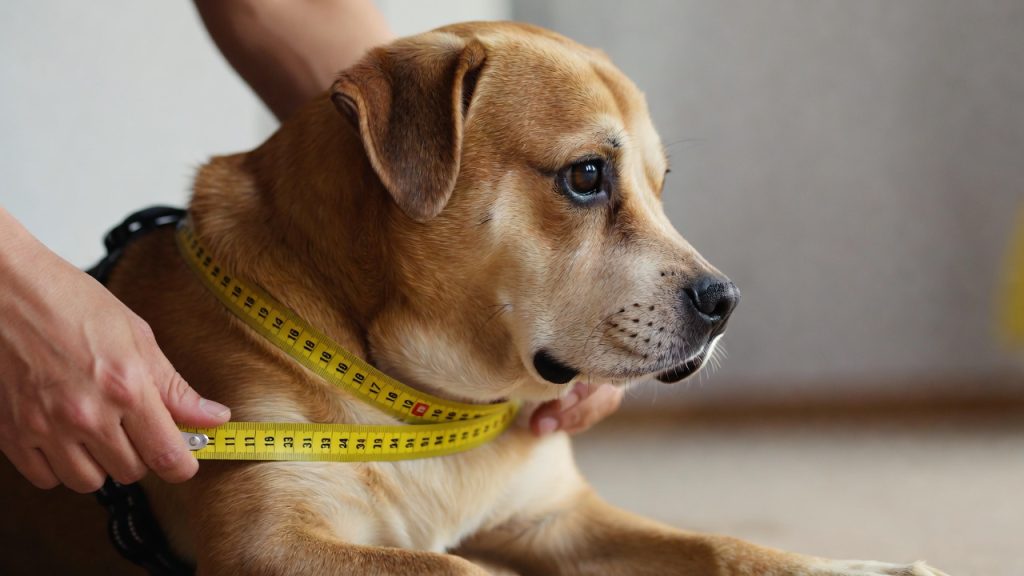
Start with your dog’s neck. This is the first and easiest measurement. Gently place your measuring tape around your dog’s neck. You want to fit two fingers between the tape and your dog’s neck. This gives you the right amount of space so it’s snug but not tight.
Don’t make it so loose that the tape falls down. And don’t pull it so tight that your dog can’t breathe or swallow. Two fingers is the sweet spot every time.
Write down this number. This is your dog’s neck size.
The Chest Measurement
The chest measurement is really important. This is the widest part of your dog’s body. Find the spot right behind your dog’s front legs. This is where the harness sits most of the time.
Have your dog stand up straight. Wrap the measuring tape around their chest at this spot. Just like with the neck, you want two fingers of space between the tape and your dog’s body. Not too tight, not too loose.
Make sure the tape is level all the way around. It shouldn’t dip down in the front or back. Keep it straight and smooth.
Some harnesses have two chest measurements. If the harness you’re buying asks for “front chest” and “back chest,” measure both spots. Measure a little higher on the chest for the front measurement. Then measure a little lower and further back for the second spot.
The Body Length Measurement
This one tells you how long your dog is. Measure from the base of your dog’s neck down to the start of their tail. This tells you if you need a small harness or a large one.
Use the tape measure and run it along your dog’s spine. Keep it straight. Don’t curve it around their body. This gives you the real length of your dog’s back and body.
The Girth Measurement
Girth is just a fancy word for the distance all the way around your dog’s body. Some harnesses care a lot about this number.
Measure around your dog at the widest part of the chest. This is similar to the chest measurement, but you’re writing down the full distance around the body instead of just across the front.
Let’s say your measuring tape goes all the way around and you see 24 inches. That’s your girth measurement.
How to Take Accurate Measurements
Keep Your Dog Still and Happy
Your dog needs to be calm while you measure. Excited dogs move around a lot. This makes your numbers wrong. Take some time to let your dog settle down. Give them treats and praise while you work.
If your dog is really wiggly, try measuring them a few times. Take the average of all your measurements. This works pretty well.
Measure Over Their Normal Coat
Measure over your dog’s fur, not against bare skin. This matters if your dog has long hair. The harness will sit on top of the fur anyway. If you measure bare skin, the harness might be too small.
For double-coated dogs like Huskies or Golden Retrievers, make sure you’re measuring with the coat fully fluffed out. Don’t flatten the fur down.
Use the Right Technique
Hold the measuring tape gently but firmly. It should be snug against your dog but never pulled tight. If you pull too hard, you’ll get a smaller measurement than reality. Then the harness will be too small.
Let the tape lie naturally against your dog’s body. If there are gaps between the tape and your dog, something’s not right. Adjust until it’s smooth and flush against the fur.
Double-Check Your Numbers
After you measure each spot, measure it again. Do you get the same number or close to it? Great. If the numbers are way different, measure one more time.
Having accurate numbers saves you headaches when buying a harness. You won’t have to return things or wait for exchanges.
Understanding Harness Sizing Charts
Once you have your measurements, you need to match them to a harness size. Most harness brands have sizing charts. Look at the chart for the brand you’re thinking about buying.
Harness sizing isn’t standard across all brands. One company’s medium might be different from another company’s medium. This is why your measurements matter so much.
Look at the chart and find where your measurements fit. If your neck measurement is 12 inches and your chest is 18 inches, find the row that covers both those numbers.
Some charts list measurements in inches. Others use centimeters. Make sure you’re reading the right column. If you measured in inches but the chart is in centimeters, do a quick conversion. One inch equals about 2.5 centimeters.
If your dog is between sizes, think about which way to go. Is your dog on the small side? Go with the smaller size. Is your dog a bigger pup? Go with the larger size. You can always add a tighter strap if needed.
Different Harness Styles Have Different Fit Needs
Step-In Harnesses
Step-in harnesses are super easy to put on. Your dog steps into them like stepping into pants. These harnesses wrap around the chest and belly.
For step-ins, your chest and girth measurements are most important. The length matters less because the harness doesn’t have to fit your dog’s back length.
Over-the-Back Harnesses
These harnesses slip over your dog’s head and shoulders. They have a strap that goes down the back and around the belly. For these, your body length measurement is really important.
Vest-Style Harnesses
Vest harnesses cover a lot of your dog’s body. They’re great for dogs that pull a lot. You’ll need accurate chest, girth, and length measurements for these.
No-Pull Harnesses
No-pull harnesses have a clip on the front of the chest. When your dog pulls, the harness turns them toward you instead of letting them forge ahead. These still need your chest and girth measurements to fit right.
Common Measuring Mistakes to Avoid
Measuring too tight. This is the number one mistake. Lots of people pull the tape measure snug thinking that’s how it should fit. But remember: two fingers of space. That’s the rule. Too tight measurements mean a harness that’s uncomfortable for your dog.
Measuring in the wrong spots. Some people measure around the thickest part of the belly instead of the chest. Your chest measurement should be right behind the front legs. That’s the key spot for harness fit.
Forgetting about growth. If you have a puppy, your dog will grow. A harness that fits perfect now might be too small next month. Some people buy slightly bigger harnesses for puppies. Just make sure it’s not so big it slips off.
Not checking the brand’s specific chart. One harness brand might say a medium is for 18-22 inch chests. Another brand says their medium is for 16-20 inch chests. Always look at that specific brand’s chart.
Measuring with the tape at an angle. Keep your measuring tape level and straight. If it’s crooked or angled, you’ll get the wrong number.
Measuring your dog after a bath. Freshly bathed dogs often have fluffier coats. Wait a day or two after a bath to measure. The coat will be back to normal.
How to Know If the Harness Fits Right
After you get your harness, test it to make sure it fits well.
Can you fit two fingers under the straps? This is the golden rule. Put your fingers under each strap. You should be able to slide them in without too much effort. If you can’t fit any fingers, it’s too tight. If you can fit a whole hand, it’s too loose.
Does your dog seem comfortable? Watch your dog wear the harness for a few minutes. Do they move normally? Do they seem happy? Or do they seem uncomfortable or try to escape?
Can your dog move freely? Your pup should be able to walk, run, sit, and lie down without the harness getting in the way. If the harness keeps pulling their legs back or restricting movement, it’s not right.
Does the harness slip or shift? When your dog moves around or sits down, the harness should stay in place. It shouldn’t slide up to their neck or down to their belly. It should stay where it’s supposed to be.
Check after a walk. Walk your dog around the block wearing the new harness. When you come home, check the spots where the harness touches your dog. Is there any red marks or redness? This means it’s too tight.
Tips for Measuring Different Dog Breeds
Small Dogs and Toy Breeds
Small dogs can be tricky to measure because they’re so tiny. Use a soft measuring tape designed for smaller items. Be extra gentle. Hold your small pup still and calm.
Small dogs often have thinner necks. Make sure your neck measurement is accurate for their breed. A Chihuahua neck is way different from a Great Dane neck.
Large Dogs
Large dogs need accurate measurements because they’re powerful. A loose harness on a big dog is dangerous. They can slip out and get away from you.
Make sure you measure your large dog with their coat fully fluffed. Big dogs often have thick fur. Measure over the coat, not on bare skin.
Hairy and Fluffy Dogs
Fluffy dogs like Poodles, Golden doodles, and Old English Sheepdogs need special care. Their coats are thick and can hide their real body size.
Measure with the coat as it normally sits. Don’t fluff it extra big. Don’t flatten it down. Just measure naturally.
For very hairy dogs, you might need to add a half inch to your chest measurement. This gives extra room for the thick coat.
Barrel-Chested Dogs
Breeds like Bulldogs and Pit Bulls have wide chests. Their chest measurement is much bigger than their neck measurement. Make sure to measure the actual wide part, not somewhere narrower.
These dogs need harnesses designed for their body shape. A regular harness might not fit right on a barrel-chested dog.
Long-Backed Dogs
Dogs like Dachshunds and Basset Hounds have long backs. Their body length measurement is important. You might need a longer harness than you’d think based on their size.
These dogs also have shorter legs. Some harnesses can get in the way of their legs. Try a vest-style harness for better fit.
Online Shopping Tips for Harnesses
When you buy online, you can’t try the harness on first. That’s why your measurements are super important.
Read customer reviews. People leave comments about fit. If lots of customers say a harness runs big or small, pay attention. Adjust your size choice based on what others say.
Check the return policy. Make sure you can return or exchange the harness if it doesn’t fit. Most good brands allow returns for free or cheap.
Measure twice, buy once. Before you hit the buy button, check your measurements one more time. Make sure they match the sizing chart.
Order early. If you’re not sure about the fit, order your harness before you really need it. That way you have time to test it and exchange if needed.
Look at pictures. Many online stores have pictures showing how the harness looks on real dogs. This helps you see how it should fit.
When to Remeasure Your Dog
After your dog grows. Puppies grow fast. Measure them every month or so. When your measurements change, it’s time for a bigger harness.
If your dog gains or loses weight. Dogs can get heavier or lighter. After a diet change or health issue, measure again to be safe.
If your dog’s coat changes. When your dog blows their coat or gets groomed, the fit might feel different. A shorter-haired dog will need less room than a fuller-coated dog.
If you’re buying a harness from a different brand. Each brand sizes different. Even if your dog hasn’t changed, measure before buying from a new brand.
Harness Fitting for Special Situations
Harnesses for Senior Dogs
Older dogs sometimes have sensitive skin. Make sure the harness isn’t rubbing anywhere. Check after each wear for any sore spots.
Senior dogs also move slower and might not tolerate tight harnesses. Make sure their harness fits loose enough that they’re comfortable. Add that extra space if needed.
Harnesses for Dogs with Health Issues
Dogs with back problems or other health issues need careful fitting. Talk to your vet about what type of harness works best.
Some dogs can’t wear normal harnesses because of surgical sites or injuries. Your vet might recommend a special harness or no harness at all for a while.
Harnesses for Anxious or Reactive Dogs
Anxious dogs need harnesses that make them feel secure without being restrictive. A vest-style harness often works well. These dogs sometimes pull hard, so a secure fit is important.
Quick Measurement Checklist
Before you buy a harness, make sure you have:
- [ ] Accurate neck measurement
- [ ] Accurate chest measurement
- [ ] Body length measurement
- [ ] Girth measurement if the brand asks for it
- [ ] Sizing chart from the brand you’re buying from
- [ ] Measurements written down clearly
- [ ] Photos of where you measured
Final Thoughts on Getting the Right Fit
Measuring your dog for a harness is one of the best things you can do for their safety and comfort. It takes just a few minutes but makes a huge difference when you go for walks.
Remember the two-finger rule. Use a soft measuring tape. Measure over your dog’s normal coat. Check your measurements twice. Look at the brand’s sizing chart carefully.
A well-fitting harness means more enjoyable walks. Your dog stays safe. You have better control. Everyone’s happy.
Take your time with the measuring process. Don’t rush it. Your dog will appreciate a harness that feels good and lets them move freely. And you’ll feel great knowing you did it right.
Now you’re ready to shop for a harness with confidence. You have real measurements. You know what to look for. You understand how harnesses should fit. Go find your dog the perfect harness.
Your pup is going to love their new gear. And those walks are about to get even better.