How Often Should You Feed a Cat?
If you just brought home a furry friend, or you have had one for years and still feel unsure, you are not alone. Cat owners ask this question all the time: how many times a day should a cat eat? The truth is, there is no single answer that fits every cat. Age, weight, health, and activity level all play a part. But do not worry. This guide will walk you through everything in simple terms, so you can build a feeding routine that keeps your cat happy, healthy, and full of energy.
Let’s break it all down step by step.
Why Feeding Schedule Matters So Much
Cats are creatures of habit. They like routine, and their bodies work best when meals come at steady times. A good feeding schedule does more than just fill your cat’s belly. It helps control weight, supports digestion, and even affects mood and behavior.
If you feed your cat at random times, or leave food out all day without any thought, your pet can end up overweight, underweight, or dealing with digestive trouble. On the other hand, a steady routine helps your cat feel secure and reduces begging, stress, and litter box issues.
Think of it this way: your cat cannot tell you when it is truly hungry versus just bored. That is why the responsibility falls on you to set up a smart feeding plan.
How Many Times a Day Should You Feed an Adult Cat?
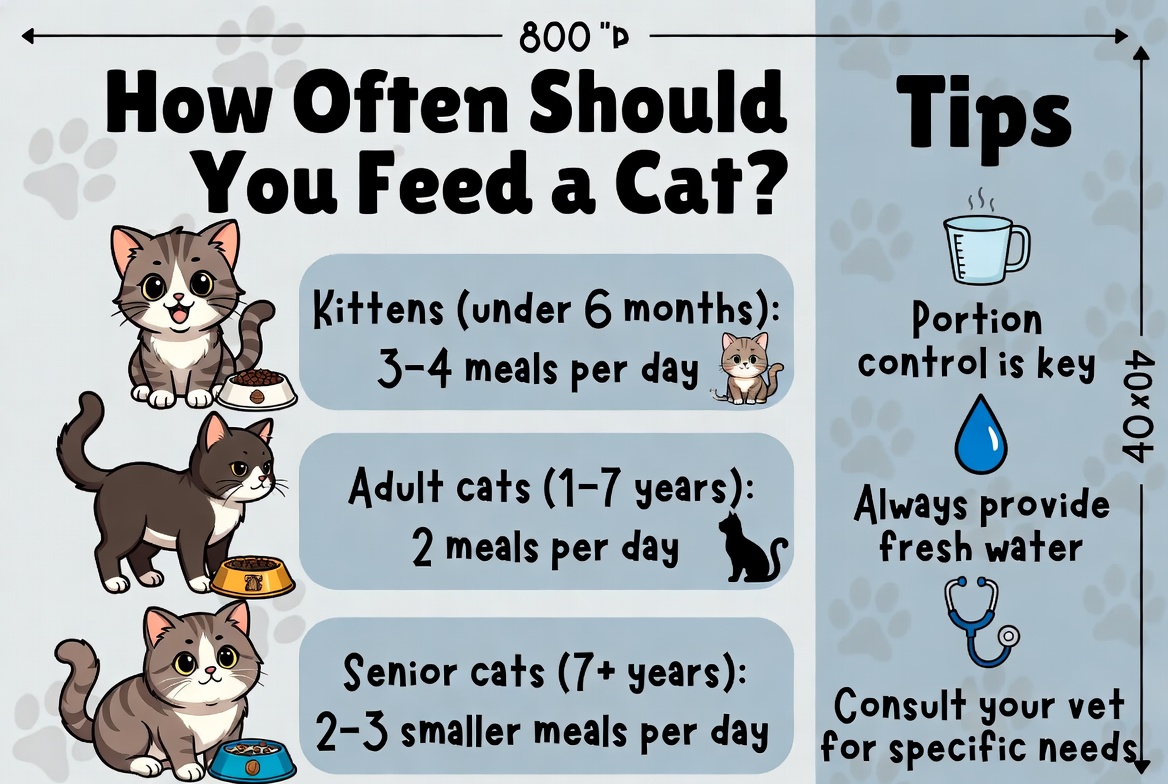
For most healthy adult cats, two meals a day works great. That usually means one meal in the morning and one in the evening, spaced about ten to twelve hours apart. This mimics a natural rhythm and keeps your cat’s metabolism steady throughout the day.
Some owners prefer three or even four smaller meals a day, especially if their cat tends to beg for food or eats too fast. Smaller, more frequent meals can help with:
- Reducing vomiting from eating too quickly
- Keeping blood sugar levels steady
- Lowering the chance of overeating in one sitting
- Making your cat feel satisfied more consistently
There is no strict rule saying two meals is the only right way. What matters most is consistency. Once you pick a schedule, try to stick with it as closely as possible.
Feeding Kittens: A Different Story
Kittens burn through energy fast because they are growing quickly and playing nonstop. Because of this, they need more frequent meals than adult cats.
Here is a simple breakdown by age:
Newborn to four weeks old Kittens this young usually nurse from their mother or drink kitten formula from a bottle every two to three hours. This is not something most pet owners handle directly unless they are caring for an orphaned kitten.
Four to eight weeks old This is when kittens start weaning onto solid food. Offer small meals four to six times a day. Their tiny stomachs cannot hold much at once, so frequent small portions work best.
Two to six months old At this stage, three to four meals a day is a solid routine. Kittens are still growing rapidly and need plenty of protein and calories to support healthy bone and muscle development.
Six months to one year old You can start shifting toward three meals a day, and by the time your kitten nears its first birthday, you can transition to the adult feeding schedule of two meals a day.
Kittens have small stomachs but huge energy needs, so frequent feeding keeps them fueled without overwhelming their digestive system.
Senior Cats and Their Feeding Needs
Older cats often need adjustments to their feeding routine too. As cats age, their metabolism slows down, and some senior cats become less active. Others may develop health issues like kidney disease, diabetes, or dental problems that affect how and when they should eat.
For most senior cats, two meals a day still works well. But you might notice your older cat eating less at each sitting, which is normal. If your senior cat is losing weight quickly or refusing food, it is worth checking in with your vet, since this could point to an underlying health issue that needs attention.
Some senior cats do better with smaller, more frequent meals, especially if they have trouble digesting large portions at once. Pay attention to your cat’s body language and appetite cues to figure out what works.
Free Feeding vs. Scheduled Meals
There are two common approaches when it comes to cat feeding: free feeding and scheduled meals. Let’s look at both.
Free Feeding
This means leaving dry food out all day so your cat can nibble whenever it wants. It sounds convenient, and it can work for some cats, especially those with naturally good self-control around food.
However, free feeding comes with real risks:
- It makes portion control nearly impossible, leading to obesity
- It can mask signs of appetite loss, which is often an early symptom of illness
- It works only with dry food, since wet food spoils quickly if left out
If you have multiple cats, free feeding also makes it hard to tell which cat is eating how much, which can be a problem if one cat needs a special diet or medication.
Scheduled Meals
This means feeding your cat set portions at specific times of day. Most vets recommend this approach because it gives you better control over your cat’s diet and health.
Benefits of scheduled meals include:
- Easier to track appetite changes, which helps catch illness early
- Better portion control, which supports a healthy weight
- Reduces the chance of food going stale or attracting pests
- Helps you notice quickly if your cat skips a meal, which can be an early warning sign
For most cats, scheduled meals are the smarter, safer choice, even though free feeding might seem easier at first glance.
Wet Food vs. Dry Food: Does It Change Feeding Frequency?
Yes, it can. The type of food you feed affects how often and how much you should offer.
Wet food has a much higher water content, which helps with hydration and tends to be more filling per calorie. Because it spoils if left out, wet food usually works best with scheduled meals, two to three times a day.
Dry food lasts longer sitting out and is often more calorie-dense, meaning your cat needs less volume to feel full. This makes it easier to free feed, but portion control still matters to avoid weight gain.
Many owners mix both types, offering wet food during scheduled mealtimes and a small amount of dry food available for grazing. This combination can offer the best of both worlds if managed carefully.
Factors That Affect How Often You Should Feed Your Cat
Every cat is different, and several factors influence the ideal feeding frequency.
Age
As covered earlier, kittens need frequent small meals, adults do well with two meals a day, and seniors may need adjustments based on health and activity level.
Weight and Body Condition
If your cat is overweight, your vet might suggest smaller, more frequent meals to help control calorie intake without leaving your cat feeling hungry for long stretches. If your cat is underweight, more frequent feeding can help increase calorie intake gradually.
Activity Level
An active, playful cat burns more energy and may need slightly more food or more frequent meals compared to a couch potato cat that naps most of the day.
Health Conditions
Cats with diabetes, kidney disease, or digestive issues often need a very specific feeding schedule set by a vet. For example, diabetic cats usually need meals timed around insulin shots to keep blood sugar levels stable.
Multi-Cat Households
If you have more than one cat, feeding schedules can get tricky. Some cats eat too fast because they feel competition from other pets. Feeding cats in separate spaces or at separate times can reduce stress and prevent one cat from eating another’s portion.
Signs You Might Be Feeding Your Cat Too Much or Too Little
Learning to read your cat’s body and behavior helps you fine-tune the feeding schedule over time.
Signs of overfeeding:
- Weight gain or a rounded belly that hangs low
- Low energy or reluctance to play
- Vomiting after meals from eating too much at once
- Difficulty grooming certain areas due to excess weight
Signs of underfeeding:
- Visible ribs or spine without much fat covering
- Excessive begging or crying for food
- Low energy and dull coat
- Weight loss over time
A healthy cat should have a visible waist when viewed from above and ribs that you can feel easily but not see sticking out. If you are ever unsure, your vet can help you figure out the right portion sizes and schedule based on your cat’s weight and body condition.
How to Set Up a Feeding Routine That Works
Here are some simple tips to build a feeding schedule your cat will thrive on.
Pick set times and stick with them. Cats thrive on routine, so try to feed at the same times every day, give or take thirty minutes.
Measure portions instead of guessing. Use a kitchen scale or measuring cup rather than eyeballing food amounts. This helps avoid overfeeding.
Watch your cat’s weight regularly. A quick monthly check-in on your cat’s body condition can help you catch changes early before they become bigger problems.
Avoid feeding table scraps. Human food can throw off your cat’s diet and lead to unhealthy weight gain or digestive upset.
Talk to your vet about specific needs. Every cat is different, and a vet can help tailor a feeding plan based on breed, age, weight, and any health conditions.
Use puzzle feeders for enrichment. These slow down fast eaters and give your cat some mental stimulation during mealtime, which is especially helpful for indoor cats that need extra activity.
What About Treats?
Treats can be part of a healthy diet, but they should stay limited. A good rule of thumb is that treats should make up no more than ten percent of your cat’s daily calorie intake. Too many treats can lead to weight gain and may throw off your cat’s appetite for regular meals.
If you use treats for training or bonding, try to factor them into your cat’s overall daily food amount rather than adding them on top without thought.
Common Feeding Mistakes to Avoid
Many cat owners make small mistakes without realizing it. Here are a few to watch for:
Feeding at random times every day. This confuses your cat’s internal clock and can lead to begging behavior.
Leaving dry food out constantly without measuring. This often leads to gradual weight gain that sneaks up over time.
Switching foods too quickly. Sudden diet changes can upset your cat’s stomach. Introduce new food gradually over several days by mixing it with the old food.
Ignoring appetite changes. If your cat suddenly eats much more or much less than usual, it could be a sign of illness. Do not brush this off, especially if it lasts more than a day or two.
Feeding based on the bag’s suggested amount without adjusting. Bag recommendations are just a starting point. Your cat’s actual needs depend on activity level, age, and metabolism, so adjust as needed based on body condition.
Special Considerations for Outdoor Cats
If your cat spends time outdoors, its calorie needs might be higher due to increased activity and exposure to colder temperatures. Outdoor cats may benefit from slightly larger portions or an extra small meal compared to indoor cats that spend most of the day resting.
That said, outdoor cats also face the risk of hunting and eating on their own, which can make it tricky to track exact food intake. Keep an eye on your cat’s weight and adjust home feeding amounts if you notice they are gaining or losing weight unexpectedly.
When to Talk to Your Vet About Feeding
While general guidelines work for most healthy cats, some situations call for a vet’s input:
- Your cat has a chronic illness like diabetes, kidney disease, or thyroid issues
- Your cat is significantly overweight or underweight
- Your cat suddenly refuses food or eats far less than normal
- You are transitioning from kitten food to adult food
- Your cat is pregnant or nursing, which increases calorie needs significantly
- You notice frequent vomiting, diarrhea, or other digestive issues tied to feeding
A vet can run tests, check body condition, and help you build a feeding plan tailored specifically to your cat’s needs.
Final Thoughts
Feeding your cat the right amount at the right times is one of the simplest ways to support a long, healthy life. For most healthy adult cats, two meals a day spaced evenly apart works well. Kittens need more frequent small meals to fuel their rapid growth, and senior cats may need slight adjustments based on their activity level and health.
Pay close attention to your cat’s body condition, energy level, and appetite. These signs will tell you a lot about how well your current feeding routine is working. And when in doubt, your vet is always the best resource for guidance tailored to your specific cat.
At the end of the day, a consistent, thoughtful feeding routine builds trust between you and your cat, supports good health, and helps prevent common issues like obesity or digestive trouble. Small changes, like measuring portions or sticking to set meal times, can make a big difference in your cat’s overall wellbeing.
Your cat depends on you to make smart choices about food, so take the time to observe, adjust, and check in with your vet when needed. A well-fed cat is a happy, healthy companion for years to come.
Frequently Asked Questions About Cat Feeding
Is it bad to feed a cat only once a day?
For most cats, one meal a day is not ideal. Cats have small stomachs built for eating little and often, similar to how they would hunt small prey multiple times a day in the wild. A single large meal can lead to overeating, stomach upset, and long stretches of hunger that cause begging or irritability. Two meals a day is a much better fit for most cats’ natural eating patterns.
Can I feed my cat at night?
Yes, you can. Many cats are naturally more active at dawn and dusk, so an evening meal fits their natural rhythm nicely. If your cat tends to wake you up at night looking for food, a small meal right before bedtime can help keep them satisfied through the night.
How long can a cat go without eating?
A healthy adult cat can typically go about twenty-four to forty-eight hours without food, though this is not something you should aim for on purpose. If your cat refuses food for more than a day, it is a good idea to reach out to your vet, since prolonged loss of appetite can lead to a serious liver condition called hepatic lipidosis, especially in overweight cats.
Should I feed my cat before or after exercise or play?
Many cats naturally want to hunt, then eat, then groom, then sleep. You can mimic this pattern by having a short play session before mealtime. This taps into your cat’s natural instincts and can make mealtime feel more rewarding and satisfying.
Do indoor cats need less food than outdoor cats?
Generally, yes. Indoor cats tend to be less active and burn fewer calories compared to outdoor cats that roam, climb, and hunt. Because of this, indoor cats often need slightly smaller portions to avoid weight gain. Keep an eye on body condition and adjust portions if you notice your indoor cat gaining extra pounds.
What if my cat begs for food constantly?
Constant begging does not always mean your cat is truly hungry. Some cats beg out of boredom, habit, or simply because they have learned that meowing gets them a snack. Try sticking to a firm schedule and avoid giving in to begging outside of mealtimes. Puzzle feeders and interactive toys can also help redirect that energy in a healthy way.
Is it okay to change my cat’s feeding schedule?
Yes, but try to do it gradually rather than all at once. Cats adjust better to slow changes. If you need to shift meal times or switch from free feeding to scheduled meals, ease into the new routine over a week or two so your cat has time to adapt without added stress.
A Quick Recap
Here is a simple summary to keep in mind:
- Kittens under eight weeks need four to six small meals a day
- Kittens from two months to six months do well with three to four meals a day
- Kittens nearing their first birthday can shift to two meals a day
- Healthy adult cats typically thrive on two meals a day
- Senior cats often stick with two meals but may need portion adjustments
- Scheduled meals generally beat free feeding for weight control and health monitoring
- Wet food usually calls for scheduled feeding, while dry food offers more flexibility
- Activity level, health conditions, and body weight all shape the ideal feeding frequency
Building the right feeding routine takes a little observation and patience, but once you find what works, both you and your cat will settle into a rhythm that supports a long, comfortable, and healthy life together.