5 Best Cat Litter For Urinary Tract Infections In 2026
As an Amazon Associate we earn from qualifying purchases.
Urinary tract problems in cats can be stressful to notice and hard to manage. Many owners look for a supplement that supports the bladder and kidneys, and the search for the best cat litter for urinary tract infections often leads to a mix of litter products and supplements.
This guide focuses on the supplements sold as cat UTI remedies, and it explains how they differ in plain terms. Note that a litter product and a supplement serve different purposes, so this review concentrates on the supplements.
Litter is a daily-use item that changes the environment around the cat, while a supplement is an ingested product meant to support urinary health from the inside.
The five products in this round-up share a few traits. Each one is sold as a natural or herbal aid for cat urinary health, and most rely on similar plant ingredients such as cranberry extract. This comparison rests on the listed features and typical use of each product, not on personal testing.
It is meant to help beginners understand what to look for before speaking with a veterinarian. Labels often describe effects in general supportive terms, so reading the ingredient list and dosing directions carefully is a good first step.



1. Cat & Dog Urinary Tract Infection Treatment: best for households with both cats and dogs
This drop-form supplement is labeled for both cats and dogs from three months of age. It is built around a blend of cranberry, pumpkin seed, couch grass and marshmallow root. Its listing centers on kidney and bladder support, along with help for discomfort during urination. Because it is a liquid, it can be easier to adjust than a tablet for very small or picky animals.
Who it suits and how it is used
This product suits owners who share a home with both a cat and a dog. The dosage depends on body weight, with the label listing half a dropper for pets under 10 pounds and up to three droppers for pets over 35 pounds. Each dropper holds one milliliter.
The drops can go straight into the mouth slowly, or be mixed into food, but the label says not to mix them with water. Owners should follow the chart for each animal separately rather than assuming one dose fits all pets in the house.
Key ingredients in plain words
Cranberry extract is included for urinary tract support. Pumpkin seed extract is described as having antioxidant properties. Couch grass and marshmallow root are listed for digestive and urinary support, and for easing discomfort. The label recommends daily use for up to four weeks, or as a veterinarian advises. Herbal ingredients can interact with some medications, so anyone already giving prescription treatment should check with a vet before starting.
Daily use and feel
Because the dosing is weight-based, owners of a multi-pet home may need to measure carefully for each animal. Mixing into food tends to be the simpler route for many households. Daily use is a short, routine task rather than a complex schedule. Many owners find it helps to attach the dose to an existing habit, such as the morning meal, so it is less likely to be missed.
Performance and ease of use
The product is sold as a supplement, so results can vary from pet to pet. The listing describes its effects in general supportive terms rather than with clinical data. Measuring with the dropper is straightforward, though owners should check the milliliter markings before each dose. Keeping a simple log of doses and any changes in litter box habits can help owners discuss results clearly with their veterinarian.
Value for money
The price sits in the middle range of this group. Buyers who need one product for both species may find it practical. Those who only have a cat may prefer a product formulated only for felines. Comparing the total cost of a full course against the number of doses per bottle gives a clearer picture than the sticker price alone.
Pros
- Labeled for both cats and dogs from three months of age
- Clear weight-based dosing chart on the label
- Can be mixed into food for easier daily use
- Uses familiar plant ingredients such as cranberry
Cons
- Dosing changes with weight, so multi-pet homes need careful measuring
- The label says not to mix with water, which limits some options
- Results are not backed by clinical data in the listing
- Usage is capped at four weeks unless a veterinarian advises otherwise
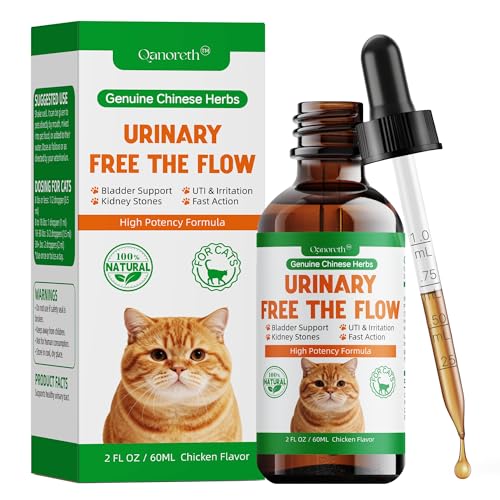
2. Urinary Tract: best for owners who want a simple, budget-friendly cat drop
This cat-only liquid drop is sold as a natural over-the-counter option for urinary and bladder support. It contains cranberry, pumpkin seed, couch grass, marshmallow root and bearberry. The listing highlights a chicken flavor that many cats accept.
Who it Who it suits and how it is used
This product suits owners who want a simple option for one cat. The listing says it can be added to water or food, and the built-in dropper makes measuring easier. Many buyers look for a low-mess routine, and this format is designed with that in mind.
Key ingredients in plain words
The formula uses cranberry extract, a plant ingredient often associated with urinary tract support. Pumpkin seed, couch grass, marshmallow root and bearberry appear alongside it. The listing says these ingredients are known to support kidney and bladder health, though it does not provide clinical proof.
Daily use and feel
Adding drops to food or water takes only a few seconds each day. Cats that dislike strong tastes may find the mild chicken flavor more agreeable. Owners should still watch if their cat accepts the drops without refusing food or water.
Performance and ease of use
The product is presented as a gentle daily supplement rather than a fast-acting treatment. Its listing mentions help with discomfort, straining and frequent urination. Because it is a supplement, outcomes can differ from cat to cat.
Value for money
This is the lowest-priced item in this round-up, and it offers a 60 milliliter bottle. For owners who want a basic, cat-specific supplement, the cost is easy to justify. Those who need stronger support for stones may want to look at other options in this list.
Pros
- Lowest price among the five products reviewed
- Built-in dropper makes measuring simple
- Mixes easily into water or food
- Chicken flavor may help with acceptance
Cons
- The listing offers general claims rather than clinical evidence
- Not specifically formulated for stone dissolution
- Some cats may still refuse flavored supplements
- Effects are described as supportive rather than rapid
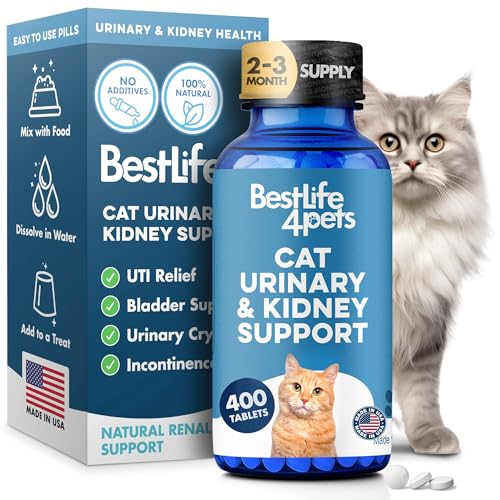
3. BestLife4Pets Cat UTI Remedy & Kidney Support: best for owners who prefer pills
This product comes as a large count of small tablets, with 400 pills in the package. It is marketed as a natural remedy for cat urinary tract infections, kidney health and bladder crystals. The listing focuses on flushing and general urinary wellness.
Who it suits and how it is used
This product suits owners who find liquid drops hard to give. The pills are described as small and odorless, and they can be hidden in treats or pill pockets. The listing also says they can be crushed and dissolved in water, which may help cats that resist swallowing tablets.
Key features in simple words
The product is positioned for kidney support, bladder irritation and frequent urinary problems. Its listing mentions helping to flush toxins and supporting the kidney and renal system. These are general supportive claims rather than specific medical outcomes.
Daily use and feel
A large pill count means a long supply for a single cat. Hiding a pill in a treat takes some practice, and not every cat accepts it. Owners who crush and dissolve pills should check that the cat takes the full dose.
Performance and ease of use
The product offers a different format from drops, which can be an advantage for pill-friendly routines. Its performance depends on how consistently the cat receives each dose. The listing does not provide clinical data, so expectations should stay modest.
Value for money
The price is higher than the drop products in this list, but the count is large. Per-dose cost may be reasonable for owners who give pills daily. Those who need a short course may find the supply more than they need.
Pros
- Large pill count offers a long supply
- Small, odorless and tasteless tablets
- Can be hidden in treats or dissolved in water
- Covers kidney, bladder and urinary concerns in one product
Cons
- Higher price than the drop
- Higher price than the drop-form products in this list
- Some cats resist pills even when they are hidden in treats
- The listing offers general claims rather than clinical evidence
4. Cat Bladder Remedy: best for cats with a history of bladder or kidney stones
This herbal product is marketed specifically for cats with bladder and kidney stones. Its listing focuses on helping existing stones pass and on reducing the chance that new ones form. It is one of the more stone-focused options in this round-up.
Stones and crystals are a common concern for cat owners, and the right product depends on what a cat actually needs. A supplement like this one is best viewed as a support tool. It is not a replacement for a diagnosis or a treatment plan from a veterinarian.
Who it suits and how it is used
This product suits owners whose cat has already been diagnosed with stones or crystals. It is described as useful during recovery, as well as for long-term prevention. The formula mixes with food or water, and the listing says it is made from 100 percent natural herbal ingredients.
A practical example is a cat that eats wet food at every meal. Mixing a powder into that food may be easier than getting the cat to accept a separate dose. Owners of dry-food eaters may prefer to add the product to water, though they should check that the cat keeps drinking it.
Key ingredients in plain words
The blend includes plantago seed, poria, hydrangea root, marshmallow root and cranberry extract. The listing says these ingredients help promote the discharge of stones and support smooth urine flow. Plantago seed and marshmallow root are commonly used in herbal products for soothing the urinary tract.
Cranberry extract is one of the better-known ingredients in urinary care, though its role in stone prevention is still debated among researchers. Readers who want to understand each ingredient in more depth can ask their veterinarian or read the full ingredient list on the product page.
Daily use and feel
Because the product is aimed at long-term use, it fits into a daily routine. Owners may notice that the cat’s urine flow and comfort are the main points the product addresses. Regular check-ins with a veterinarian remain important when stones are involved.
Keeping a simple log of litter box visits, urine color and any straining can help owners spot changes early. Bring that log to vet appointments, since it gives the vet useful information about how the cat is doing between visits.
Performance and ease of use
The listing makes strong claims about dissolving and preventing stones. These are not backed by clinical data in the product information, so readers should view them with caution. Mixing into food or water is simple for most households.
Ease of use is one of the product’s clearer strengths. Owners do not need special equipment, and the directions are straightforward. Acceptance still depends on the individual cat, so a small test portion is a sensible first step.
Value for money
The price falls in the middle of this group. Owners managing stone-prone cats may find a stone-specific formula worth considering. Those looking only for general urinary support may not need this level of focus.
When comparing prices, check the amount in each package and how long it lasts at the recommended serving. A lower sticker price can still cost more over time if the daily dose is larger. Compare cost per week rather than cost per package.
Pros
- Formulated with stone prevention and recovery in mind
- Made from listed herbal ingredients with no harsh additives mentioned
- Mixes easily into food or water
- Includes soothing ingredients such as marshmallow root
Cons
- Stone-dissolving claims are not backed by clinical data in the listing
- Stones can require veterinary care that a supplement cannot replace
- Herbal blends may vary in taste and acceptance from cat to cat
- Better suited to cats with known stone history than general use
5. Cat Urinary Tract Infection Treatment: best for a simple, gentle daily routine
This drop-form supplement is a close relative of the cat urinary products already covered. It contains cranberry extract, pumpkin seed extract, couch grass, marshmallow root and bearberry. Its listing centers on general urinary tract and bladder support.
Each ingredient in the blend is traditionally linked to urinary comfort in the product listing. The combination is meant to support the bladder as a whole rather than target one specific problem. Owners should read the full ingredient list to confirm that it matches their cat’s needs and any known sensitivities.
Who it suits and how it is used
This product suits owners who want an easy, low-effort routine for an adult cat. The dropper form can be mixed directly into food or water. The listing says it suits all ages and breeds of cats.
Measuring is simple because the dropper marks the dose. Owners who give the drops at the same time each day tend to build a routine more easily. A vet should still be consulted before starting any supplement, especially for a cat that is already on medication or has a diagnosed condition.
Key features in simple words
The chicken flavor is described as appealing to cats, which can make daily dosing easier. The formula is positioned as a natural over-the-counter option. Its listing mentions help with discomfort, straining and frequent urination.
Being sold over the counter means no prescription is required to buy it. That also means it is not regulated as a drug treatment for infections. Owners should treat it as a supportive product and not as a replacement for veterinary care.
Daily use and feel
Mixing a few drops into food is a quick daily step. Cats that accept the flavor may take it without fuss. Owners should still watch for any change in appetite or drinking habits.
Some cats notice the taste in water and drink less as a result. Mixing the drops into a small amount of wet food is often the easiest approach. Owners should keep fresh water available at all times, since more drinking supports a healthy urinary tract.
Performance and ease of use
The product is designed as a gentle supplement rather than a quick fix. Its effects are described in supportive terms. Results will vary between cats, and the listing does not include clinical trial data.
Owners should look for gradual changes over several weeks rather than dramatic results. Keeping a simple log of urination habits, litter box visits and behavior can help track any improvement. If symptoms such as blood in the urine, pain or inability to urinate appear, a vet visit is needed straight away.
Value for money
This item has a low price, close to the cheapest option in the group. It offers a straightforward, affordable way to add a daily supplement to a cat’s routine.
Owners who want a basic product for a single cat may find the cost easy to justify. Those who need more targeted support may prefer a stone-focused formula instead.
Pros
- Low price, close to the cheapest option in this round-up
- Dropper form is easy to measure and mix
- Chicken flavor may improve acceptance
- Suitable for cats of all ages and breeds, according to the listing
Cons
- General supportive claims without clinical evidence in the listing
- Not designed specifically for dissolving stones
- Some cats may refuse flavored drops
- Works as a gentle routine rather than a fast-acting option
Comparison insights: how these cat UTI remedies differ
The five products share many ingredients, so the differences often come down to format and focus. Drops are generally quicker to mix, while pills suit owners who prefer a solid dose. Stone-focused formulas target a narrower need than general urinary support products.
In terms of performance, all five are presented as supportive supplements rather than treatments with proven results. The listings describe help with comfort, flushing and general bladder health. None of them offers clinical data in its product information, so buyers should set realistic expectations.
Ease of use varies more than performance. The chicken-flavored drops and the Cat Bladder Remedy blend mix easily into food or water. The pills suit owners who can hide them in treats, though not every cat cooperates.
Value for money depends on the cat and the household. The lowest-priced drops offer a simple, affordable option. The larger pill count may suit owners who give daily doses over a long period. On the other hand, a higher price does not guarantee better outcomes, since the listings present similar kinds of claims.
Buying guide: key factors explained in plain words
Start by checking the species on the label. Some products are labeled for both cats and dogs, while others are cat-only. Choose the one that matches the animal you are treating. Using a product labeled for the wrong species can lead to incorrect dosing or unexpected reactions.
Next, consider the format. Drops mix easily into food or water and can be measured with a built-in dropper. Pills may suit cats that accept them, but some cats resist tablets even when they are hidden in treats. If your cat refuses one format, a different form may make daily dosing far easier.
Look at the ingredient list. Cranberry extract appears in almost every product here. Ingredients such as marshmallow root and couch grass are commonly used in herbal urinary blends. Check that you are comfortable with the plant ingredients before buying, and note any ingredient your cat has reacted to in the past.
Think about your reason for buying. A general urinary supplement may suit a cat with mild, occasional discomfort. A stone-focused product may suit a cat with a known history of stones. Keep in mind that supplements do not replace veterinary diagnosis or treatment. Signs such as straining in the litter box, blood in the urine, or repeated trips without producing much urine call for a prompt vet visit.
Finally, consider cost per dose rather than only the bottle price. A larger count or bottle may last longer. Compare the amount you will actually use over a typical course. Divide the total price by the number of doses to see which product costs less to use each day.
Who should buy these products: matching buyers to the right option
Owners with both a cat and a dog should consider the first product. Its labeling covers both species from three months of age. Dosing depends on weight, so careful measuring matters. Use the dropper or measuring tool that comes with the product, and never estimate by eye.
Owners who want a simple, budget-friendly drop for one cat may prefer the second product. Its dropper and mild chicken flavor keep daily use straightforward. It suits a basic routine rather than specialized needs. If your cat has a complex health history, ask your veterinarian before starting any new supplement.
Owners who struggle with liquids may find the pill-based product more practical. It suits cats that accept tablets or take them in treats. Owners who prefer to avoid liquids altogether may appreciate this format. Ask your vet how to give the tablet if your cat tends to spit out food or treats.
Owners whose cat has been diagnosed with bladder or kidney stones may look at the stone-focused remedy. It is described as useful for both recovery and prevention. Stones should still be managed with a veterinarian. Your vet can confirm the type of stone, advise on diet, and tell you if a supplement fits your cat’s treatment plan.
Owners who want a gentle, routine supplement for an adult cat may consider the fifth product. Its dropper form and chicken flavor make daily mixing easy. It suits owners looking for general support rather than stone-specific care. Keep track of how your cat responds, and report any change in appetite, litter box habits, or behavior to your vet.
Final verdict
No single product in this round-up is clearly the strongest choice for every cat. Each one suits a different household, format preference and budget. The right pick depends on the cat, the owner and the reason for buying.
Owners with a mixed household may favor the first product, since it is labeled for both dogs and cats and offers a wider use case. Those with a single cat and a tight budget may prefer the drop-form options, which tend to be easier to measure and mix into food or water.
Owners managing known stones may look first at the stone-focused blend, though they should still confirm that choice with a veterinarian.
In short, all five products are presented as supportive supplements rather than proven treatments. None of the listings includes clinical data, so no product here should be treated as a substitute for veterinary care.
A cat showing signs of pain, blood in the urine, straining or frequent attempts to urinate needs prompt attention from a vet. These signs can point to a blockage or another serious condition, and waiting to see if a supplement helps can delay the care the cat needs.
Frequently Asked Questions
Can a cat UTI supplement replace a vet visit?
No. A supplement can support urinary health, but it does not diagnose or treat infections or stones. A veterinarian should confirm the problem with an exam and, when needed, a urine test, and then recommend the right care.
Is cranberry extract the main ingredient in these products?
Cranberry extract appears in all five products, usually alongside other plant ingredients. Its role is described as supporting the urinary tract, though the listings do not provide clinical proof. Owners should compare the full ingredient list rather than focusing on one item.
Are drops or pills better for cats?
Neither format is better in every case. Drops mix easily into food or water, which can help cats that refuse tablets, while pills suit cats that accept them without fuss. The best choice is the one your cat will take consistently, because a supplement only works if it is given regularly.
How long should a cat take these supplements?
Some listings suggest daily use for up to four weeks, or as a veterinarian advises. Always follow the label and ask a vet about the right length of use for your cat. A cat with a recurring issue may need a different schedule than one using a supplement for general support.
Is it safe to give the dog-and-cat product to a cat?
The first product is labeled for both species and includes weight-based dosing. Owners should still check the dose for their cat’s weight and speak with a veterinarian before starting any new supplement. A dose that suits a dog can be too high for a small cat, so the label’s cat-specific guidance matters.

Hi, I’m Mary, the founder of PetGadgetPro.com. I’m a passionate pet lover with a special place in my heart for dogs and cats. I share practical advice and honest insights on pet gear to help pet parents make better choices. My dedicated research team studies products in depth, and our writers create reviews using trusted, authentic sources—so you can feel confident choosing the best for your pets.