How to Keep Litter From Tracking Around the House?
Cat litter tracking is one of those annoying pet problems that sneak up on you. One moment your cat steps out of the litter box, and the next thing you know, tiny granules are scattered across your kitchen, bedroom, and living room. If you’re tired of finding litter in your socks or sweeping up dirt every single day, you’re in the right place. This guide shows you real, practical solutions to stop litter from spreading all over your home.
Why Cat Litter Ends Up Everywhere
Before we talk about fixes, let’s understand why this happens in the first place. Cats use their paws to dig and cover their waste inside the litter box. When they do this, litter sticks to their paws and fur. Then they walk out and leave tiny tracks of granules throughout your house.
Some litter types are worse than others. Loose, fine-textured litter tends to stick to paws more easily. Heavier clumping litter doesn’t track as much, but it still happens. The problem gets worse when you have multiple cats or when cats are constantly going in and out of the box.
Your floor type matters too. Hard surfaces like tile and wood show litter more obviously than carpet. That said, you’ll find stray granules on any surface if you don’t take steps to prevent them.
Invest in a Quality Litter Box
Your first line of defense is the litter box itself. Not all boxes work the same way. Some designs catch more litter than others.
Top-Entry Litter Boxes
Top-entry boxes force cats to jump into the box from above and step down. When they exit, they step up and out. This motion naturally shakes loose litter off their paws before they leave the box. Cats have to jump higher to get in and out, which helps dislodge granules from their fur.
The downside? Some older cats or kittens struggle with the extra height. Cats with arthritis or joint problems might find it painful. You also need to make sure the box is big enough so your cat doesn’t feel cramped.
Self-Cleaning Litter Boxes
These mechanical boxes automatically rake out clumps. Less waste sits in the box, which means fewer opportunities for litter to stick to your cat’s paws. They cost more upfront, but they do reduce tracking because less dirty litter stays in the box.
Enclosed Litter Boxes with Doors
Covered boxes with a door or flap create a barrier between the litter box area and your home. Your cat steps out of the enclosed space, and the door acts as a natural stopping point. Many enclosed boxes also come with built-in litter traps that catch granules.
Use Litter Box Mats
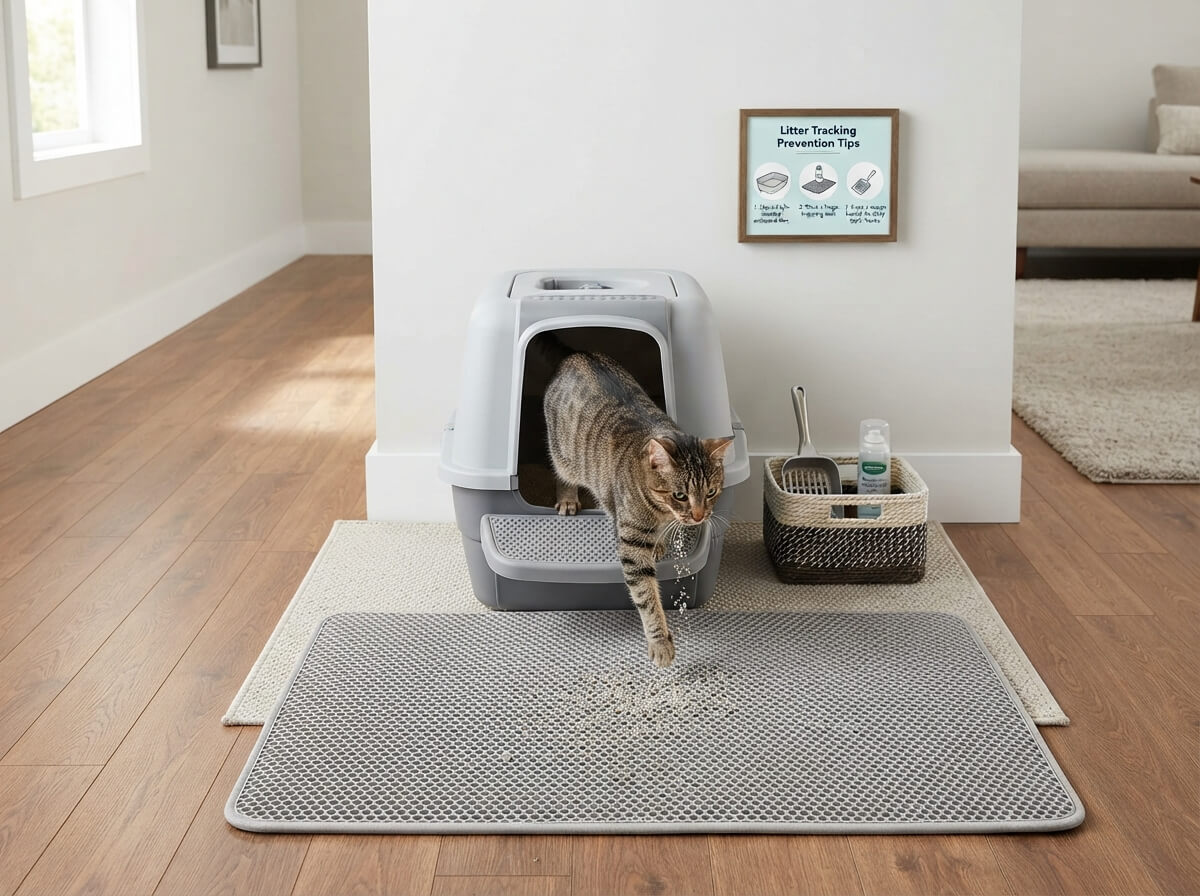
A good litter mat sits right in front of your litter box and catches litter before it reaches your floors. This is one of the most effective tools you can use.
Types of Litter Mats
Double-layer mats work really well. The top layer has holes that let litter fall through. Litter granules sink through the holes and collect on the bottom layer. When your cat steps onto the mat while exiting, more litter drops out of their paws into the mat.
Rubber mats with a textured surface also work. They grip your cat’s paws and shake off loose litter. Some cats like the feel of these mats, while others avoid them, so you might need to test a few options.
Washable fabric mats are another choice. They’re softer on paws and easier to clean than plastic or rubber. Toss them in the wash regularly, and they stay fresh and functional.
Mat Size and Placement
Get a mat that’s at least 2 to 3 feet wide and deep enough to catch litter from multiple steps. Place it directly in front of the litter box entrance. If your cat has to walk on the mat before stepping onto your regular floor, more litter will stick to the mat instead of spreading around.
Some people use two mats stacked together for extra catching power. The first mat softens the impact, and the second mat catches even more stray granules.
Choose the Right Type of Litter
The kind of litter you buy makes a real difference in how much tracks around your home.
Clumping Litter
Clumping litters form hard balls when they get wet. They’re heavier and don’t stick to paws as easily. Pine-based clumping litter tends to track less than clay-based versions. It’s also slightly easier on your cat’s respiratory system.
Pellet Litter
Pellet litter is much larger than typical granules. Cats can’t bury waste as completely, so some cats dislike it. However, the large size means it doesn’t stick to paws nearly as much. Pellets also track less overall because they’re heavier and roll instead of stick.
Crystal Litter
Crystal litter is less common but works well for tracking. The crystals are bigger and don’t cling to fur. They do need regular scooping, and some cats find them uncomfortable, so check with your cat first.
Avoid Fine-Textured Litter
Stay away from ultra-fine, dust-like litter. These products create clouds of dust, track easily, and can irritate your cat’s airways. Even though fine litter feels soft, it causes more problems than it solves.
Create a Litter Box Room or Corner
If you have space, dedicate an area of your home to the litter box. A spare bathroom, laundry room, or mudroom works great.
Keep this space separate from the main living areas. Place the litter box inside, then put a litter mat in front of it. Your cat still has easy access, but the litter tracking stays contained to one zone. You only need to clean that specific area instead of sweeping your whole house.
If you add a baby gate or pet gate to the entrance, you keep the litter mess even more contained. Your cat can jump over or push through the gate, but stray litter stays on that side.
This approach takes up more space, but it dramatically cuts down on litter scattered throughout your home.
Maintain Your Litter Box Regularly
A dirty litter box causes more tracking. When waste piles up, your cat has to dig deeper to find clean litter. More digging means more litter sticks to their paws.
Daily Scooping
Scoop out clumps at least once a day, ideally twice. Remove solid waste and any clumped litter as soon as your cat uses the box. This keeps the surface clean and reduces the chance of litter sticking to paws.
Weekly Full Changes
Once a week, throw out all the litter and wash the box. Use warm soapy water and dry it completely before adding fresh litter. A clean box is less likely to have litter spread around because the bottom isn’t caked with debris.
Odor Control Without Mess
Skip litter additives and sprays that create extra dust. These products actually make tracking worse. Instead, focus on scooping more often. Baking soda works if you want to control odor, but honestly, daily scooping is your best bet.
Place the Litter Box in a Strategic Location
Where you put the litter box affects how much litter ends up in other rooms.
Away From Main Living Areas
Put the box somewhere quiet and low-traffic. Cats need privacy when they use the bathroom. A basement corner, spare closet, or guest bathroom is ideal. Avoid high-traffic hallways or main living spaces.
On Easy-to-Clean Flooring
Place the box on tile, linoleum, or other hard flooring if possible. Litter sits on top of these surfaces and doesn’t stick. It’s easy to sweep up or wipe clean. Wood floors work too, but they’re harder to clean and can get damaged over time.
Away From Food and Water
Keep the box far from your cat’s food and water bowls. Cats naturally want distance between eating and bathroom areas. A cat that feels the box is too close to their food is more likely to have accidents elsewhere.
Install a Litter Box Enclosure
Enclosures do more than just hide the box. They actually catch litter.
Furniture-Style Enclosures
These look like decorative furniture and house the litter box inside. They often have an entrance hole or door. Your cat gets privacy, and the enclosed space contains dust and scattered litter. Enclosures keep the mess contained better than open boxes.
DIY Enclosure Options
You don’t need to buy expensive furniture. A large plastic storage container with a hole cut in the side works great. A cardboard box with a small entrance also helps contain litter. Even a simple wooden frame with fabric draped over it creates a barrier.
Open-Frame Enclosures
Some enclosures have an open top but high sides. Litter flying out during digging gets caught inside. Your cat can still jump in and out easily.
Use Litter Tracking Prevention Mats
Beyond basic litter mats, specialty products help stop tracking.
Honeycomb-Design Mats
These mats have holes all over that let litter fall through. They’re specifically designed to catch granules before they leave the litter area. The holes are sized so litter falls through but your cat’s paws don’t sink in.
Multi-Layer Mats
Mats with three or more layers trap litter at each level. Litter falls through multiple barriers and gets stuck deep in the mat. These heavy-duty mats cost more but last longer and work harder.
Sticky Mats
Some mats have a slightly tacky surface that grabs litter particles. They work well but need cleaning more often since the stickiness wears down.
Keep Your Cat Clean
Sometimes the solution involves your cat directly.
Regular Brushing
Brush your cat at least twice a week, ideally every day. A slicker brush or undercoat rake removes loose fur and gets rid of litter particles clinging to their coat. Less litter stuck in their fur means less drops around the house.
Paw Wipes
Keep paw wipes near the litter box. After your cat uses the box, gently wipe their paws. This removes stuck litter before they walk on your floors. Most cats tolerate quick paw wipes, especially if you use pet-safe wipes.
Occasional Baths
Cats don’t need frequent baths, but a bath every month or two can help if tracking is severe. Focus on their paws and rear end. Use warm water and cat-safe soap. Bathe your cat only if they’re comfortable with water.
Improve Your House Layout
Sometimes the best solution involves how you arrange your home.
Create a Transition Zone
If the litter box is in a room that connects to your main living space, use furniture or rugs to create a transition area. Place a mat in the doorway. This gives your cat a place to step and shake off litter before entering the next room.
Use Rugs Strategically
Place washable rugs in high-traffic areas between the litter box and main living spaces. Litter gets trapped in the rug fibers instead of spreading across hard floors. Shake out and wash these rugs frequently.
Rearrange Furniture
If possible, create a path from the litter box that goes through less-used areas of your home. Your cat’s main route to and from the box will determine where litter spreads. Route that path away from bedrooms and living areas.
Control Dust and Air Movement
Dust from litter can spread litter particles through the air.
Keep the Area Ventilated
Use a fan near the litter box to push dust and small particles away from living spaces. Direct the fan toward a window or away from bedrooms. Good air circulation prevents litter dust from settling throughout your home.
Use an Air Purifier
An air purifier with a HEPA filter removes litter dust from the air. Place it near the litter box area. Run it continuously or at least several hours a day. This helps keep litter particles from floating around.
Reduce Drafts
Avoid placing the litter box near air vents or fans that blow toward your living space. Moving air can kick up litter and spread it further. Choose a protected, draft-free spot.
Handle Multiple Cats
If you have several cats, tracking gets worse because more cats use the box more often.
Use Multiple Boxes
The rule is one box per cat plus one extra. Two cats need three boxes. Three cats need four boxes. More boxes mean less time between uses, and you can scoop more frequently. Each box stays cleaner, so less litter sticks to paws.
Separate Box Locations
Place boxes in different rooms if you can. Spread out the tracking problem instead of having all litter tracked from one spot. Each box gets its own litter mat and enclosure.
Rotate Litter Types
Some cats prefer different litter types. If your cats have different preferences, ask your vet about safe compromises. Sometimes using slightly different litter types reduces the amount each cat tracks.
Clean Up Efficiently
Even with all these prevention methods, some litter still gets out.
Vacuum Regularly
Vacuum high-traffic areas daily if you have cats. Use a vacuum designed for pet homes with good suction. Litter granules hide under furniture and in corners, so be thorough.
Use a Lint Roller
Keep lint rollers near the litter box area. Quick cleanups with a lint roller catch loose litter before it spreads. It’s faster than vacuuming for small messes.
Sweep First
Before vacuuming, sweep litter granules into a pile. This protects your vacuum from clogging and speeds up cleanup. Combine sweeping with a litter scoop for quick, efficient cleaning.
Try Commercial Solutions
Several products are designed specifically to stop litter tracking.
Litter Genie Boxes
These storage boxes lock in odor and dust. They’re not litter boxes themselves but holding containers. They do reduce odor and contain some dust, which helps with tracking reduction.
Automatic Litter Boxes
Self-cleaning boxes remove waste immediately after use. Less dirty litter stays in the box, so less gets tracked out. They’re expensive but effective if tracking is a major problem.
Litter Deodorizers
Some sprays and powders reduce odor without creating extra dust. Look for products labeled dust-free and pet-safe. These help your space smell fresher without adding to tracking problems.
Be Patient With Your Cat
Cats don’t track litter on purpose. They’re naturally clean animals. Using these solutions takes time, and your cat might need adjustments. If you suddenly change everything, your cat might get stressed or stop using the box.
Change one or two things at a time. Add a mat, then swap to a better litter type after a week. Give your cat time to adjust to new boxes or locations. A stressed cat is more likely to have accidents, which creates other problems.
Quick Action Steps
Start reducing litter tracking right now with these steps:
First, buy a quality litter mat and place it in front of your box today. This single step catches the most litter.
Second, switch to a clumping or pellet litter if you’re using fine-textured litter. Better litter makes an immediate difference.
Third, commit to daily scooping. Clean litter stops sticking to paws as much.
Fourth, brush your cat regularly. Remove litter from their fur before it hits your floors.
These four actions alone cut litter tracking by half in most homes.
Conclusion
Litter tracking doesn’t have to be a permanent problem in your home. Use a combination of these strategies to find what works for your specific situation. Every cat and home is different, so your perfect solution might involve a litter mat plus an enclosed box, or it might be switching to pellet litter and adding daily brushing.
Start with the easiest, most affordable fixes first. A quality mat and better scooping habits cost little and help a lot. Add more solutions as needed. Most people find that two or three of these methods eliminate the majority of litter tracking problems. Your home can stay clean and your cat can stay happy. It just takes a little effort and the right approach.
Hi, I’m Mary, the founder of PetGadgetPro.com. I’m a passionate pet lover with a special place in my heart for dogs and cats. I share practical advice and honest insights on pet gear to help pet parents make better choices. My dedicated research team studies products in depth, and our writers create reviews using trusted, authentic sources—so you can feel confident choosing the best for your pets.