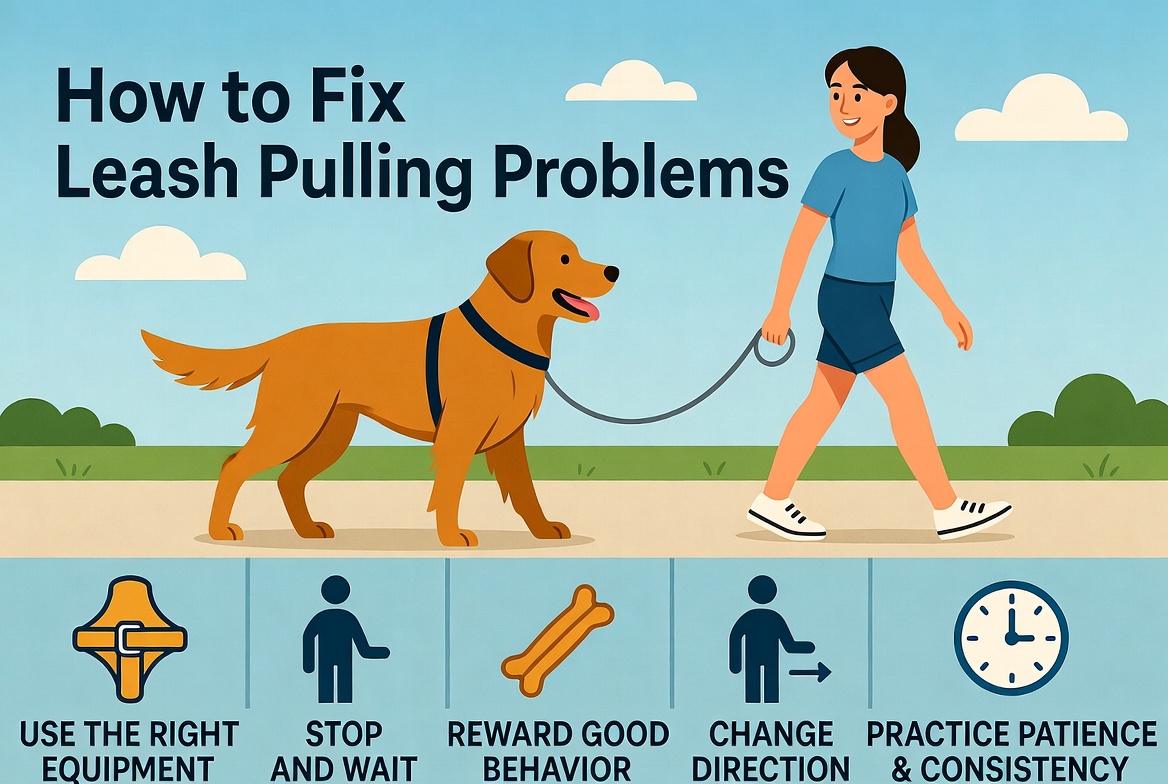
How to Fix Leash Pulling Problems?
Your dog yanks on the leash like they’re training for a sled dog race. Your arm feels like it might pop out of its socket. You dread walks. Sound familiar? Leash pulling is one of the most common dog behavior issues that dog owners face, and the good news is that you can fix it.
The thing is, your dog pulls on the leash for reasons that make total sense to them. They’re not trying to drive you crazy. They simply haven’t learned how to walk politely on a leash yet. With patience, consistency, and the right techniques, your dog can become a joy to walk with instead of a chore.
This guide walks you through everything you need to know about dog leash pulling, why it happens, and exactly how to solve it so your walks become enjoyable again.
Why Do Dogs Pull on Leashes?
Before we jump into solutions, let’s talk about why your dog pulls in the first place. Understanding the root cause helps you fix the problem faster.
Dogs pull on leashes because they’re excited. That squirrel over there? Worth pulling toward. The neighbor’s dog? Gotta investigate. Your dog’s natural instinct is to move forward and explore their world. The leash feels like it’s holding them back from all the fun stuff they want to do.
Your dog also pulls because it works. If your dog pulls and you move forward, they learn that pulling gets them what they want. They’ve trained you without meaning to. Every time you let your dog drag you toward something they’re interested in, you’re rewarding the pulling behavior.
Dogs that pull on leashes haven’t learned any better way to get around. They don’t know that staying close to you and walking calmly also leads to good things. They’ve never learned that walking behavior pays off better than pulling behavior.
Some dogs pull because they have excess energy. A dog that hasn’t exercised enough will have pent-up energy that comes out on the leash. That pulling might be their way of burning off steam.
Other dogs pull because they feel anxious or overwhelmed. They might pull to escape something that scares them or to get closer to something that comforts them. Anxiety-based pulling looks different from excitement-based pulling, and we’ll talk about how to handle both.
The Right Gear Makes a Difference
Your equipment matters when you’re trying to stop leash pulling. The wrong collar or leash can actually make pulling worse.
A regular collar puts all the pressure on your dog’s neck. When your dog pulls, it tightens around their neck, which feels bad and can even damage their trachea over time. This is why we don’t recommend using regular collars for dogs that pull.
A harness is a much better choice for a pulling dog. A front-clip harness puts the attachment point on your dog’s chest. When your dog pulls, the harness turns their body toward you. It’s physics, and physics always wins. Your dog learns that pulling doesn’t actually get them anywhere. This makes training way easier because your dog gets immediate feedback about what doesn’t work.
A retractable leash is the enemy of leash training. These leashes teach dogs that pulling equals more freedom. They also make it nearly impossible to maintain a consistent distance from your dog. Stick with a standard 4-foot to 6-foot leash instead.
Some people use no-pull harnesses or head halters. These tools can work well if your dog tolerates them, but they’re not magic. The real work still comes down to training and consistency.
Start with Exercise and Mental Stimulation
Here’s a truth that many dog owners miss: a tired dog is a dog that pulls less. Your dog needs exercise before you even start leash training.
Think about it. If your dog has pent-up energy, they’re going to want to run and explore the moment that leash goes on. No amount of training will overcome that burning need to move. So start by wearing your dog out.
Take your dog for a run in the backyard. Play fetch. Do some training games that make them think. Visit a dog park if your dog gets along well with other dogs. The goal is to burn physical and mental energy.
A tired dog is calmer and more focused during leash training. They’re more likely to listen to you. They’re more interested in working with you than bolting ahead. This isn’t lazy training—this is smart training. You’re setting yourself up for success.
Do this exercise before your training sessions. Your dog will respond better and learn faster.
The Stop and Go Method
This is one of the most effective ways to teach dogs not to pull. It’s simple, doesn’t require any special equipment beyond a good harness and leash, and it works with most dogs.
Here’s how it works:
Start your walk. The moment your dog pulls, stop moving. Just plant your feet. Don’t yank back on the leash. Don’t say anything. Just stop. Your dog will feel the change and look back at you wondering why you’re not moving.
Wait for your dog to take a step toward you. It might just be one step. The second your dog gives you slack in the leash, you start moving again. Reward this good behavior with praise, a treat, or just the reward of moving forward.
Your dog is learning that pulling makes you stop, and slack in the leash makes you move. They’re learning that the only way to get somewhere is to not pull.
Be consistent. Every single time your dog pulls, stop. Don’t get frustrated or angry. Just stop. This isn’t punishment—it’s natural consequence. Pulling doesn’t work anymore.
This method takes time. Your walks will be slow at first. Your dog has been pulling to reach places, and now that tactic doesn’t work. They’ll figure out that walking next to you is the way to go, but it takes repetition.
Most dogs start showing improvement within a few days of this method. Some dogs catch on in a few hours. Every dog is different, and patience is key.
The Reward-Based Approach
The stop and go method works by stopping what dogs don’t want (progress stops). The reward-based approach works by giving dogs what they do want (treats and praise) when they do the right thing.
Here’s how to use this approach:
Walk your dog on a loose leash. When your dog isn’t pulling, give them a treat. Then give another treat a few seconds later. Keep the rewards coming as long as your dog stays close and keeps the leash loose.
This method teaches your dog that being near you and walking calmly is the best thing ever. Why would they want to pull when staying close gets them yummy treats?
The key is to reward constantly at first. Don’t wait for your dog to pull and then expect them to know they did wrong. Catch them doing it right and reward heavily.
As your dog gets better at loose leash walking, you can reward less often. You’ll go from treating every few seconds to treating every minute or so.
Some people worry about training their dogs with treats. That’s okay at first. Gradually, your dog will start walking nicely just to stay near you, and you’ll need treats less often. Also, you can use small pieces of food from their regular meals so you’re not adding extra calories.
Combine this method with the stop and go method for even better results. Reward loose leash walking, and stop when your dog pulls.
Teach the “Heel” or “Close” Command
Teaching your dog a specific command for walking nicely on a leash gives them something concrete to aim for.
Start in your house or yard where there are fewer distractions. Hold a treat close to your leg. Move a few steps forward. The treat lures your dog to stay near your leg. Say “heel” or “close” as your dog stays in this position. When you stop, give the treat.
Repeat this over and over. Eventually, your dog learns that the word “heel” means walk right next to your leg, and good things happen.
Once your dog knows this command at home, practice it on walks. When you see your dog about to pull, say “heel” and reward when they comply.
This gives your dog a job to do. Instead of just wandering and pulling, they’re focusing on staying near you and listening for your command. Many dogs actually love having this kind of structure.
Handle Common Walking Challenges
Different situations make leash pulling worse. Let’s talk about how to handle the toughest scenarios.
Other dogs: Most dogs get excited when they see another dog. They pull to get closer. The best approach is to create distance. Cross the street or step to the side before your dog reaches their pulling point. Reward your dog for staying calm around the other dog. Over time, your dog learns that staying calm around other dogs is better than pulling toward them.
Squirrels and other animals: These triggers are tough because they’re so exciting for dogs. The stop and go method works well here, but you might also try redirecting your dog’s attention back to you before they pull. Call their name, offer a treat, or point at something else. Make yourself more interesting than the squirrel.
People: Some dogs pull toward people they want to greet. This is friendly pulling, but it’s still pulling. Work on loose leash walking near people. Reward your dog for staying calm even when they see humans they like.
Passing by favorite spots: If your dog pulls toward a particular house, park, or location, start creating distance before you reach that spot. Reward your dog for staying calm as you pass by.
Stay Consistent Across Everyone
This is huge and often gets overlooked. If one person in your house uses the stop and go method while another person lets your dog pull, your dog gets confused. Your dog learns that sometimes pulling works and sometimes it doesn’t, so they keep trying.
Everyone who walks your dog needs to use the same approach. Sit down with your household and pick one method. Then stick with it, every single walk, every single time your dog pulls.
Your dog can handle different people walking them if everyone follows the same rules. Dogs understand that different people might have different voices or treat types, but the rules stay the same.
What About Punishment?
A lot of dog owners want to know if they should punish leash pulling. The short answer is no. Punishment doesn’t work well for stopping pulling and often makes things worse.
When you jerk a leash or yell at your dog for pulling, your dog learns to fear the leash or fear you during walks. Your dog doesn’t learn what to do instead—they just learn to avoid punishment. This often leads to more anxiety and more pulling.
Punishment also damages your relationship with your dog. Your dog should enjoy walks with you, not fear them.
The methods we talked about—stop and go, rewards, teaching commands—these work because they teach your dog what to do instead of pulling. Your dog learns the right behavior, and there’s no fear or damage to your bond.
Troubleshoot Your Training
If your dog isn’t improving after a week or two, something needs to change.
First, make sure you’re being consistent. Are you actually stopping every single time your dog pulls? Be honest. Missing even some of the pulling behaviors slows down your dog’s learning.
Second, check your expectations. How long has your dog been pulling? If your dog has been pulling for a year, don’t expect a complete fix in a week. Change takes time, usually a few weeks to a few months.
Third, make sure your dog is getting enough exercise beforehand. A wired dog learns slowly.
Fourth, check your leash and harness. Are they actually working correctly? Is your harness fitted properly? Sometimes equipment issues slow progress.
If nothing is working after several weeks, talk to a professional dog trainer. Some dogs have leash pulling issues connected to anxiety or fear, and these dogs might need specialized help.
Keep Training on Walks
Leash training doesn’t happen in a vacuum. Every single walk is a training opportunity.
Pay attention to your dog’s body language. Notice when they’re about to pull and head it off. Notice when they’re walking well and reward that behavior. Stay focused on the training.
Some people zone out during walks and then wonder why their dog isn’t improving. Your walks need to be work time, not just time to be outside.
This doesn’t mean walks can’t be fun. They absolutely can be. But you need to be present and engaged with the training part of the walk.
Build Better Habits Gradually
You don’t have to walk your dog in the most exciting places right away. Start in quiet areas where there are fewer things to pull toward. Maybe that’s your street or a quiet park.
Once your dog walks nicely in calm places, move to slightly more exciting locations. Then progressively introduce more distractions.
This is called building duration and distance. You’re teaching your dog to walk nicely for longer periods and in tougher environments.
A dog that walks perfectly in your neighborhood might lose it when you get to a busy dog park. That’s normal. Each new environment is new training. Go back to more basic training in exciting places, then gradually increase the difficulty.
Celebrate Small Wins
Your dog probably won’t go from pulling constantly to walking perfectly overnight. That’s okay. Celebrate every improvement.
When your dog walks for ten seconds without pulling instead of five seconds, that’s progress. When they pull less frequently than they did yesterday, that’s progress. When they look at you instead of yanking toward something interesting, that’s huge progress.
These small wins add up. Lean into the incremental improvement and you’ll stay motivated to keep training.
The Long-Term Reality
Here’s the truth about leash pulling: it doesn’t stop forever after one training session. Your dog always knows that pulling exists as an option. You’re not making pulling impossible. You’re making it not work and making loose leash walking more rewarding.
This means maintaining loose leash walking throughout your dog’s life. That sounds like a lot, but it’s not. Once your dog learns the behavior well, maintenance is easy. You still reward occasionally. You still use your consistent technique if your dog tests the boundaries.
Think of it like brushing your teeth. You don’t brush your teeth once and call it good forever. You brush regularly to maintain good oral health. Same thing with loose leash walking. You maintain it with regular walks and the occasional reward.
Wrap It Up
Leash pulling doesn’t have to be a permanent part of your dog ownership experience. Dogs are learners, and they can absolutely learn to walk nicely on a leash.
Start with the right equipment—a front-clip harness and regular leash. Exercise your dog before training. Pick a training method that fits your style, whether that’s stop and go, rewards, or teaching a specific command. Stay consistent across everyone who walks your dog. Be patient and celebrate progress.
Your walks will get better. Your dog will get better. You’ll both enjoy being outside together way more than you do right now.
The effort you put in now pays dividends for years. A dog that walks nicely on a leash opens up your whole world. You can take them places. You can let other people walk them. You can enjoy your dog instead of getting frustrated every time you clip on the leash.
Start today. Pick one method. Do one walk. Then do another walk tomorrow using the same method. Keep going. Your future self will thank you for putting in this work now.