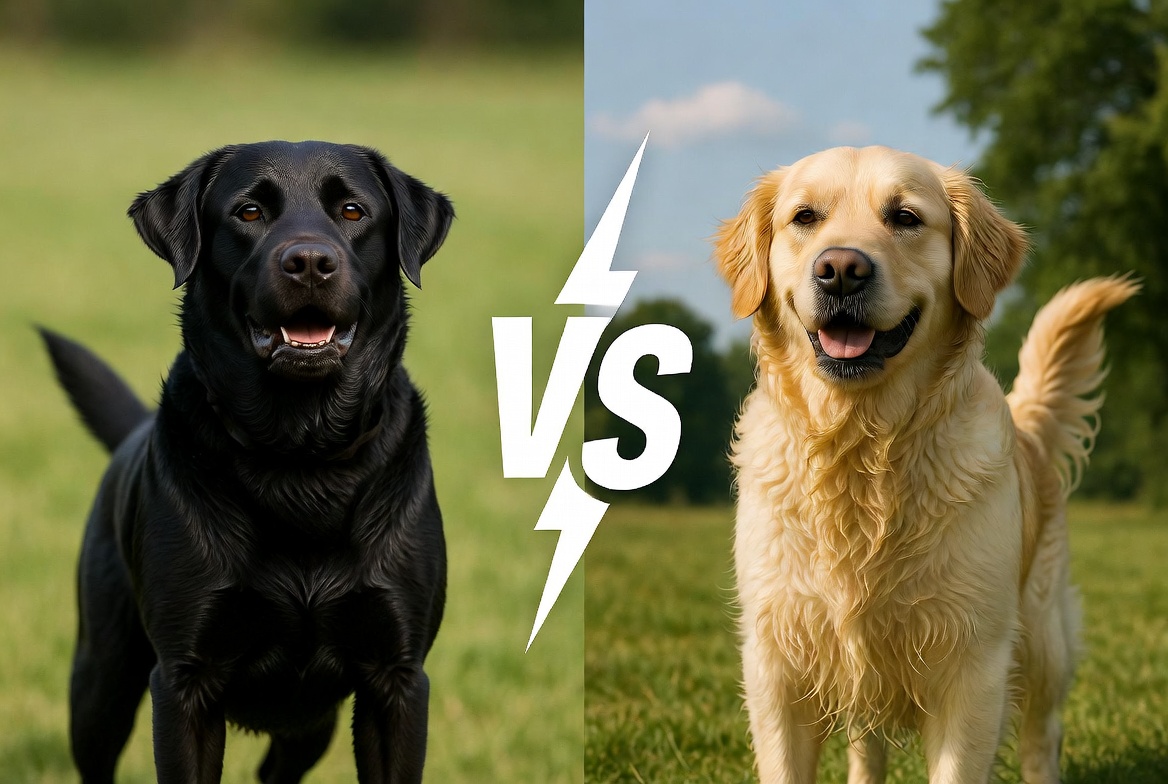
Labrador vs Golden Retriever
Are you torn between two of the most popular dog breeds? Labradors and Golden Retrievers look similar to many people. They’re both big, friendly, and full of energy. But they have real differences that matter when you’re picking your next pet.
This guide breaks down everything you need to know about these amazing dogs. You’ll learn about their personalities, how much exercise they need, their health issues, and much more. By the end, you’ll have a clear picture of which breed fits your life better.
The Origins and History of Both Breeds
Where Labradors Come From
Labradors started as water dogs in Newfoundland, Canada. Fishermen used them to help pull in nets and retrieve fish that fell off lines. These dogs were tough workers in cold, wet conditions. They had water-resistant coats that kept them dry and warm.
The breed came to England in the 1800s. English hunters loved them for retrieving game from water and land. They refined the breed and made it more popular. Eventually, Labs became beloved worldwide.
Golden Retrievers: A Different Story
Golden Retrievers came from Scotland. Dudley Marjoribanks, a Scottish nobleman, created the breed. He wanted a dog that could retrieve birds in the highlands. His goal was to combine the best traits from different retriever breeds.
He used Wavy-Coated Retrievers as the main base. Then he added other breeds to get the exact dog he wanted. The result was the Golden Retriever. The breed became popular in England first, then spread around the world.
Both breeds were designed to be hunters and retrievers. This explains why they both love water and have strong natural instincts.
Physical Differences You Can See
Size and Weight
Labradors and Golden Retrievers are similar in size, but there are small differences. Male Labs usually weigh 65 to 80 pounds. Females are a bit lighter at 55 to 70 pounds. They stand about 22 to 24 inches tall at the shoulder.
Golden Retrievers are roughly the same size. Males typically weigh 65 to 75 pounds. Females usually run 55 to 65 pounds. They stand about 20 to 24 inches tall.
Both breeds fall into the large dog category. If you live in a small apartment, either breed might be tough to fit. They need space to move around comfortably.
Coat Types and Colors
This is where you see a major difference between the two breeds.
Labradors have short, dense coats. The hair lies flat and looks sleek. Labs come in three solid colors: black, yellow, and chocolate. That’s it. You won’t find a mixed color Lab.
Golden Retrievers have longer, feathered coats. The hair is silky and flows nicely. Goldens come in cream, golden, and dark golden colors. Some Goldens are almost white. Others look nearly red.
Labs shed, but not as much as Goldens. Golden Retrievers are known for heavy shedding. You’ll find their hair on your furniture, clothes, and floors. During spring and fall, it gets really bad.
If you don’t like vacuuming, Labs might be the better choice. If you’re okay with extra fur everywhere, Goldens can still work for you.
Facial Features
Labradors have broader skulls and stronger jaws. Their noses are larger. Their eyes sit wider apart on their heads.
Golden Retrievers have more refined features. Their skulls are narrower. Their faces look softer and more gentle. Their eyes seem kinder. Both breeds have floppy ears, but Goldens’ ears are longer.
If you like a stronger-looking dog, Labs fit that bill. If you prefer a softer appearance, Goldens are more your style.
Personality Traits and Temperament
How Labradors Act
Labs are known for being outgoing and energetic. They love people and want to be included in everything. Labs are highly social dogs. They do great with families, kids, and other pets.
Labs are also very food motivated. They’ll do almost anything for a treat. This makes training easier in many ways. The downside is they can get overweight if you aren’t careful with portions.
Labs have a “do it now” attitude. They want to play, run, and work right away. They get bored easily if left alone too long. A bored Lab can become destructive. They might chew furniture or dig holes in your yard.
Labs are friendly with everyone. They’re not guard dogs. A thief could walk into your home, and your Lab might just wag its tail. This friendliness is one of their best traits.
How Golden Retrievers Behave
Golden Retrievers are also incredibly friendly and loving. They might actually be even more gentle than Labs. Goldens are sensitive dogs. They pick up on your moods and emotions.
Goldens are eager to please. They want to make you happy. This desire to please makes them wonderful service dogs. They’re used as guide dogs for blind people and therapy dogs for hospitals.
Goldens are patient with kids. They rarely snap or get mean. They have an almost endless supply of patience and kindness.
Goldens do get sad when left alone. They bond deeply with their families. Being separated from you can cause anxiety. Some Goldens develop separation anxiety if left alone for long periods.
Goldens are still energetic and playful. They love running and swimming. But they seem to balance playtime with calm, cuddly moments better than Labs.
Training and Intelligence
How Easy Are Labs to Train?
Labradors are smart dogs. They learn commands quickly. Because they’re food motivated, training goes pretty fast. You use treats as rewards, and they catch on.
Labs want to please you once they understand what you want. Training a Lab puppy is actually fun for most people. They seem excited to learn new things.
The challenge with Labs is their energy level. They might know exactly what you want, but they’re too hyped up to focus. Young Labs can be stubborn when they’re playing. They want action, not lessons.
Positive reinforcement works best with Labs. Use treats, toys, and praise. Never use harsh punishment. Labs respond to kindness and encouragement.
Training Golden Retrievers
Goldens are also intelligent dogs. They learn quickly and retain information well. Training a Golden is often smooth because they so badly want to please you.
Goldens don’t need food rewards as much as Labs do. They’re happy with praise and a pat on the head. For many Goldens, your happiness is reward enough.
Goldens focus better than Labs during training sessions. They seem more willing to sit still and work through lessons. This makes them excellent for obedience competitions.
The downside is that Goldens can be more stubborn about things they don’t want to do. Labs will generally cooperate even if they’re bored. Goldens might just refuse if they don’t feel like it.
Both breeds do well with patient, consistent training. Start young and keep sessions fun.
Exercise Needs and Activity Levels
How Much Exercise Do Labs Need?
Labradors need a lot of exercise. A lazy walk around the block isn’t enough. A healthy adult Lab needs at least an hour of activity each day. Many Labs want even more than that.
Labs love playing fetch. They love swimming. They love running. Any activity that gets their body moving will make them happy.
If Labs don’t get enough exercise, they become destructive. They might chew up your shoes or knock things off tables. They’re not being bad on purpose. They just have energy they need to burn.
Labs do well with active families. People who like hiking, running, or playing sports are perfect for Labs. If you’re a couch potato, a Lab will drag you off that couch.
How Much Exercise Do Goldens Need?
Golden Retrievers also need good exercise. An adult Golden should get at least an hour of activity daily. Some Goldens are content with slightly less than Labs though.
Goldens also love water and retrieving. They’ll swim in your pool or a lake. They’ll chase balls for hours. They enjoy jogging with their owners.
The difference is that Goldens can be a bit more satisfied with moderate activity. If you exercise your Golden regularly but not intensely every single day, they’re usually okay. Labs seem to have a higher baseline of energy they need to burn.
Both breeds benefit from mental exercise too. Puzzle toys, training sessions, and sniffing games keep their brains active. A tired dog is a well-behaved dog.
Grooming and Coat Care
Caring for a Lab’s Coat
Labs have short coats that need regular brushing. Brush them a couple times a week with a slicker brush or de-shedding tool. During shedding season, brush them more often.
Labs don’t need professional grooming. A good bath every month or two is fine. Dry them well after swimming or baths.
Check their ears regularly. Labs have floppy ears that can trap moisture. Ear infections happen sometimes, so keep them clean and dry.
The good news is that Labs are low-maintenance grooming-wise. You don’t need to take them to a groomer.
Caring for a Golden’s Coat
Golden Retrievers need more grooming. Brush them daily if you want to keep up with the shedding. Most Goldens need brushing at least three or four times a week.
Get a good undercoat rake. This tool removes the loose hair before it falls on your furniture. A de-shedding tool also works great.
Many people get their Goldens professionally groomed every six to eight weeks. This helps manage the shedding. Professional groomers can trim the feathering to reduce loose hair.
Goldens also need regular baths. Monthly baths keep their coat healthy and shiny. Use a high-quality dog shampoo. Conditioner helps keep the coat from getting tangled.
The time commitment for Golden coat care is real. If you hate brushing, a Lab is easier.
Health Issues and Lifespan
Common Lab Health Problems
Labradors typically live 10 to 12 years. This is a reasonable lifespan for a large dog.
Labs are prone to hip dysplasia. This is when the hip joint doesn’t fit together properly. It causes pain and can lead to arthritis. Get your Lab’s hips tested before breeding. This helps prevent passing on the problem.
Labs also get elbow dysplasia. It’s similar to hip dysplasia but affects the elbows. Again, testing is important for breeders.
Some Labs develop heart problems. Dilated cardiomyopathy is a condition where the heart gets enlarged. Regular vet checkups catch this early.
Bloat is dangerous for Labs. This is when the stomach fills with gas and twists. It’s life-threatening and needs emergency surgery. Feed Labs smaller meals twice a day instead of one big meal to reduce bloat risk.
Labs sometimes get eye problems. Progressive retinal atrophy can lead to blindness. Cataracts also happen in some Labs.
Obesity is a big problem for Labs. They love eating and will eat whatever you give them. Keep portions controlled and exercise regular to prevent weight issues.
Common Golden Retriever Health Problems
Golden Retrievers typically live 10 to 12 years as well. Some Goldens live into their early teens.
Goldens are prone to cancer more than Labs are. Hip and elbow dysplasia also happen in Goldens. Get testing done before breeding.
Heart disease occurs in some Goldens. They can develop dilated cardiomyopathy just like Labs.
Goldens can get ear infections because of their long floppy ears. Keep ears dry and clean to prevent problems.
Some Goldens develop skin allergies. They might get itchy rashes or have trouble with certain foods. Allergies can be managed with diet changes and medications.
Eye problems like cataracts and progressive retinal atrophy happen in Goldens too. Get eye exams from a veterinary ophthalmologist.
Both breeds need quality nutrition and regular vet care to live long, healthy lives.
Living Space and Environment
Do Labs Need a Yard?
Labradors are active dogs. Ideally, they have a fenced yard to run in. An apartment with no yard isn’t ideal for a Lab.
That said, Labs can live in apartments if you exercise them properly. You need to commit to long walks and regular playtime. If you can’t provide enough exercise, a Lab will struggle.
Labs do well in various climates. Their water-resistant coat keeps them warm and dry. They handle cold weather fine. In hot weather, they need access to shade and water.
If you have a pool, your Lab will love it. Swimming is perfect exercise for them.
Do Goldens Need a Yard?
Golden Retrievers also prefer having a yard. It gives them space to run and play.
Like Labs, Goldens can live in apartments with enough exercise. You just need to be committed to getting them out regularly.
Goldens are sensitive to heat more than Labs are. In very hot climates, they struggle. The thick coat traps heat. Make sure they have cool places to rest and plenty of water.
Goldens love water too. If you have a pool or live near water, they’re thrilled.
Both breeds adapt to different living situations if you meet their exercise needs.
Compatibility With Families and Kids
Labs and Families
Labradors are fantastic family dogs. They love kids and are patient with them. Labs are energetic enough to keep up with active kids. They’ll play for hours.
Labs are gentle with babies and young children. They’re sturdy enough not to be easily knocked over. They rarely snap or show aggression toward kids.
The main concern is Labs’ enthusiasm. They might accidentally knock over a toddler by wagging their tail or jumping. This isn’t mean; it’s just their size and energy. Supervision is always important.
Labs are also good with other pets. They play well with other dogs. Most Labs are friendly with cats too, though individual temperament varies.
Goldens and Families
Golden Retrievers are known as one of the best family dogs. They’re incredibly patient and gentle. Goldens seem to understand that children need extra care.
Goldens do great with kids of any age. They’re protective without being aggressive. They’ll sit quietly while a toddler pulls their ears.
Like Labs, Goldens might accidentally knock over small children. Their size and enthusiasm can be a bit much sometimes. But their intention is never to harm.
Goldens are excellent with other animals. They rarely show aggression. Many Goldens seem to adopt other pets as friends.
Both breeds are wonderful for families. Goldens might have a slight edge in patience and gentleness, but both are great choices.
Cost of Ownership
Buying a Lab
A Lab puppy from a reputable breeder costs between 800 and 1,200 dollars. Some breeders charge more. Cheaper puppies might come from less responsible breeders.
Adoption is cheaper. You can often find Labs in rescues for 100 to 300 dollars.
Buying a Golden
A Golden puppy from a breeder usually costs between 1,000 and 2,000 dollars. Goldens tend to be pricier than Labs.
Adoption costs for Goldens are similar to Labs, usually 100 to 300 dollars.
Regular Expenses
Both breeds have similar ongoing costs. Food runs about 50 to 100 dollars monthly. Vet bills, toys, and other supplies add up quickly.
Grooming is where they differ. Labs need minimal professional grooming. Goldens benefit from regular professional grooming, which costs 60 to 100 dollars per session.
Over a dog’s lifetime, expect to spend 15,000 to 20,000 dollars on either breed.
Shedding: A Detailed Look
Shedding is probably the biggest practical difference between these breeds. Let’s dig deeper.
Lab Shedding
Labs shed year-round. You’ll always find some hair on your furniture. It’s normal.
During spring and fall, shedding increases. This is when Labs “blow their coats.” For a few weeks, hair comes out constantly.
Regular brushing reduces shedding significantly. A de-shedding tool works wonders. Using one for 10 minutes a few times a week makes a huge difference.
If you have allergies, a Lab might still work. Labs shed less than Goldens. Some allergic people tolerate Labs better.
Golden Shedding
Goldens are heavy shedders. They shed more than Labs. Much more.
You’ll need to brush daily during shedding season. Using a de-shedding tool is almost essential. Professional grooming helps too.
If you hate hair on your clothes and furniture, a Golden is risky. The hair gets everywhere. Your car, your couch, your bed – everywhere.
The plus side is that Goldens are so wonderful that many people don’t mind the hair. It’s a fair trade for such a loving companion.
Special Skills and Jobs
Labs as Working Dogs
Labradors excel in many jobs. They’re used as guide dogs for blind people. Labs are service dogs for people with disabilities. They work as therapy dogs in hospitals.
Labs also work as search and rescue dogs. Their intelligence and strength make them perfect for this work. Police departments use Labs as narcotics detection dogs.
Labs’ desire to work and their food motivation make them excellent working dogs. They take their jobs seriously.
Goldens as Working Dogs
Golden Retrievers are also used in many working roles. They’re excellent guide dogs. Many blind people have Golden Retrievers as their guide.
Goldens are wonderful therapy dogs. Their gentle nature makes them perfect for hospitals, nursing homes, and schools.
Some Goldens work as service dogs for people with disabilities. Their patience and sensitivity make them great at this.
Goldens are often better at jobs requiring emotional intelligence. They understand people’s feelings and respond with comfort.
Choosing Between Them: Key Points to Remember
Both Labradors and Golden Retrievers are amazing dogs. Your choice depends on your situation.
Pick a Lab if you:
- Don’t want excessive grooming
- Are okay with food motivation training
- Want a slightly lower-energy dog than a Golden
- Are an active family ready to exercise daily
- Have allergies (Labs shed less)
Pick a Golden if you:
- Love the beautiful long coat (and don’t mind brushing)
- Want a dog that’s more focused on pleasing you
- Prefer a slightly more sensitive, empathetic dog
- Are an active family that exercises regularly
- Want a dog that’s great in therapy or service work
Either breed is great if you:
- Have an active family
- Love the water
- Want a friendly, loving companion
- Are willing to exercise at least an hour daily
- Have space for a large dog
Health Screening and Finding a Breeder
Whether you want a Lab or a Golden, find a responsible breeder. Ask about health testing. Good breeders test parents for hip dysplasia, elbow dysplasia, and heart problems.
Ask for references from previous buyers. Talk to people who have puppies from that breeder. Ask about the dog’s health and personality.
Get a contract. A good breeder will take the dog back if things don’t work out. They stand behind their puppies.
Consider rescue and adoption too. Many adult Labs and Goldens need homes. Adoption is rewarding and saves a life.
Training Resources and Tips
Both breeds need consistent training. Start early and be patient.
Use positive reinforcement. Treats, toys, and praise work best. Never use harsh punishment.
Practice commands every day. Even 10 minutes of training keeps their mind sharp.
Socialize puppies early. Let them meet different people and animals. This helps them grow into well-behaved adults.
Find a good trainer if you need help. Many trainers specialize in retrievers. They understand these breeds well.
Final Thoughts
Labradors and Golden Retrievers are both incredible dogs. They’re friendly, intelligent, and loving. They make wonderful family pets and excellent working dogs.
The choice between them comes down to details. Do you want less grooming (Lab) or don’t mind more brushing (Golden)? Do you want a dog that’s slightly more independent (Lab) or more focused on pleasing you (Golden)?
Visit both breeds in person if you can. Spend time with Labs and Goldens. Feel their personalities. This helps you decide.
Whatever you choose, you’re getting a dog that will love you unconditionally. Both breeds are loyal companions that will fill your life with joy. Your new friend is waiting for you.
Remember, whether you bring home a bouncy Lab or a gentle Golden, you’re making a commitment to care for your dog for the next 10 to 12 years. Put in the effort to train them, exercise them, and love them. They’ll repay you with endless affection and loyalty.
Get ready for an amazing adventure. Your new best friend is ready to join your family.
Hi, I’m Mary, the founder of PetGadgetPro.com. I’m a passionate pet lover with a special place in my heart for dogs and cats. I share practical advice and honest insights on pet gear to help pet parents make better choices. My dedicated research team studies products in depth, and our writers create reviews using trusted, authentic sources—so you can feel confident choosing the best for your pets.