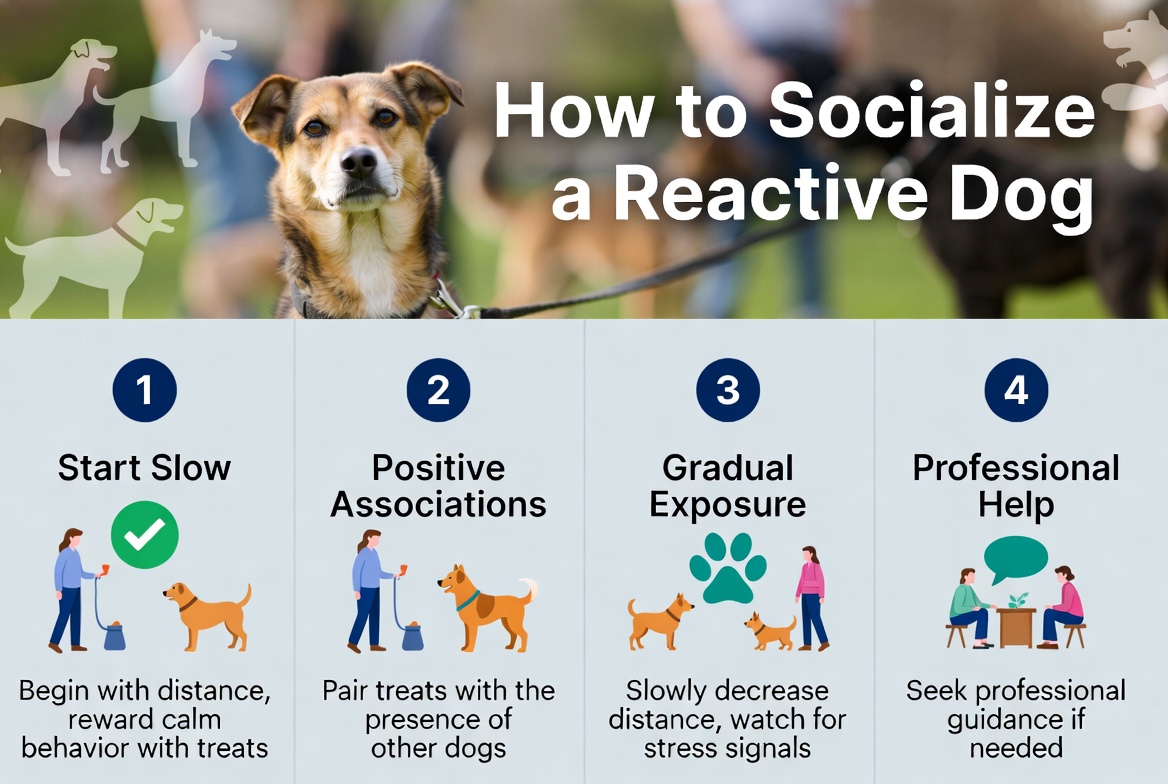
How to Socialize a Reactive Dog?
Your dog barks and lunges at every dog you pass on walks. They growl at strangers. Maybe they freeze up at the sound of a car door. If this sounds familiar, you have a reactive dog on your hands. The good news? Reactivity doesn’t mean your dog is broken or dangerous. It just means they need help learning how to handle the world around them.
Socializing a reactive dog looks different from socializing a calm puppy. You can’t just throw them into dog parks and hope for the best. You need a slower, gentler approach. You need patience. You need a plan.
This guide walks you through everything you need to know about helping your reactive dog become more relaxed and confident. Let’s start with the basics.
What Does It Mean When a Dog Is Reactive?
A reactive dog overreacts to things in their environment. They might react to other dogs, people, cars, loud noises, or bikes. The reaction usually happens fast. Your dog sees a trigger, and boom—they’re barking, lunging, pulling on the leash, or freezing in place.
Here’s the key thing to know: reactivity is not the same as aggression. A reactive dog isn’t trying to be bad. They’re scared, anxious, frustrated, or overstimulated. Their brain is in overdrive, and they’re reacting without thinking.
Think of it like this. You’re walking down the street when a car suddenly honks right next to you. You jump. Your heart races. You might yell out. That’s a reaction. Your nervous system kicked in. Now imagine your dog experiences the world this way all the time. That’s reactivity.
Reactive dogs often have a few things in common. They may have had a bad experience in the past. They might not have been socialized properly as puppies. Some dogs are just born more anxious or sensitive. Genetics plays a role. So does their early life experience.
The good news is that reactive dogs can improve. They won’t turn into zen masters overnight, but with the right training, consistency, and patience, most reactive dogs get better. Some get way better.
Why Does My Dog React This Way?
Understanding why your dog reacts is half the battle. Different dogs react for different reasons.
Fear is a big one. A dog who didn’t meet many people or other dogs as a puppy might be scared of them now. That fear comes out as barking or lunging. They’re trying to say, “Stay away!” It’s a defensive move.
Frustration is another major cause. Some dogs get frustrated because they want to meet other dogs or people, but the leash stops them. That frustration builds up and comes out as pulling, barking, or lunging. They’re not trying to be mean. They just want to get to whatever caught their attention.
Over-excitement happens too. Some reactive dogs aren’t scared or frustrated. They’re just too excited. They see another dog and want to play so badly they can’t control themselves. They bark and jump because they can’t dial down their energy.
Anxiety can drive reactivity. A dog with anxiety might react to loud noises, cars, or unfamiliar places. Their nervous system is wired to see danger everywhere. Even harmless things feel threatening to them.
Lack of socialization is a real problem. Dogs need to meet different people, dogs, and situations when they’re young. If they don’t, the world feels scary and unpredictable. A dog who never heard a car door slam until they were a year old might freak out when it happens.
Medical issues can cause reactivity too. A dog with pain, vision problems, or hearing issues might react more because they feel vulnerable. Always rule out health problems with your vet before assuming your dog’s reactivity is purely behavioral.
The First Step: Set Up for Success
Before you start socializing your reactive dog, you need to build the right foundation. You can’t socialize your way out of a bad situation. You need a plan and the right tools.
Get a good leash. A six-foot leash gives your dog room to move but keeps them under control. Avoid retractable leashes for now. They don’t give you enough control, and they can teach your dog to pull. You need something sturdy and predictable.
Use a collar or harness that works for your dog. If your dog is a big puller, a front-clip harness can help reduce pulling because it redirects their body toward you instead of forward. Find something that fits well and that your dog is comfortable wearing.
Choose quiet practice spaces. You don’t start by taking your reactive dog to a busy dog park. You start small. An empty parking lot. A quiet street. Your yard. Pick places where your dog can focus on you without too many distractions.
Work with a trainer if you can. A good trainer who understands reactivity can speed up your progress. They can see things you might miss. They can adjust your plan if it’s not working. If you’re starting this journey alone, that’s okay too. Just know that getting professional help is always an option.
Get treats your dog loves. High-value treats are going to be your best friend. Not regular kibble. I’m talking about small pieces of chicken, cheese, hot dog, or whatever makes your dog’s eyes light up. You’ll use these to reward calm behavior and shift your dog’s focus away from triggers.
Teaching a Calm Foundation: Before You Socialize
You can’t skip this part. Your dog needs to learn some basic skills before you can really start socializing them. Specifically, they need to learn how to focus on you and stay calm.
Teach them to look at you on cue. This is powerful. If your dog knows how to look at you when you ask, you have a tool to redirect their attention away from triggers. Start in a quiet room with no distractions. Say “look at me” and when your dog makes eye contact, treat and praise immediately. Do this over and over. Soon your dog learns that looking at you = good things happen.
Practice sitting and staying calm. A sitting dog is often a calmer dog. Teach them to sit on cue. Reward sitting a lot. Then practice sitting near mild distractions. A parked car. A person walking by far away. The goal is for your dog to sit and stay calm even when something interesting is happening.
Work on loose-leash walking. Your dog shouldn’t be pulling you all over the place. Teach them that when the leash is loose, you move forward. When they pull, you stop. No forward progress on a tight leash. This gives you control and shows your dog that pulling doesn’t work.
Practice the “focus” command in different settings. Once your dog knows how to focus on you at home, practice it on a quiet street. Then a slightly busier place. Build up slowly. Your dog needs to learn that they can focus on you even when other things are happening.
This foundation work takes time. Maybe a few weeks. That’s okay. You’re building skills your dog will use for the rest of their life. This investment pays off.
Start Socializing at the Right Distance
Now the real work begins. Socializing a reactive dog means helping them stay calm around their triggers. The key is distance.
Your dog has what’s called a “reactive threshold.” This is the distance at which they start to react. If another dog is far away, they’re fine. But once that dog gets to a certain distance, your reactive dog loses it.
Your job is to keep your dog below their threshold while you help them learn to stay calm.
Here’s how it works:
Identify the distance where your dog stays calm. If your dog reacts to other dogs, take them to a place where you can see other dogs from far away. Maybe a park where dogs are on the other side of a big field. Your dog can see them, but they’re far enough away that your dog doesn’t react. Find that distance.
Reward calm behavior at that distance. Your dog is looking at other dogs but staying calm? Treat them. Praise them. Make good things happen when they’re staying relaxed near their trigger.
Slowly decrease the distance over time. This is where patience comes in. After many successful sessions at one distance, you might try getting a little closer. Maybe ten feet closer. If your dog does well, great. If not, go back to the farther distance. There’s no rush.
Use treats and praise constantly. You’re not trying to bore your dog into not reacting. You’re trying to teach them that calm behavior gets rewarded. Every time your dog looks at a trigger without reacting, treat them. Create a positive association.
Keep sessions short. Don’t practice for an hour. Do five or ten minutes. Your dog’s brain can only handle so much. Short, successful sessions are better than long ones where your dog gets frustrated or overwhelmed.
Socializing with Other Dogs
Many reactive dogs have trouble with other dogs. They might bark, lunge, or try to charge. This is one of the most common reactivity problems.
Use the distance technique. Start far away from other dogs. Work your way closer over time.
Do parallel walks. Walk your dog near another dog, but both dogs walk in the same direction instead of facing each other. This is less confrontational. Your dog can see the other dog, but they’re not facing off. Many reactive dogs do better with parallel walks than face-to-face meetings.
Control the other dog if possible. If you have a friend with a calm dog, that’s perfect. You know the other dog won’t react, which gives you one less variable to worry about. Your dog can focus on learning to stay calm without worrying about the other dog’s reaction.
Have your dog on a leash. Always. You need control. Don’t let off-leash interactions happen until your dog is way past their reactivity.
Watch your dog’s body language. A stiff body, hard stare, or raised hackles mean your dog is getting stressed. Back up. You got too close too fast. There’s no shame in this. Adjust and try again.
Reward any calm behavior. Your dog glanced at the other dog and looked back at you? Treat. Your dog walked next to another dog for three seconds without reacting? Big celebration. Build on small wins.
Socializing with People
Some reactive dogs have trouble with people. They might bark when strangers approach. They might growl or seem afraid.
Start with people your dog already knows. Have family members or friends your dog likes work with you. They can reward your dog for calm behavior. This builds confidence.
Teach strangers the right way to greet your dog. No eye contact. No reaching over the head. No baby talk. A calm, boring greeting works best. Have people stand sideways. Let your dog come to them if they want to. This makes greetings less threatening.
Use the distance technique here too. Have a person stand far away. Work closer over time.
Practice with different types of people. Kids. Tall people. People in hats. People with crutches or wheelchairs. Different people trigger different reactions sometimes. Your dog needs to learn that all kinds of people are okay.
Have the person toss treats. If your dog associates people with treats, they’ll feel better about people in general. The person tosses a treat. Your dog eats it. No petting required. This creates positive feelings without forcing interaction.
Dealing with Common Reactive Situations
Your reactive dog will encounter different situations. Here’s how to handle the tough ones.
Meeting a dog on a walk: See it coming early. Cross the street before your dog reacts. Create distance. If you’re already too close, stay calm. Don’t yell at your dog. Just calmly turn around and walk the other way. Once you’re far enough away that your dog calms down, treat them for being calm. You’re rewarding distance, not reaction.
Encountering loud noises: Don’t comfort your dog when they’re scared. That can actually reinforce the fear. Stay calm and matter-of-fact. Act like the noise is no big deal. If your dog settles after the noise, reward them. You’re teaching them that loud noises don’t mean anything bad will happen.
Managing excitement when visitors arrive: Have your dog on a leash when people enter your home. Have them sit. Reward sitting. Once your dog sits calmly, the visitor can greet them. If your dog jumps up, go back to asking for a sit. You’re teaching your dog that calm behavior is what gets attention.
Dealing with frustration on walks: Your dog sees another dog far away and starts pulling. Don’t move forward. Stop. Wait for your dog to relax. When they do, move again. You’re teaching them that pulling doesn’t work. Moving happens when the leash is loose and your dog is calm.
Using Training Tools Effectively
A few training tools can help with reactivity.
High-value treats are essential. Find what your dog loves most. Use those treats for working with triggers. Save lower-value treats for regular training.
A long line (a longer leash, like 15-30 feet) can help your dog practice staying calm with more freedom. They can move around, but you have control. This works great in open spaces like fields.
A well-fitted harness gives you better control with dogs who pull hard. A front-clip harness especially helps redirect a pulling dog.
A marker word or clicker helps your dog know exactly what behavior earned the treat. “Yes!” works well as a marker word. Say it the second your dog does the right thing, then treat.
The tools aren’t magic. They just help you communicate better and manage the situation. Your consistency, patience, and training matter way more than the tools you use.
Managing Your Own Stress and Emotions
Here’s something people don’t talk about enough: your stress affects your dog.
Your dog picks up on your anxiety. If you tense up when you see another dog coming, your dog feels that tension through the leash. They think, “Oh no, my human is worried. There must be something wrong.” This makes them more reactive, not less.
Stay as calm as possible. Take deep breaths. Relax your shoulders. Keep your face relaxed. Your dog needs you to be their anchor, their calm influence. You’re saying with your body, “This is fine. We’ve got this.”
Don’t get angry at your dog. Your dog didn’t choose to be reactive. Yelling at them or punishing them doesn’t teach them anything except that you’re another source of stress. It makes reactivity worse, not better.
Celebrate small wins. Did your dog stay calm for longer today than last time? That’s progress. Mark it. Feel good about it. This journey is long. Small improvements matter.
Get support if you need it. Talk to your trainer. Talk to other dog owners who have reactive dogs. Join an online community. This can be frustrating and isolating. Getting support from people who understand helps.
How Long Does This Take?
I wish I could give you a simple answer. The truth is, it depends.
Some reactive dogs show improvement in a few weeks. Others take months or even longer. It depends on how severe the reactivity is, how long your dog has been reactive, what’s causing it, and how consistent you are with training.
Here’s what matters more than speed: consistency. Working with your dog for fifteen minutes every single day is better than one intense training session once a week. Your dog’s brain learns through repetition. The more you practice, the faster they’ll improve.
Be patient with yourself and your dog. You’re rewiring your dog’s brain. That takes time.
When to Get Professional Help
Some people can work through reactivity on their own. Others need help. Both are totally fine.
Get a trainer if your dog is fearful or aggressive. These are serious issues that need professional guidance. A trainer can assess what’s really going on and build a custom plan.
Get help if you’re not seeing progress after a few weeks. Maybe you’re not catching the right distance. Maybe your dog needs a different approach. A trainer can spot things you’re missing.
Get help if your dog’s reactivity is making you anxious or stressed. A professional can take some of that burden off you. They can give you confidence and a clear plan to follow.
Get help if you ever feel unsafe. If your dog’s behavior scares you, get professional help immediately. Don’t wait.
Look for trainers who use positive reinforcement methods. Avoid trainers who use harsh corrections or punishment. You’re trying to help your dog feel safer and more confident, not scare them into compliance.
What to Avoid When Socializing a Reactive Dog
Some things make reactivity worse. Avoid them.
Don’t force your dog into situations they’re scared of. Pushing a fearful dog closer to their trigger makes them more scared, not braver. Go slower.
Don’t use a retractable leash. You don’t have control. Your dog can lunge suddenly. Stick with a six-foot fixed leash.
Don’t let your dog practice reacting. Every time your dog practices a reactive behavior, they’re getting better at it. They’re literally training themselves to react more. Manage the environment to prevent reactions from happening.
Don’t take your dog to off-leash dog parks yet. This is a recipe for disaster. An off-leash environment is too much stimulation. Your dog will react, get scared, and possibly get hurt. Wait until your dog is past their reactivity.
Don’t compare your dog to other dogs. Someone else’s dog might be further along in their training. That’s great for them. Your dog is on their own timeline. Focus on your dog’s progress, not someone else’s.
Don’t give up. This is hard, but your dog can get better. Thousands of reactive dogs have. So can yours.
Real Signs of Progress
You’ll know your dog is improving. Watch for these signs.
Your dog notices a trigger from farther away but doesn’t react immediately. Instead of charging, they look at you. That’s huge progress.
Your dog reacts a little less intensely. Maybe they bark once instead of ten times. That’s improvement.
Your dog recovers from a reaction faster. They see a trigger, react for a second, then settle. That shows their brain is relearning.
Your dog chooses to stay near you even when triggers are present. They’re not running away or lunging. They’re choosing to stick with you. That’s trust.
Your dog seems less anxious in general. They’re sleeping better. They’re playing more. They seem more relaxed. That’s your nervous system healing theirs.
The Bottom Line
Socializing a reactive dog is challenging. It requires patience, consistency, and a plan. It tests your confidence and your commitment. But it’s absolutely doable.
Your dog isn’t broken. They’re just scared or frustrated or overstimulated. With the right approach, with small steps and lots of rewards, they can learn to handle the world. They can become more confident and more relaxed.
This isn’t about forcing your dog into situations they’re scared of. It’s about slowly, carefully teaching them that the world is safe. That you’ve got their back. That calm behavior gets rewarded.
Start where your dog is. Work at their pace. Celebrate every small win. Stay consistent. Be kind to yourself and your dog.
Your reactive dog might never be a social butterfly. And that’s okay. They don’t need to be. They just need to feel safe and confident. They need to trust you. They need to know you’ll protect them while they learn.
You can do this. Your dog can do this. Take it one walk at a time.
Hi, I’m Mary, the founder of PetGadgetPro.com. I’m a passionate pet lover with a special place in my heart for dogs and cats. I share practical advice and honest insights on pet gear to help pet parents make better choices. My dedicated research team studies products in depth, and our writers create reviews using trusted, authentic sources—so you can feel confident choosing the best for your pets.