How to Housebreak an Older Dog?
Bringing home an older dog is exciting. But if your new pet has accidents in the house, the excitement can fade fast. The good news? You can teach an old dog new tricks. Housebreaking an older dog takes patience and the right approach. This guide walks you through everything you need to know.
Why Is Housebreaking an Older Dog Different?
Your older dog is not a puppy. That matters a lot. Puppies have tiny bladders. They need to go out every two hours. Older dogs can hold it much longer. But they might have bad habits from their past.
An older dog that has accidents inside may have learned that indoors is an okay place to potty. Maybe their old owner let them go inside. Or they lived in a place where they had no choice. Breaking this habit takes work, but it’s totally doable.
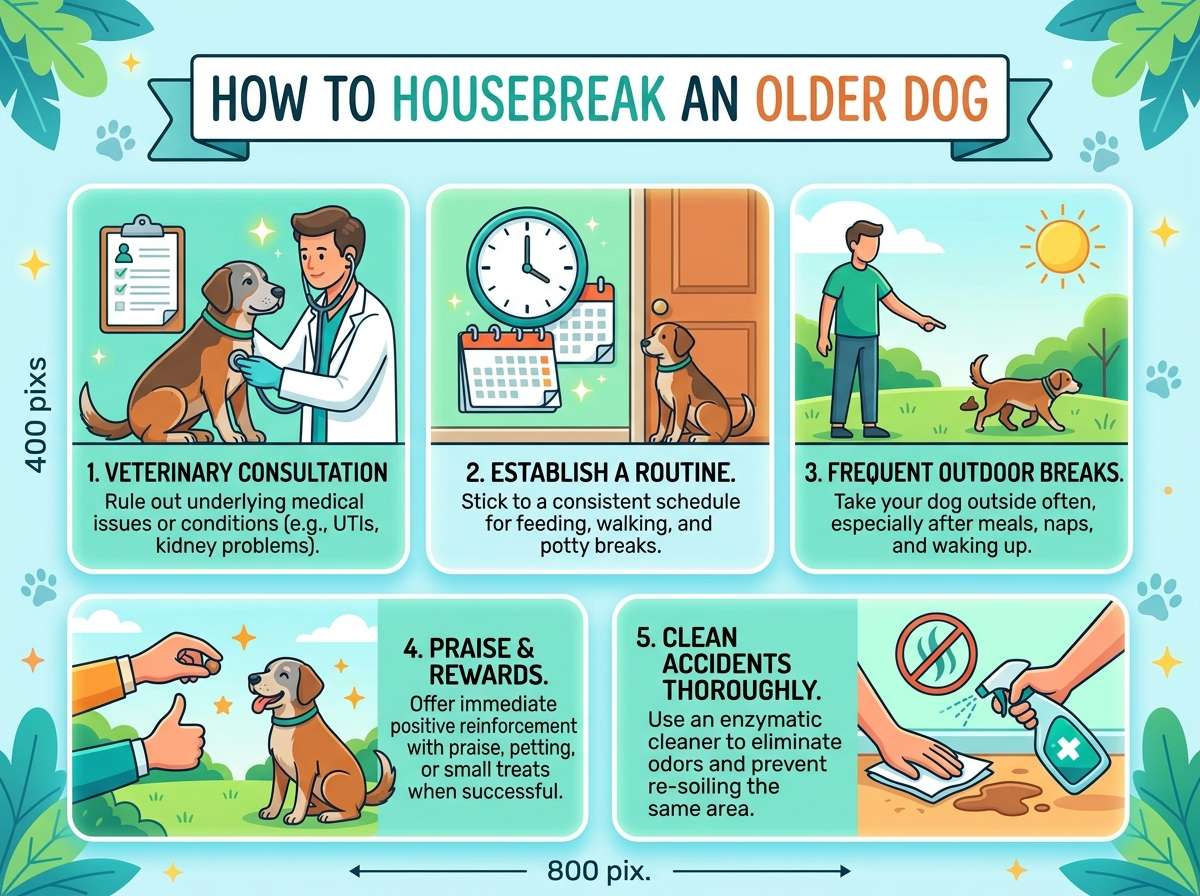
Some older dogs also have medical issues. Urinary tract infections happen often. Kidney problems can cause more accidents. Before you start housebreaking, take your dog to the vet. A checkup rules out health problems first.
The Truth About Older Dogs and Accidents
Don’t give up if your older dog has accidents. This doesn’t mean your dog is bad. Your dog is not trying to upset you. Dogs don’t pee out of spite. They don’t poop in anger.
Older dogs have bladder control issues for real reasons. Their muscles get weaker. Their kidneys work less well. Some dogs have anxiety. Others have never learned good habits. Every dog is different.
The key is knowing why your dog has accidents. Then you can fix the real problem. If your dog always goes in one spot, they learned that spot is a bathroom. If your dog goes at night, they might need more potty breaks. Pay close attention to when accidents happen.
Step One: Visit the Vet First
Before you do anything else, call your vet. This is super important. Many house-soiling issues are medical. Your vet can check for:
- Urinary tract infections
- Kidney disease
- Diabetes
- Incontinence
- Thyroid problems
- Digestive issues
Your vet can also tell you how often your dog needs to go out. Older dogs sometimes need more potty breaks. Your vet will give you a plan based on your dog’s age and health.
If your vet finds a medical problem, treat it first. Then housebreaking gets much easier. Sometimes fixing the medical issue solves the problem completely.
Step Two: Set Up a Potty Schedule
Dogs love routines. They thrive on schedules. Your older dog’s bladder is on a schedule too. If you take your dog out at the same times each day, their body adjusts.
Here’s a basic schedule to start with:
- First thing in the morning
- After each meal
- Mid-day
- Late afternoon
- Before bed
Many dogs need to go about 30 minutes after eating. Watch your dog closely. See when they sniff around or pace. This means they need to go out soon.
If your dog is having lots of accidents, take them out more often. Don’t wait for your dog to ask. Just take them out before they have a chance to have an accident.
Some people take their older dogs out 4 to 6 times a day at first. This sounds like a lot. But it works. Once your dog goes a week with no accidents, you can start spacing out the times a bit.
Step Three: Choose the Right Spot Outside
Pick one spot where you want your dog to go. Yes, just one spot. Dogs like to go where they smell their own pee. They remember the spot and come back to it.
Take your dog to this same spot every single time. Don’t vary it. Your dog will learn that this place is the bathroom. This makes housebreaking much faster.
Once your dog pees in the right spot, praise them like crazy. Use a happy voice. Give treats. Make it the best thing ever. Your dog will connect going in the right spot with good things happening.
Step Four: Manage Your Indoor Space
Your home needs rules now. Your dog can’t just roam free. Roaming free means more accidents. Instead, keep your dog in a small area while you’re working on housebreaking.
You have two good options. First, use a crate. Dogs don’t like to pee where they sleep. A crate teaches your dog to hold it. But the crate has to be small enough that your dog doesn’t want to go potty in it. Not so small it’s cruel. Just tight enough to matter.
The second option is a pen or gate. You can block off one room. Put your dog’s bed, water, and toys in that space. Your dog stays in this area when you can’t watch them. When you watch them, they have more freedom.
Never use a crate as punishment. Crates are tools. They help your dog learn. Make the crate a happy place. Put treats in it. Praise your dog for going in it.
Step Five: Watch Your Dog Like a Hawk
Supervision is everything. You can’t teach a dog not to potty inside if you miss the accident. You have to catch your dog’s behavior patterns.
When you’re home, your dog should be with you. Not locked away, but with you. Watch for the signs:
- Sniffing around
- Circling
- Whining
- Pacing
- Going to the door
The second you see these signs, scoop up your dog and run outside. Get them to that special spot. Once they go outside, treat them like they won the lottery.
If you catch your dog in the act of having an accident, interrupt them gently. Never yell. Never hit. Never rub their nose in it. Just take them outside. Let them finish in the right spot. Then praise them.
Step Six: Clean Accidents the Right Way
You messed up a spot in your home. Your dog will smell it and think it’s a bathroom now. You need to clean it so well that your dog can’t smell anything.
Regular cleaners don’t work. You need an enzymatic cleaner. This type of cleaner breaks down urine and poop at the chemical level. It gets rid of the smell that only dogs can detect.
Here’s how to clean:
- First, soak up as much as you can with paper towels
- Then use the enzymatic cleaner as directed
- Let it sit for the full time the label says
- Don’t rush this step
- Do this for every accident spot
Repeat this process until your dog stops going in the same place. It usually takes a few cleaning sessions.
Step Seven: Manage Nighttime Accidents
Nighttime is hard for older dogs. Their bladders are full. They sleep long stretches. They can’t ask to go outside.
Start by limiting water before bed. Give your dog water during the day. Stop water about 3 hours before sleep. But always make sure your dog has water during the day.
Take your dog outside right before bed. Stay out there. Don’t come in until your dog goes potty. This empties the bladder.
Your dog might still have accidents at night. This is normal at first. Don’t punish your dog for nighttime accidents. Your dog is not being naughty. Your dog’s body can’t hold it yet.
You can use absorbent pads on the floor. Not as the goal, but as a backup. Some people use doggy diapers for nighttime. These are just tools while your dog learns.
As your dog improves, nighttime accidents will slow down. Then stop. This takes time. Weeks or even months. Be patient.
Step Eight: Deal with Crate Accidents
Some dogs have accidents in their crate. This breaks the whole system. If this keeps happening, the crate is too big. Your dog thinks part of the crate is a bedroom and part is a bathroom.
Get a smaller crate. Or use a divider to make the current crate smaller. Your dog should only have enough room to lie down and turn around.
If accidents keep happening, your dog might have anxiety. Some dogs get stressed in crates. Your vet or a trainer can help with this.
Never leave a dog in a crate so long they have no choice but to go inside. This teaches them it’s okay. Puppies can hold it for one hour per month of age. An older dog can hold it longer. But most dogs need a break after 6-8 hours.
Step Nine: Handle Medical Issues
Your dog might have legitimate health problems. Incontinence happens to older dogs. This is not about behavior. Your dog can’t control it.
Signs of incontinence:
- Leaking while sleeping
- Dripping during the day
- Large wet spots
- Your dog acting distressed
If your dog has incontinence, your vet can help. Medicine works for many dogs. Some vets recommend certain supplements. Others suggest diet changes.
Talk to your vet about options. Don’t assume your dog is being naughty. A real medical issue needs real treatment.
Step Ten: Use Positive Reinforcement
Your dog learns from what you reward. If you reward going outside, your dog will want to go outside more.
Use treats your dog goes crazy for. Use praise with real energy. Pet your dog. Smile big. Use a happy, high voice. Make going outside the best thing ever.
Your dog wants to make you happy. Dogs love praise from their people. Use this to your advantage.
Rewards work way better than punishment. Punishment teaches your dog to hide. Your dog learns to sneak off and have accidents. Your dog gets scared of you. This makes everything worse.
Stick with rewards. Always.
The Timeline: How Long Does This Take?
How fast will your dog learn? It depends on many things. Here’s a general timeline:
Weeks 1-2: You’re setting up the routine. You’re establishing the spot. Your dog is learning the new rules.
Weeks 3-4: Your dog gets the pattern. Accidents might be less frequent. You’re building good habits.
Weeks 5-8: Many dogs are almost there. They might have one accident a week or fewer. You can start spacing out potty breaks a bit.
Weeks 9-12: Most dogs reach full success. Few or no accidents. You can trust your dog more.
Some dogs take longer. A dog with a long history of indoor pottying might need 4 months. A dog with medical issues needs time for medicine to work. That’s okay. Stick with it.
The worst thing you can do is stop trying. Dogs don’t unlearn behaviors on their own. If you give up, accidents will come back.
Special Situations and What To Do
The Dog That Marks Territory
Some dogs pee in small amounts on furniture and walls. This is marking, not full elimination. These dogs need a different approach.
Marking is about saying “this is mine.” Neutering or spaying helps if your dog isn’t already fixed. Also, give your dog lots of outdoor time. Let them mark outside instead.
The Anxious Dog
Some dogs have accidents because of stress or anxiety. These dogs might be fine for days, then have a major accident during a stressful time.
Work with a trainer or vet behaviorist. They can help your dog feel safe. Training and sometimes medication help anxious dogs.
The Dog With Senior Incontinence
Very old dogs sometimes lose control. Their muscles fail. This is not about training. Your vet needs to manage this with medicine or dietary changes.
The Stubborn Dog
Some dogs just seem determined to go inside. Don’t lose hope. These dogs might need more frequent potty breaks. Or they might need a longer process. Stay consistent. Your persistence pays off.
Common Mistakes to Avoid
Punishment
Never yell at, hit, or punish your dog for accidents. This teaches your dog to hide. Your dog learns fear. This makes everything harder.
Rubbing Their Nose In It
This old advice is totally wrong. Your dog doesn’t understand what you’re doing. They just get scared. It doesn’t work. Don’t do it.
Giving Up Too Early
Housebreaking takes time. If you stop trying after a few weeks, your dog forgets what they learned. Consistency is everything.
Assuming Your Dog is Mean
Your dog is not trying to ruin your day. Your dog is not being spiteful. Dogs don’t think that way. Something is causing the accidents. Find out what it is.
Skipping the Vet Visit
Medical issues cause accidents. Don’t skip this step. A vet visit saves you months of trouble.
Too Much Freedom Too Fast
Don’t let your dog roam your whole house yet. Keep them confined until they’ve proven they can handle it.
Training Tools That Help
Bells on the Door
Train your dog to ring bells when they need to go out. Hang bells from the door handle. Tap your dog’s nose on the bells. Every time your dog goes to the door, ring the bells first. Over time, your dog learns to ring them.
This lets your dog tell you when they need to go.
Enzymatic Cleaners
We talked about this already, but it’s so important. Stock up on enzymatic cleaner. You’ll use a lot of it at first.
Crates
A good crate is worth the money. Get a solid one that will last. Your dog might use it for life.
Pads and Diapers
These aren’t the end goal. But they help manage accidents while you train.
Baby Gates
Gates let you confine your dog to one area. They let your dog see you. They’re less stressful than closed doors.
When to Call a Professional
Sometimes you need help. There’s no shame in this. Here’s when to call:
- Your dog’s accidents aren’t getting better after 8 weeks of work
- Your dog has extreme anxiety about going outside
- Your dog marks furniture constantly
- Medical problems persist despite vet treatment
- You’re not sure what’s causing the accidents
A professional trainer or vet behaviorist can help. They see patterns you might miss. They have tricks that work. A few sessions with a pro can save you months of frustration.
Final Thoughts: You Can Do This
Housebreaking an older dog is hard work. It takes patience. It takes consistency. It takes belief that your dog can learn.
But your dog can learn. Dogs are smart. They want to do the right thing. Your job is to teach them clearly what the right thing is.
Here’s the real secret to success: Show up every day. Take your dog out on schedule. Reward every success. Clean every mistake. Stay patient. Don’t give up.
One day, you’ll realize you haven’t had an accident in weeks. Your dog will ask to go outside. Your dog will be clean. All that work will feel worth it.
Your older dog came into your home. Maybe they came from a rough situation. Maybe they never learned good habits. But now they have a second chance. They have you.
And with your help, they’ll learn. It might take longer than you hope. But it will happen. Your dog will be housetrained. You’ll have the clean home you want. And your dog will have the security of knowing exactly what makes you happy.
That’s worth the wait.
Quick Reference: Your Housebreaking Checklist
- [ ] Schedule a vet appointment
- [ ] Ask your vet how often your dog should go out
- [ ] Rule out medical problems
- [ ] Pick one outdoor potty spot
- [ ] Create a daily potty schedule
- [ ] Get a crate or set up a small space
- [ ] Buy enzymatic cleaner
- [ ] Start taking notes on when accidents happen
- [ ] Never punish accidents
- [ ] Praise successes with real enthusiasm
- [ ] Stay consistent for at least 8 weeks
- [ ] Limit water before bed
- [ ] Supervise your dog at all times
- [ ] Clean accidents fully and completely
- [ ] Call a professional if needed after 8 weeks
Frequently Asked Questions
Can older dogs learn to be housetrained?
Yes. Absolutely yes. Dogs can learn at any age. Older dogs might learn a bit slower than puppies. But they’re also calmer and easier to work with in many ways.
How many times a day should my older dog go out?
Start with 6 times a day. That’s right when they wake up, after meals, mid-day, late afternoon, and before bed. Once they improve, you can reduce to 4 times a day.
What if my dog has accidents at night?
Nighttime is hard. Limit water before bed. Use puppy pads as a backup. Give your dog extra potty breaks in the morning. Nighttime accidents usually take longest to fix.
Should I use puppy pads?
Puppy pads are controversial. Some say they teach dogs it’s okay to go inside. Others say they help manage accidents while training. Use them if you need to. But keep them in one spot. Don’t move them around. Aim to phase them out over time.
What if my dog keeps using the same spot?
That spot probably still smells like pee to your dog. Clean it with enzymatic cleaner multiple times. You might need to clean it 3-5 times before the smell is really gone.
Is my dog being stubborn?
Probably not. Your dog either doesn’t understand what you want, can’t control their bladder, or has anxiety. None of these are about stubbornness. Figure out the real issue and address it.
How do I know if it’s a medical problem?
Signs include leaking while sleeping, constant dribbling, or going way more than normal. Ask your vet. That’s what they’re there for.
What if nothing works?
Give it at least 12 weeks of consistent effort. If nothing improves, call a professional. Sometimes trainers see things you miss.
Remember, housebreaking an older dog is totally possible. You have the tools. You have this guide. You just need patience and belief in your dog. Your dog is counting on you. And you’re going to succeed.
Hi, I’m Mary, the founder of PetGadgetPro.com. I’m a passionate pet lover with a special place in my heart for dogs and cats. I share practical advice and honest insights on pet gear to help pet parents make better choices. My dedicated research team studies products in depth, and our writers create reviews using trusted, authentic sources—so you can feel confident choosing the best for your pets.