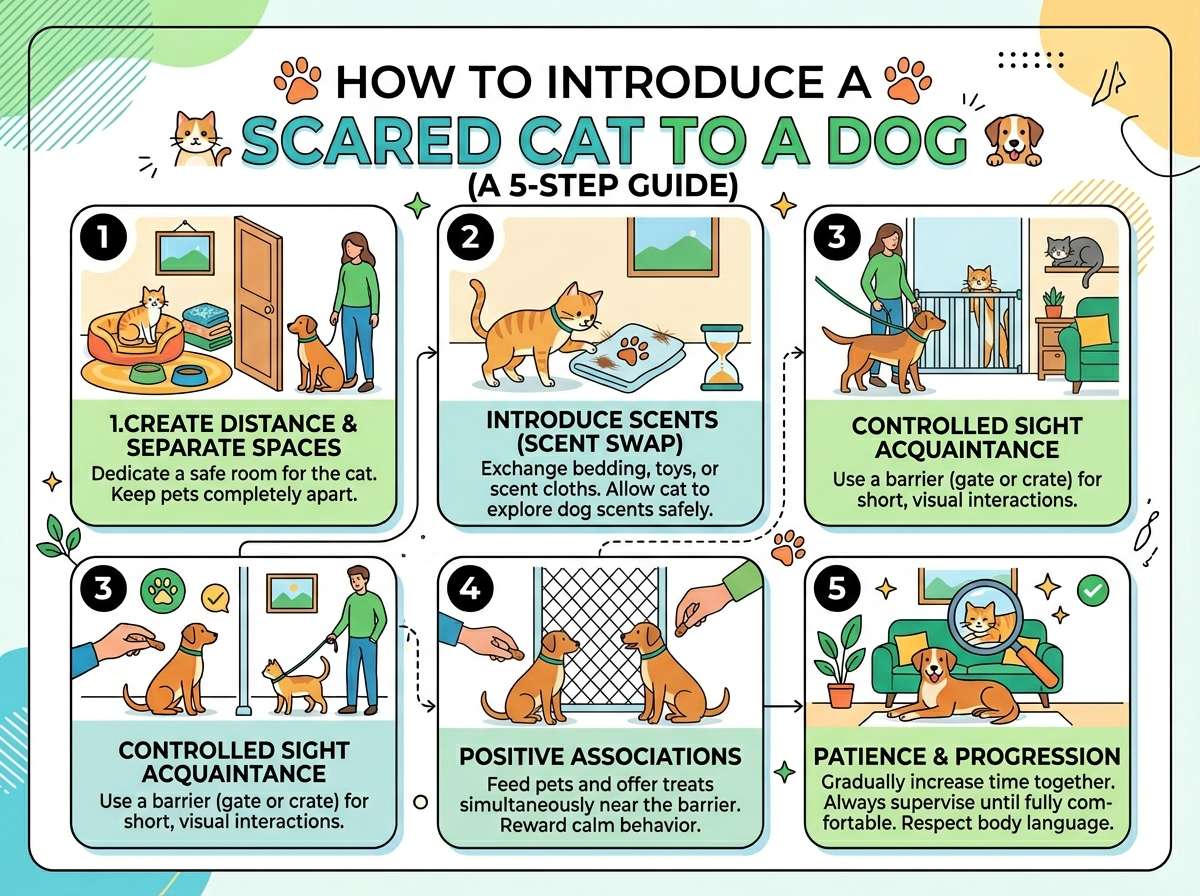
How to Introduce a Scared Cat to a Dog?
So you have a cat. Your cat is nervous, anxious, and maybe even terrified of dogs. Now you’re bringing a dog home, or your dog has just arrived. You’re worried about how your fearful feline will react. This is a real problem that many pet owners face, and the good news is that you can help your cat feel safe and confident around your new canine friend.
This guide will walk you through every step. We’ll cover everything from preparing your home to managing the first meetings. By the end, you’ll know exactly what to do.
Why Cats Get Scared of Dogs
Before we jump into solutions, let’s talk about why cats are so nervous around dogs in the first place.
Cats and dogs are different animals with different body languages. A dog’s play style can look aggressive to a cat. When a dog runs, jumps, and barks, cats see this as a threat. Their survival instinct kicks in.
Dogs are usually bigger than cats. They have loud voices. They move in ways that cats find scary. A dog’s energy can feel overwhelming to a calm, quiet cat.
Some cats have never met a dog before. They don’t know what to expect. Fear of the unknown is real. If a cat has had a bad experience with a dog in the past, the fear will be even stronger.
Cats are creatures of habit. They like their space. They want to control their environment. A new dog disrupts everything they know. This stress can make even a brave cat act nervous and withdrawn.
Prepare Your Home Before the Dog Arrives
The best time to start is before your dog ever gets home. This is when you can set up everything properly and give your cat time to adjust.
Create a Safe Space for Your Cat
Your cat needs a sanctuary. This is a room where your cat can go to feel completely safe. It should be a quiet space, far away from where the dog will spend most of its time.
Stock this room with everything your cat needs. Put food and water bowls in here. Add a clean litter box. Include comfortable beds and blankets. Put in some toys and scratching posts. Make this the most comfortable place in your home for your cat.
The safe space should have at least one high perch. Cats love to be up high where they can see but not be seen. A cat tree or shelf works great. This gives your nervous cat an escape route and a place to watch what’s happening below.
Leave the door to this room open at all times unless you need to keep the dog out. Your cat should always have access to their sanctuary. Over time, your cat will feel more confident knowing this space is always there.
Keep Their Routine Intact
Cats thrive on routine. Feed your cat at the same times every day. Play with them at the same times. Keep everything the same for as long as possible.
When your dog arrives, your cat’s world will feel chaotic. Keeping one thing stable (their daily routine) will help them feel more grounded. A cat that knows dinner happens at 6 PM will feel calmer than a cat whose whole life feels upside down.
Set Up Separate Food and Water Stations
Dogs and cats should never eat from the same bowls. This causes conflict and stress.
Put your cat’s food and water in their safe space or in a quiet area where the dog can’t go. Use a baby gate or a narrow opening that only your cat can fit through. This way, your cat can eat in peace without worrying about the dog.
Dogs are curious about cat food. They might try to eat it. This isn’t good for either animal. Keeping feeding areas separate solves this problem.
Manage the Litter Box
Never put the litter box where the dog can reach it. Dogs are drawn to cat litter boxes for reasons we don’t want to think about. Your cat also needs privacy when using their litter box.
Place the litter box in a private area that only your cat can access. A bathroom with a baby gate works well. Or use a cat flap that leads to a closet. Your cat should feel safe and hidden when doing their business.
The Waiting Period: Building Confidence
Before the first face-to-face meeting happens, you can start building your cat’s confidence. There are things you can do right now.
Let Your Cat Smell the Dog First
If your dog is already at home, this is powerful. Let your cat smell something that smells like the dog. You could use a blanket that the dog has slept on. Or wear a shirt after petting the dog and let your cat smell you.
Don’t force your cat to investigate. Just leave the scented item nearby. Your cat will sniff it when they feel ready. This introduces the dog’s scent in a non-threatening way.
Repeat this over several days. Your cat will start getting used to the idea that a dog is around.
Play Calming Sounds
There are recordings of dogs barking and playing. Play these at a very low volume in your cat’s safe space. Gradually turn the volume up over several days. This helps desensitize your cat to dog noises.
A scared cat needs time to get used to the sounds before they meet the real dog. The sounds can feel less scary when your cat is in their safe, familiar space.
Use Treats and Positive Associations
Pair the dog’s scent with treats. If your cat gets a treat near the dog’s blanket, their brain starts making a good connection. The dog’s scent means good things are about to happen.
Do this consistently. Your cat will begin to see the dog as a source of good stuff rather than something to fear.
Exercise Your Cat Daily
A tired cat is a calmer cat. Play with your cat more often. Use a wand toy or a laser pointer. Get your cat running and pouncing. Aim for at least two 15-minute play sessions per day.
A cat that has burned off energy will be in a better mood. They’ll also be less likely to run and trigger the dog’s chase instinct.
The First Meeting: Making It Go Smoothly
The first time your cat and dog see each other is a big moment. You need to set it up carefully.
Keep the Dog Calm First
Your dog should be calm and tired before meeting your cat. A excited, hyper dog will scare your cat even more.
Exercise your dog before the meeting. A long walk or a play session works great. You want your dog to be relaxed, not bouncy and energetic.
Some dogs need a little help staying calm. Your vet can recommend calming treats or supplements. Don’t use anything without asking your vet first.
Start with a Barrier Between Them
Don’t let them touch on day one. Use a closed door or a sturdy baby gate between them.
Your cat should be on one side, your dog on the other. This lets them see and smell each other without any possibility of contact. Your cat feels safer with a barrier.
Keep this first meeting short, maybe 5 to 10 minutes. Your cat might hiss, hide, or act scared. This is normal. Don’t react with emotion. Stay calm and quiet.
Reward both animals with treats during this interaction. Your dog gets a treat for sitting calmly. Your cat gets a treat for being in the room. This builds positive associations with each other’s presence.
Repeat the Barrier Meetings
Do this several times before removing the barrier. You might need to do it for three days, five days, or even two weeks. Every cat is different. Go at your cat’s pace.
You’ll start to notice changes. Your cat might get closer to the gate. They might watch the dog instead of hiding. Your dog might stop trying to get through the gate and just relax.
These are signs that progress is happening.
Watch the Body Language Carefully
Learn what your cat’s scared body language looks like. A frightened cat has flat ears, a puffed-up tail, and crouches low to the ground.
A calm cat has normal ears, a relaxed tail, and sits or stands with a normal posture.
Your dog’s body language matters too. A tense dog has a stiff body and stares at the cat. A calm dog has loose muscles and looks away from the cat sometimes.
Never move forward to the next step if either animal is showing stressed body language. Wait longer. Do more barrier meetings.
Supervised Face-to-Face Time
When both animals seem ready, it’s time for direct contact. But it needs to be carefully supervised.
Start in a Neutral Space
Pick a room that isn’t either animal’s favorite place. Don’t do it in your cat’s safe room. Don’t do it in the dog’s sleeping area. Pick somewhere neutral.
Make sure the cat has an escape route. A high perch, an open door to another room, or a cat tree in the corner gives your cat options.
Keep Your Dog on a Leash
Even if your dog is the friendliest animal alive, use a leash for the first few meetings. You need control if anything goes wrong.
Your dog might want to chase or play in ways that scare the cat. The leash stops this from happening. It also sends a message to your dog that you’re in charge of this interaction.
Let the Cat Come to the Dog
Don’t chase your cat into the room or force them to say hello. Your cat should make the choice to be there.
Sit down on the floor. Let your dog sit next to you, still on the leash. Ignore the cat. Just let them be in the same space.
Your cat will eventually get curious. They might slowly walk closer. They might sniff the dog. They might walk away. All of this is fine.
The goal is just being in the same room without conflict.
Keep These Sessions Short
Start with 15 to 20 minutes. Your cat might be stressed even if they look okay. Short sessions prevent them from getting overwhelmed.
You can do multiple short sessions per day. Morning, afternoon, and evening sessions work great.
As time goes on, you can make sessions longer. But if your cat seems stressed, go back to shorter sessions.
Reward Calm Behavior
When your cat is calm around the dog, give them a treat. When your dog is calm around the cat, give them a treat too.
Both animals need to learn that being around each other leads to good things.
Managing Different Personality Types
Not all dogs have the same energy level. Not all cats have the same fears. You need to adjust your approach based on what you’re dealing with.
High-Energy Dogs
Some dogs are bouncy, playful, and never seem to run out of energy. These dogs need extra work.
Exercise them more before introductions. A 45-minute walk or a solid play session helps burn off that energy.
You might need longer separation periods with a baby gate. A high-energy dog can scare a cat just by being excited.
Always keep a high-energy dog on a leash during supervised time. They’re more likely to jump or chase.
Calm, Laid-Back Dogs
Some dogs are chill and don’t care much about anything. These introductions often go faster.
Your cat might relax more quickly around a calm dog. You might be able to move through the steps more rapidly.
Still follow the process. Don’t rush it just because the dog seems friendly.
Prey-Drive Dogs
Some dog breeds were bred to hunt. They have a strong prey drive. Cats look like prey to these dogs.
These introductions need extra care and time. You might need two weeks or more before the dog can be off-leash around the cat.
Never leave these dogs and cats alone together unsupervised. Not until you’re 100% sure it’s safe. Even then, take precautions.
Extremely Fearful Cats
Some cats are scared of their own shadow. These introductions take longer and need more patience.
Be prepared for the process to take a month or more. There’s no rush.
Your vet can recommend calming supplements or pheromone sprays designed for anxious cats. These can help your cat feel less stressed during the process.
What to Expect: Common Reactions
Different things might happen during the introduction process. Let’s talk about what’s normal and what’s not.
Hissing and Spitting
Your cat might hiss, spit, or swat at the dog. This is your cat saying “stay away from me.” It’s normal and actually healthy. Your cat is standing up for themselves.
A dog that gets hissed at might back away. This is good. The dog is respecting the cat’s boundaries.
If your dog ignores the hissing and keeps coming toward the cat, get your dog away. Use the leash to pull them back.
Hiding and Avoiding
Your cat might hide under the bed or behind the couch whenever the dog is around. This is your cat’s way of coping.
Don’t force your cat out of hiding. Let them come out when they feel safe. Over time, they’ll spend more time out of hiding.
The Dog Ignoring the Cat
Some dogs don’t even notice or care about cats. They just ignore them completely.
This is great. Your cat can relax when the dog isn’t paying attention.
Playful Interactions
Eventually, you might see your cat and dog actually playing together. They might chase each other or wrestle gently.
This is a good sign. It means they’ve built a relationship and feel safe with each other.
Still supervise play. Make sure it’s gentle and that the cat can get away if they want to.
Potential Problems and Solutions
Sometimes things don’t go as planned. Here’s how to handle common issues.
The Dog Won’t Stop Chasing the Cat
Your dog is always trying to chase or catch the cat. This makes your cat even more scared.
Your dog needs more exercise. A tired dog won’t have the energy to chase.
Use a leash during all interactions. Redirect your dog’s attention when they try to chase.
Try teaching your dog a “leave it” command with a trainer. This teaches them not to bother the cat.
The Cat Attacks the Dog
Your cat is the aggressor, attacking or chasing the dog.
This is less common but it happens. Your cat is scared and acting out.
Keep them separated for longer. Do more barrier meetings. Your cat needs more time to feel safe.
Eventually, as your cat feels safer, the aggression might stop.
The Cat Won’t Eat or Use the Litter Box
Extreme stress can cause your cat to stop eating or using the bathroom normally.
This is a sign that the process is going too fast. Slow way down.
Give your cat more time alone in their safe space. Do fewer and shorter supervised meetings.
If this continues for more than a day or two, talk to your vet. Your cat might have a health issue.
Long-Term Success: After the Introduction
The introduction is just the beginning. You need to maintain peace between your cat and dog over time.
Separate Them When You’re Not Home
Until you’re completely sure they get along, don’t leave them together unsupervised.
Put one of them in a separate room while you’re away. This prevents problems when you’re not there to manage the situation.
Some cats and dogs live together peacefully and can be left alone together. Others need to be separated always. You’ll figure out what works for your pets.
Watch for Changes in Behavior
Keep an eye on your cat’s behavior over time. Are they eating normally? Are they using the litter box? Are they playing and acting like themselves?
Changes in behavior can signal that your cat is stressed. You might need to adjust how your animals spend time together.
Continue Exercise for Both Pets
A dog and cat that are both exercised are less likely to bother each other.
Keep playing with your cat. Keep walking your dog. A tired pet is a well-behaved pet.
Respect Your Cat’s Space
Your cat might never love your dog. That’s okay. As long as they coexist peacefully, you’ve won.
Make sure your cat always has a safe space where the dog can’t go. Your cat needs to know there’s always a place they can escape to.
Building a Real Friendship
Sometimes cats and dogs go beyond just tolerating each other. They actually become friends.
You’ll know this is happening when they:
- Sleep near each other
- Groom each other or share food
- Play together
- Greet each other when separated
- Act relaxed around each other
This takes time. Sometimes it takes weeks. Sometimes it takes months. Some cats and dogs never get there, and that’s fine.
Don’t rush friendship. Let it develop naturally.
Introducing Multiple Cats to One Dog
If you have more than one cat, introduce them one at a time to the dog.
Start with your most confident cat. Get them comfortable first. Then introduce your nervous cat. The confident cat might help the nervous one feel braver.
Space out the introductions by at least a week. This gives each cat time to adjust before the next one is introduced.
Introducing One Cat to Multiple Dogs
Multiple dogs are more challenging for a cat. They create more noise and chaos.
Do all the introductions with the calm dog first. Then add the second dog.
The same process applies. Use barriers. Do supervised time. Go slowly.
When Professional Help Is Needed
Sometimes you hit a wall. Your cat is terrified. Your dog won’t listen. You’re not sure what to do.
There’s no shame in getting help. Animal behaviorists and trainers are professionals. They know how to handle difficult situations.
A good trainer can give you specific advice for your specific animals. They can watch the interactions and tell you what’s working and what’s not.
Your vet can also help. They might recommend calming supplements or rule out medical issues that could be causing problems.
Patience Is Your Best Tool
The most important thing to remember is that this takes time. Introducing a scared cat to a dog is not a weekend project.
Some pairs click right away. Some take weeks. Some take months.
Your job is to be patient and support both your animals through this process.
Your cat doesn’t hate your dog. Your dog isn’t trying to be mean. They’re just animals with different communication styles trying to figure each other out.
Stay calm. Go slow. Celebrate small wins. Trust the process.
Final Thoughts
Bringing a dog into a home with a scared cat is challenging. But it’s totally doable. Thousands of cats and dogs live together happily every single day.
By following the steps in this guide, you’re setting yourself up for success. You’re giving your animals the best chance to build a good relationship.
Start with preparation. Build confidence slowly. Move into introductions carefully. Manage the process with patience and kindness.
Before you know it, your nervous cat might surprise you. They might warm up to the dog. They might even become friends.
And if they just learn to coexist peacefully, that’s a win too.
Your cat and dog can share a home. It just takes the right approach and the right amount of time.
Now go create a safe space for your cat. Start the process. Trust that it will work out.
You’ve got this.
Hi, I’m Mary, the founder of PetGadgetPro.com. I’m a passionate pet lover with a special place in my heart for dogs and cats. I share practical advice and honest insights on pet gear to help pet parents make better choices. My dedicated research team studies products in depth, and our writers create reviews using trusted, authentic sources—so you can feel confident choosing the best for your pets.