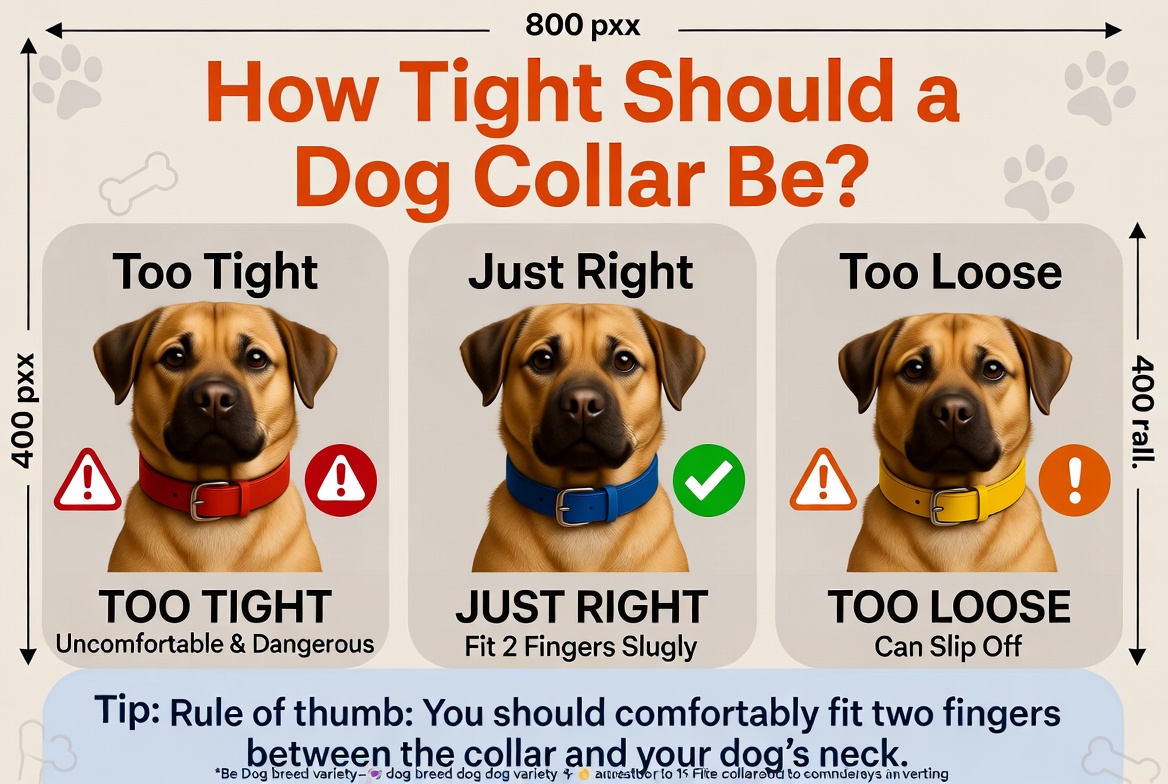
How Tight Should a Dog Collar Be?
If you’ve ever put a dog collar on your pup, you’ve probably wondered if you’re doing it right. Is it too loose? Too tight? Will your dog slip right out of it during a walk? Don’t worry—you’re not alone in asking these questions. Getting your dog’s collar fit just right is one of the most important things you can do to keep your furry friend safe and comfortable.
A good collar fit sits somewhere in that sweet middle ground. You want it snug enough that your dog can’t wiggle free, but loose enough that your dog breathes easily and moves their neck without restriction. This guide will walk you through everything you need to know about dog collar tightness, from measuring your dog’s neck to spotting signs that something’s off.
Why Getting Collar Fit Right Matters So Much
Your dog’s collar serves several jobs at once. It holds their ID tags so you can find them if they get lost. It keeps them from running off during walks. For training purposes, it gives you a way to guide your pup. When you get the collar fit wrong, you risk your dog’s health and safety.
A collar that’s way too tight can cut off blood flow to your dog’s head, cause skin problems, and damage their windpipe. A collar that’s too loose might slip right off your dog’s head, leaving your pup free to roam wherever they want. Neither situation is ideal for your dog’s wellbeing.
Beyond safety concerns, proper dog collar tightness also affects your dog’s comfort. Imagine wearing a hat or scarf that’s digging into your skin all day. That’s what a too-tight collar feels like for your dog. On the flip side, a loose collar flops around and gets caught on things, which annoys dogs and creates hazards.
The good news is that finding the right fit takes just a few minutes of your time, and once you know how to do it, you can check your dog’s collar fit regularly to make sure it stays just right as your pup grows and changes.
The Standard Two-Finger Rule Explained
The most reliable way to check if your dog’s collar sits at the right tightness is the two-finger method. This simple test works for dogs of all sizes and breeds, and vets recommend it across the board.
Here’s how it works: After you put the collar on your dog, slip two of your fingers—usually your index and middle finger—under the collar. You should be able to fit your two fingers comfortably under the collar without any squeezing or forcing. If your fingers slide in with zero resistance, the collar’s too loose. If you can’t fit your fingers under it at all, it’s too tight.
This sweet spot gives your dog enough room to breathe, eat, drink, and move their head naturally. At the same time, the collar sits snug enough that your dog can’t pull their head backward and slip right out of it. That two-finger space is the magic zone you’re aiming for every single time you put the collar on.
The best part about this method is that it works the same way whether you’re fitting a puppy collar or a full-grown dog collar. It also works for different collar types—regular buckle collars, adjustable collars, training collars, and even slip collars. No matter what kind of dog collar you use, you can always count on the two-finger test.
Measuring Your Dog’s Neck for the Perfect Fit
Before you even buy a dog collar, you need to know your dog’s neck size. This measurement helps you pick the right collar length in the first place, and it serves as your baseline as your dog grows.
To measure your dog’s neck, grab a soft measuring tape or a piece of string. Have your dog stand still—yes, easier said than done, but treats help. Wrap the tape or string around the thickest part of your dog’s neck. Keep it snug but not tight while you’re measuring. Write down this number.
Once you have that measurement, add half an inch to an inch to it. That’s the collar size you should look for. This extra room accounts for the space you’ll need to fit your two fingers underneath.
For example, if your dog’s neck measures eight inches around, look for a collar that’s nine to nine and a half inches long. This gives you room to adjust the collar and still maintain that perfect two-finger fit.
Keep in mind that your dog’s neck size changes over time. Puppies grow fast, and even adult dogs can gain or lose weight. Make it a habit to remeasure your dog’s neck every couple of months, especially while your pup is still developing. You’d be surprised how quickly a collar that fit perfectly stops fitting so well.
Signs Your Dog’s Collar Is Way Too Tight
A collar that’s too tight causes real harm to your dog. Knowing what to look for helps you catch the problem before it gets serious.
The most obvious sign is that your dog seems uncomfortable. They might paw at their collar constantly, rub their neck against things, or shake their head more than usual. Some dogs become reluctant to have you touch their neck area if their collar is cutting into their skin.
Check your dog’s skin around the collar line regularly. Redness, irritation, hair loss, or open sores all point to a collar that’s rubbing too hard. These signs mean the collar material is grinding against your dog’s skin and causing damage. The longer your dog wears a tight collar, the worse this damage gets.
Your dog might also cough, gag, or have trouble swallowing if their collar is too snug. These signs mean the collar is putting pressure on your dog’s windpipe and throat. This is serious and needs your immediate attention. A collar that restricts your dog’s breathing can cause real medical problems over time.
Some dogs become anxious or aggressive when their collar is too tight. They might growl when you reach toward their collar or neck, or seem stressed when you put it on. This behavioral change often points to pain or discomfort from a tight collar.
Watch how your dog eats and drinks. A collar that’s too tight can make it hard for your dog to swallow. If your pup seems to struggle during meals or drinks less water than usual, loosen that collar right away.
If you spot any of these signs, take off the collar immediately and give your dog’s skin a rest. Then grab that measuring tape and check your fit again. Your dog depends on you to keep them safe.
Signs Your Dog’s Collar Is Too Loose
On the other side of things, a loose collar creates its own set of problems. The most obvious issue is that your dog can escape. During walks, if your dog gets startled or chases something, they might back out of a loose collar and take off.
A loose collar also spins and flops around on your dog’s neck. This movement gets caught on things—branches, fences, furniture—and can trap your dog or injure their neck if they panic and thrash around. Collars that spin can also get twisted up, which defeats the purpose of wearing it.
Your dog’s ID tags work best when they’re attached to a collar that sits in one stable place. A loose collar means your tags bounce around and might fall off or become unreadable.
From a training standpoint, a loose collar makes it harder to guide your dog during walks. You lose the ability to give gentle corrections or get your dog’s attention quickly when you need it.
The escape risk is the real danger here. A dog without a collar or one that slips off easily faces serious hazards. They might run into traffic, get lost, or eat something they shouldn’t. In worst cases, a lost dog without proper ID tags might end up in a shelter or never come home.
How Tight Should Puppy Collars Be? Special Considerations for Growing Dogs
Puppies grow at an amazing speed. Their neck size changes almost weekly in some breeds. This means you need to check your puppy’s collar fit way more often than you would for an adult dog.
Puppy collars should follow the same two-finger rule as adult collars. You want that snug-but-not-squeezing fit. However, because puppies grow so fast, you’ll need to loosen their collar or buy a new one frequently.
Get in the habit of checking your puppy’s collar fit every single week. Yes, every week. Grab those two fingers and do the test. If you can’t fit your fingers under the collar anymore, it’s time to adjust or upgrade. Missing even one adjustment period can mean several days of your puppy wearing a collar that’s way too tight.
Look for adjustable puppy collars that give you plenty of room to grow into. Collars with plastic slide adjusters or traditional buckles work well because you can expand them as your pup gets bigger. Avoid fixed-size collars for puppies because you’ll just end up buying a new one constantly anyway.
Puppies are also more likely to get their collars caught on things because they’re curious and playful. Check your puppy’s collar daily for twists or tangles. A puppy’s delicate neck tissues are more vulnerable to injury than an adult dog’s, so prevention really matters.
Adult Dogs and Collar Maintenance Through the Years
Once your dog reaches their adult size, collar fitting becomes easier. Adult dogs’ neck sizes stay pretty consistent unless they gain or lose weight or develop a medical issue.
Still, you shouldn’t just set it and forget it. Check your dog’s collar fit at least once a month. Life happens—your dog eats more or less, grows thicker fur, gets injured, or develops swelling. Any of these things can change how well the collar fits.
If your dog gains weight, you’ll need to loosen the collar. If your dog loses weight, you might need to tighten it up. Weight changes happen gradually, so do these checks regularly to catch problems early.
As your dog ages, keep an eye out for any changes in how they react to their collar. Some senior dogs develop neck arthritis or stiffness, and a collar that fit fine for years might suddenly bother them. Older dogs also might have less patience for discomfort, so staying on top of fit is important.
Collar Types and How They Affect Proper Fit
Different collar types have different tightness needs, and understanding these differences helps you pick the right collar for your dog.
Standard buckle collars and snap collars are the most common. These sit around your dog’s neck and fasten with a buckle or snap. They should always fit with that two-finger space underneath.
Adjustable nylon collars give you lots of room to customize the fit. They’re great for growing puppies because you can loosen them as your pup gets bigger. You can also adjust them for different seasons—looser in summer when your dog might have less fur, tighter in winter when their coat thickens up.
Training collars, like flat collars designed for leash work, need that same two-finger fit. Never use a training collar as an excuse to tighten the fit. The whole point of training is to work with your dog, not against them, and a too-tight collar sends the wrong message.
Martingale collars are designed for dogs that might slip out of regular collars, especially narrow-headed breeds like greyhounds. These collars have an extra loop that tightens slightly when your dog pulls but shouldn’t ever be so tight that your dog can’t breathe. Even with a martingale, aim for that two-finger space when the collar is in its loose state.
Harnesses work differently because they distribute pressure across your dog’s chest and back instead of concentrating it on the neck. However, harnesses should still fit snugly without restricting your dog’s movement. You should still be able to fit one finger under a harness, similar to how you’d check a collar.
Chain collars, prong collars, or choke chains need special care. Many trainers and vets recommend against these because of injury risk, but if you do use one, it should be loose enough that your dog can breathe freely and tight enough that your dog can’t slip out. These collars should only go on your dog right before training and come off immediately after.
How Activity Level Affects Your Dog’s Collar Needs
Your dog’s collar fit might need adjusting based on their activity level and what they do.
If your dog gets lots of exercise and playtime, their muscles build up and their neck might get thicker or more muscular. You might need to loosen their collar to account for this development.
Dogs that swim or get wet regularly need looser collars because water and wet fur make the neck temporarily bigger. A collar that fits perfectly dry might cut off circulation when your dog’s soaking wet. Some owners actually keep their dog’s collar off during swimming to prevent this issue.
In winter, when your dog has a thick winter coat, their neck is effectively bigger. A collar that fit fine all summer might be too tight come winter. Adjust accordingly based on seasonal coat changes.
High-energy dogs that pull hard on the leash sometimes need bigger collars too. The strain of pulling can make the collar sit differently on the neck. You might find that a slightly looser fit helps reduce choking and coughing on walks with a powerful puller.
Comfort and Safety: Finding the Balance
Getting the right collar tightness is all about balancing two competing needs: keeping your dog safe and keeping your dog comfortable.
A collar needs to be tight enough that your dog can’t escape. Imagine your dog spotting a squirrel or another dog during a walk. If the collar’s too loose, that’s all the motivation your dog needs to slip right out and chase it into traffic. Safety means you need to trust that your dog won’t wiggle free.
At the same time, your dog wears this collar all day, every day. They need to be able to breathe, turn their head, eat, drink, and play without their collar getting in the way. Comfort means your dog isn’t suffering while you keep them safe.
The two-finger rule is brilliant because it finds this balance. It’s tight enough to prevent escape but loose enough for comfort. Trust this method.
Getting Your Dog Used to a New or Tighter Collar
If you’ve loosened your dog’s collar and it’s now looser than your pup is used to, or if you’re putting a collar on a rescue dog for the first time, your dog might need time to adjust.
Some dogs act like you’ve tortured them the moment you put a collar on. They might freeze, refuse to walk, or throw a full drama production. This is usually just adjustment anxiety, not actual pain.
Start by letting your dog wear the collar for short periods indoors. Put it on for a few minutes while you give treats and praise. Reward your dog for ignoring the collar or for calm behavior while wearing it. Gradually increase the time your dog wears it.
For dogs that really hate collars, you can try different collar materials or styles. Some dogs prefer soft fabric collars to hard plastic, or narrow collars to wide ones. A change in material or design sometimes makes all the difference in how willing your dog is to wear it.
Never force your dog to wear an improperly fitted collar just because they resist. If your dog panics or becomes very distressed, take the collar off and try again in a few hours. Building positive associations with the collar takes patience but pays off.
How to Adjust Collars Correctly
If your collar has an adjustable mechanism, learn how to work it correctly. Different collars adjust in different ways.
Buckle collars have a traditional belt-buckle style mechanism. These work like any buckle—pull or slide the strap through until you reach the right tightness. Make sure the buckle closes securely before putting the collar on your dog.
Snap collars have a plastic snap mechanism instead of a buckle. These are faster to adjust but sometimes less precise. Make sure the snap is fully engaged before your dog goes anywhere.
Slide-adjustment collars use a plastic slider that you move along the strap to change tightness. These are great for fine-tuning the fit. However, they can sometimes slip if you don’t seat the slider firmly.
When you adjust a collar, do it while it’s off your dog’s neck. It’s easier to get the fit right and safer than trying to adjust it while it’s already on your pup.
Warning Signs That You Need a New Collar Entirely
Eventually, your dog’s collar wears out and needs replacing. Knowing when it’s time for a new one keeps your dog safe.
Look at the material. If it’s cracked, frayed, peeling, or falling apart, get a new collar. Worn-out collars fail when you least expect it, leaving your dog vulnerable.
Check for rust on metal parts like buckles or D-rings. Rust weakens metal and can break unexpectedly.
If your dog has outgrown the collar’s adjustment range, it’s time for a bigger one. Once you’re at the tightest or loosest setting and still not getting the right fit, that collar won’t work anymore.
Collars with permanent odors or stains might be harboring bacteria or allergens. If you can’t clean it out, replace it.
When your dog’s collar no longer fits properly no matter how much you adjust it, accept that it’s time for a new one. This is especially true for growing puppies. Don’t try to make a too-small collar work by squeezing your dog into it.
Common Mistakes Dog Owners Make with Collar Fit
Even well-meaning owners sometimes get collar fit wrong. Here are the mistakes to avoid.
The biggest mistake is checking the fit only once when you first get the collar. Your dog changes sizes, seasons change, and materials stretch. One-time checking isn’t enough.
Another common mistake is thinking that if your dog doesn’t complain, the collar must fit fine. Some dogs put up with discomfort without showing obvious signs. Don’t rely on your dog to tell you something’s wrong—do your own checks.
Many owners tighten collars too much out of fear that their dog will escape. Yes, escape is a risk, but a too-tight collar creates bigger health problems than a dog getting loose occasionally. Trust that a properly fitted collar will hold.
Some people adjust collars without removing them first. Trying to manipulate a collar that’s already around your dog’s neck is awkward and risky. Take the collar off, adjust it, and then put it back on.
Owners sometimes forget that collars need different tightness depending on what their dog is wearing. A collar might need loosening in summer or tightening under a winter coat. These seasonal adjustments matter.
Finally, people often ignore visible signs of irritation or discomfort. Red marks, hair loss, or behavioral changes around the collar area are your dog’s way of telling you something’s wrong. Listen to those signs.
Special Situations: Illness, Injury, and Sensitivity
Sometimes your dog’s collar fit needs to change due to medical reasons.
If your dog has a neck injury or undergoes neck surgery, your vet might recommend taking the collar off entirely during recovery. If your dog needs to keep their collar on for safety reasons, a collar that’s slightly looser than normal might reduce pressure on the injury.
Dogs with thyroid problems might develop swelling in their neck. This temporary swelling means you need to loosen the collar until the condition is treated.
Allergies sometimes cause swelling around the neck or skin irritation where the collar sits. If your dog has an allergic reaction, removing the collar gives their skin a chance to recover. Once healed, you might need to adjust the fit to prevent the area from getting irritated again.
Older dogs sometimes develop more sensitive skin. A collar that never bothered them might start causing irritation as they age. Softer collar materials often help senior dogs.
If your dog has a skin condition like mange or dermatitis, the collar can aggravate the problem. Talk to your vet about whether your dog needs to wear a collar during treatment.
Training Tools and Collar Tightness
If you use your dog’s collar for training purposes, fit becomes even more critical.
Gentle leash training depends on a properly fitted collar that sits at the right height on your dog’s neck. If the collar’s too tight or sits in the wrong spot, you can’t give clear feedback to your dog, and your dog might associate training with discomfort rather than positive reinforcement.
Some training methods use a collar that’s tighter than normal wear collars. Only a professional trainer should adjust collars for specialized training. Never assume you know how tight a training collar should be—ask your trainer.
Never leave a training collar on your dog unsupervised. These collars should only be worn during active training sessions.
If you use treats and positive reinforcement for training, your dog doesn’t need a tight collar at all. A standard collar at normal tightness works great for reward-based training.
Quick Tips for Getting Collar Fit Right Every Time
Here’s your quick reference guide for perfect collar fit.
Use the two-finger method every time you put a collar on your dog. This is your most reliable test.
Measure your dog’s neck every couple of months and keep notes. You’ll spot size changes faster.
Check the fit daily for puppies and weekly for adult dogs.
Adjust collars while they’re off your dog’s neck.
Know what signs to look for—redness, coughing, excessive pawing, behavioral changes.
Choose adjustable collars so you can fine-tune the fit.
Never ignore signs that the collar isn’t fitting right.
Replace worn collars before they fail.
Take the collar off during swimming and water play.
Ask your vet if you’re ever unsure about proper collar fit.
The Bottom Line on Dog Collar Tightness
Your dog’s collar might seem like a small thing, but getting it right matters for your dog’s safety and comfort. A collar that fits properly keeps your dog secure on walks and carries their ID tags. It doesn’t cause pain, irritation, or breathing problems. And it stays put so your dog can’t wiggle free.
The two-finger rule is your best friend here. Learn it, use it, and trust it. Check your dog’s collar fit regularly—it’s just a thirty-second habit that makes a huge difference for your pup.
Your dog can’t tell you if their collar is too tight, so you have to be their advocate. Pay attention to physical signs, behavioral changes, and fit checks. Adjust when needed. Replace when necessary.
Taking the time to get this right shows how much you care about your dog’s wellbeing. Keep your dog comfortable, keep them safe, and enjoy your walks knowing that your pup is wearing their collar just the way it should be.