How Often Should You Replace a Dog Collar?
It’s easy to forget about your dog’s collar, right? It just sits there, doing its job day in and day out. But like anything else your furry friend uses, collars don’t last forever. Knowing when to get a new one isn’t just about looks; it’s about your dog’s safety and comfort. Let’s dive into all the reasons you might need a fresh collar.
Why Collars Matter So Much
Think of your dog’s collar as an important piece of their daily life. It holds their ID tags, which are super important if they ever get lost. Plus, it’s what you connect their leash to when you go for walks. A good collar means a safe and happy pup. A bad or worn-out collar can cause big problems.
Safety First, Always
A collar that’s breaking down can snap during a walk. No one wants their dog running loose near traffic! A collar that’s too loose lets your dog slip out easily. A collar that’s too tight can hurt them or make it hard to breathe. Keeping an eye on your dog’s collar condition is a big part of being a good pet owner.
Comfort for Your Canine Companion
Imagine wearing something scratchy or too tight all the time. Not fun! Your dog feels the same way. A rough, frayed, or poorly fitting collar can rub their neck raw, pull their fur, or just be plain uncomfortable. They deserve to feel good in their gear.
Signs It’s Time for a New Collar
Your dog’s collar can’t talk, so it’s up to you to notice when it’s seen better days. Here are some clear signals that a replacement is due.
Wear and Tear is Visible
This is the most obvious sign. Just like your clothes get old, so does a dog collar.
Fraying Fabric or Loose Threads
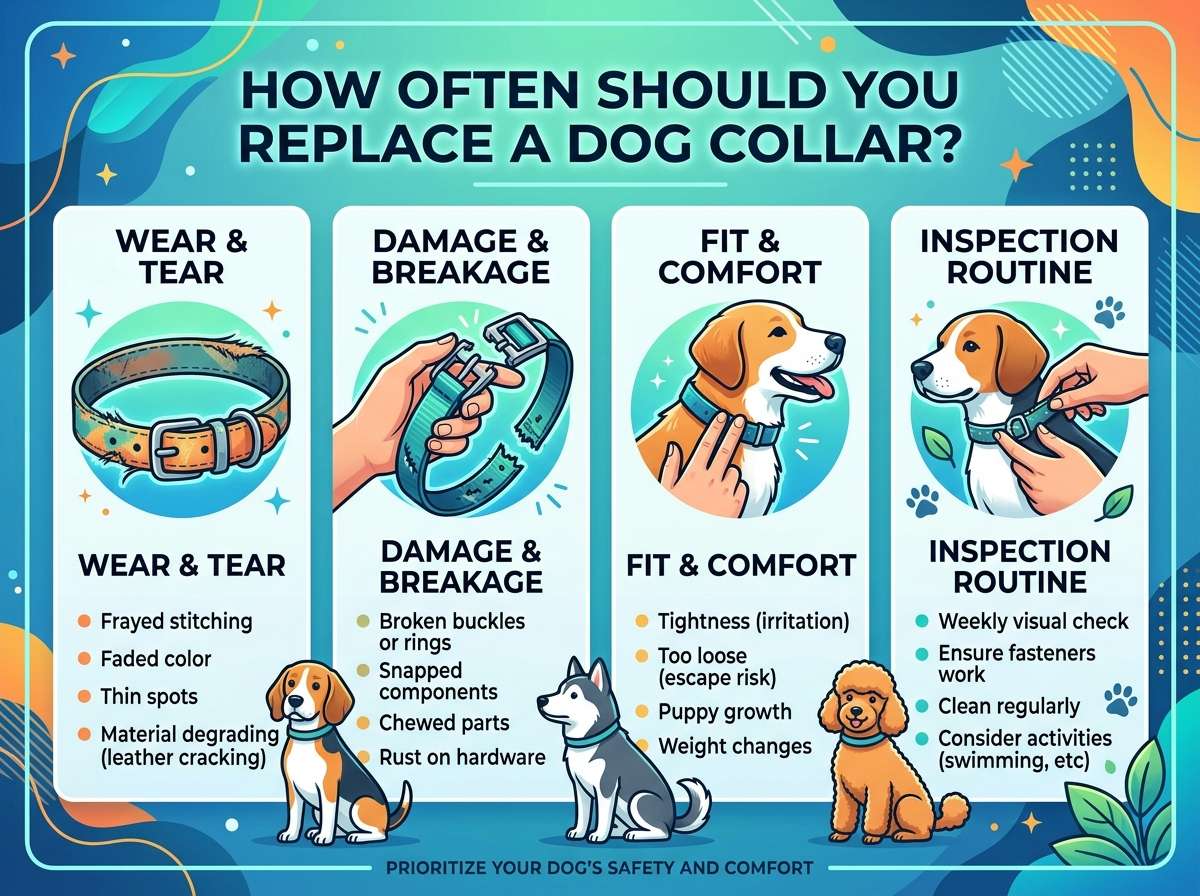
Look closely at the material. Is it starting to unravel? Are there little threads sticking out? This means the collar is weakening. It might not seem like a big deal, but these weak spots can give way, especially if your dog pulls a lot on the leash.
Stretching or Thinning Material
Over time, materials stretch out. Canvas, nylon, or even leather collars can become thinner or wider than they once were. This stretching means the collar might not fit as snugly or securely. It also suggests the material is losing its strength.
Fading or Discoloration
While not always a safety issue, a faded collar often means it’s been through a lot of sun, rain, and washes. This exposure also degrades the material over time. It’s a visual cue that the collar’s prime days are behind it.
Hardware Issues
The metal or plastic parts of the collar are just as important as the fabric itself.
Rusty or Damaged Buckle
Buckles are crucial for keeping the collar on. Rust on a metal buckle can weaken it and make it hard to open or close. A bent or cracked plastic buckle is even worse – a small tug could break it completely, letting your dog escape. Always check how easily the buckle works.
Weakened D-Ring (Leash Attachment Point)
The D-ring is where you clip your leash. This part takes a lot of stress during walks. If it’s bent, severely scratched, or rusting, it’s a huge risk. A broken D-ring means no way to attach the leash, which is a major safety hazard.
Broken or Loose Rivets
Some collars use rivets to hold parts together, especially leather ones. If these rivets are loose or missing, parts of the collar can come apart. This is a clear sign of structural failure.
Fit Problems
A collar that doesn’t fit right is uncomfortable and unsafe.
Collar is Too Tight
If you can’t easily slip two fingers under the collar, it’s too tight. This can make it hard for your dog to breathe, especially when they’re active. It can also rub their skin, causing irritation or sores. Your dog may start to cough or gag during walks if the collar is squeezing them.
Collar is Too Loose
If you can easily slip more than two fingers under the collar, it’s likely too loose. A loose collar lets your dog Houdini their way out of it, especially if they get spooked. A collar that’s too baggy can also snag on things, which can be dangerous.
Dog Has Grown
This is a big one for puppies and young dogs! They grow like weeds. A collar that fit perfectly for months might suddenly be too small. Make sure to check their collar fit regularly as they mature. Adult dogs can also gain or lose weight, which affects how their collar fits.
Skin Irritation or Hair Loss
Sometimes, the collar itself can cause problems for your dog’s skin.
Redness or Rubbing Areas
If you notice red spots, raw skin, or bald patches around your dog’s neck, the collar is a likely culprit. It could be rubbing them the wrong way, or the material might be irritating their skin. This is a definite sign that you need to change collars and likely let their skin heal.
Allergic Reactions to Material
Some dogs can have sensitivities to certain materials, like specific metals in buckles or dyes in the fabric. If your dog gets itchy or develops a rash around their collar, consider trying a collar made from a different material, like hypoallergenic options.
How Often to Check Your Dog’s Collar
You don’t need a specific calendar reminder to check the collar. Make it part of your routine interactions with your dog.
Regular Visual Inspection
Just a quick glance each day when you put on the leash or pet your dog’s neck. Do a more thorough check once a week. Look at all the points we just discussed: the fabric, the buckle, the D-ring, and the fit.
During Grooming Sessions
When you brush your dog or give them a bath, take off their collar and really check it out. This is a great time to clean the collar too, which helps it last longer. It’s also a perfect opportunity to inspect their neck for any skin issues that the collar might be hiding.
After Rough Play or Adventurous Outings
If your dog has been wrestling with other dogs, rolling in the mud, swimming, or running through thick bushes, their collar might have taken a beating. Give it an extra check for damage after these activities. Water, especially salt water, can be particularly harsh on collar materials and metal components.
Factors That Affect Collar Lifespan
Not all collars are created equal, and not all dogs treat them the same way. Several things influence how long a collar will last.
Material Type
Collars come in many materials, and some are tougher than others.
Nylon and Polyester Collars
These are very common, affordable, and come in lots of colors. They’re pretty durable for everyday use, but they can fray, stretch, and fade over time, especially with lots of sun exposure or frequent washing. You might need to change these every one to three years, depending on activity.
Leather Collars
Leather can be very strong and stylish. Good quality leather collars can last a long time if cared for properly. They need to be cleaned and conditioned occasionally. Poor quality leather can crack or dry out and break down faster. Leather can last several years, sometimes even five or more, but it depends a lot on the quality and care.
Biothane and Waterproof Collars
These are fantastic for dogs who love water or get dirty a lot. Biothane is a type of webbing with a PVC or TPU coating, making it super durable, waterproof, and odor-resistant. These tend to last a very long time, often several years, because they don’t absorb moisture and are easy to clean.
Dog’s Activity Level and Habits
A couch potato’s collar will last longer than an adventure dog’s.
Swimmers and Mud Rollers
Water exposure, especially chlorinated or salt water, can degrade materials and rust hardware faster. Mud and dirt can also get into buckles and cause wear. Collars on these dogs need more frequent checks and replacements.
Pullers and Chewers
If your dog pulls hard on the leash, the collar and D-ring take a lot of stress. If your dog also likes to chew on their collar, or their friend’s collar during play, it will definitely wear out faster. Chew marks are a definite reason to replace a collar.
Dogs with Fast-Growing Fur
Some dogs, especially those with thick undercoats, might get mats or discomfort if their collar isn’t sitting right or if it pulls their fur. While not directly damaging the collar, it can signal that a different collar style might be needed for their comfort.
Climate and Environmental Factors
Where you live and what your dog does outside plays a role.
Sun Exposure
UV rays from the sun can break down fabrics and cause colors to fade. A collar constantly exposed to intense sunlight will degrade faster than one mostly used indoors.
Humidity and Rain
Constant dampness can promote rust on metal parts and mildew growth on fabric collars, weakening them over time.
Types of Collars and Their Lifespans
It isn’t just about material; the purpose of the collar influences how long it should last or how often you should check it.
Everyday Flat Collars
These are the most common type, usually made of nylon, polyester, or leather. They hold ID tags and attach to leashes. For most dogs, these should be checked frequently and replaced every one to three years, or sooner if showing wear.
Martingale Collars
These collars have a small loop that tightens when your dog pulls, preventing them from slipping out. They are great for sighthounds or dogs with narrow heads. The tightening mechanism adds extra stress points, so you should check the small loop regularly for fraying or weakening. These might need replacing every year or two, especially with a strong puller.
Harnesses (Not Collars, but Important!)
While not a collar, many dog owners use a harness for walks. Harnesses distribute pressure across the dog’s chest and back. They have more straps and buckles than collars. All the same wear and tear rules apply to harnesses; check buckles, straps, and stitching often. A harness used for daily walks might also need replacing every one to three years.
Training Collars (e.g., Head Halters, Gentle Leaders)
These are specific tools for training. They are not meant to be left on all the time. Because they are used differently, they may show wear differently. Check all points of contact and buckles each time you use them. The lifespan can vary widely depending on how often they’re used and how much pressure is applied during training.
Extending Your Collar’s Life
While you can’t stop time, you can do things to make your dog’s collar last longer.
Regular Cleaning
Dirt, grim, natural oils from your dog’s fur, and even skin cells can build up on a collar. This gunk can break down fibers. Most fabric collars can be hand-washed with mild soap and water. Let them air dry completely. For leather, wipe it down and use a leather conditioner occasionally to keep it supple.
Proper Storage
When your dog’s collar isn’t on them (like during baths or overnight if they don’t wear it then), store it somewhere dry and out of direct sunlight. Don’t just toss it in a damp pile of clothes.
Having a Backup Collar
It’s a really good idea to have a spare collar. If your main collar shows signs of wear, you can switch to the backup right away while you get a new one. This ensures your dog is never without a safe collar and ID tags. A backup is also great if one collar needs cleaning or suffers unexpected damage.
The Cost of Replacement vs. The Cost of a Problem
Replacing a dog collar might seem like a small expense, but it’s an investment in your dog’s security.
Peace of Mind is Priceless
A worn-out collar can break. If your dog gets loose, the worry and potential dangers are huge. They could get hurt, get lost, or cause an accident. Spending a few dollars on a new collar regularly is a small price for knowing your dog is safe.
Avoiding Injury to Your Dog
An ill-fitting or damaged collar can cause skin irritation, neck pain, or even choking hazards. Keeping their collar in good shape means keeping them comfortable and healthy.
Avoiding Liability Issues
If your dog gets loose because their collar broke and they cause an accident or scare someone, you could be held responsible. A reliable collar is a part of responsible pet ownership.
Wrapping Up
There’s no magic time frame for changing your dog’s collar, like saying “every six months” or “every year.” It really comes down to paying attention. Look at the collar often, check its fit, inspect the hardware, and notice its overall condition. Be proactive! If you see fraying, rust, stretching, or if it just doesn’t fit well anymore, it’s time for a new one. A well-maintained, properly fitting collar keeps your best friend safe, comfortable, and always ready for their next adventure with you. Your dog depends on you to keep them safe, and that includes their collar!
Hi, I’m Mary, the founder of PetGadgetPro.com. I’m a passionate pet lover with a special place in my heart for dogs and cats. I share practical advice and honest insights on pet gear to help pet parents make better choices. My dedicated research team studies products in depth, and our writers create reviews using trusted, authentic sources—so you can feel confident choosing the best for your pets.