How Often Should Litter Be Changed Completely?
Your cat’s litter box needs proper care, and one of the most important questions cat owners ask is how often they should do a full litter change. This isn’t just about keeping your home fresh. A clean litter box keeps your cat happy and healthy, and it helps prevent infections and behavioral issues.
Let me break down everything you need to know about litter box maintenance so you can give your feline friend the best care possible.
The Quick Answer: Complete Litter Changes
Most cats need a complete litter box change about once a week. That means dumping out all the old litter and washing the box before adding fresh litter. However, the exact timing depends on several factors that affect how fast litter gets dirty.
The number of cats you have plays a huge role. One cat needs a full change once a week, while two cats might need a change every 4-5 days. Three or more cats require changes every 2-3 days or even daily. Your cat’s habits and the type of litter you use also make a big difference.
Why Complete Changes Matter
Scooping your litter box every day keeps things somewhat clean, but it’s not enough on its own. Scoops only remove the solid waste and clumps. Over time, tiny particles and urine build up at the bottom of the box. Bacteria and odors grow, and your cat may start avoiding the box altogether.
A full litter change gives you the chance to clean the actual box. You rinse away all the urine, dust, and bacteria that scoops miss. This makes a huge difference in odor control and your cat’s health.
When you do a complete change, you also spot any problems. You might notice the box has cracks, or the litter has moisture in weird places. You can catch these issues before they become big problems.
Daily Scooping: Your First Defense
Before we talk about complete changes, let’s cover daily scooping. You should scoop your litter box at least once a day, every single day. Some cat owners scoop twice a day if they have multiple cats or a cat with sensitive bowels.
Daily scooping removes clumps and solid waste before they break down and create ammonia smells. This makes your home smell better and keeps your cat from stepping in waste. Cats are clean animals and will protest if their litter box gets too gross.
Think of daily scooping as the first step. It keeps things tolerable between complete changes. A good scoop with holes helps clumps stay on top of the litter where you can grab them easily.
Factors That Change Your Litter Schedule
Your specific litter change schedule depends on several things working together.
Number of Cats
The most important factor is how many cats share the box. One cat creates a manageable amount of waste. Two cats double the problem. With three or more cats, litter gets dirty fast.
Many cat experts say you should have one box per cat, plus one extra. So if you have two cats, you need three boxes. This spreads out the waste and lets you change litter less often on each individual box.
Type of Litter
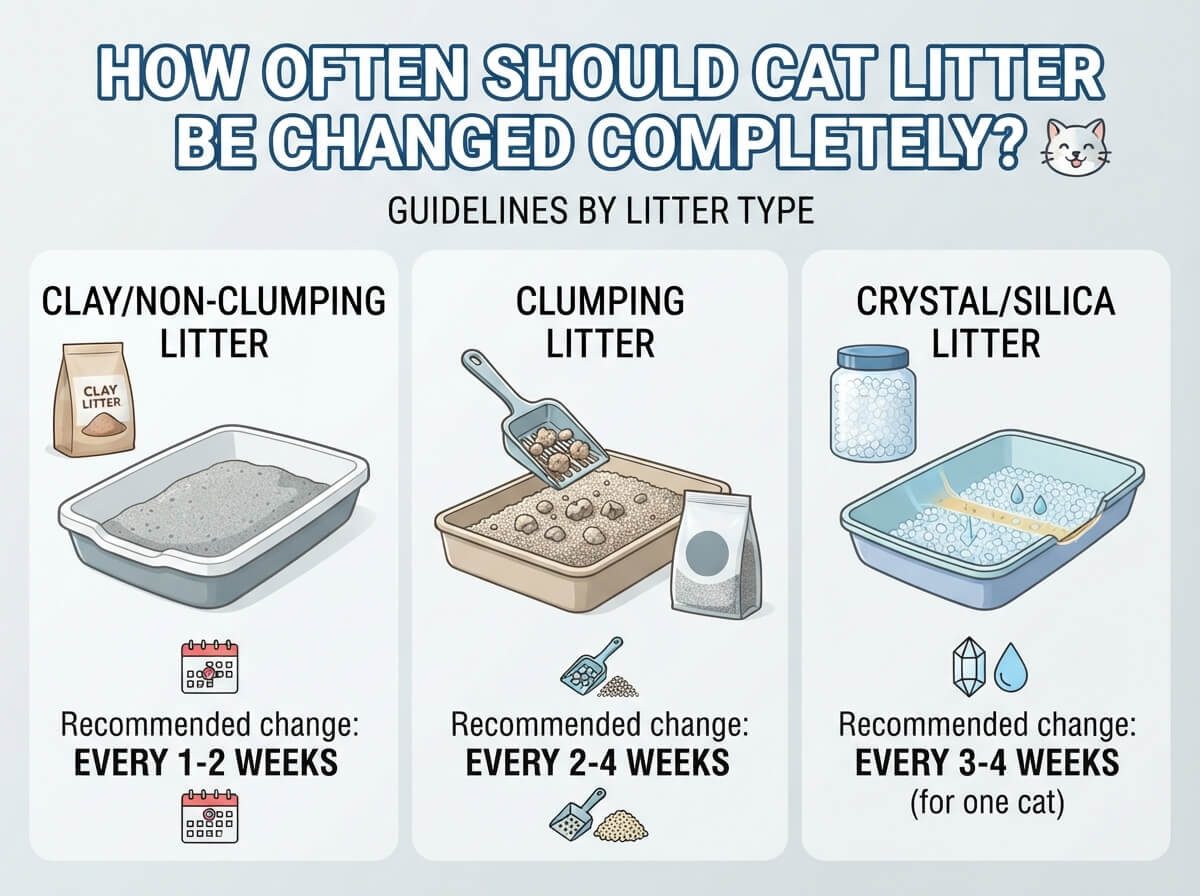
Different litter types perform differently. Clumping litter tends to work longer because it balls up around waste and keeps odors trapped. Non-clumping litter breaks down faster and smells worse as it sits.
Clay litter is traditional and affordable but needs frequent changes. Crystal litter or silica gel litter lasts longer because it absorbs urine without breaking down. Wooden pellet litter and paper-based litters fall somewhere in the middle.
Your cat’s preference matters too. If your cat hates a certain type of litter, they might go outside the box, which creates a mess you want to avoid.
Litter Box Size
A bigger box holds more litter, which can go longer between changes. A small box fills up fast with waste. If your cat is large, they might kick litter around, spreading it across the floor. Using a bigger box helps manage this.
Your Cat’s Health
A healthy cat creates normal waste that clumps well and doesn’t smell too strong. A cat with diarrhea, urinary issues, or other health problems creates more waste and odor. These cats need more frequent litter changes.
If your cat suddenly needs the box more often, talk to your vet. Increased bathroom trips can signal an infection or other health issue.
Your Home’s Ventilation
Good airflow helps litter dry out and reduces odors. A litter box in a stuffy bathroom holds smell more than one in an open space with a window. If your litter area has air circulation, you can go longer between complete changes.
Your Sensitivity to Odor
Some people are more bothered by litter box smells than others. If you’re sensitive to odors, you might do complete changes more often than necessary. That’s fine. Your comfort matters too, and your cat won’t mind having fresher litter more often.
The Weekly Change: Your Target Goal
Most single-cat households do well with a complete change once a week. Here’s what a weekly schedule looks like:
- Daily scooping every morning or evening
- One complete emptying and box wash each week
- Fresh litter added after washing
This schedule keeps odors under control and maintains the box in good condition. Your cat stays happy, and your home stays fresh.
To stick with a weekly schedule, pick one day each week as your “litter day.” Maybe it’s every Saturday. You develop a routine, and it becomes easier to remember.
Multi-Cat Households and More Frequent Changes
If you have multiple cats, expect to change litter more often. With two cats and two boxes, you might change one box every 5-6 days and rotate them. This way you’re always doing some form of change.
With three cats, you might need to change litter every 3-4 days across your multiple boxes. Some people with many cats do a partial change every few days and a full change weekly on rotation.
The key is that no single cat should go too long using the same dirty litter. Cats are less likely to use a filthy box, and they’ll pee outside of it. That creates a much bigger problem than doing an extra litter change.
Seasonal Factors and Litter Changes
Seasons affect how fast litter gets dirty. In humid seasons, litter absorbs moisture from the air and gets clumpy faster. In dry seasons, it lasts a bit longer.
If you live somewhere hot and humid, you might need to change litter more often. Cold, dry climates let litter last slightly longer. These differences are usually small, but they matter over time.
Signs Your Litter Needs a Complete Change Now
Don’t wait for a set schedule if your litter shows these signs:
Strong Ammonia Smell
Ammonia means urine has broken down in the litter. This smell builds up over time and gets stronger. When you notice it, do a complete change soon.
Wet Spots or Clumping Issues
If litter doesn’t clump properly or stays wet, it’s time for a change. Bad clumping means you’re not removing waste effectively with scooping.
Dust or Debris
Litter breaks down into dust as cats use it. Excessive dust means the litter is old and tired. Fresh litter creates less dust and is better for your cat’s lungs.
Unusual Odors
If the litter smells off or rotten, something is wrong. This might mean bacteria is growing or your litter has gotten moldy. Change it immediately.
Your Cat Avoiding the Box
If your cat suddenly stops using the box or uses it less, the litter might be too dirty. Try a complete change and see if they go back to using it normally.
How to Do a Complete Litter Change
The process is simple and takes about 10 minutes:
First, scoop out all the old litter into a bag or trash can. Get as much as possible. Then, brush or wipe the box to remove any stuck clumps or dust.
Next, rinse the box with warm water. Use a hose outside or fill your bathtub if the box is small. This removes urine and bacteria that stuck to the plastic.
Let the box dry completely or wipe it dry with a towel. A wet box makes fresh litter clump wrong.
Add fresh litter to your clean, dry box. Most boxes do well with 2-3 inches of litter. Too little and cats will kick it out. Too much wastes litter.
Finally, dispose of old litter properly. Clumping litter can go in the trash, but never flush it. Some communities have litter recycling, though most don’t.
Choosing the Right Litter for Your Situation
Different litter types work better for different schedules.
Clumping clay litter is the most popular choice. It works well and gives you about 4-7 days between complete changes with one cat. It clumps tightly so you remove more waste with each scoop.
Crystal or silica gel litter lasts longer. Some people change it only every 10-14 days. It absorbs urine without breaking down, so it stays fresher. However, some cats don’t like walking on crystals.
Natural litters made from wood, paper, or corn go somewhere in the middle. They’re eco-friendly and work well for cats with sensitive skin. You change them every 5-10 days depending on the specific brand.
Recycled paper litter is dust-free and gentle on lungs. It works for about 5-7 days between complete changes.
Storage Tips for Litter
Where you store litter affects how long it lasts in your box. Keep bags in a cool, dry place away from humidity. Humidity makes litter clump prematurely and ruins it.
If you buy litter in bulk, store it properly so the oldest litter gets used first. Litter that sits too long can develop odors or quality issues.
Budget and Litter Costs
Complete weekly changes add up over time. For one cat using clumping litter, you’ll spend about the same amount on litter as you would if you changed it less often but bought premium litter. The difference is that you keep your home fresher.
If budget is tight, you can reduce costs by using litter more efficiently. Bigger boxes hold more litter. Larger clumps from quality clumping litter mean you remove more waste with each scoop. These small things reduce how much litter you use.
Health Benefits of Regular Complete Changes
Clean litter boxes prevent many health problems. Bacteria can’t build up as easily. Urinary tract infections become less common. Respiratory issues from dust decrease.
Your cat experiences less stress from a clean bathroom area. Stress can cause behavioral problems, health issues, and inappropriate elimination. A fresh box keeps your cat relaxed and happy.
Making Litter Changes Easier
Create a routine and stick to it. Maybe you change litter on a specific day each week. Having a schedule makes it automatic and helps you remember.
Use a litter mat to catch particles that stick to your cat’s paws. This reduces tracking litter around your home.
Keep supplies handy. Have fresh litter, bags, and cleaning tools near your litter area so you’re more likely to do the job when needed.
Consider a litter box with a removable tray. These boxes make changes faster and easier than traditional boxes.
What About Outdoor or Multi-Box Setups
If you have outdoor litter boxes, change them more often. They’re exposed to weather and outside contamination. Rain or moisture accelerates breakdown, and outdoor animals might get into them.
Change outdoor boxes every 2-4 days. This protects your cat and keeps away pest animals.
With multiple indoor boxes, you can rotate changes. Change one box one day and another box a few days later. This spreads out your work.
Keeping Track of Your Schedule
Write down when you change litter, or set a phone reminder. Many people set a recurring weekly alarm that reminds them it’s litter day.
Use a simple notebook or spreadsheet to track when you change each box. This helps you see patterns and know when each box actually needs a change.
Final Thoughts on Litter Changing
Most cat owners find that a complete litter change once a week works perfectly. It keeps your home fresh, your cat healthy, and maintains the litter box in good condition. When you combine daily scooping with weekly complete changes, you get the best results.
Pay attention to your specific situation. Your number of cats, litter type, box size, and home setup all play a role. Adjust your schedule as needed based on how fast your litter gets dirty and how your cat responds.
Your cat depends on you for a clean bathroom space. Regular litter changes are one of the easiest ways to show your cat you care about their health and happiness. Start with a weekly schedule and adjust from there. You’ll quickly learn what works best for your household.