How Long Does a Bernese Mountain Dog Live?
If you’re thinking about getting a Bernese Mountain Dog or you already own one, you might be wondering how many years you’ll have with your furry friend. This is one of the most important questions any dog owner can ask. After all, you want to know what to expect before bringing a new pet into your home.
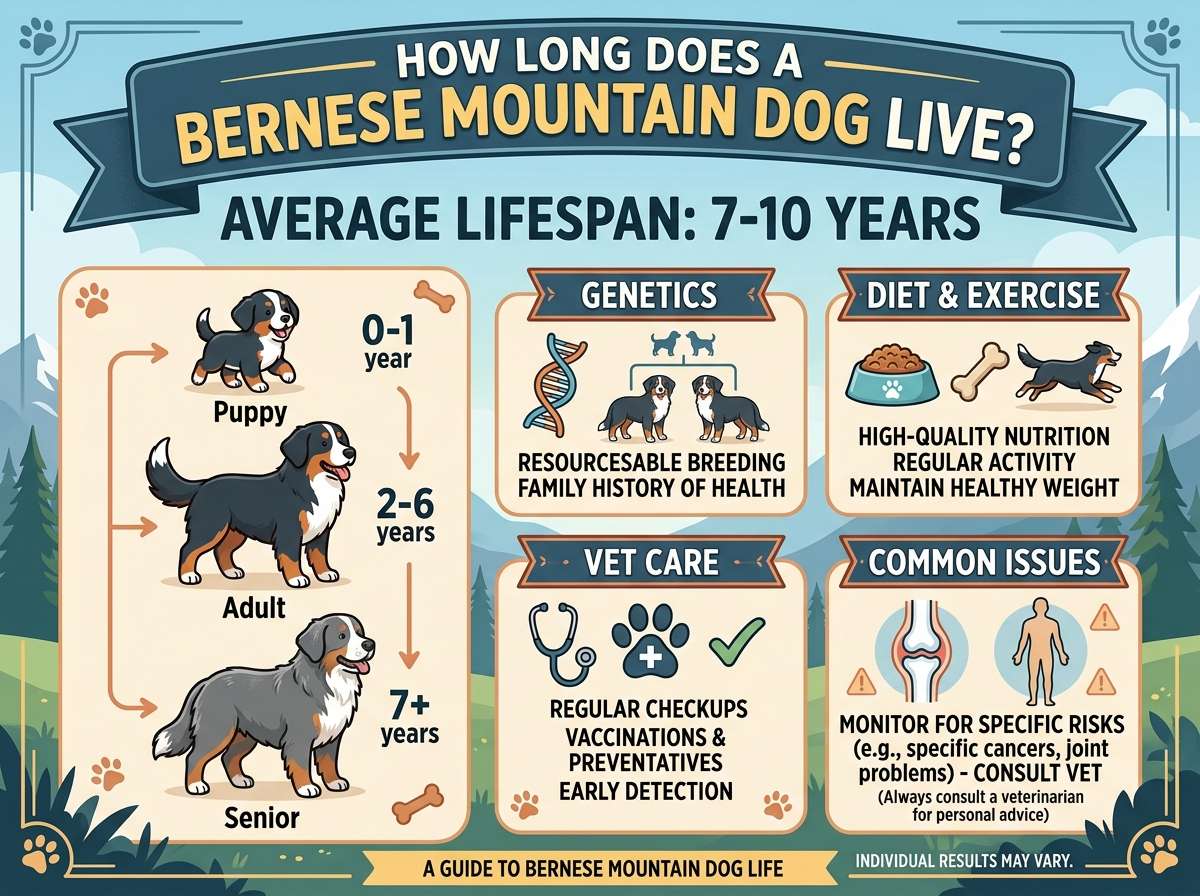
Bernese Mountain Dogs typically live between 7 to 10 years. Some dogs might live a bit longer, while others may pass away a little earlier. This lifespan is shorter than many other dog breeds. That’s just how genetics and their size work out.
Why Do Bernese Mountain Dogs Have a Shorter Lifespan?
Large dogs don’t live as long as small dogs. It’s that simple. A Bernese Mountain Dog is a big breed. These dogs can weigh between 70 to 115 pounds. That’s a lot of dog!
Big dogs age faster than smaller breeds. Their hearts work harder. Their bones carry more weight. Their bodies go through life at a faster pace. It’s not sad or unusual. It’s just how nature works for large dog breeds.
If you own a Great Dane or a Saint Bernard, you’ll see the same pattern. Large dogs simply don’t live as long as dogs that weigh 20 pounds or less. This is one of the biggest drawbacks to owning a big dog breed.
The Average Bernese Mountain Dog Lifespan
Let’s get specific about numbers. Most Bernese Mountain Dogs live 7 to 10 years. Some make it to 11 or 12 years old. A few rare cases might even see 13 or 14 years.
The most common age range is 8 to 10 years. If your Bernese Mountain Dog reaches 10 years old, you’re doing something right. Your dog has had a good, long life.
Don’t focus too much on exact numbers. Every dog is different. Some Bernese Mountain Dogs might not make it to 7. Others might surprise you and live past 11. Health, genetics, and lifestyle all matter.
Health Problems That Affect Bernese Mountain Dog Life Expectancy
Bernese Mountain Dogs face some serious health challenges. These problems can shorten their lives. Knowing about them helps you keep your dog healthy for longer.
Hip and Elbow Dysplasia
This is one of the biggest problems. Hip dysplasia happens when the hip joint doesn’t form right. The ball and socket don’t fit together like they should. Elbow dysplasia is similar but happens in the elbow.
Both conditions are painful. They cause arthritis over time. Your dog might limp or have trouble walking. The pain gets worse as your dog gets older.
These conditions are mostly genetic. You can’t prevent them completely. But you can reduce the risk by getting your puppy from a good breeder who tests their dogs.
Cancer in Bernese Mountain Dogs
Cancer is very common in Bernese Mountain Dogs. These dogs have a higher cancer rate than many other breeds. Some sources say up to 50% of Bernese Mountain Dogs will develop some type of cancer in their lifetime.
That’s a scary number. But it doesn’t mean your dog will definitely get cancer. It just means the risk is higher.
Different types of cancer can affect this breed. Some are more deadly than others. Early detection helps a lot. Regular vet checkups can catch cancer before it spreads.
Degenerative Myelopathy
This disease attacks the spinal cord. It’s also called DM. Dogs with this condition start to lose control of their back legs. They can become partially or fully paralyzed.
The disease is painful and gets worse over time. There’s no cure. It eventually leads to death.
Some Bernese Mountain Dogs carry the gene for this disease. A simple DNA test can tell you if your dog is at risk.
Bloat (Gastric Dilatation-Volvulus)
Bloat happens when the stomach fills with gas and then twists. This is a medical emergency. It can kill a dog in just a few hours.
Large dogs with deep chests get bloat more often. Bernese Mountain Dogs fit this description. A dog with bloat needs surgery right away.
You can’t prevent bloat completely. But you can reduce the risk by feeding smaller meals. Don’t let your dog eat too fast. Avoid exercise right after eating.
Other Health Issues
Bernese Mountain Dogs also face other problems like allergies, skin issues, and eye problems. These don’t usually shorten life, but they make living uncomfortable.
Some dogs get cataracts as they age. Others develop ear infections. These issues need treatment from a vet.
How to Help Your Bernese Mountain Dog Live Longer
You can’t add 10 extra years to your dog’s life. But you can make smart choices to keep your dog healthy for as long as possible.
Feed Your Dog Quality Food
Good nutrition matters. Don’t buy the cheapest dog food at the store. Look for brands with real meat as the first ingredient.
Feed the right amount. Overweight dogs don’t live as long. A fat Bernese Mountain Dog will have more health problems. Keep your dog at a healthy weight.
Ask your vet what food is best for your dog. Different dogs need different foods. Your vet can guide you.
Keep Your Dog Active
Exercise is important. Bernese Mountain Dogs were bred to work. They need regular activity to stay healthy.
Take your dog for walks. Play fetch. Let your dog run in the yard. But don’t overdo it. Young puppies and senior dogs need less exercise than dogs in their prime.
Exercise keeps the heart strong. It helps maintain a healthy weight. It keeps the joints moving. All of this adds years to your dog’s life.
Regular Vet Checkups
Don’t skip vet visits. Take your dog in at least once a year. Older dogs should go twice a year.
Your vet can catch problems early. Early treatment saves lives. Cancer, hip dysplasia, and other conditions are easier to manage when caught early.
Ask your vet about health screening tests. Some tests can identify problems before your dog shows symptoms.
Keep Your Dog’s Teeth Clean
Dental health is important. Dirty teeth lead to infections. Those infections can spread to the heart and other organs.
Brush your dog’s teeth at home. Give your dog dental chews. Your vet can do a professional cleaning if needed.
Manage Your Dog’s Stress
Stress affects dogs just like it affects people. A happy dog lives longer than a stressed dog.
Spend time with your dog. Play together. Go on adventures. Keep a routine so your dog knows what to expect.
Anxiety and fear shorten life. A calm, happy dog is a healthy dog.
Watch for Warning Signs
Learn the signs that something is wrong. Is your dog drinking more water? Eating less? Moving slowly? Acting strange?
These signs might mean nothing. Or they might mean your dog needs help. If you notice changes, call your vet.
Catching problems early is the key to a longer life.
The Bernese Mountain Dog Senior Years
At around 7 years old, your Bernese Mountain Dog is entering the senior phase. Things change at this age.
Your senior dog might move slower. They might sleep more. They might have trouble climbing stairs. Hearing and vision might fade.
These changes are normal. All dogs deal with aging. Your job is to make it comfortable.
Provide a soft bed. Use ramps or steps for furniture. Keep food and water on the main floor. Your dog shouldn’t have to work hard to eat, drink, or rest.
Pain management is important. Talk to your vet about options. Medicine can help ease arthritis pain. Supplements might help too.
Spend quality time with your senior dog. They don’t have as many years left. Make those years count.
When to Say Goodbye
This is the hardest part. Eventually, you’ll need to decide when your dog’s quality of life is gone. This is called euthanasia or putting your dog to sleep.
It’s a loving decision. You’re preventing suffering. Your dog won’t feel pain anymore.
Signs that it might be time include loss of appetite, inability to move, constant pain, or incontinence that can’t be managed. Every situation is different.
Talk to your vet. They can help you decide. There’s no shame in choosing to let your dog go peacefully. It’s an act of love.
Getting a Bernese Mountain Dog: What You Need to Know
If you’re thinking about getting a Bernese Mountain Dog, understand the lifespan commitment. You’ll have 7 to 10 years together. That might sound short, but it’s still a long commitment.
Find a good breeder. Ask about health testing. Make sure the parents have been screened for hip dysplasia, elbow dysplasia, and other genetic problems.
Get pet insurance. Medical bills can get expensive. Insurance helps you afford treatment when your dog gets sick.
Be prepared emotionally. These are wonderful dogs. They’re friendly, loyal, and gentle. But they don’t live long. Be ready for that reality before you bring one home.
Making the Most of Your Time Together
Whether you have 7 years or 12 years with your Bernese Mountain Dog, make them count. These dogs give so much love. They deserve your best effort.
Take lots of photos. Write down funny stories. Remember the little moments. The time goes by faster than you think.
Create memories. Go on adventures. Let your dog sleep on the couch if they want. Spoil them a little. Life is short for them.
Your Bernese Mountain Dog will give you unconditional love every single day. That’s worth more than any number of years.
Comparing Bernese Mountain Dogs to Other Large Breeds
Bernese Mountain Dogs don’t live much longer than other large breeds. A German Shepherd usually lives 9 to 13 years. A Labrador Retriever lives 10 to 12 years. A Great Dane often lives only 7 to 10 years.
Smaller breeds live longer. A Chihuahua might live 14 to 18 years. A Dachshund can live 12 to 16 years. That’s the trade-off with getting a large dog.
If lifespan is your biggest concern, a small dog breed might be better. But if you love large dogs, understand that you’ll have less time together.
How Genetics Play a Role
Genetics determine a lot about your dog’s lifespan. Some dogs inherit strong genes that help them live longer. Others inherit genes that make them prone to disease.
This is why breeder selection matters. A responsible breeder tests their dogs for genetic problems. They don’t breed dogs with serious health issues.
You can also do genetic testing on your own dog. A simple DNA test can tell you if your Bernese Mountain Dog carries genes for certain diseases.
Knowing about genetic risks helps you monitor your dog. You’ll know what to watch for.
The Role of Nutrition in Lifespan
What you feed your dog matters. Some foods are more nutritious than others. Good nutrition supports health and longevity.
Look for dog foods with high-quality proteins. Dogs need meat. They need fat too. Don’t fall for grain-free fads. Most dogs do fine with grains.
Avoid artificial ingredients. Skip the food coloring and weird chemicals. Plain, simple, good food is best.
Supplements can help too. Glucosamine helps joints. Omega-3 fatty acids support the heart and brain. Ask your vet which supplements make sense for your dog.
Portion control is crucial. Overweight dogs die younger. Their organs have to work harder. They get more diseases. Keep your dog lean.
Creating a Safe Environment
Where your dog lives matters. A safe home reduces injuries and stress.
Keep your dog cool in summer. Large dogs overheat easily. Provide shade and fresh water. Don’t exercise in extreme heat.
Keep your dog warm in cold weather. Bernese Mountain Dogs were bred for cold, so they handle it well. But puppies and seniors need extra warmth.
Prevent accidents. Keep toxic plants away. Store chemicals safely. Don’t leave your dog unsupervised around dangers.
A calm, safe home is a healthy home.
Understanding End-of-Life Care
As your dog ages, you might face difficult medical decisions. Will you do surgery on a senior dog? Will you start medication?
There are no right answers. Every owner makes different choices. Your vet can explain options.
Palliative care focuses on comfort, not cure. This is often the best approach for very senior dogs. Your dog’s quality of life matters more than adding a few more months.
Discuss your values with your vet. Some people want to fight every disease. Others want to focus on keeping their dog comfortable. Both choices are valid.
Learning from Your Dog’s Life
Your Bernese Mountain Dog teaches lessons just by living. They show you what love looks like. They teach you to be present. They remind you that time is precious.
When your dog passes, you’ll have memories. Lots of them. Those memories will bring you joy long after your dog is gone.
Consider ways to honor your dog. Plant a tree. Create a photo album. Write down your favorite stories. Keep your dog’s memory alive.
The short lifespan of a Bernese Mountain Dog is sad. But it also makes the time you have more special. Every moment counts.
Final Thoughts on Bernese Mountain Dog Lifespan
A Bernese Mountain Dog typically lives 7 to 10 years. It’s not a long time. But it’s enough time to form a deep bond.
You can help your dog live a full, healthy life by providing good food, exercise, and veterinary care. You can watch for health problems and catch them early. You can give your dog love and attention.
Most importantly, enjoy every single day. Don’t worry too much about the end. Focus on the present. Your dog is here now. That’s what matters.
Whether you have 7 years or 12 years, it will feel too short. These dogs are special. They’re loyal, gentle, and loving. They deserve your very best.
So if you’re thinking about getting a Bernese Mountain Dog, go for it. Yes, they don’t live as long as small dogs. Yes, they face health challenges. But the love they give makes it all worthwhile. The memories will last a lifetime.
Your Bernese Mountain Dog will be one of the best decisions you ever make. Cherish every moment.

Hi, I’m Mary, the founder of PetGadgetPro.com. I’m a passionate pet lover with a special place in my heart for dogs and cats. I share practical advice and honest insights on pet gear to help pet parents make better choices. My dedicated research team studies products in depth, and our writers create reviews using trusted, authentic sources—so you can feel confident choosing the best for your pets.