5 Best Non Tracking Cat Litter In 2026
As an Amazon Associate we earn from qualifying purchases.
Picking a litter that stays in the box can make a real difference to a clean home. This guide helps beginners who want the best non tracking cat litter but do not know where to start. It covers five popular options, and each one is built to reduce the bits of litter that stick to paws and get carried across floors.
The five products in this round-up share a few common traits. Each one is a litter aimed at less tracking, and most also promise low dust and some form of odor control. The comparison below rests on the listed features and typical use of each product, not on personal testing. Read the details as a guide to what each one is designed to do.
Tracking happens when small granules cling to fur and paw pads, then drop onto rugs, tile and hallways. Litters that use larger granules, softer shapes or lighter materials often reduce this problem. Shape and size matter, but so does how often a cat walks in and out of the box. A tidy setup with a mat or a litter box with a high entry can also help.



1. ARM & HAMMER Slide Platinum Easy Clean-Up: best for busy multi-cat homes
This is a clumping clay litter from a well-known household brand. It is designed for owners who want quick, simple scooping and strong everyday odor control. It suits homes with more than one cat, based on the multi-cat strength listed in its features.
Multi-cat homes often produce more waste in a short time, so the litter needs to hold up under steady use. A clumping formula helps here because each clump can be removed as a single piece. That keeps the rest of the litter cleaner for longer, which means fewer full changes.
What it is and who it suits
Clumping litter forms solid clumps when a cat urinates, so waste can be lifted out in one piece. This product is built for that style of box care. It fits owners who want a familiar, widely available option at a moderate price.
It is a good match for people who already know how to scoop and want a predictable routine. Beginners can also use it, since the method is simple and the product is easy to find in most stores.
Key features in plain words
The litter is described as forming firm clumps that slide out of the box. It also lists triple-action freshness that absorbs and locks odors around the clock. The formula is noted as dust free and suitable for both traditional and robotic litter boxes.
Dust-free claims matter for households with asthma, allergies or sensitive noses, since fine particles can float in the air when the litter is poured or stirred. Compatibility with robotic boxes is also useful, because some automatic systems work best with certain clumping formulas.
Daily use and cleanup
In practice, clumps that release cleanly mean less scraping at the bottom of the box. Owners typically spend less time on each scoop. Because the formula is scented, some households may notice a fragrance in the room, which is a matter of personal preference.
A simple routine helps. Scoop clumps once or twice a day, top up the depth as needed, and empty the box fully on a regular schedule. Good habits often matter as much as the litter itself.
Performance and value
The product is listed as offering reliable odor control and heavy-use performance. At its listed price, it sits in the lower-middle range for this category. Buyers who want a dependable everyday clumping litter may find the value reasonable.
Value depends on how much litter a household goes through. Because clumping litter lasts longer when scooped well, the cost per week can be lower than the sticker price suggests.
Pros
- Clumps are described as firm and easy to scoop out.
- Listed as suitable for robotic and traditional litter boxes.
- Dust-free formula with a scented option for fresher air.
- Designed to hold up in multi-cat households.
Cons
- The scent may not suit owners or cats who prefer unscented litter.
- Clay litters are heavier than lightweight alternatives.
- Its tracking control is less of a focus than its clumping strength.
2. Fresh Step Advanced Clean Paws Multi Cat: best for long-lasting odor control
This is a low tracking clumping litter sold in a two-pack, aimed at multi-cat homes. It focuses on long-lasting odor control and granules designed to stay in the box. It suits owners who want a larger supply from a product with a strong reputation in this category.
What it is and who it suits
The product is a clumping clay litter with low-tracking granules. The granules are described as less likely to stick to paws, so they are less likely to leave the tray on a cat’s feet. It suits households where litter tends to spread across the floor, such as homes with a busy entryway or a box placed near a hard floor.
It also suits owners who share a home with more than one cat. Multi-cat households create more waste in a shorter time, so a litter with a long odor control claim can be helpful. Single-cat homes can use it too, though the two-pack may be more than they need.
Key features in plain words
The formula is listed to neutralize strong smells, including urine and feces, for a stated 21-day period. It combines natural clay with carbon and an ammonia block, plus added freshness. Carbon and ammonia-control ingredients are common in litters that aim for longer odor control, so the design is easy to follow.
The product also lists a low-dust formula and compatibility with most automatic litter boxes. Owners with an automatic box should still check the manufacturer’s guidance for their specific model before switching litters. Low dust is a useful feature for people who sit near the box or who have a sensitive nose.
Daily use and cleanup
Because the granules are designed to stay in the box, owners may find fewer loose bits on the floor. The clumps are described as tight, which helps when scooping. Tight clumps lift out cleanly and leave less litter stuck to the tray, which makes daily cleanup quicker.
The added fragrance is noticeable to some people, so it is well suited to those who like a scented room. It may not appeal to everyone, especially people with scent sensitivities or households that prefer unscented products. If scent is a concern, it is worth testing a small bag before buying a larger supply.
Performance and value
The two-pack gives a larger total quantity, which can make the price per pound easier to compare. Buyers should look at the total weight on each package and divide the price by that weight to judge value. Comparing two products this way is more reliable than looking at the sticker price alone.
Its listed odor control period is long, and the litter is described as strong in day-to-day use. Long odor control can reduce how often a box needs a full change, though regular scooping is still needed. Buyers who want a bigger supply with a strong seller standing may find it a sensible choice.
Pros
- Low-tracking granules are designed to stay inside the box.
- Listed odor control lasts a stated 21 days.
- Low-dust formula with compatibility for most automatic boxes.
- Two-pack offers a larger total amount of litter.
Cons
- The fragrance is not a fit for owners who prefer unscented litter.
- Clay-based litter is heavier to carry than lightweight options.
- The total cost is higher than a single standard box.
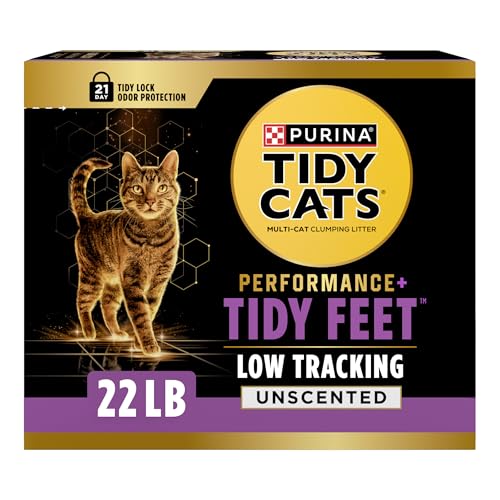
3. Purina Tidy Cats Performance Plus Tidy Feet: best for low tracking and dust control
This is a clumping litter from a major pet care brand, built around low tracking and very low dust. It is a strong option for owners who want a clean floor and a fragrance-free room. It suits multi-cat homes based on its listed features.
What it is and who it suits
The product uses a blend of litter particles that are designed to roll less outside the box. It also forms tight clumps for easy scooping. It suits owners who see litter spreading beyond the tray and want a more contained setup.
It can also suit owners who notice dust in the air around the box. Lower dust may be useful in small apartments or rooms where the litter is kept near living areas. Households with several cats may appreciate a litter built to handle frequent use.
Key features in plain words
The formula is listed as 99.9 percent less dust and 64 percent less tracking compared with a leading clumping litter. It offers 21-day odor control when used as directed. The litter is also described as multi-cat suitable and scented with a clean linen fragrance.
These percentages are manufacturer comparisons, so they describe the brand’s own testing against one named competitor. Real results depend on the cat, the home and the box setup. Treat the figures as a starting point rather than a guarantee.
Daily use and cleanup
Because the particles are designed to stay in the box, owners may notice less litter on the floor. The tight clumps help with scooping, though the box still needs regular cleaning. Scooping at least once a day keeps the box fresh, and a full change is still needed on the schedule the manufacturer recommends.
The linen scent is mild for most people, though a few may still notice it. Anyone with a strong scent sensitivity should smell the product in a store or test a small bag first. Fragrance is a matter of personal preference, so results will vary from home to home.
Performance and value
The listed tracking and dust figures suggest strong containment for a clumping litter. Lower tracking usually means less cleaning of floors and rugs, which can add up over time. These claims are most useful when weighed against your own floor type and cat habits.
The 22-pound box is a sizable amount for a single purchase. Dividing the price by the weight gives a fair way to compare it with other options. At its listed price, the value is competitive for owners who prioritize a cleaner floor.
Pros
- Listed as offering much less tracking and very low dust.
- Tight clumps are designed for easy scooping.
- Odor control is listed for a stated 21 days when used as directed.
- Suitable for multi-cat households.
Cons
- The clean linen scent may not suit every household.
- Clay litter is heavier than lightweight alternatives.
- Results depend on regular box cleaning and proper use.
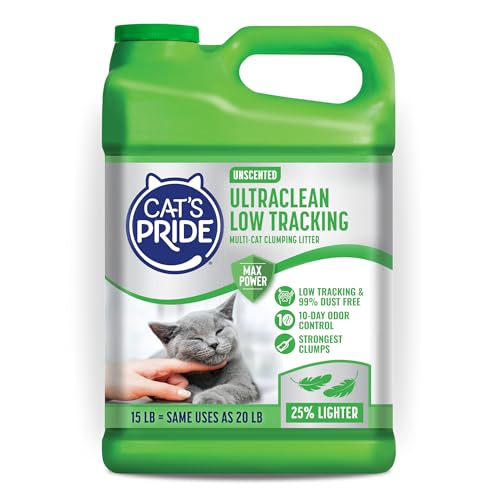
4. Cat’s Pride UltraClean Low Tracking Powerful: best for lightweight handling
This is an unscented clumping clay litter sold in a jug. It is designed to be lighter than many traditional scoopable litters. It suits owners who want easy carrying and storage, plus a fragrance-free option.
Many cat owners look for litter that is simple to lift, pour and store. This product targets that need. It is a clumping clay option, so it works differently from non-clumping litters that require full box changes.
What it is and who it suits
The product is a clay litter that forms clumps when it absorbs liquid. Its granules are described as low tracking. It suits owners who prefer unscented litter and who find heavy bags hard to lift.
Clumping litter lets owners scoop out wet spots and leave the rest of the box in place. This can reduce how often the whole box needs emptying. It also suits households with one or two cats, where clumps are easier to manage.
Key features in plain words
The jug is listed as 25 percent lighter than other traditional scoopable litters. The product is 99 percent dust free and unscented. It is also listed to provide up to 10 days of odor control, and the company notes that natural clay can cause color variation between batches.
A lighter jug can make a real difference when you carry litter from a store or pour it into a box. Dust-free claims matter for owners who notice dust in the air or who have a cat with breathing sensitivities. Color variation is a normal trait of natural clay and does not usually affect how the litter performs.
Daily use and cleanup
Because the litter is lighter, pouring and refilling may feel less tiring. Its unscented formula suits households that avoid fragrance in the home.
Because the product is unscented, the room is unlikely to carry a noticeable fragrance. This can suit households with sensitive noses or cats that dislike strong smells. Owners usually find the clumps easy to scoop, though the box still needs regular cleaning.
Performance and value
The listed 10-day odor control is shorter than some competitors, so the box may need more frequent attention. The lighter weight makes the jug easier to store and transport. At its listed price, it is one of the more affordable options in this round-up.
Odor control depends on how many cats use the box, how often it is scooped and how the home is ventilated. A household with several cats may need to scoop more often than the listed 10 days suggests. Setting a short daily scooping routine can help keep the box fresh between changes.
Pros
- Listed as 25 percent lighter than many traditional litters.
- Unscented and 99 percent dust free.
- Clumps are described as strong and easy to scoop.
- Lower price point for a clumping litter.
Cons
- Listed odor control of up to 10 days is shorter than some alternatives.
- Color can vary between batches because the clay is natural.
- Owners who want a scented room will need a different choice.
5. Feline Pine Platinum Non-Clumping Cat Litter: best for natural, plant-based litter
This is a non-clumping litter made from pine shavings and baking soda. It is a different type of product from the four clumping options above. It suits owners who want a plant-based, fragrance-free choice and do not need clumps.
Non-clumping litters often appeal to owners who want a more natural material. They also tend to be lighter than clay, which can help when carrying bags. The trade-off is a different cleaning routine, covered below.
What it is and who it suits
Non-clumping litter does not form solid clumps. Instead, it absorbs liquid and holds it in the granules, so the whole box is changed on a regular schedule. This product suits owners who prefer natural materials and are willing to do full box changes.
Owners who choose this type usually plan a fixed change schedule and set aside time for it. It can also suit homes where clumping litter causes tracking or where a cat seems unsettled by clumps. The best fit is an owner who values materials over ease of scooping.
Key features in plain words
The litter is made from natural pine shavings with baking soda added for odor control. It contains no added fragrance and is described as lightweight, at less than half the weight of clay litter. The shavings come from kiln-dried wood reclaimed from lumber production.
Kiln drying is a standard step that reduces moisture in the wood before it is processed. Reclaimed lumber means the shavings use wood that was already produced for other purposes. Baking soda is a common odor absorber, so its role here is to help control smell between changes.
Daily use and cleanup
Because the litter does not clump, owners usually scoop out solid waste and replace the litter more often. The lightweight format makes refilling quick, and the product is described as producing little dust. Some owners find the full change more work than scooping clumps, so this is a trade-off to consider.
A typical routine involves daily removal of solid waste and a full change on a set schedule. Owners often note the date of each change on a calendar or phone reminder to stay consistent. Keeping a second bag of litter ready can make full changes quicker.
Performance and value
The pine shavings are listed as highly absorbent, binding odors and locking away ammonia. The product is designed to keep the box fresh and dry between changes. At its listed price, the value depends on how often the litter needs replacing in a given household.
Because full changes use more litter over time than clumping litter, the total cost can rise in a busy home. Comparing the price per week of use, rather than the price per bag, gives a clearer picture of value. Owners with one cat may find the cost easier to manage than owners with several.
Pros
- Made from plant-based pine shavings with no added fragrance.
- Lightweight, which makes filling and changing easier.
- Described as low dust and sourced from reclaimed lumber shavings.
- Suitable for owners who want a natural, unscented option.
Cons
- Non-clumping litter requires full box changes rather than simple scooping.
- It may not suit owners who prefer clumping litter.
- Full changes can increase the amount of litter used over time.
Comparison insights: how these products differ
The five products fall into two groups. Four are clumping litters, and one is a non-clumping litter. This is the biggest difference, and it shapes everything from cleanup to how often the box needs a full change. Clumping litters let owners remove solid waste and wet clumps while keeping the rest of the litter usable. Non-clumping litter usually needs more complete replacements.
Performance varies mainly by the claims listed for each product. The Purina and Fresh Step options list the strongest tracking and dust controls, while the Cat’s Pride and Feline Pine options focus more on weight and natural materials. Odor control periods also differ, with some products listing 21 days and others 10 days or less.
These periods assume the product is used as directed, so a listed number is best read as a guide rather than a promise.
Ease of use depends on the type of litter and the owner’s routine. Clumping litters are usually quicker to maintain with regular scooping, often once or twice a day in a single-cat home. Non-clumping litter asks for more frequent full changes, though it can be simpler for owners who prefer not to scoop. An owner who is away for long hours may find one approach fits better than the other.
Value for money depends on the size, the listed performance and how often the litter needs replacing. The Cat’s Pride jug is the least expensive option listed, while the Fresh Step two-pack offers the largest total amount. Owners should compare the price per pound and how long each box lasts in their own home, since a cheaper bag that needs frequent replacement can cost more over time.
Buying guide: the key factors in plain words
Before picking a litter, it helps to know what each factor means. The points below explain the most common terms in simple language. Each one can affect how well a litter fits a particular household. Reading the label alongside these terms makes product claims easier to judge.
Clumping or non-clumping
Clumping litter forms solid balls when it gets wet. Waste can be lifted out, so the rest of the litter stays clean longer. For example, a single-cat home might scoop once a day and change the whole box only every few weeks. Non-clumping litter absorbs liquid without forming clumps, so the whole box usually needs a full change on a set schedule.
Low tracking
Tracking means litter sticking to a cat’s paws and being carried out of the box. Low-tracking litters use granules designed to stay in the tray. This can mean fewer loose bits on floors, rugs and furniture. Litter with larger granules or a heavier texture often tracks less, though results vary by cat and by box design.
Dust levels
Dust is the fine powder that rises when litter is poured or stirred. Low-dust litters are better suited to homes with people who have sensitive lungs or noses. Many products in this category list low or very low dust, though the actual experience depends on handling. Pouring slowly and at a low height can reduce dust with any product.
Odor control
Odor control describes how well a litter reduces smells. Some products list a period, such as 10 or 21 days, when used as directed. The listed period is a guide, and regular box cleaning still matters. A litter cannot fully make up for a box that is rarely scooped or a home with poor ventilation.
Scented or unscented
Scented litter adds a fragrance to the room. Unscented litter has no added smell, which suits many households. Cats can be sensitive to strong scents, so an unscented option may be a safer starting point for some owners. Owners who notice a cat avoiding the box after a litter change should consider this factor first.
Weight and handling
Clay litter is generally heavier than plant-based options. Lighter litter is easier to carry, pour and store. This matters most for owners who buy large bags or carry litter up stairs. A bag that feels manageable in a store may feel much heavier after a trip home.
Multi-cat homes
Homes with more than one cat place more demand on a litter. A product described as suitable for multi-cat use is designed to handle heavier daily use. Owners should still check how often the box needs cleaning, since more cats usually mean more waste to remove each day and more frequent full changes for non-clumping products.
Who should buy these products
The right litter depends on the household. The matches below are general guides based on the listed features, not guarantees. Owners should consider their cats, their routines and their floors.
Owners who want easy scooping and a familiar clumping litter may consider the ARM & HAMMER Slide Platinum Easy Clean-Up. It suits busy households and owners with robotic boxes. Clumps form solid balls that are simple to lift out, which saves time on daily cleaning. It may appeal most to those who do not mind a scented room.
Owners who want long-lasting odor control and a larger supply may consider the Fresh Step Advanced Clean Paws Multi Cat. It suits multi-cat homes and owners who like a scented litter. A larger supply can mean fewer trips to the store, which helps those who buy in bulk. It may be a good fit for those who want to keep the box fresh between full changes.
Owners who want the strongest listed control over tracking and dust may consider the Purina Tidy Cats Performance Plus Tidy Feet. It suits multi-cat homes and owners with carpeted floors, since fewer granules stick to paws and get carried out of the box. It may suit owners who want a cleaner floor without a strong fragrance.
Owners who prefer unscented litter and lighter bags may consider the Cat’s Pride UltraClean Low Tracking Powerful. It suits households with sensitive noses and owners who find heavy bags hard to handle. A lighter bag is easier to carry from the car to the laundry room or closet. It may suit those on a tighter budget.
Owners who want a natural, plant-based, fragrance-free option may consider the Feline Pine Platinum Non-Clumping Cat Litter. It suits owners who are comfortable with full box changes, because non-clumping litter does not form solid clumps to remove. It may suit households that want to avoid clay, which is the main material in most clumping litters.
Final verdict
There is no single best option for every home. Each of the five products is built for a slightly different owner. The right choice depends on if the priority is tracking, dust, scent, weight or a natural material.
For most owners who want a clumping litter with low tracking and low dust, the Purina Tidy Cats option is a strong starting point. For a fragrance-free and lighter choice, the Cat’s Pride jug is worth a look. Owners who want a natural, non-clumping litter may prefer the Feline Pine option, provided they are comfortable with full box changes.
In short, the best choice is the one that fits the cat, the household and the daily routine. Reading the listed features, comparing the price per pound and considering scent and handling will help narrow the options. Starting with a smaller size can also be a sensible way to see how a litter performs in the home, and if your cat accepts it, before committing to a large bag.
Frequently Asked Questions about non tracking cat litter
What does non tracking cat litter mean?
Non tracking is a term used for litter designed to stick less to paws and stay in the box. In practice, most products in this category are described as low tracking, which is a more accurate label. Granule size, texture and weight all affect how much litter clings to a cat’s paws after leaving the box.
Is clumping or non-clumping litter better for beginners?
Clumping litter is often easier for beginners because waste can be scooped out between full changes. Clumps form around urine, so the clean litter stays in the box for longer. Non-clumping litter requires more frequent full changes but can suit owners who prefer natural materials or who want a simpler, lower-cost option.
Does a scented litter bother cats?
Some cats may be sensitive to strong fragrances, while others do not mind them. Unscented litter is often a safer starting point if the cat’s comfort is uncertain. Owners can watch how the cat uses the box after a change, noting if the cat sniffs, avoids or digs less than usual.
How often should litter be changed?
Clumping litter is usually scooped daily and fully changed on a regular schedule set by the product and the household. Non-clumping litter generally needs a full change more often. The listed odor control period is a guide, not a fixed rule, so it helps to check the box by smell and sight as well.
Are these products suitable for multi-cat homes?
Several products in this round-up are described as suitable for multi-cat households. Owners with more than one cat should still check how often the box needs cleaning, as heavier use can affect how long the litter lasts. Adding an extra box can also reduce crowding and make scooping easier to keep up with.

Hi, I’m Mary, the founder of PetGadgetPro.com. I’m a passionate pet lover with a special place in my heart for dogs and cats. I share practical advice and honest insights on pet gear to help pet parents make better choices. My dedicated research team studies products in depth, and our writers create reviews using trusted, authentic sources—so you can feel confident choosing the best for your pets.