How to Create a Pet Feeding Schedule?
Feeding your pet is one of the most basic responsibilities of pet ownership, but getting it right makes all the difference. A solid pet feeding routine isn’t just about dumping food in a bowl twice a day—it’s about creating a structured plan that keeps your dog, cat, or other companion healthy, happy, and energized throughout the day.
If you’re new to pet ownership or looking to improve your current feeding habits, this guide walks you through everything you need to know about building a successful feeding schedule for your pet.
Why Your Pet Needs a Feeding Schedule
Your pet thrives on routine. Just like humans, animals do better when they know what to expect and when to expect it. A consistent feeding schedule helps your pet’s body run smoothly and gives you peace of mind that your furry friend is getting proper nutrition at the right times.
A regular pet eating routine offers real benefits. Your pet’s digestion works best when meals come at the same time each day. This predictability helps their stomach prepare for food and keeps their digestive system running like a well-oiled machine. You’ll also notice fewer accidents in the house because your pet will have a regular potty schedule tied to meal times.
Beyond the physical benefits, pets actually feel calmer when they have a set feeding plan. They know when food is coming, so they don’t constantly beg or seem anxious around the kitchen. This makes your life easier and your pet less stressed. A good mealtime routine also helps you keep better tabs on your pet’s health. When you feed at consistent times, you’ll quickly spot changes in appetite—a sign that something might need attention.
Understanding Your Pet’s Age and Life Stage
The first step in creating your pet feeding schedule is figuring out where your pet falls in life. Age matters a lot when it comes to how often and how much your pet needs to eat.
Puppies and Kittens
Young pets have fast-growing bodies that need fuel constantly. Puppies usually need three to four meals every day until they hit around six to twelve weeks old. After that point, most puppies do fine with three meals daily until they’re about six to seven months old. At that age, you can transition to twice-daily feedings.
Kittens follow a similar path. Kittens aged six to twelve weeks need four meals a day. From three to six months, bump it down to three meals daily. Once your kitten reaches six months, you can move to twice-daily feeding. Young cats and dogs have small stomachs, so giving them smaller meals more often prevents overeating and keeps their energy stable.
Adult Pets
Most adult dogs and cats thrive on two meals per day. This schedule works well for pet owners who have a morning and evening routine. Splitting meals helps prevent bloating issues and keeps your pet’s energy steady throughout the day. Many vets recommend spacing meals eight to twelve hours apart.
Senior Pets
Older pets might benefit from smaller, more frequent meals. Senior cats and dogs sometimes have less efficient digestion, and giving them smaller portions two or three times daily helps them absorb nutrients better. Older pets may also feel fuller faster, so more frequent meals ensure they get enough calories. Talk to your vet about what works best for your aging companion.
Choosing the Right Feeding Times
Consistency matters more than the exact time you pick. If you feed at seven in the morning and six at night, stick to those times. Your pet’s body will adjust to that routine, and their digestive system will prepare accordingly.
That said, timing your feedings can make life easier for you. Many pet owners find success with these schedules:
- Morning (6-8 AM) and evening (5-7 PM)
- Morning (7-9 AM) and evening (6-8 PM)
- Early morning (5-7 AM) and late evening (8-10 PM)
Think about your own schedule and when you’re home. If you work long hours, consider hiring a pet sitter or using an automatic feeder to keep meals on track. Consistent timing helps with potty training if you have a young pet or a pet with special needs.
Some pet owners use food timing to their advantage for training and behavior. Feeding your pet right after exercise or training sessions can work as a reward. Just make sure this fits into your overall daily plan and doesn’t mess up your set schedule.
Figuring Out Portion Sizes
Getting portion sizes right prevents overfeeding and keeps your pet at a healthy weight. The amount your pet needs depends on several things: age, size, activity level, metabolism, and the type of food you use.
Start by looking at your food bag’s feeding guide. It shows recommended amounts based on weight. For example, a thirty-pound dog might need one to one and a half cups of food daily, split between two meals. A ten-pound cat might need about a quarter to a third cup split into two feedings.
These guides are just starting points. Every pet is unique. An active, young dog burns more calories than a senior dog who loves napping. A kitten growing fast needs more than an adult cat. Watch your pet’s body condition and adjust from there.
Your vet can give you exact numbers based on your pet’s specific needs. They can also check if your pet has health issues that affect calorie needs. Pets with thyroid problems, joint issues, or digestive concerns often need custom portion sizes.
Use a proper measuring cup rather than eyeballing it. This keeps portions consistent day to day. Write down what you feed so you stay on track and can spot changes easily.
Picking Quality Pet Food
The food you pick shapes your pet’s health and energy. Quality pet food has the right balance of protein, fat, carbs, and nutrients your pet needs.
Look for foods that name real meat as the first ingredient. Chicken, beef, fish, or lamb should come first on the ingredient list. Avoid foods packed with fillers, artificial colors, or by-products. Your pet’s body uses whole foods better than low-quality ingredients.
Different life stages need different foods. Puppy and kitten food has extra calories and nutrients for growth. Adult food keeps maintenance going. Senior formulas often have less fat and joint support added. Talk to your vet about which food fits your pet best.
Some pets have special needs. Allergies, sensitive stomachs, or health issues might mean special diet food. Your vet can recommend brands and types that work for your pet’s situation. Never switch foods without a plan—new food causes stomach upset in many pets. Mix new food gradually with old food over a week or two.
Wet food, dry food, and raw diets each have pros and cons. Dry kibble is affordable and helps clean teeth. Wet food has more moisture and appeals to picky eaters. Raw diets try to copy what wild pets ate, but they need careful planning to ensure complete nutrition. Most vets recommend high-quality dry or wet food from trusted brands.
Building Your Daily Feeding Schedule
Now let’s put it together. Here’s how to build a real feeding routine.
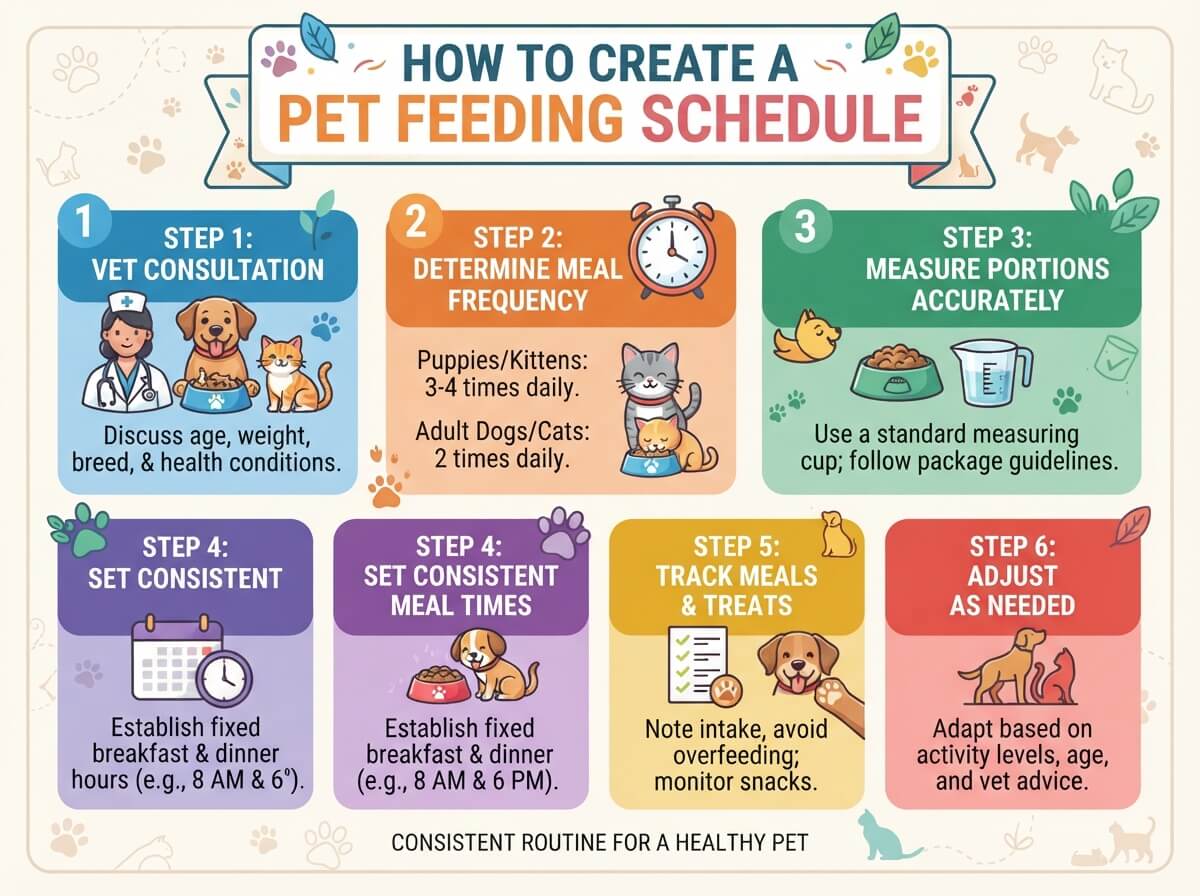
Step 1: Write Down What You Know
Gather these facts: your pet’s age, current weight, activity level, any health issues, and the food type you use. Write this stuff down so you have it in front of you.
Step 2: Determine Meal Frequency
Use your pet’s age to pick how many meals daily. Puppies need more meals than adult dogs. Cats vary a lot—some do fine with one meal; others need two.
Step 3: Pick Your Times
Choose times that fit your life and stick to them. Write these times down and put them where you see them daily—the fridge, your phone, a calendar.
Step 4: Measure Portions
Use your food bag’s guide and your vet’s input to figure out daily amount. Divide that by number of meals. Measure each meal with a cup so you stay consistent.
Step 5: Set Up Your Feeding Station
Find a quiet spot away from traffic where your pet eats. Use a placemat under bowls to contain spills. Keep food and water bowls separate if your pet eats better that way. Wash bowls daily to prevent bacteria growth.
Step 6: Use Tools to Help
A simple timer on your phone reminds you to feed on schedule. Automatic feeders work great if you have an unpredictable schedule—they dispense meals at set times. These tools help you stay consistent even on hectic days.
Making Adjustments Along the Way
Your feeding routine isn’t set in stone. As your pet grows, their needs change. A puppy eating three times daily will eventually move to twice daily as they mature. An active adult dog might need different portions than a couch-loving companion.
Watch your pet’s body condition monthly. You should feel ribs easily but not see them sticking out. A healthy pet has a waist you can see from above and a belly that doesn’t sag or jiggle excessively. If your pet looks too thin or too heavy, talk to your vet before adjusting food amounts.
Changes in your pet’s life call for schedule adjustments. A new job with longer hours means you might need an automatic feeder or pet sitter. A move to a new home might shift your natural routine. A new pet in the house means separate feeding spaces if needed. Stay flexible and adjust as life happens.
Seasonal changes can affect your pet’s needs too. Active pets might need slightly more food in cold weather when they burn more calories staying warm. Indoor-only pets in summer might need less if they’re less active. These shifts are usually small, but staying aware helps you catch issues early.
Handling Treats and Snacks
Treats are part of pet life, but they count toward daily calories. Treats should make up no more than ten percent of your pet’s daily calorie intake. That means if your pet eats four hundred calories of regular food daily, treats should total no more than forty calories.
Keep healthy treat options on hand. Plain carrots, green beans, or small pieces of cooked chicken work great and cost less than fancy treats. If you use commercial treats, read the label and adjust meal portions to account for treat calories.
Don’t use treats as a substitute for training or attention. Your pet wants your time more than food. Use treats for training rewards, but keep portions tiny—a piece the size of a pea works fine.
Track treats the same way you track meals. Write them down so you know your pet’s total food intake. This helps spot overeating and keeps your pet at a healthy weight.
Dealing with Common Feeding Problems
Picky Eaters
Some pets turn their nose up at food. Don’t let them convince you to add tasty toppings that ruin your plan. Pets won’t starve themselves. Try feeding at set times and removing uneaten food after twenty minutes. Try again at the next scheduled meal. Often, pets eat better when they know food comes at set times and won’t appear again until the next meal.
Overeating and Weight Gain
Overweight pets face health problems like joint pain and diabetes. Stick to portion sizes and resist those begging eyes. Exercise matters too—active pets burn more calories. Increase playtime and walks before increasing food portions.
Rapid Eating
Some pets gulp food so fast they don’t chew. This causes bloating and digestion problems. Slow feeders with obstacles inside bowls make eating take longer. Puzzle feeders turn eating into a game that slows them down.
Vomiting After Eating
Eating too fast often causes vomiting. Slow feeders help. Some pets also do better with smaller portions spaced farther apart. If vomiting continues, see your vet—it might signal a health problem.
Food Aggression
Pets acting aggressive around food need calm, patient handling. Feed them in a quiet space away from other pets. Never hand-feed an aggressive pet or try to take their bowl. This is a serious behavior issue—talk to a trainer or your vet for help.
Involving Your Whole Household
Everyone who lives with your pet needs to know the feeding schedule and follow it. Make a chart and put it on the fridge. Explain to kids why consistent feeding matters and have them help with meals—this teaches responsibility and keeps them involved.
Talk to your partner or roommates about sticking to times. Accidental double-feeding happens when people don’t communicate. One person thinks they fed the pet, but someone else already did. Create a simple system—maybe a checklist they mark off after feeding.
If you have a pet sitter or dog walker, write down the exact schedule, portion sizes, and food type. Leave detailed notes about your pet’s preferences and any eating quirks. The clearer your instructions, the better they’ll stick to your plan.
Your Vet is Your Partner
Your veterinarian knows pet nutrition. Schedule a check-up to discuss your pet’s feeding plan. Bring your food bag and ask if it’s the best choice for your pet. Ask for specific portion sizes based on your pet’s weight and activity level.
Vets spot nutrition issues you might miss. They can tell if your pet is overweight, underweight, or showing signs of food allergies. They also know if your pet’s health issues require special diet foods.
Regular vet visits—usually yearly for young and adult pets, twice yearly for seniors—help catch problems early. Your vet might suggest adjustments as your pet ages or their health changes.
Tracking and Staying Consistent
Keep a simple feeding log. Write down what you fed, how much, and when. Note anything unusual like vomiting, skipped meals, or behavior changes. This record helps you spot patterns and makes vet visits easier.
Use whatever system works for you—a notebook, a phone note, or an app. The goal is staying consistent and catching problems early. When you can show your vet a clear record of your pet’s eating habits, they can help you faster.
Stick to your schedule even on vacation or hectic days. If you must travel, arrange for someone to feed your pet on schedule. Take food with you if possible or pack a clear list of your pet’s needs. Consistency matters most when life gets crazy.
Final Thoughts
Creating a pet feeding schedule takes some planning upfront, but it pays off in a healthier, happier pet. Start with the basics: know your pet’s age, pick meal times that work for you, measure portions carefully, and stick to your plan. Watch your pet’s health and adjust as needed.
Your pet depends on you for proper nutrition. A solid feeding routine shows you take that job seriously. You’ll notice your pet feeling more energized, looking healthier, and acting calmer when you nail down a consistent schedule. That’s the reward for putting in the effort to feed your pet right.
Get started this week. Write down your pet’s information, pick your feeding times, measure your portions, and commit to sticking with it. Your pet will thank you with better health and a happier life.