What Size Dog Collar Does My Dog Need?
So you got a new dog, and now you’re staring at all these collar options online wondering which size will actually fit your furry friend. You’re not alone in this confusion. Collar shopping seems simple until you realize there are like a hundred different sizes out there. Let me break this down for you so you can pick the perfect collar without any guesswork.
Why Getting the Right Collar Size Matters
Before we jump into the numbers, let’s talk about why this actually matters. A collar that’s too big will slip right off your dog’s neck, leaving your pup vulnerable to running away or getting lost. A collar that’s too small will dig into the skin, cause discomfort, and make your dog miserable. Neither situation is ideal, so nailing the right fit is honestly pretty important.
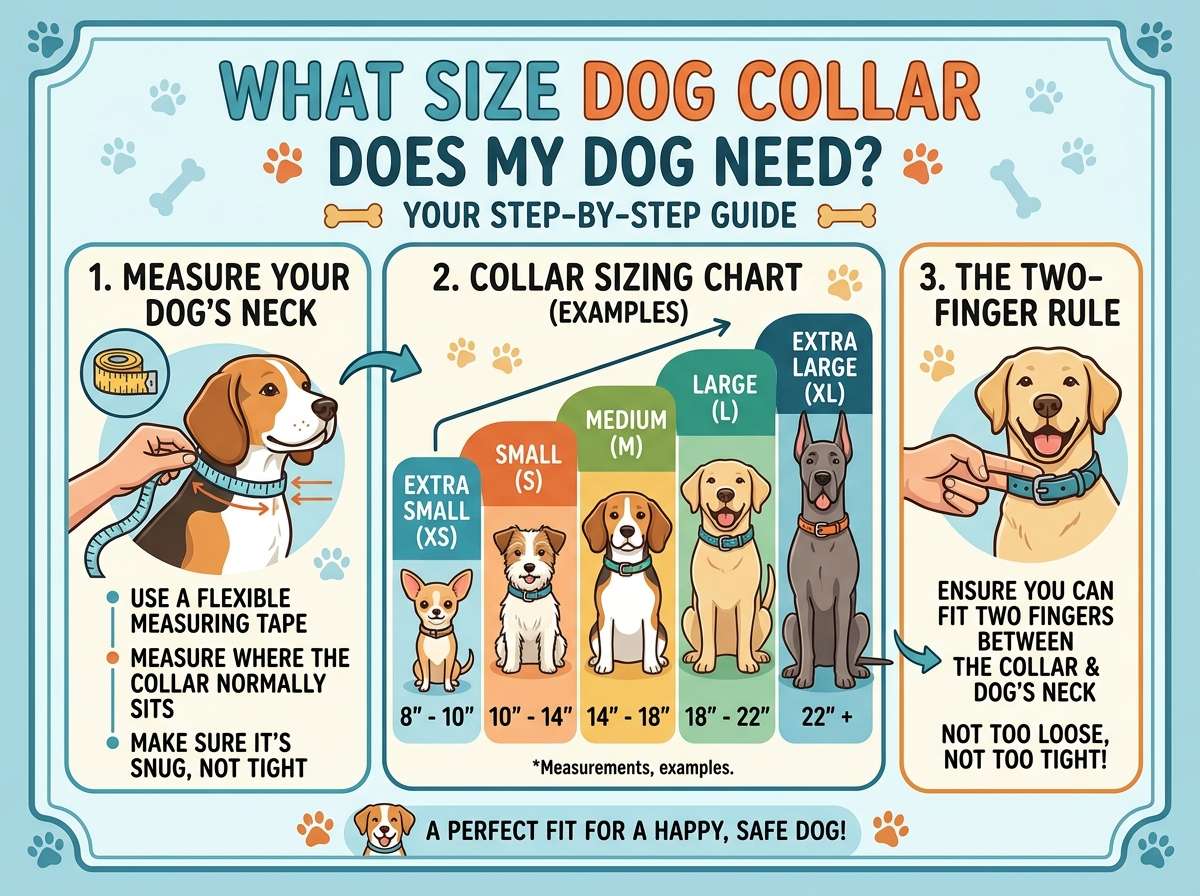
The perfect dog collar should sit snugly around your dog’s neck without being tight. You want to be able to slide one or two fingers between the collar and your dog’s skin. This gives your pup room to move and breathe while keeping the collar in place. Think of it like wearing a watch – it should be fitted but not cutting off your circulation.
How to Measure Your Dog’s Neck
The best way to find the correct collar size is to measure your dog’s neck. Grab a soft measuring tape (the kind tailors use works great) or even a piece of string if that’s what you have on hand. If you use string, you can lay it on a ruler afterward to get the measurement.
Measure around the widest part of your dog’s neck. Make sure the tape or string sits flat against the fur without pulling too tight or too loose. You want the measurement to be natural and comfortable, not stretched. Write down this number – you’ll need it when shopping for collars.
Here’s a pro tip: measure your dog’s neck a couple times on different days. Dogs grow, gain weight, and lose weight just like we do. Getting multiple measurements helps you catch any changes your dog is going through.
Standard Dog Collar Sizes Explained
The dog collar market uses several standard sizes, and knowing these sizes helps you shop with confidence. Most dog collars come in these basic categories:
Extra Small (XS) collars fit dogs with necks measuring around 7 to 9 inches. These are for tiny breeds like Chihuahuas, Toy Poodles, and Yorkshire Terriers. If your dog could fit in a teacup, this is probably your size.
Small (S) collars work for dogs with neck sizes between 9 and 12 inches. Miniature Pinschers, Pomeranians, and small Dachshunds typically need this size. Small dogs can still be mighty, so don’t underestimate them.
Medium (M) collars fit dogs with necks measuring 12 to 16 inches. This size covers a lot of ground and includes breeds like Beagles, Cocker Spaniels, and smaller mixed breeds. Medium is the most common size because so many dogs fall into this range.
Large (L) collars work for dogs with necks around 16 to 20 inches. German Shepherds, Golden Retrievers, and Labradors often need this size. These are your bigger, stronger dogs that need a sturdy collar.
Extra Large (XL) collars fit dogs with necks over 20 inches. Giant breeds like Great Danes, Saint Bernards, and Mastiffs need collars this big. These collars are built tough to handle powerful dogs.
Some manufacturers offer custom sizing or half sizes like “Small-Medium” to bridge the gap between standard sizes. If your dog’s neck measurement falls right between two sizes, going up to the bigger size is usually the safer choice.
Adjustable Collars Versus Fixed Collars
When you’re shopping, you’ll see two main types of collars: adjustable and fixed. Let’s talk about what this means for fit.
Adjustable collars have a buckle or clasp that lets you tighten or loosen them as needed. This is super handy because your dog’s neck might change size over time, and an adjustable collar grows with your pup. These collars typically have a size range they cover, so you pick the size that matches your dog’s current neck measurement, then adjust the buckle to get the perfect fit.
Fixed collars have a set size with no adjustment options. They come in the standard sizes we talked about above. You pick the exact size that matches your dog’s neck measurement. Fixed collars are often cheaper and come in more styles, but they don’t have any wiggle room if your dog’s size changes.
For puppies, adjustable collars are a no-brainer because puppies grow fast. You can loosen the collar as your pup gets bigger instead of buying a new collar every month. For adult dogs that have stopped growing, either type works fine – it just depends on your preference.
Collar Width and Its Role in Fit
Here’s something that trips people up: collar width is different from collar size. The width is how thick the collar is around your dog’s neck. This matters because wide collars and narrow collars don’t fit the same way.
Wide collars spread the pressure across a bigger area of your dog’s neck. They’re comfier for dogs that pull a lot on walks because the force gets distributed instead of concentrated on one spot. Wide collars look great on bigger dogs and work well for training purposes.
Narrow collars take up less space and work well for small dogs or dogs that don’t pull much. They’re easier to slip on and off, and they come in tons of fun patterns and colors. Narrow collars also work great if your dog has sensitive skin because there’s less material in contact with the fur.
The width you pick comes down to your dog’s size, your dog’s behavior, and what looks good to you. A tiny Chihuahua looks silly in a wide 2-inch collar. A large German Shepherd looks undersized in a thin collar. Match the width to your dog’s build and personality.
Measuring Tips for Different Dog Situations
Some dogs make measuring easier than others. If you have a calm, well-behaved dog, measuring takes like 30 seconds. But not all dogs cooperate with this process.
If your dog is wiggly or anxious, try measuring when they’re calm, like right after a walk when they’re tired. A tired dog is usually a cooperative dog. You can also ask a friend to help – one person can hold your dog still while the other measures.
Some people measure their dog’s neck while the dog is wearing a collar that fits well. You measure the collar instead of the bare neck. This works perfectly fine and might be easier if your dog has thick, fluffy fur that makes the bare neck hard to measure.
If you’re shopping online and can’t measure in person, look for return policies that are generous. A lot of good retailers let you send back collars that don’t fit, so you can order a size, try it, and swap it out if needed.
Sizing Across Different Collar Types
Different collar styles fit a little differently, so keep this in mind when you’re shopping.
Traditional flat collars (the basic buckle collar most dogs wear) fit pretty straightforward. You measure your dog’s neck and pick the corresponding size.
Rolled collars are softer and less likely to mat the fur. They’re often a touch thicker around the dog’s neck than flat collars, but the sizing is basically the same. Your neck measurement tells you the size you need.
Harness collars don’t go around just the neck – they wrap around the chest and front legs too. These need different measurements because they’re not measuring just the neck. A dog that’s a “Medium” in a regular collar might be a “Large” in a harness collar. Always check the harness sizing chart because it’s different from regular collar sizing.
Martingale collars (the ones that tighten slightly when your dog pulls) still use regular collar sizing based on your dog’s neck measurement. The tightening mechanism doesn’t change the sizing system.
Choke chains and pinch collars (training collars) also use neck measurement for sizing. These are specialized training tools, so make sure you know how to use them before you buy one.
The key is to check the specific sizing chart for whatever collar type you’re interested in. Manufacturers sometimes have their own quirks in how they size things.
What Happens When a Collar Doesn’t Fit Right
Let’s talk about what goes wrong when the sizing is off, because you want to avoid these problems.
A collar that’s too big will slip around on your dog’s neck or slide right off when you’re least expecting it. You might be walking along, your dog sees a squirrel, lunges toward it, and boom – the collar’s off and your dog is free. This is a nightmare scenario, especially if you’re near a road or in an unfenced area. Way too risky.
A collar that’s too small creates a whole different problem. It digs into the skin, leaves marks on the neck, and makes your dog uncomfortable. Your pup might try to scratch it off or shake their head constantly. Over time, a tight collar can cause hair loss from friction, skin irritation, and even breathing problems. This is why getting the fit right really matters for your dog’s health and comfort.
A collar that’s slightly loose but stays on is fine. Some people worry about this, but as long as you can slide one or two fingers under the collar comfortably, you’re in the safe zone. Your dog needs room to move.
Measuring Growing Puppies
Puppies are special when it comes to collar sizing because they grow crazy fast. A collar that fits perfectly today might be way too small in a month. Here’s what works best for puppies.
Adjustable collars are your best friend with puppies. Buy an adjustable collar in the right size range for your puppy’s current neck measurement. You’ll be able to loosen it as your pup grows. This saves you money because you’re not buying a new collar every few weeks.
Measure your puppy’s neck every 2 to 3 weeks to make sure the collar still fits right. Growing puppies can surprise you with how fast they increase in size. Quick checks help you catch when your pup has outgrown the current collar before it becomes uncomfortable.
Talk to your vet about your puppy’s expected adult size. If your vet says your puppy will be large, buy a larger collar range that can grow with them. Small breeds usually finish growing by 6 to 8 months, while larger breeds can keep growing until 12 to 18 months.
When your puppy reaches their adult size (your vet can tell you when), you can switch to a fixed collar if you prefer, or stick with an adjustable one. The choice is up to you.
Sizing Collars for Fluffy and Thick-Coated Dogs
Dogs with thick, fluffy fur present a unique challenge because the fur takes up space around the neck. A Standard Poodle, Golden Retriever, or Husky has way more fluff than a short-haired dog, and this affects collar fit.
Measure these fluffy dogs the same way you’d measure any dog – around the neck where it sits naturally. The fur doesn’t change the basic process. But when you buy the collar, remember that the fur will compress a bit when the collar is on, so you might be able to go with a slightly smaller size than you’d expect.
Here’s the important part: the collar still needs to allow room for two fingers underneath. Don’t assume the fur will make the fit tighter and then buy a collar so loose it falls off. Measure, fit, and adjust carefully.
Some people with thick-coated dogs prefer rolled collars or padded collars because they sit on top of the fur instead of pressing into it. This reduces matting and keeps the coat healthier. If your dog has a beautiful coat you want to protect, this is worth considering.
Weight Changes and Re-measuring
Dogs gain and lose weight just like humans do. A healthy dog might gain weight over winter and lose it again in spring. A dog that’s been ill might lose weight during recovery. A rescued dog might gain weight once it gets proper nutrition and exercise.
This is why it’s good to re-measure your dog’s neck every couple of months. You don’t need to obsess over it, but a quick check helps you make sure the collar still fits right. If your dog’s weight changes significantly, the collar fit might change too.
If your dog gains weight, you might need to move up to the next collar size. If your dog loses weight, you might be able to go down a size. Don’t fight with a collar that’s starting to feel too tight – switch to a bigger size for your dog’s comfort.
How to Tell If a Collar Fits Properly
Let’s get practical. You’ve got the collar on your dog – how do you know it fits right?
First, there should be no gaps between the collar and your dog’s neck. The collar should sit snugly around the neck without twisting or sliding. It should look like it belongs there, not like it might fall off at any second.
Second, try the finger test. Slide one or two fingers (flat, not curled) under the collar. You should be able to fit your fingers with just a little bit of snugness. If you can’t slide any fingers under, it’s too tight. If you can fit your whole hand under, it’s too loose.
Third, watch your dog’s behavior. A well-fitting collar doesn’t bother the dog. Your pup shouldn’t be scratching at it, shaking their head, or trying to rub it off. If your dog seems annoyed by the collar, it probably doesn’t fit right.
Fourth, check the collar after your dog wears it for an hour or so. Is there a mark around the neck? A light mark that goes away quickly is normal, but a deep impression that takes a while to fade means the collar is too tight.
Fifth, make sure the collar doesn’t pull the fur or cause matting. Some movement and minor marks are fine, but if you see bald spots or raw skin after wearing the collar, something’s wrong with the fit.
Collar Maintenance and Replacing Worn Collars
Here’s something people don’t always think about: collars wear out and need replacing. A collar that fit great when it was new might not fit right anymore as it gets worn.
Fabric collars can stretch out over time, especially if your dog pulls a lot. A collar that started snug might get loose after months of wear. Check the fit every few months and replace the collar if it’s not holding up.
Leather collars can shrink if they get wet a lot, which changes the fit. They can also crack and break, creating rough edges that irritate your dog’s skin. If your leather collar is falling apart, it’s time for a new one.
Metal buckles and clasps can break or bend, which affects how the collar closes. If your buckle is damaged, the collar won’t stay on properly. Replacing a broken buckle is sometimes possible, but often it’s easier to just get a new collar.
Set a mental reminder to check your dog’s collar every month or two. Make sure it still fits right and isn’t damaged. Keeping a good collar on your dog is an ongoing responsibility, not a one-time decision.
Shopping Tips for Finding the Right Collar
When you’re actually shopping for a collar, keep these things in mind.
Always check the sizing chart before you buy. Every brand is a little different, and what one company calls “Medium” might not match another company’s “Medium.” Look at the actual neck measurements the size covers, not just the size label.
Read reviews from people with similar dogs. If someone bought the same collar for a dog the same size as yours, their review tells you a lot about how it fits. People usually mention if a collar runs small, large, or true to size.
Look for return policies that are easy to use. If you can send back a collar that doesn’t fit, you can order with confidence knowing you’re not stuck with the wrong size. Good retailers stand behind their products.
Consider trying collars in person at a pet store or vet clinic if you can. Seeing collars in real life and feeling the material helps you make a better decision than ordering blind from a picture.
Buy from trusted brands that make quality products. A cheap collar might seem like a good deal until it breaks in a month and you have to buy another one. A mid-range collar from a reputable brand usually lasts longer and fits better.
Summary: Getting Your Dog’s Collar Right
Your dog’s collar is more than just an accessory – it’s a safety tool that keeps your pup secure and comfortable. Getting the right size is the first step to making sure that collar does its job.
Measure your dog’s neck carefully, check the manufacturer’s sizing chart, and go for a snug fit that lets you slide one or two fingers underneath. Adjustable collars work great if your dog’s size might change. Pay attention to how your dog wears the collar and make adjustments as needed.
Remember that your dog’s size and weight can change over time, so check the fit every couple of months. If your dog outgrows or loses size, switch to a different collar size. Keep an eye on the collar itself for signs of wear and replace it if it’s damaged or not holding up.
Take this information, measure your dog’s neck right now, and start shopping with confidence. Your dog will be more comfortable, safer, and happier wearing a collar that actually fits right. That’s a win for both of you.
Hi, I’m Mary, the founder of PetGadgetPro.com. I’m a passionate pet lover with a special place in my heart for dogs and cats. I share practical advice and honest insights on pet gear to help pet parents make better choices. My dedicated research team studies products in depth, and our writers create reviews using trusted, authentic sources—so you can feel confident choosing the best for your pets.