How to Get Skunk Out of Your Dog?
Your dog just came running back from the yard. You notice something smells weird. Then you realize—oh no! Your pup had an encounter with a skunk. Now your house smells like a skunk sprayed everything in sight. Don’t panic. This happens to dog owners all the time. The good news is that skunk smell on dogs can be removed. It just takes the right steps and a little patience.
In this guide, I’ll walk you through everything you need to know about getting skunk odor off your dog. You’ll learn what works, what doesn’t, and how to keep your furry friend safe during the whole process.
What Actually Happens When a Skunk Sprays Your Dog
Before you jump into cleaning, let’s talk about what’s really going on. Skunks don’t spray out of meanness. They spray because they’re scared. When a skunk feels threatened, it releases a smelly liquid from glands near its tail. This liquid contains sulfur compounds. Sulfur is what makes the smell so awful and so hard to get rid of.
The spray sticks to your dog’s fur and skin. It can also get in your dog’s eyes, nose, and mouth. That’s why quick action is so important. The longer the spray sits on your dog, the deeper it soaks in.
Here’s the thing about skunk odor—it’s not just a smell. It’s a real substance that bonds to hair and skin. Normal soap and water won’t cut it. You need something stronger. But don’t worry. The fix is simple, and you probably have most of the ingredients at home right now.
Step One: Check Your Dog for Injuries
Safety first. Before you do anything else, check your dog for wounds. Did the skunk scratch your pup? Are there bite marks? Look closely at the face, neck, and any other spots where the two animals might have tussled.
If your dog has deep cuts or seems to be in pain, call your vet right away. Don’t wait. A vet visit is worth it to make sure your dog is okay.
Even small scratches can get infected. If you see any wounds, clean them gently with warm water. You can use a clean cloth or some gauze. Then check in with your vet just to be safe.
Also, look inside your dog’s mouth and eyes. Skunk spray can irritate these areas. If your dog seems like it’s in pain or can’t open its eyes fully, that’s another reason to call the vet.
Step Two: Get Your Dog Outside (And Keep Them There)
This is critical. You don’t want your dog running through the house and spreading skunk smell everywhere. Get your pup outside right away. Keep them in the yard or garage while you gather your supplies.
If the weather is nice, leave your dog outside while you prepare. This keeps the smell from soaking into your furniture and carpets. Trust me—you want to avoid that.
Make sure your dog has water available. They might be stressed from the encounter. Let them calm down a bit before you start the cleaning process.
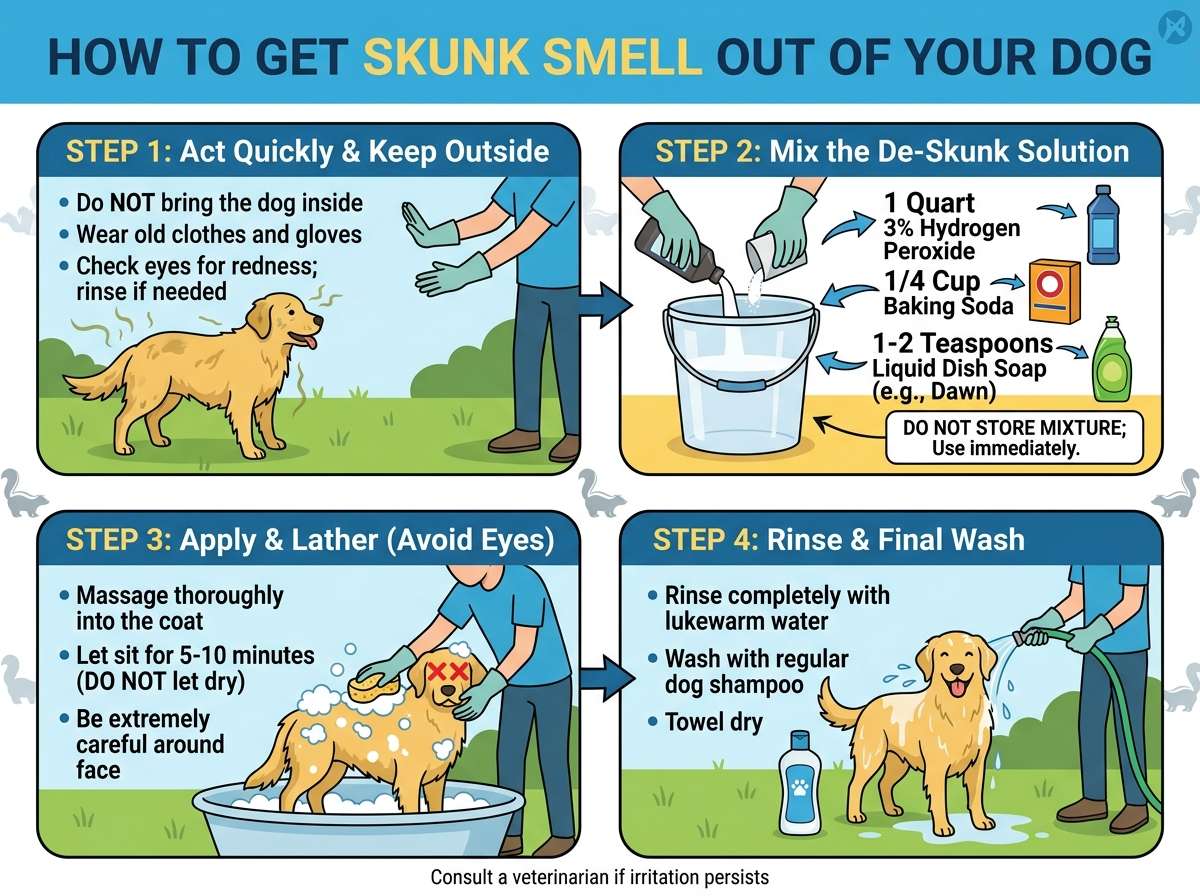
Step Three: Make the Famous Skunk Odor Removal Solution
Here’s the magic formula that actually works. This recipe has been used by veterinarians and dog owners for years. The best part? You probably have all the ingredients right now.
The ingredients you need:
- One quart of three percent hydrogen peroxide
- One quarter cup of baking soda
- One teaspoon of liquid dish soap (the plain kind, not the concentrated type)
That’s it. Just three ingredients.
How to make it:
- Pour the hydrogen peroxide into a large bowl or bucket
- Add the baking soda
- Mix well until the baking soda dissolves
- Add the dish soap
- Stir everything together
The solution will fizz a little bit. That fizzing action is actually what helps break down the skunk oils. Don’t add water to this mixture. Water makes it less effective.
Why this works: The hydrogen peroxide breaks down the sulfur compounds. The baking soda helps neutralize the smell. The dish soap helps the mixture spread through your dog’s fur and reach the skin. Together, they destroy the skunk odor instead of just covering it up.
Step Four: Apply the Solution to Your Dog
Now comes the actual bath part. You’ll need to work fast because this solution works best when it’s fresh.
Before you start:
- Grab some old towels you don’t mind getting stained
- Have your dog stand on a towel or in a bathtub
- Get a plastic cup or pitcher for pouring
The application process:
- Wet your dog’s coat with plain water first
- Starting at the head (but avoid the face), pour the solution onto your dog
- Work it into the fur with your hands or a soft brush
- Rub it into the skin—this is where the smell is hiding
- Pay special attention to the areas where the skunk sprayed the most
- Let the solution sit on your dog for five to ten minutes
- Rinse thoroughly with plain water
Important safety tips:
- Keep the solution away from your dog’s eyes and face
- If the solution gets near the eyes, rinse immediately with water
- Work in a well-ventilated area if you can
- Wear old clothes because hydrogen peroxide can bleach fabric
- Protect your dog’s eyes—you can use a damp washcloth to shield them
Step Five: The Second Wash
After you rinse off the solution, give your dog a regular bath with dog shampoo. This helps remove any remaining mixture and gets your pup really clean.
Use warm water and a good quality dog shampoo. Work it into a lather all over your dog’s body. Pay extra attention to the areas that got sprayed. Then rinse completely until all the shampoo is gone.
You might need to do this twice. If you still smell skunk, that’s okay. Your nose might just be sensitive to it right now. Usually one treatment does the trick, but some dogs need two.
Step Six: Dry Your Dog Completely
After the bath, dry your dog off really well. Use towels first. Then if you have one, use a pet-safe hair dryer on a low setting. Make sure you get all the moisture out of your dog’s coat.
Wet fur traps smell. A dry dog smells much better than a damp one. Plus, your dog will be more comfortable.
What NOT to Do When Your Dog Gets Sprayed
There are a lot of old myths about skunk removal. Let me tell you what doesn’t work.
Don’t use tomato juice. This is the classic myth. Tomato juice doesn’t remove skunk smell. It just makes your dog smell like skunk and tomato. You’ll have two bad smells instead of one.
Don’t use plain vinegar alone. Vinegar might cover the smell temporarily, but it won’t get rid of it. The smell will come back. Plus, vinegar irritates many dogs’ skin.
Don’t use perfume or cologne. These products just add another smell on top of the skunk. Again, you end up with mixed bad smells.
Don’t bathe your dog in regular soap. Regular soap won’t break down the oils that carry the smell. You’re just wasting your time and your dog’s patience.
Don’t use bleach. This is dangerous. Bleach can hurt your dog’s skin and lungs. Never use it, even diluted.
Don’t delay. The longer you wait, the deeper the smell soaks in. Start treatment as soon as you can.
Alternative Methods That Actually Work
If you don’t have hydrogen peroxide at home, there are other options.
Store-bought skunk removal products: Several companies make products specifically for removing skunk odor from dogs. These products use the same basic science as the hydrogen peroxide recipe. They cost more, but they’re convenient if you don’t have the ingredients on hand.
Enzyme-based cleaners: These products contain enzymes that break down odor-causing compounds. They work pretty well, though not quite as fast as the hydrogen peroxide method. You can find them at pet stores.
Baking soda alone: If you only have baking soda, you can try using it by itself mixed with water to make a paste. Apply it to the affected areas and let it sit for a few minutes, then rinse. This works okay but isn’t as effective as the full recipe.
Vinegar and baking soda: Mix one part vinegar with three parts water. Make a paste with baking soda. Apply the paste first, let it dry a bit, then rinse with the vinegar solution. This combination is decent but still not as good as hydrogen peroxide.
Dealing With Skunk Smell in Your Home
Here’s the thing—some of that smell might have gotten into your house already. Don’t worry. You can tackle that too.
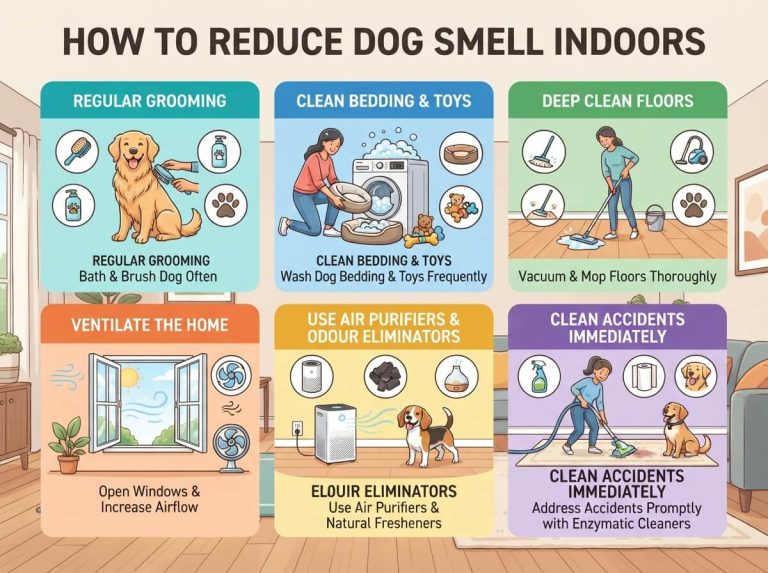
Open all your windows. Fresh air is your friend. Let your home air out for a few hours if the weather allows.
Use activated charcoal. Put bowls of activated charcoal around your house. It absorbs odors. You can find this at pet stores or online.
Baking soda everywhere. Sprinkle baking soda on carpets and furniture. Let it sit for a few hours, then vacuum it up. You can also put bowls of baking soda in problem areas.
Wash what you can. Any blankets or cushions your dog touched should go in the wash. Use hot water if the fabric allows it. Add a cup of baking soda to your wash cycle.
Clean hard surfaces. Wipe down any hard surfaces your dog touched with a mixture of vinegar and water. This helps remove lingering smell.
Professional help. If the smell is really bad and it got into your carpets, consider calling a professional cleaning service. They have equipment that can really get deep into fabrics.
How Long Does Skunk Smell Last on Dogs
In most cases, the skunk smell on your dog should go away within a few hours to a day after treatment. Some traces might hang around for a few days, especially if your dog’s fur is long and thick.
Your nose might actually be more sensitive to the smell than other people’s noses. After a few days, you probably won’t notice it much, even if a faint trace remains.
If the smell lasts longer than a few days, do the treatment again. You might not have covered all the affected areas the first time, or your dog might have a really thick coat that trapped the oils deep inside.
Preventing Future Skunk Encounters
Once you’ve dealt with this problem, you probably want to prevent it from happening again. Here are some ways to protect your dog.
Keep your yard secure. Skunks look for food and shelter. Make sure your trash cans have tight lids. Don’t leave pet food outside. Keep your yard fenced so skunks can’t wander in.
Supervise outdoor time. Don’t let your dog roam unsupervised, especially at dawn or dusk. That’s when skunks are active. Watch your pup while they’re in the yard.
Make noise. Skunks prefer to avoid confrontation. If you make noise in your yard, skunks are less likely to hang around. Clap your hands or call out before letting your dog outside.
Remove food sources. If skunks are finding food in your yard, they’ll keep coming back. Pick up fallen fruit from trees. Don’t leave garbage lying around. Keep your yard clean and uninteresting to skunks.
Install motion-sensor lights. Skunks don’t like bright light. Motion-sensor lights can scare them away.
Talk to your vet. Your vet might recommend a vaccination against rabies. Skunks can carry rabies, so this is worth discussing.
Is Your Dog Actually Okay After a Skunk Spray
Most dogs who get sprayed by skunks are fine. The spray is gross and smelly, but it’s not poisonous. However, there are some things to watch for.
Watch for health issues:
- Eye irritation or redness
- Coughing or difficulty breathing
- Vomiting
- Lethargy or lack of appetite
- Excessive drooling
If you notice any of these signs, call your vet. The skunk spray might have caused some internal irritation.
Check for wounds: As I mentioned earlier, make sure there are no bite marks or scratches. Even small wounds can get infected.
Monitor behavior: Some dogs get stressed after a scary encounter. Your dog might be quieter or clingier than usual for a day or two. That’s normal. Just give your pup some extra love and attention.
Most dogs bounce back from skunk encounters pretty quickly. Once the smell is gone, they usually forget all about it.
The Bottom Line
Getting skunk smell off your dog is totally doable. You now know the best method—the hydrogen peroxide, baking soda, and dish soap solution. This combination really works because it breaks down the actual chemicals in skunk spray instead of just covering them up.
Remember these key points:
- Act fast when your dog gets sprayed
- Check for injuries first
- Keep your dog outside while you prepare
- Use the proven recipe, not myths like tomato juice
- Treat your home too if needed
- Watch your dog for any health issues
- Take steps to prevent future encounters
Skunk encounters are part of dog ownership for many people. It’s not fun, and yes, it stinks. But it’s fixable. In a day or two, you and your dog will be back to normal. And you’ll have a great story to tell at the dog park.
The next time you’re chatting with other dog owners, you can confidently explain what actually works for removing skunk smell. You’ll be the expert. Your friends will thank you when they need this advice someday.
Stay vigilant about keeping your yard secure and supervising your dog outside. But also know that if a skunk encounter does happen, you’ve got this. You know exactly what to do. Your dog will be clean again before you know it.
Quick Reference: The Skunk Odor Removal Recipe
Ingredients:
- 1 quart of 3% hydrogen peroxide
- 1/4 cup of baking soda
- 1 teaspoon of liquid dish soap
Steps:
- Mix ingredients in a bowl
- Wet your dog with plain water
- Apply the solution to your dog’s fur
- Rub it in well and let it sit for 5-10 minutes
- Rinse thoroughly with water
- Give your dog a regular bath with dog shampoo
- Rinse again and dry completely
Time to remove smell: A few hours to a day
That’s the secret. Keep this recipe handy, and you’ll be ready if your dog ever has a skunk encounter. Good luck, and here’s hoping your pup learns to stay away from skunks in the future.
Hi, I’m Mary, the founder of PetGadgetPro.com. I’m a passionate pet lover with a special place in my heart for dogs and cats. I share practical advice and honest insights on pet gear to help pet parents make better choices. My dedicated research team studies products in depth, and our writers create reviews using trusted, authentic sources—so you can feel confident choosing the best for your pets.