How to Get Rid of Skunk Smell on a Dog?
Your dog ran into the yard with excitement. Then came the smell. That awful, unmistakable skunk odor now clings to your furry friend. Sound familiar? You’re not alone. Skunk encounters happen to dog owners all the time, especially if you live near wooded areas or have a curious pup.
The good news? You can eliminate that stinky skunk smell. It takes effort and the right approach, but your dog will smell fresh again. This guide will show you exactly how to get skunk smell off your dog using proven methods.
Why Skunk Spray Smells So Bad
Let’s talk about what makes skunk spray so powerful. Skunks don’t spray just any bad smell. They spray a chemical compound called mercaptan. This chemical is sulfur-based and sticks to fur, skin, and clothes like nothing else.
The smell isn’t just bad. It’s designed by nature to protect skunks from predators. The odor penetrates deep into the fur and settles on the skin. Regular soap and water won’t cut it. The mercaptan compounds need special treatment to break down.
Interestingly, the spray also causes a temporary burning sensation. Check your dog’s eyes and nose. If redness appears, you may need to rinse these areas carefully. However, most skunk spray encounters only affect the smell, not the dog’s health.
The Famous Skunk Smell Removal Recipe
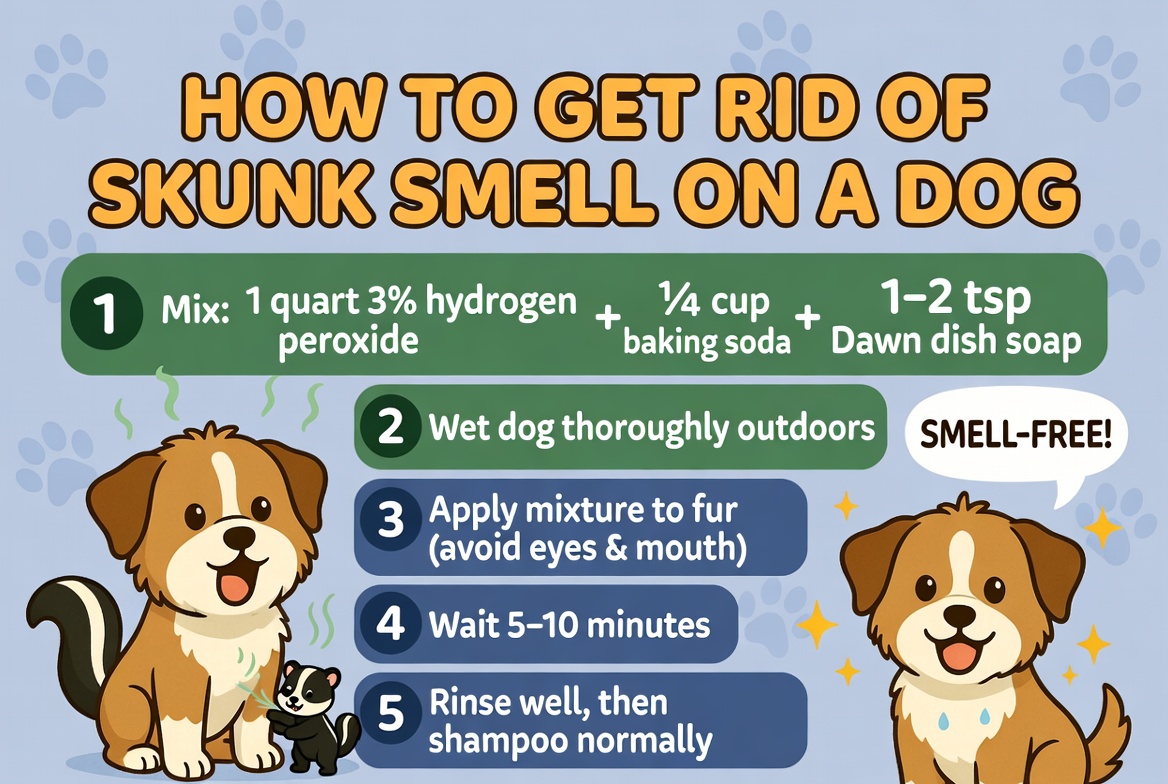
The most effective formula for removing skunk odor has been tested by countless pet owners. This recipe works because it breaks down the sulfur compounds in skunk spray. Here’s what you need:
The Ingredients:
- 1 quart of 3% hydrogen peroxide (the kind from drugstores)
- ¼ cup of baking soda
- 1 teaspoon of liquid dish soap
Why These Work:
Hydrogen peroxide oxidizes the mercaptan compounds. This chemical reaction breaks them apart so they no longer smell. Baking soda absorbs odors and helps scrub the fur. Dish soap helps everything mix together and coat the fur evenly.
This combination is far better than tomato juice or other old-fashioned remedies. Yes, people used to recommend tomato juice. It doesn’t actually remove the smell. It just masks it temporarily.
Step-By-Step Instructions for Bathing Your Dog
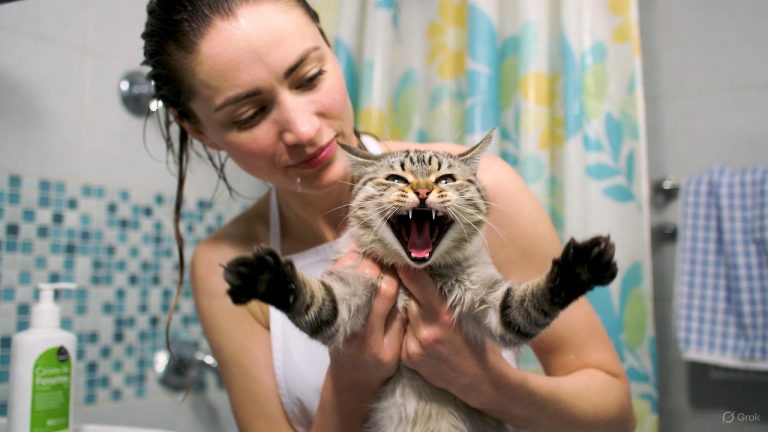
The process takes time and patience. Your dog might not enjoy it, so work calmly and steadily.
Before You Start:
Gather all your supplies first. You need the mixture, towels, a bathtub or large basin, and possibly treats for your dog. Wear old clothes because the mixture can bleach fabric. Yes, really. That hydrogen peroxide can lighten colored clothing, so dress accordingly.
Step 1: Prepare Your Dog
Get your dog wet with plain water first. Use lukewarm water, not hot. Wet the entire body from neck to tail. Your dog’s fur needs to be damp, not dripping wet. This helps the mixture spread evenly.
Step 2: Mix the Solution
Never mix the ingredients before use. Mix them just before application. Why? Hydrogen peroxide breaks down over time, especially when mixed with baking soda. Fresh mixture works best.
Pour the hydrogen peroxide into a bowl. Add the baking soda slowly while stirring. It will fizz and bubble. This fizzing action is good. It means the reaction is happening. Add the dish soap and stir until smooth.
Step 3: Apply to Your Dog
Work the mixture into your dog’s fur using your hands or a sponge. Start at the neck and work backward. Don’t rush. Massage it into the coat thoroughly. Pay special attention to areas where the spray hit hardest. Usually, that’s the face, head, and front legs.
Avoid the eyes and ears. If the mixture gets near the eyes, rinse gently with plain water. The mixture is safe on skin, but eyes need protection.
Let the mixture sit on your dog’s fur for 5 to 10 minutes. Don’t leave it longer than 10 minutes. This contact time lets the ingredients work their magic on the sulfur compounds.
Step 4: Rinse Completely
Rinse your dog thoroughly with plain water. Use lots of water. Make sure you remove all the mixture. Any residue left behind can irritate the skin or leave a chemical smell.
Keep rinsing until the water runs clear and you don’t see any soap bubbles. This step takes longer than you might think, but it’s crucial.
Step 5: Dry Your Dog
Towel dry your dog well. Use several towels if needed. Your dog will want to shake off water, so be ready. After towel drying, you can use a regular dog dryer on low heat if your dog tolerates it.
What About Your Dog’s Face and Ears?
The face and ears are tricky. You don’t want the mixture in the eyes or deep in the ears. Here’s what works:
For the face, mix a small batch using half the amounts. Apply it with a soft cloth or sponge. Work carefully around the eyes. Have a bowl of plain water nearby to rinse immediately if needed.
For the ears, skip the remedy entirely. Just wash the ear flaps with plain water and a soft cloth. The smell usually doesn’t penetrate deep inside the ears anyway.
If your dog got sprayed directly in the face, call your vet. They can examine the eyes and ears to make sure nothing needs medical treatment.
Timeline for Smell Removal
The first bath eliminates most of the smell. You might notice a big improvement right away. However, some odor usually lingers. This is normal.
Check your dog again the next day. If the smell is gone, you’re finished. If some odor remains, wait three to four days. Then apply the mixture again.
Most dogs need one or two treatments. Rarely, a dog needs three. The smell gets fainter with each application. After the second treatment, any remaining odor is usually very subtle.
Don’t bathe your dog more than every three to four days. Your dog’s skin needs time to recover between treatments. Too many baths can dry out the skin and cause irritation.
Can You Prevent Skunk Spray Encounters?
Prevention is always easier than treatment. Here are practical ways to reduce the chances of your dog getting sprayed:
Keep Your Dog Supervised:
Always watch your dog in the yard, especially at dawn or dusk. These are the hours when skunks are most active. Skunks can’t see well, so they rely on smell and hearing. A dog running at a skunk looks like a threat.
Secure Your Yard:
Check your fence for holes and gaps. Skunks can squeeze through surprisingly small openings. Seal any holes you find. Also, check under sheds or decks where skunks might den.
Remove Food Sources:
Skunks eat garbage, pet food, and insects. Bring pet food dishes inside at night. Secure trash cans in a garage or shed. Keep your yard clean of fallen fruit or vegetable scraps.
Use Motion-Activated Lights:
Skunks avoid bright light and sudden movement. Motion sensors that trigger lights can scare skunks away from your yard.
Avoid Confrontation:
If you see a skunk, leave it alone. A skunk stamps its feet before spraying. This is a warning. If you see this behavior, back away slowly. Most skunks want to avoid confrontation. They only spray when threatened.
Train your dog to come when called. A dog that listens to commands can be brought inside before a problem starts.
What NOT to Do After Skunk Spray
Some methods don’t work. Worse, some can actually make things worse. Here’s what to skip:
Don’t Use Tomato Juice:
This old remedy doesn’t work. The acid in tomato juice doesn’t break down mercaptan. It just masks the smell temporarily. Plus, tomato juice can stain light-colored fur.
Don’t Use Perfume or Air Freshener:
These products mix with the skunk smell and create something even worse. Instead of one bad smell, you get two competing odors.
Don’t Bathe Too Often:
Over-bathing dries out your dog’s skin. This causes itching and flaking. Stick to the recommended timeline. Wait at least three to four days between treatments.
Don’t Use Commercial Skunk Spray Removers as Your Only Solution:
Some products claim to remove skunk smell. Some work okay, but most are no more effective than the hydrogen peroxide mixture. They also cost much more. Save your money.
Don’t Ignore Medical Issues:
If your dog shows signs of distress after skunk spray, see a vet. Symptoms like excessive drooling, vomiting, or difficulty breathing require immediate attention.
Alternative Methods to Try
The hydrogen peroxide method is proven and effective. But here are other options if you want to try something different:
Enzymatic Cleaners:
Products designed for pet messes can help. Some contain enzymes that break down odor compounds. These work better than regular cleaners but not as well as the peroxide mixture. Apply according to product directions.
Baking Soda Paste:
Mix baking soda with water to create a paste. Apply to affected areas. Let sit for 15 minutes, then rinse. This method is milder and works for light odors.
Vinegar Rinse:
Mix one part white vinegar with two parts water. Use this as a final rinse after a regular bath. Vinegar helps neutralize odors. The vinegar smell will fade as it dries.
Professional Grooming:
Some groomers have special skunk removal treatments. These cost money but save you time and effort. Call ahead to see if your groomer offers this service.
Quick Tips for Success
Small things make a big difference:
Work in a Bathroom:
A bathtub or shower is the perfect space. The water containment makes rinsing easier. Plus, cleanup is simple.
Have Help:
Ask a family member to help hold your dog or hand you supplies. An extra set of hands makes the job much faster.
Use Treats:
Give your dog treats during the bath. This creates positive associations. Your dog will be less resistant next time.
Check the Bottle:
Make sure your hydrogen peroxide is the 3% kind used for first aid. Don’t use the industrial strength version sold for cleaning. That’s too strong for dogs.
Protect Your Hands:
Wear gloves if you want to. The hydrogen peroxide is safe on skin but can bleach nail beds temporarily.
Work Quickly But Calmly:
Move with purpose, but don’t rush. Your dog picks up on your stress. Staying calm helps keep your dog calm.
The Science Behind Why It Works
Understanding the chemistry helps you appreciate why this method works so well.
Mercaptan is a sulfur compound. These compounds stick to hair and skin because they’re lipophilic, meaning they love oil and fat. Your dog’s fur is naturally oily, so the smell loves it.
Hydrogen peroxide is an oxidizing agent. It breaks chemical bonds. When it contacts mercaptan, a reaction happens. The mercaptan breaks down into different compounds. These new compounds don’t smell bad.
Baking soda works differently. It absorbs odor molecules. When mixed with hydrogen peroxide, it also helps scrub the fur physically. The gentle abrasive action helps remove smell-causing particles.
Dish soap acts as an emulsifier. It helps the mixture coat the fur evenly and mix with both oil and water. This ensures every part of the smelly fur gets treated.
Together, these three ingredients attack the problem from multiple angles. That’s why this method works better than single-ingredient solutions.
How Long Does the Smell Take to Disappear Completely?
After your first treatment, the smell drops dramatically. Most people notice 80 to 90 percent improvement right away.
The remaining smell fades naturally over time. Even if you don’t do anything else, the odor will diminish over a few days. Your dog’s body naturally breaks down remaining mercaptan.
Sunlight helps. Let your dog spend time in the sun after the bath. UV rays can help break down any remaining smell compounds. Plus, a sunny day is nice for your dog after the stress of a bath.
Air circulation matters too. Don’t keep your dog in a closed room. Open windows and let fresh air flow. This helps carry away any lingering odor.
Special Situations and Concerns
What if Your Dog Got Sprayed Indoors?
You’ll need to treat both your dog and your house. The remedies are different. For your house, open all windows. Place bowls of baking soda in the affected room. Vinegar and water solutions help on hard surfaces. Fabric items might need professional cleaning.
What if Your Dog Has Sensitive Skin?
Dogs with allergies or existing skin conditions need extra care. Do a patch test first. Apply the mixture to a small area and wait 24 hours. Check for irritation. If none appears, proceed with the full treatment.
What if Your Dog Gets Sprayed in Winter?
The process is the same, but drying takes longer. Make sure your dog is completely dry before going outside. Wet fur in cold weather causes discomfort. Dry thoroughly with towels and consider using a pet dryer.
What if Your Dog Has Very Long Fur?
Long-haired dogs need the mixture to reach the skin. Work slowly through the fur. You might need to use more mixture. Make sure it penetrates all the way down. Longer contact time might help too. Extend the sitting time to 8 or 10 minutes.
Prevention for the Future
After dealing with skunk smell once, you’ll want to avoid it again. Here’s how:
Start with training. Teach your dog to stay away from certain areas of the yard. Use commands like “leave it” or “no.” A dog that listens is a dog that stays safer.
Consider a physical barrier. A fence around vegetable gardens or problem areas keeps skunks out and dogs in. Skunks prefer open areas. Enclosed spaces make them feel trapped.
Motion-activated sprinklers startle skunks and teach them to stay away. They’re harmless but effective.
Make your yard less attractive to skunks. Remove shelter areas where they might hide. Skunks need cover. Open, exposed yards are less appealing.
Regular fence inspections catch problems early. Check monthly for new holes or damage. Fix any issues immediately.
When to Call a Veterinarian
Most skunk spray encounters don’t require a vet visit. But certain situations do:
Call the vet if your dog shows any of these signs:
- Severe eye irritation or discharge
- Difficulty breathing
- Excessive drooling or vomiting
- Lethargy or unusual behavior
- Signs of pain or distress
- Any wound or injury from the encounter
Your vet can examine your dog and provide professional treatment if needed. They can also prescribe antibiotics if infection develops.
Conclusion: You’ve Got This
Skunk smell on your dog is frustrating, but it’s fixable. The hydrogen peroxide, baking soda, and dish soap combination is proven. It works because it targets the actual chemicals in skunk spray, not just masking the smell.
Follow the steps carefully. Mix the solution fresh. Apply it thoroughly. Let it sit. Rinse completely. Your dog’s nose will thank you.
The smell will disappear. Your dog will smell normal again. Life will return to regular smelly dog moments, which seem wonderful compared to skunk spray.
Next time, take steps to prevent the encounter. Supervise your dog outside. Secure your yard. Avoid confrontation with skunks. With a little effort, you might avoid this problem altogether.
But if your dog does encounter a skunk again, you know exactly what to do. You have the knowledge and the recipe. Grab those supplies and get to work. Your fresh-smelling dog is just a few steps away.
Remember: this is a common problem with a proven solution. Thousands of dog owners have dealt with this exact situation. Your dog will be fine. The smell will go away. And you’ll have a great story to share with other pet owners.
Hi, I’m Mary, the founder of PetGadgetPro.com. I’m a passionate pet lover with a special place in my heart for dogs and cats. I share practical advice and honest insights on pet gear to help pet parents make better choices. My dedicated research team studies products in depth, and our writers create reviews using trusted, authentic sources—so you can feel confident choosing the best for your pets.