
How to Care for a Ferret?
So you want to bring a ferret home? These playful little creatures make amazing pets. But they need special care to stay healthy and happy.
This guide will walk you through everything you need to know about ferret care. From setting up their home to feeding them the right food, you’ll learn it all.
Getting to Know Your Ferret
Ferrets are small, furry animals with long bodies and short legs. They belong to the weasel family. Most ferrets live between six to ten years when you care for them properly.
These curious pets love to explore everything around them. They’re incredibly playful and need lots of attention. If you ignore them, they get bored and sad.
Ferrets sleep a lot during the day. They can snooze for up to eighteen hours! But when they’re awake, they’re full of energy. They’ll bounce around and want to play with you.
Your ferret will bond with you over time. They recognize their owners and show affection in their own special ways. Some like to lick your hands or curl up in your lap.
Setting Up the Perfect Home
Your ferret needs a safe, comfortable space to live. A good cage is your first big purchase.
The Right Cage Size
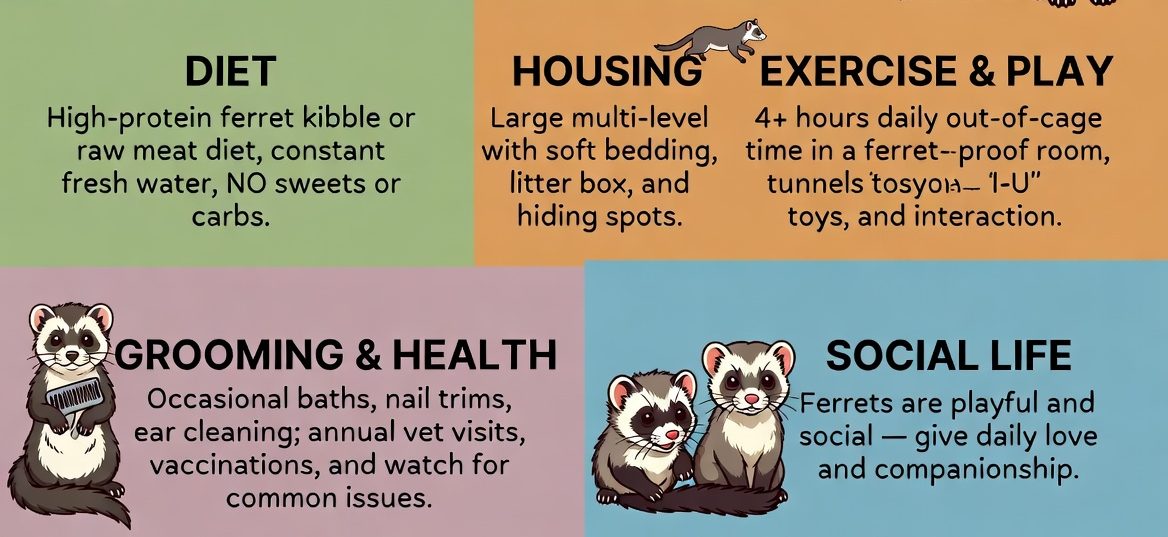
Get the biggest cage you can afford. Ferrets need room to move around. The minimum size should be at least three feet long, two feet wide, and two feet tall. Bigger is always better.
Multi-level cages work great for ferrets. They love to climb and explore different levels. Make sure the spacing between bars is less than one inch. Ferrets can squeeze through tiny gaps.
Look for cages with solid floors or platforms. Wire floors hurt their paws and can cause health problems. If your cage has wire levels, cover them with fleece or towels.
Bedding and Comfort
Ferrets love soft, cozy spots for sleeping. Set up hammocks in their cage. You can buy special ferret hammocks or make your own from old fleece blankets.
Add sleep sacks and tunnels too. Ferrets enjoy burrowing into soft things. They feel safe and warm in these snuggly spots.
Never use cedar or pine shavings as bedding. These woods contain oils that harm ferret respiratory systems. Stick with fleece blankets, old t-shirts, or special ferret bedding.
Litter Box Training
Yes, ferrets can learn to use a litter box! They naturally go to the bathroom in corners. Place litter boxes in the corners of their cage.
Use paper-based or wood pellet litter. Don’t use clumping cat litter or clay litter. Ferrets might eat it and get very sick.
Your ferret won’t be perfect with the litter box. Accidents happen. Clean up messes quickly and don’t punish your pet. They’re doing their best.
Feeding Your Ferret Right
Diet is super important for ferrets. They’re obligate carnivores. This means they need to eat meat to survive.
The Best Food Options
High-quality ferret food is your best choice. Look for food with at least 32% protein and 18% fat. The first three ingredients should be meat sources.
Good protein sources include chicken, turkey, and lamb. Avoid foods with corn, wheat, or vegetables as main ingredients. Ferrets can’t digest plant matter well.
Some people feed raw diets to their ferrets. This includes raw chicken, turkey, and other meats. Raw feeding can be great, but you need to research it carefully first.
Never feed your ferret dog food or cat food long-term. These don’t have the right nutrients. Your ferret will get sick over time.
Treats and Snacks
Ferrets love treats! But give them in moderation. Too many treats lead to obesity and health issues.
Good treat options include:
- Small pieces of cooked chicken
- Freeze-dried meat treats
- Commercial ferret treats
- Raw egg (occasionally)
Avoid sugary treats, fruits, and vegetables. Ferrets can’t process sugar well. It can lead to insulinoma, a serious disease.
Never give your ferret chocolate, grapes, raisins, or onions. These are toxic to ferrets.
Water Needs
Fresh water must be available all the time. Change the water at least twice daily.
You can use a water bottle or a heavy bowl. Bottles keep water cleaner. Bowls let ferrets drink more naturally. Some owners provide both.
If you use a bowl, get a heavy ceramic one. Ferrets love to tip things over. A heavy bowl stays put.
Exercise and Playtime
Ferrets need at least four hours of playtime outside their cage every day. This keeps them healthy and happy.
Ferret-Proofing Your Home
Before letting your ferret roam, you must ferret-proof the room. These little escape artists get into everything.
Block off small spaces behind appliances. Ferrets love to crawl into tight spots. They can get stuck or hurt.
Remove any rubber items within reach. Ferrets chew on rubber and swallow it. This causes dangerous blockages in their stomach.
Hide electrical cords or cover them with protective tubing. A curious ferret might chew through a cord and get shocked.
Close toilet lids and cover any open water sources. Ferrets can drown in toilets or buckets.
Fun Games and Activities
Ferrets are natural hunters. They love games that let them use these instincts.
Try a game of chase. Run around and let your ferret follow you. Then chase them back. They think this is hilarious.
Hide treats around the room. Your ferret will love sniffing them out. This keeps their mind sharp.
Get some toys made for ferrets. Crinkle tunnels, balls, and stuffed animals work great. Rotate toys to keep things interesting.
Fill a shallow box with rice or packing peanuts. Let your ferret dig and burrow in it. They go crazy for this activity.
Walks and Outdoor Time
Some ferrets enjoy walking on a harness and leash. Start harness training young for best results.
Get a ferret-specific harness. The H-style harnesses work best. Never use a collar alone. Ferrets can slip right out.
Keep outdoor time short at first. Watch for signs of stress or fear. Not all ferrets like being outside.
Avoid walking in extreme heat. Ferrets overheat easily. Their bodies can’t handle high temperatures.
Health Care Basics
Regular vet visits keep your ferret healthy. Find a vet who knows about ferrets before you need one.
Vaccinations
Ferrets need vaccines just like dogs and cats. The rabies vaccine is required in most places. It protects your ferret and keeps you safe too.
The distemper vaccine is also important. Canine distemper is fatal to ferrets. This vaccine saves lives.
Your vet will create a vaccine schedule for your ferret. Stick to it carefully.
Common Health Problems
Ferrets can develop several health issues. Knowing the signs helps you catch problems early.
Adrenal disease is very common in ferrets. Signs include hair loss, itching, and swollen private parts. Surgery or medication can help.
Insulinoma affects many older ferrets. This pancreatic tumor causes low blood sugar. Your ferret might seem weak, drool, or have seizures.
Lymphoma is a type of cancer that hits ferrets. Watch for weight loss, lack of appetite, or swollen lymph nodes.
Dental disease develops when teeth aren’t cared for. Bad breath, drooling, and difficulty eating are warning signs.
When to See the Vet
Don’t wait if something seems wrong. Ferrets hide illness well. By the time you notice symptoms, they might be very sick.
Rush to the vet if your ferret:
- Stops eating or drinking
- Has diarrhea or vomiting
- Struggles to breathe
- Seems limp or won’t wake up
- Has a seizure
- Shows signs of pain
Regular checkups help catch problems before they get serious. Schedule wellness visits at least once per year.
Grooming Your Ferret
Ferrets need regular grooming to stay clean and healthy.
Bathing Basics
Don’t bathe your ferret too often. Over-bathing makes them smell worse. Their skin produces more oils to compensate.
Bathe your ferret only when truly dirty. Once every few months is plenty. Some ferrets need even fewer baths.
Use ferret shampoo or gentle kitten shampoo. Human shampoo is too harsh. It dries out their skin.
Make the water lukewarm, never hot. Support your ferret’s body during the bath. Wash quickly and rinse thoroughly.
Dry them with a towel right away. Some ferrets tolerate a hair dryer on low heat. Keep them warm until completely dry.
Nail Trimming
Trim your ferret’s nails every two weeks. Long nails get caught on things and tear. This hurts your ferret.
Use small animal nail clippers or cat nail clippers. Cut just the clear tip of the nail. Avoid the pink quick inside. Cutting the quick causes bleeding and pain.
If you’re nervous about nail trimming, ask your vet to show you how. You can also have a groomer do it.
Ear Cleaning
Ferret ears get waxy. Clean them about once a month.
Use a ferret ear cleaner or gentle pet ear wash. Put a few drops in the ear. Massage the base of the ear for a few seconds. Let your ferret shake their head. Wipe away the loosened wax with a cotton ball.
Never stick cotton swabs deep into the ear. You could damage the ear drum.
If you see dark, crusty discharge, visit the vet. Your ferret might have ear mites.
Dental Care
Brush your ferret’s teeth if possible. Use a small toothbrush and pet toothpaste. Never use human toothpaste.
Many ferrets don’t tolerate tooth brushing. That’s okay. Dental treats and toys help some.
Watch for signs of dental problems. Yellow or brown teeth need professional cleaning. Your vet does this under anesthesia.
Building a Bond with Your Ferret
Ferrets have unique personalities. Getting to know yours takes time and patience.
Handling and Socialization
Handle your ferret gently from the start. Support their whole body when you pick them up. Never grab them by the tail or scruff roughly.
Young ferrets might nip during play. This is normal. Don’t yell or hit. Say “no” firmly and put them down. They’ll learn that biting ends playtime.
Spend time every day just sitting with your ferret. Let them crawl on you and explore. Talk to them in a calm voice. This builds trust.
Introduce new people slowly. Let others feed treats to your ferret. This creates positive associations.
Training Your Ferret
Ferrets are smart. They can learn tricks and commands.
Start with simple commands like “come” or “no.” Use treats to reward good behavior. Be consistent with your words and actions.
Some ferrets learn to fetch. Throw a small toy and reward them when they bring it back. Make it a fun game.
Litter training takes patience. When you see your ferret backing into a corner, quickly move them to the litter box. Praise them when they use it correctly.
Never punish accidents or mistakes. Positive reinforcement works much better. Ferrets respond to love and treats, not anger.
Reading Ferret Body Language
Learn what your ferret is telling you through their behavior.
A happy ferret does the “war dance.” They jump around wildly with their mouth open. This looks crazy but means they’re having fun.
Hissing or backing away means fear or discomfort. Give your ferret space. Let them calm down.
A ferret lying flat and relaxed is comfortable. They trust you when they sleep near you.
Grinding teeth gently shows contentment. It’s like a cat purring.
If your ferret bares their teeth and makes a clucking sound, they’re annoyed. Respect their boundaries.
Costs of Ferret Ownership
Owning a ferret costs money. Be prepared for these expenses.
Initial Setup Costs
Getting started requires some investment. You’ll need:
- A quality cage (up to $200)
- Food and water dishes ($10-20)
- Litter boxes and litter ($20-30)
- Bedding and hammocks ($30-50)
- Toys ($20-40)
- Carrier for vet visits ($30-50)
Expect to spend $300-500 on initial supplies. You might find deals or used items to save money.
Monthly Expenses
Budget for regular monthly costs:
- High-quality food ($30-50)
- Litter ($10-20)
- Treats ($5-10)
That’s roughly $50-80 per month for basic care.
Veterinary Costs
Vet care is the biggest expense. An annual checkup runs $50-100.
Vaccinations cost $15-30 each. Your ferret needs at least two per year.
Emergency visits can cost hundreds or thousands. Pet insurance might be worth it. Compare plans to find good coverage.
Surgery for common issues like adrenal disease costs $500-2000. Save an emergency fund for unexpected health problems.
Living with Multiple Ferrets
Ferrets are social animals. Many do better with a companion.
Introducing New Ferrets
Don’t just toss ferrets together. Introduce them slowly and carefully.
Keep the new ferret separate at first. Let them smell each other through a barrier. Swap bedding so they get used to each other’s scent.
After a few days, allow supervised meetings in neutral territory. Watch for aggression. Some scruffing and chasing is normal during introductions.
If fighting gets serious, separate them and try again later. Most ferrets become friends eventually.
Managing a Ferret Group
Multiple ferrets need more space, more food, and more attention. Make sure you can handle the commitment.
Separate litter boxes prevent territorial issues. Provide at least one box per ferret.
Watch for bullying or food guarding. Some ferrets are bossy. Make sure everyone gets enough to eat.
More ferrets mean more mess and more vet bills. But it also means more fun and entertainment. Ferrets play together in adorable ways.
Common Mistakes to Avoid
New ferret owners make some typical errors. Learn from others’ mistakes.
Mistake One: Not Enough Research
Too many people get ferrets without learning about them first. Then they realize how much work these pets need.
Do your homework before bringing a ferret home. Read books, watch videos, and talk to experienced owners.
Mistake Two: Wrong Diet
Feeding cheap food or inappropriate treats causes health problems. Invest in quality nutrition from day one.
Don’t give your ferret fruits, vegetables, or sugary snacks. Stick to meat-based foods and treats.
Mistake Three: Not Ferret-Proofing
Letting ferrets roam in unsafe areas leads to accidents. They get stuck, injured, or poisoned.
Check every room carefully before playtime. Get down on ferret level to spot dangers.
Mistake Four: Ignoring Health Issues
Waiting too long to see the vet can be fatal. Ferrets go downhill fast when sick.
Trust your instincts. If something seems off, call the vet. Better safe than sorry.
Mistake Five: Not Enough Interaction
Ferrets are social pets. They need your time and attention every single day.
Don’t get a ferret if you’re gone all day and tired at night. They deserve better.
Finding the Right Ferret
Ready to bring home your new friend? Here’s how to find a healthy ferret.
Breeders vs. Pet Stores vs. Rescues
Each source has pros and cons.
Reputable breeders often have healthier ferrets. You can ask about the parents and health history. But good breeders are hard to find.
Pet stores are convenient. But ferrets from large suppliers often have health issues later. They might already be spayed or neutered, which increases some health risks.
Rescue organizations save ferrets from bad situations. You’ll give a deserving animal a second chance. Many rescue ferrets are already trained and socialized.
What to Look For
A healthy ferret has bright eyes and a shiny coat. They should be active and curious.
Check for clear breathing with no wheezing. The nose should be slightly moist but not runny.
Look at the ferret’s body condition. They shouldn’t be too thin or too fat. Feel their ribs easily but don’t see them sticking out.
Ask about health guarantees and return policies. Responsible sellers stand behind their animals.
Your Ferret’s Life Stages
Ferrets change as they age. Know what to expect at each stage.
Baby Ferrets (Kits)
Kits are adorable but challenging. They nip more and need extra training.
Young ferrets have tons of energy. They need even more playtime than adults.
Start handling and socializing kits early. This creates a well-adjusted adult ferret.
Adult Ferrets
Adult ferrets settle into routines. They’re still playful but calmer than kits.
This is the easiest stage. Your ferret knows the rules and has bonded with you.
Keep up with preventive care. Regular vet visits catch problems before they start.
Senior Ferrets
Older ferrets slow down. They sleep more and play less.
Senior ferrets need softer bedding for achy joints. Make sure food and water are easy to reach.
Health problems become more common. Watch closely for any changes in behavior or appetite.
Give your senior ferret extra love and comfort. Make their golden years as happy as possible.
The Joys of Ferret Ownership
Despite all the work, ferrets bring incredible joy to your life.
These silly animals make you laugh every day. Their playful antics lift your mood instantly.
Ferrets give affection in their own unique ways. A ferret curling up on your lap is pure magic.
You’ll join a community of ferret lovers. These people share your passion and offer support when needed.
Watching your ferret grow and thrive is deeply rewarding. You’re giving this little creature a wonderful life.
Final Thoughts on Ferret Care
Caring for a ferret is a big responsibility. These pets need daily attention, quality food, regular vet care, and lots of love.
But if you’re ready for the commitment, ferrets make fantastic companions. They’re funny, affectionate, and endlessly entertaining.
Start with the basics covered in this guide. Build a safe home, feed good food, and spend quality time together.
Keep learning about ferrets throughout their life. Every ferret is different. You’ll discover what makes yours special.
Your ferret is counting on you for everything. Take that responsibility seriously. Give them the best life possible.
The bond you’ll form with your ferret is worth every bit of effort. These little masked bandits steal your heart completely.
Welcome to the wonderful world of ferret ownership. You’re in for an amazing adventure with your new fuzzy friend.