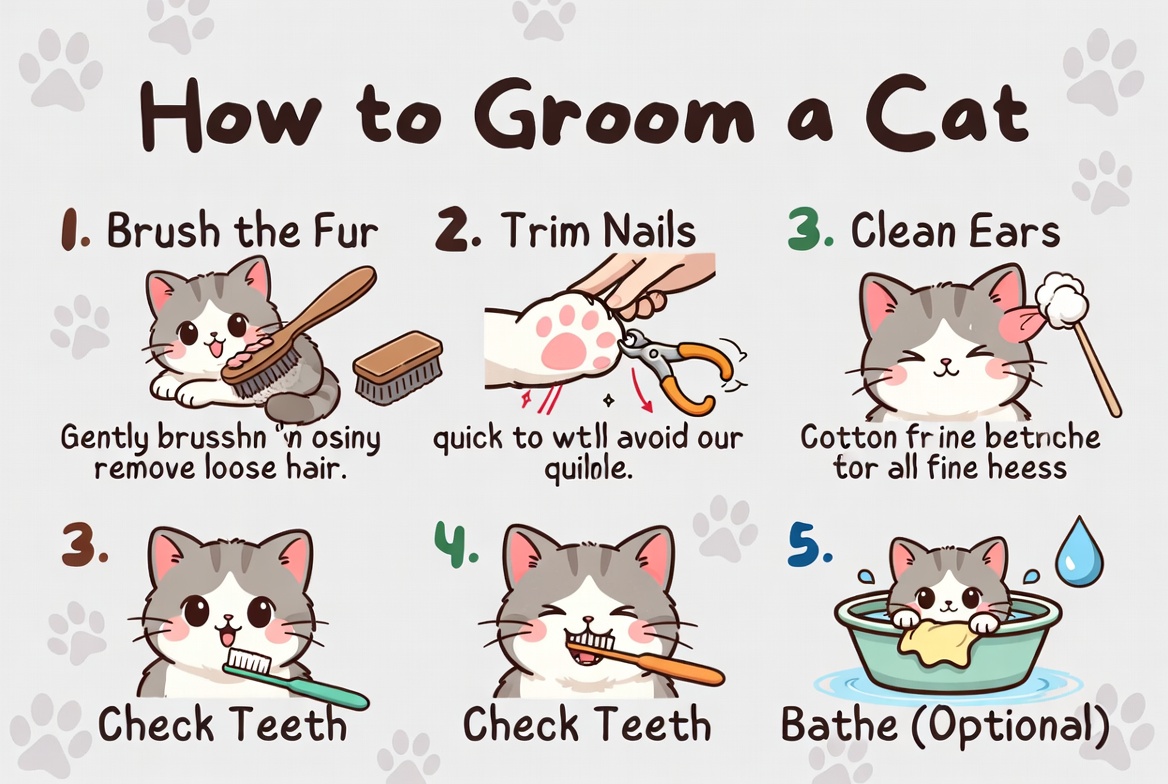
How to Groom a Cat?
Cats are naturally clean animals. They spend a lot of time licking themselves to stay neat and tidy. But even the best self-grooming cats need help from their owners. Regular cat grooming keeps your furry friend healthy, happy, and looking great.
If you’re new to cat grooming, don’t worry. This guide will walk you through everything you need to know. We’ll cover brushing, nail trimming, ear cleaning, and more. Let’s make grooming fun and easy for both you and your cat.
Why Cat Grooming Matters
Your cat needs grooming for many important reasons. When you groom your cat, you do so much more than just make them look nice.
Regular grooming removes loose fur from your cat’s coat. This stops your cat from swallowing too much hair when they lick themselves. Hairballs happen less often when you brush your cat regularly.
Grooming also helps you spot health problems early. You’ll notice lumps, bumps, skin issues, or other concerns when you touch and examine your cat’s body. Catching these issues fast means your cat gets help sooner.
Your cat’s nails grow all the time. Long nails hurt. They catch on things. They can break and cause pain. Trimming nails keeps your cat comfortable and protects your furniture too.
Clean ears matter a lot. Dirty ears lead to infections. Ear mites love dirty ears. Regular ear cleaning keeps infections away. Your cat hears better when their ears are clean.
Grooming your cat strengthens your bond too. The time you spend together builds trust. Your cat learns that touch is safe and good. Many cats actually enjoy grooming time when you do it right.
A well-groomed cat looks and feels amazing. Your home stays cleaner with less shedding. Your cat’s skin stays healthy. Everything gets better with a solid grooming routine.
Tools You’ll Need for Cat Grooming
Before you start grooming your cat, gather the right supplies. Having everything ready makes the job easier and less stressful.
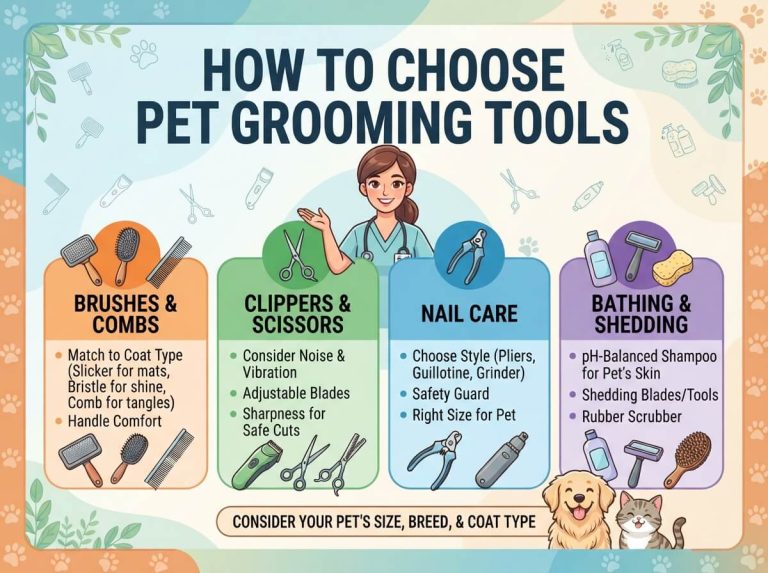
Brushes and Combs
Slicker brushes work great for most cats. They have short wires close together on a flat surface. This brush removes mats and loose fur fast.
Metal combs are perfect for checking if your cat has fleas. Run the comb through their fur and check the teeth. Fleas and flea dirt show up easily on the comb.
Rubber brushes feel nice to most cats. The rubber tips massage their skin while removing loose hair. Many cats like how these feel.
Deshedding tools help a lot during shedding season. Tools like the FURminator remove tons of loose fur in one pass. This keeps hair off your furniture and out of your cat’s belly.
Nail Clippers
Scissor-style clippers work well for most cat owners. They’re simple to use and give you good control.
Guillotine clippers have a hole where you stick the nail. A small blade cuts when you squeeze the handle. These work fast once you get the hang of them.
Grinders are electric tools that file nails smooth. Some cats like grinders better than clippers. There’s no scary snipping sound with grinders.
Other Supplies
You’ll need cat nail file to smooth rough edges after cutting.
Get styptic powder to stop bleeding if you cut the nail too short. This powder is your safety net.
Cotton balls or pads help with ear cleaning. Never stick anything deep in the ear. Cotton on your finger is all you need.
Ear cleaning solution made for cats works great. Your vet can recommend a brand. It makes the job easier.
Mats and tangles need a mat splitter or mat rake. These tools break apart tangles without hurting your cat.
A grooming table makes the job easier. You don’t bend over as much. Cats feel more secure on a small, flat space.
Keep treats nearby. You’ll reward your cat during and after grooming. Positive rewards make grooming something your cat looks forward to.
How to Brush Your Cat the Right Way
Brushing is the foundation of good cat grooming. Let’s cover how to do it properly so your cat enjoys the experience.
Start with the Right Brush
Long-haired cats need a slicker brush. Use it gently to remove mats and tangles. Work in the direction the hair grows.
Short-haired cats do well with rubber brushes or soft bristle brushes. These remove loose hair without pulling too hard on the skin.
Pick the Right Time
Groom your cat when they’re relaxed. Many cats are calm after eating or playtime. Never try to groom an upset or angry cat.
Choose a quiet place. Turn off loud noise. Make the space calm and peaceful. Your cat will cooperate better.
Start with a Quick Check
Run your hands over your cat’s whole body. Feel for mats, tangles, lumps, or tender spots. If you find matted fur, work on that area gently.
Talk to your cat while you touch them. Use a soft voice. This helps them relax and enjoy the experience.
Brush Gently
Hold the brush at a slight angle. Make short, gentle strokes. Never push hard or pull at mats roughly.
Start on the head and neck. Move down the back and sides. Save the belly and legs for last. Many cats don’t like belly touches.
Brush in the direction the fur grows. Going against the grain bothers cats. Work with their fur, not against it.
Spend Time on Problem Areas
Behind the ears gets matted easily. Brush this spot often. The underarms mat a lot too. Spend extra time here.
The back legs and belly are tricky spots. Mats love these areas. Be extra gentle in these places.
Know When to Stop
Groom for short sessions at first. Five to ten minutes is plenty for a beginner cat. Your cat will let you know when they’ve had enough.
If your cat walks away, let them go. Don’t force grooming on an unwilling cat. End on a good note so they want to do it again.
Deal with Mats and Tangles
Small mats are easy to remove. Brush gently with a slicker brush. Work from the outside of the mat toward the center. This prevents pulling.
Bad mats need a mat splitter. This tool cuts the mat without hurting the skin below. Slide the mat splitter under the mat and pull slowly.
Very bad mats close to the skin need professional help. A groomer can remove them safely. Sometimes shaving is the best choice.
Trimming Cat Nails Without Fear
Nail trimming scares a lot of new cat owners. But it’s not hard once you know how. Let’s make it simple.
Why Trim Nails
Cats have nails that grow fast. Long nails curl under. They hurt when your cat walks. Long nails catch on things and break.
Indoor cats can’t wear their nails down naturally. They need your help to keep nails at a healthy length. Outdoor cats may wear them down, but regular trimming is still good.
Get Your Cat Ready
Let your cat sit on your lap. Give them treats. Get them calm and happy first.
Hold one paw gently. Press slightly to make the claw come out. Look at the nail closely.
You’ll see a pink area inside the nail. This is the quick. It has blood vessels and nerves. Never cut the quick.
The white or gray part at the tip is safe to cut. This part has no feeling. This is what you’ll trim.
Do the Actual Trimming
Hold the clipper at a 45-degree angle under the nail. Make one quick cut. Don’t squeeze slowly. One fast cut works best.
Cut only the very tip. You want to remove just the curved part. Cut too much and you’ll hit the quick.
If you hit the quick, apply styptic powder right away. Press the powder onto the nail. The bleeding stops fast.
After a few nails, stop. Give your cat treats. Some cats only let you trim a few nails at a time. That’s totally fine.
Do this every two to three weeks. Regular trimming is better than waiting until nails are super long.
Use a Grinder Instead
Electric grinders work great for nervous cats. They make a buzzing sound, but there’s no scary cutting motion.
Let your cat hear the sound first. Don’t start right away. Let them get used to the noise.
Touch the spinning tip gently to the nail tip. Hold it there for just one second. Move to the next nail.
Grinders take longer than clippers. But many cats prefer them. Try both and see what your cat likes.
Cleaning Cat Ears the Easy Way
Clean ears are healthy ears. Ear cleaning is quick and easy once you get the hang of it.
Why Ears Need Cleaning
Cats have ear canals shaped like an L. Dirt and wax build up inside easily. This buildup causes infections and discomfort.
Ear mites love dirty ears. These tiny bugs cause itching and infection. Clean ears prevent mite problems.
Regular ear checks let you spot problems early. You’ll see redness, discharge, or smell bad odors. These signs mean your cat needs vet help.
How to Clean Ears
Start by looking in your cat’s ear. The inside should be light pink and clean. Some light brown wax is normal.
A dark brown or black crusty look means mites. Your vet needs to treat this. Don’t wait for home treatment to work.
Get cat ear cleaning solution from your vet. Regular water or other liquids can cause problems.
Put a few drops in the ear canal. Not too many. Just enough to wet the inside.
Gently rub the base of the ear. Rub in circles for about 30 seconds. Your cat might shake their head. Let them.
Use a cotton ball to wipe away the liquid and dirt that comes out. Don’t stick the cotton ball deep in the ear.
Repeat on the other ear.
How Often to Clean
Most cats need ear cleaning once a month. Some need it more often. Ask your vet how often your cat needs cleaning.
Cats with droopy ears get dirtier faster. Outdoor cats might need more frequent cleaning. Watch your cat’s ears and adjust as needed.
Taking Care of Your Cat’s Teeth
Tooth care matters for cats just like it matters for humans. But many owners skip dental care. Let’s talk about why it’s important.
Why Teeth Need Care
Plaque builds up on cat teeth just like human teeth. This plaque turns to tartar. Tartar causes gum disease and tooth loss.
Cats with bad teeth often have pain. They eat less and lose weight. They develop infections that spread through their body.
Clean teeth mean your cat lives longer and feels better. Dental disease causes serious health problems. Prevention is so much easier than treatment.
Brush Your Cat’s Teeth
Brushing is the best way to keep teeth clean. Start slow. Let your cat lick cat toothpaste off your finger. It tastes good to them.
Use a small soft toothbrush made for cats. A human toothbrush is too big. A cat toothbrush fits perfectly.
Lift your cat’s lip gently. Brush the outside of the teeth with small circular motions. Focus on where the teeth meet the gums.
Most cats let you brush the outside teeth. Inside teeth are harder to reach. Do what you can without stressing your cat.
Aim for brushing every day. Even a few times a week helps a lot. Something is better than nothing.
Dental Treats and Food
Dental treats help keep teeth cleaner. They work by mechanically scraping plaque off teeth. Give these as snacks.
Some cat foods are made to help with dental health. They’re slightly firmer so they help scrape teeth clean.
Your vet might recommend dental water additives. These liquids go in your cat’s water bowl and help prevent tartar buildup.
Professional Cleaning
Your vet can clean teeth professionally. This involves putting your cat under anesthesia. It’s safe but requires a vet visit.
Professional cleaning removes tartar you can’t remove at home. If your cat has serious tartar buildup, your vet might recommend this.
Ask your vet when your cat needs professional cleaning. Some cats need it every year. Others need it less often.
Bathing Your Cat: Is It Necessary?
Most cat owners don’t bathe their cats. Cats are great at cleaning themselves. So do cats really need baths?
When Cats Need Baths
Outdoor cats might need baths if they get really dirty. Indoor cats almost never need baths.
Cats with long hair sometimes need baths. Their thick coats can get matted. A bath and good drying help prevent serious mats.
Cats with skin conditions might need medicated baths. Your vet will tell you if your cat needs this.
Cats that get into something sticky or smelly need baths. If they get into paint or oil, a bath helps remove it.
How to Bathe a Cat
Use lukewarm water. Not hot. Not cold. Lukewarm feels good.
Get a non-slip mat in the bathtub or sink. Cats feel scared on slippery surfaces. The mat makes them feel safer.
Use cat shampoo only. Human shampoo can hurt cat skin. Cat shampoo is made for their skin.
Wet your cat’s fur with a cup or low-pressure spray. Let them get used to the water first.
Apply shampoo and lather gently. Avoid the face and ears.
Rinse very well. Any shampoo left behind irritates skin.
Wrap your cat in a soft towel immediately. Cats get cold fast when wet. Keep them warm.
Most cats hate baths. If your cat hates it, skip baths unless truly necessary. Self-grooming works fine for most indoor cats.
Dealing with Shedding
Cat fur ends up everywhere. Shedding is completely normal. But you can manage it.
Why Cats Shed
Cats shed year-round. They have cycles where they shed more. During heavy shedding season, loose fur covers everything.
Indoor cats shed all the time because artificial lighting messes with their natural cycles. Outdoor cats shed more in spring and fall.
Shedding is healthy. Cats need to get rid of old fur. You just need to help them do it.
Reduce Shedding
Regular brushing removes loose fur before it falls out everywhere. Brush your cat every day during heavy shedding. This makes a huge difference.
Deshedding tools are amazing. They pull out tons of loose undercoat. Use these during shedding season.
A good diet helps coat health. Healthy skin sheds less. Talk to your vet about the best food for your cat.
Manage the Fur
A lint roller removes cat hair from furniture quickly. Keep several around your home.
Vacuum often. A vacuum made for pet hair works best. These pick up cat hair better than regular vacuums.
Furniture covers protect your couch and chairs. Wash them regularly.
Some people embrace the fur. Get a black couch or dark furniture. Cat hair shows up less.
Grooming Long-Haired Cats vs Short-Haired Cats
Different cats need different grooming approaches. Let’s break it down by coat type.
Long-Haired Cat Grooming
Long-haired cats need daily brushing. Seriously. Mats develop fast with long fur. Daily brushing prevents mats from forming.
Use a slicker brush and metal comb. The slicker brush removes mats. The metal comb finds mats you missed.
Bathe long-haired cats once every couple of weeks if they get matted easily. The bath helps loosen mats. Dry them completely.
Long-haired cats need more frequent nail trimming. Their nails stay hidden under fur. Check nails weekly.
Ear cleaning is more important for long-haired cats. Fur grows around the ears and traps moisture.
Short-Haired Cat Grooming
Short-haired cats need brushing two to three times a week. This prevents mats and reduces shedding.
A rubber brush or soft bristle brush works great. These don’t pull on short hair.
Nail trimming every two to three weeks is usually fine.
Ear cleaning once a month keeps ears healthy.
Baths are almost never necessary for short-haired cats.
Making Grooming Time Pleasant for Your Cat
Grooming only works if your cat cooperates. Here’s how to make grooming something your cat enjoys.
Start Small
Don’t groom for long periods at first. Five minutes is plenty. End before your cat gets frustrated.
As your cat gets used to grooming, you can go longer. Patient, short sessions beat long, stressful ones.
Give Treats and Praise
Treats are magic. Offer a small treat before grooming. Give treats during grooming. Give treats after.
Soon your cat connects grooming with good things. They start looking forward to it.
Use a happy voice. Tell your cat they’re doing great. Be encouraging and positive.
Find the Right Spot
Some cats like grooming on your lap. Others prefer a grooming table. Some like being on the floor.
Try different spots and see what your cat prefers. Comfort helps them relax.
Know Your Cat’s Limits
Some cats tolerate only certain body parts being groomed. One cat might let you brush their back but hate their belly. Another cat hates paws.
Respect these limits. Groom what they allow. Forcing grooming makes them hate it.
Stay Calm
Cats pick up on your energy. If you’re frustrated, they get nervous. Stay calm and patient.
If grooming isn’t working, stop and try again later. There’s no rush.
When to Call a Professional Groomer
Sometimes you need professional help. That’s completely okay.
You Need a Groomer If
Your cat has serious mats you can’t remove. A groomer can handle this safely.
Your cat is too stressed by at-home grooming. A professional might be able to work with them better. Or sometimes a cat just needs to be sedated by a vet for grooming.
You don’t feel confident trimming nails. A groomer can show you how. Or just let them handle it.
Your long-haired cat needs a full grooming and you don’t have time. Groomers do full grooms that include brushing, nails, ears, and sometimes baths.
Your cat needs a sanitary trim. This removes hair around the rear end. It keeps things clean and prevents problems.
What to Expect at a Groomer
A good groomer handles your cat gently. They work at a calm pace. They don’t force things that upset your cat.
Grooming takes time. A full grooming for a long-haired cat might take an hour or more. Short-haired cats usually take less time.
Ask the groomer what they’ll do. A good groomer explains their process. They answer your questions.
Get recommendations from your vet or other cat owners. A good groomer makes a big difference.
Common Grooming Problems and Solutions
Sometimes grooming hits bumps. Here’s how to handle common issues.
Your Cat Won’t Sit Still
Try grooming them right after playtime when they’re tired. A tired cat sits still better than an energetic one.
Groom in a quiet room with no distractions. Keep the space calm.
Some cats respond to calming treats or sprays. Ask your vet about options.
If your cat is stressed, see a vet. Sometimes anxiety or pain causes resistance to grooming.
You Cut the Quick
It happens to everyone. Don’t panic. The bleeding stops fast.
Press styptic powder onto the bleeding nail. Hold it there for a few seconds. The powder stops the bleeding.
Don’t use the nail clipper on that nail again for a while. Give it time to heal.
Mats Keep Coming Back
You’re probably not brushing enough. Increase brushing frequency.
Or your cat’s coat might be prone to matting. Deshedding tools help a lot. Consider professional grooming.
A bath can help prevent mats. The water and drying help loosen tangles.
Ear Cleaning Causes Shaking
This is totally normal. Cats shake their head when you clean ears. That’s okay.
Just make sure you’re not sticking cotton too deep. Only clean the outer area.
Some ear cleaners irritate ears more than others. Ask your vet about gentler formulas.
Your Cat Hates Nail Trimming
Try an electric grinder instead. Many cats prefer grinders to clippers.
Ask your vet if your cat has painful arthritis or neuropathy. Pain makes them resist grooming.
Sometimes you need vet help. Your vet can trim nails during regular checkups.
Creating a Grooming Schedule
A routine makes grooming easier. Let’s build a schedule that works.
Daily Tasks
Check your cat for any lumps, bumps, or skin issues. A quick feel-over takes seconds.
Look at eyes and ears for discharge. Healthy eyes are clear. Healthy ears are clean.
Brush your cat if they’ll let you. Even a few minutes helps.
Weekly Tasks
Do a thorough brush with a slicker brush. This removes loose fur and finds small mats before they become big ones.
Check nails. Trim any that look long.
Look in ears for dirt or smell for odors.
Monthly Tasks
Clean ears if they need it.
Give a full grooming session. Brush thoroughly, trim nails, clean ears, check teeth.
Take a good look at your cat’s whole body. Feel for anything unusual.
As-Needed Tasks
Bathe only if your cat needs it. Long-haired cats with mats might need monthly baths.
Deal with mats as soon as you find them. Small mats are easy. Big mats are not.
Trim longer nails if they grow faster than expected.
Health Benefits of Regular Grooming
We’ve touched on this, but let’s really drive home why grooming matters for your cat’s health.
Skin Health
Regular brushing removes dead skin cells and dirt. This keeps skin healthy. Healthy skin is less itchy.
You notice skin issues early when you groom regularly. Bumps, rashes, or dry patches show up quickly. Your vet can treat these fast.
Coat Health
A well-brushed coat looks shiny and healthy. Matted hair is uncomfortable. Regular brushing prevents mats.
Less shedding means your cat doesn’t swallow as much hair. This means fewer hairballs.
Nail Health
Trimmed nails don’t break. Your cat walks comfortably. Infected nails don’t develop.
Short nails also mean less damage to your furniture. That’s a bonus.
Ear Health
Clean ears don’t get infected. Ear mites can’t move in. Your cat hears better.
Ear problems are painful. Prevention is so much better.
Dental Health
Brushed teeth don’t get gum disease. Your cat keeps their teeth longer. They chew food better with healthy teeth.
Dental disease spreads bacteria through the body. Preventing dental disease prevents whole-body problems.
Early Problem Detection
Grooming means you touch your cat all over. You feel lumps and bumps. You notice weight changes.
You see skin issues, discharge, and other problems. Catching issues early saves money and saves your cat’s life.
The Bottom Line
Cat grooming doesn’t have to be complicated or stressful. Start simple. Use the right tools. Take your time. Be gentle and patient.
Your cat will learn that grooming is safe and sometimes even enjoyable. You’ll build a stronger bond. Your cat will be healthier and happier.
Regular grooming prevents so many problems. Mats don’t form. Nails don’t break. Ears don’t get infected. Teeth don’t decay.
Start a grooming routine today. Begin with brushing. Add nail trimming when you’re ready. Work up to ear cleaning. Soon you’ll have a complete grooming routine that your cat accepts.
Every cat is different. What works for one cat might not work for another. Be flexible. Adjust your approach. Listen to what your cat needs.
You’ve got this. Your cat is lucky to have an owner who cares enough to learn about proper grooming. Get out there and give your furry friend the care they deserve.

Hi, I’m Mary, the founder of PetGadgetPro.com. I’m a passionate pet lover with a special place in my heart for dogs and cats. I share practical advice and honest insights on pet gear to help pet parents make better choices. My dedicated research team studies products in depth, and our writers create reviews using trusted, authentic sources—so you can feel confident choosing the best for your pets.