How to Grind Dog Nails?
If you have a furry friend at home, you know how important it is to keep them healthy and happy. One task that many dog owners find tricky is nail care. You might have heard about grinding dog nails and wondered what it’s all about. The good news is that it’s not as hard as it sounds. Let me walk you through everything you need to know about nail grinding for dogs.
Why Your Dog’s Nails Matter
Before we get into the how, let’s talk about the why. Your dog’s nails need care just like yours do. When nails get too long, they can hurt your pup. Long nails change how your dog walks. They can cause joint pain and make movement uncomfortable.
Think about what happens when your dog runs around. Long nails dig into the floor. They don’t grip properly. This makes it harder for your dog to move with ease. Your dog might start limping or walking funny. Long nails can also break or split. That’s painful and can lead to infections.
Keeping your dog’s nails at a good length helps them walk right. It protects their joints and bones. It also saves your floors and furniture from scratches. Nail care is a big part of pet health that many owners overlook.
Trimming vs. Grinding: What’s the Difference?
You’ve probably seen dog nail clippers at the pet store. You might wonder why anyone would grind nails instead. Both methods work, but they’re different.
Nail clippers work by cutting the nail. You squeeze the clipper and it chops through the nail. It’s fast, but it can crush the nail. This sometimes causes splitting. Clippers also need to be very sharp to work well. Many people find them hard to use safely.
A nail grinder is a small electric tool. It works like a power tool but smaller and much gentler. Instead of cutting, it files the nail down smooth. The spinning wheel grinds away at the nail bit by bit. This gives you control. You can take your time. The grinding creates a smooth edge instead of a sharp cut.
Grinding has real benefits. It’s safer for nervous dogs. You get more control over how short you make the nails. The grinding seals the nail edge so it’s less likely to split. Many vets like this method better because it’s gentler.
The Tools You’ll Need
Let’s talk about what you actually need to get started.
The main tool is a dog nail grinder. You’ll find many options online and at pet stores. Some are cordless, which is nice. Others plug in. Most have different speed settings. A good grinder for beginners is quiet and has adjustable speeds. Loud noises scare dogs.
You don’t need anything fancy to start. A basic grinder costs between twenty and fifty dollars. Higher-end models cost more but work the same way for home use.
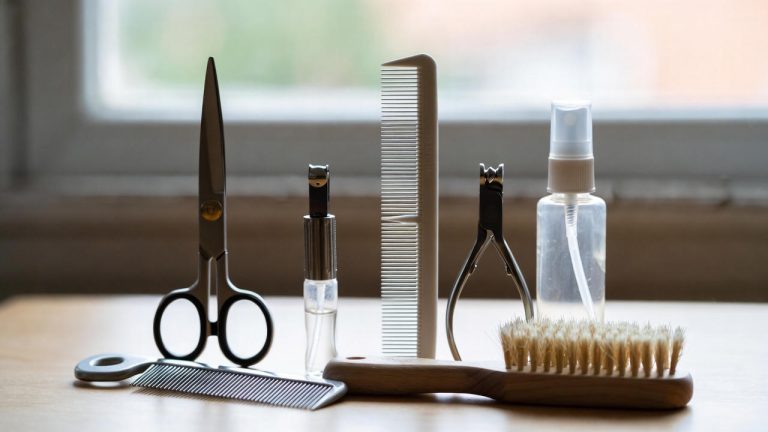
Besides the grinder, you’ll want some basics:
Get some treats ready. Lots of treats. You’ll use them to reward your dog and keep them calm. High-value treats work best. These are treats your dog really loves.
Have some nail file on hand. Even with a grinder, a regular file is handy for smoothing any rough spots.
Grab a comfortable place to work. You need good light so you can see your dog’s nails clearly. A grooming table or sturdy chair works great.
Keep styptic powder nearby. This stops bleeding if you grind too far. It’s not expensive and gives you peace of mind.
Have some towels or a blanket. This makes your dog feel secure and keeps hair off your clothes.
Getting Your Dog Ready
The prep work is huge. A calm dog is easy to work with. A scared dog is not.
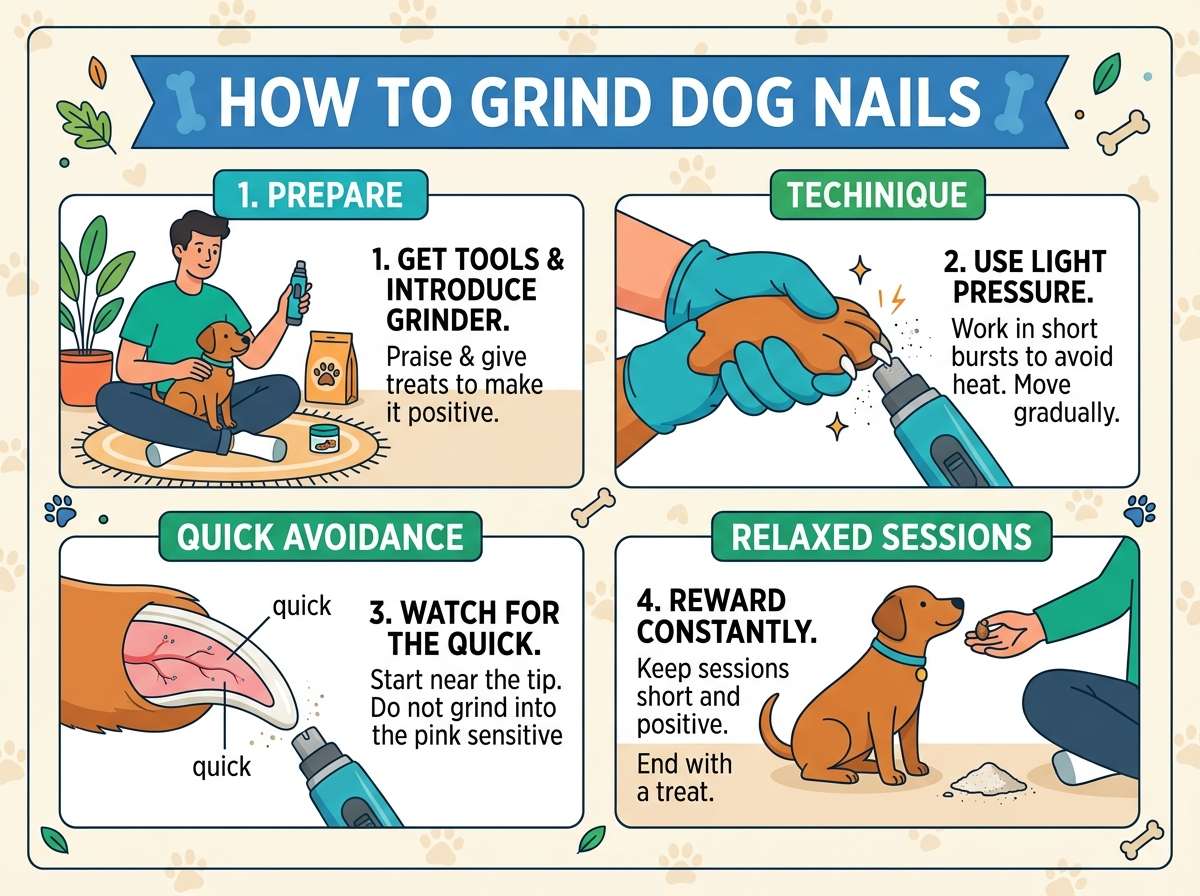
Start slow. Let your dog see the grinder before you use it. Turn it on and let them hear the noise. Make it a positive thing. When your dog hears the sound, give them treats. Do this several times over a few days. Your dog will learn that the grinder sound means good things happen.
Touch your dog’s paws a lot. This is key. Many dogs don’t like their feet touched. You need to change that. Sit with your dog and handle their paws gently. Play with their toes. Look at their nails. Do this every day for a week or two. Your dog will get used to you touching their feet.
The night before grinding, give your dog a good workout. A tired dog is a calm dog. Take them for a long walk or play session. They’ll be relaxed when it’s time to work on their nails.
On the day you grind nails, pick a calm time. Don’t do it when your dog is hyper. Wait until after they’ve eaten and are feeling mellow. Early morning or after lunch often works well.
Sit down with your dog on the floor or on your lap. Take it slow. There’s no rush. If your dog seems scared, stop and try again later. Building confidence takes time.
Step-by-Step: How to Actually Grind
Now for the main event. Here’s what to do.
Start by picking a paw. The front paw is usually easier than the back. Pick up your dog’s paw gently and hold it steady. Look at the nail. You need to see where the quick is. The quick is the pink part inside the nail. It has blood vessels. You never want to grind into the quick.
In light-colored nails, you can see the quick. It’s pink. In dark nails, it’s harder to see. With dark nails, look at the bottom of the nail. You’ll see a small dark circle in the center. That’s the quick. Grind only the outer part.
Turn on your grinder to a low speed. Not the fastest setting. Low speed gives you control and is less scary for your dog. Test it on your own nail first if you’re nervous. It doesn’t hurt. It just feels like a light filing.
Hold the grinder at a slight angle to the nail. Not straight on. The angle helps you see what you’re doing. Touch the nail gently. Don’t press hard. The grinder does the work. You just hold it there and let it file the nail.
Grind the tip of the nail. Move slowly from side to side. You’re trying to round off the sharp point. After a few seconds on each spot, move to the next spot. Work your way around the nail.
Stop often and check your work. Look at the nail from different angles. Make sure you’re not going too far. A little bit at a time is the right way. You can always grind more. You can’t put the nail back if you grind too much.
Your goal is to shorten the nail and smooth it out. The tip should be rounded, not sharp. You want the nail to be short enough that it doesn’t click on the floor when your dog walks.
As you grind, you might see a small black or gray spot in the center of the nail. That’s the start of the quick. Stop immediately if you see that. You’ve gone far enough.
After you finish one nail, praise your dog. Give them treats. Make it a big deal. They did a great job. Move to the next nail the same way.
Most dogs have four nails on each front paw and four on each back paw. That’s sixteen nails total. You might also have one or two dew claws. These are small nails higher up on the leg. They need grinding too.
Take breaks between paws. Your dog needs a break. Stretch their legs. Give them water. Let them relax. Then come back and do the next paw.
The whole thing might take twenty to thirty minutes your first time. That’s fine. Going slow is better. As you practice, you’ll get faster.
How Short Should They Be?
This is a question many beginners ask. How short is too short?
The rule is simple: your dog’s nails should not click on the floor. When your dog walks on a hard floor, you shouldn’t hear clicking sounds. That sound means the nails are touching the ground. They’re too long.
When nails are the right length, the nail barely touches as your dog walks. Most of your dog’s weight is on their pad and toe. The nail just sits there.
How short that is depends on your dog. Big dogs have thicker nails and longer toes. Small dogs have tiny nails. The length varies. The click test is the best way to know.
If you’re not sure, grind less rather than more. It’s always safer. You can always do another round in a week or two. Taking your time is smart.
What If You Hit the Quick?
Okay, so you’re careful, but what if it happens? Don’t panic. It happens to everyone learning to grind.
If you grind into the quick, the nail will bleed. It looks scary but it’s not serious. Your dog might yelp. Stay calm. Your dog looks to you to see if this is bad. If you stay calm, they will too.
Stop grinding right away. Take out the styptic powder. Press it onto the bleeding nail. Hold it there for a minute. The powder stops the bleeding fast. It might sting a little bit, but the pain goes away quickly.
After the bleeding stops, give your dog treats and praise. Keep an eye on the nail for the rest of the day. It should stop bleeding and heal on its own.
If it keeps bleeding after a few minutes, contact your vet. But this is rare.
The good news is that hitting the quick teaches you. You’ll remember where that line is. Next time you’ll be more careful. Most people only hit the quick once or twice before they figure out where it is.
How Often Should You Grind?
This depends on your dog and how fast their nails grow.
Most dogs need their nails ground every four to eight weeks. Some dogs grow nails faster and need it every three weeks. Other dogs are fine with every ten weeks.
The click test helps here too. When your dog’s nails start clicking again, it’s time. You’ll get a feel for the rhythm after a few grindings.
Dogs that exercise a lot outside wear down their nails naturally. These dogs might need grinding less often. Dogs that spend most time indoors usually need more frequent grinding.
If you’re new to this, do a grinding every month at first. Then you can space it out as you learn how fast your dog’s nails grow.
Common Mistakes to Avoid
Learning from others’ mistakes helps. Here are the big ones people make.
Don’t grind too fast. Using the highest speed setting is tempting. It seems like you’ll finish faster. But high speed is harder to control. It’s also louder and scarier for your dog. Stick with low to medium speeds.
Don’t press hard. The grinder does the work. Pushing hard doesn’t help. It makes you lose control and could hurt your dog. Let the tool do what it’s made to do.
Don’t rush. Some people try to grind all the nails in five minutes. Your dog gets scared or hurt. Take your time. A relaxed dog and careful work matter more than speed.
Don’t ignore your dog’s signals. If your dog pulls away, yelps, or seems scared, stop. You can try again later. Forcing it makes future grindings harder. Your dog will remember and get nervous.
Don’t forget the dew claws. People often skip these. Dew claws need care too. They can get very long and curly if ignored.
Don’t use a dull grinder. If your grinder isn’t working well, it’s probably dull. A sharp grinder is gentler and easier. Most grinders last a long time but eventually need new parts.
Safety Tips You Should Know
Safety matters when using power tools on your pet.
Keep the grinder away from loose fur. Long hair can wrap around the spinning wheel. Hold your dog’s fur back or tie it if needed. This prevents tangling.
Don’t grind near your dog’s skin. The grinder can heat up slightly and burn delicate skin. Stick to the nail only.
Watch for signs your dog is overheating. The grinder gets warm. If your dog has a dark coat or is in a hot room, they might overheat. Stop if your dog pants heavily or seems uncomfortable.
Keep your hands steady. A sudden jerk could cause problems. Use a solid grip. If you’re shaky, rest your arm on a stable surface.
Have your dog checked by a vet if their nails are very long. Sometimes long nails mean a health problem. A vet should check before you start grinding.
Never use a human nail grinder. These aren’t made for pet nails and don’t work well. Spend the few dollars extra for a real pet grinder.
When to Call the Vet or Groomer
Sometimes you should get help from a professional.
If your dog is very anxious, a groomer or vet can help. They have experience with nervous dogs. They can use sedation if needed.
If your dog’s nails are so long they’re curling, see a vet first. This sometimes means an underlying problem. Don’t try to fix it yourself.
If you hit the quick and the bleeding doesn’t stop after ten minutes, call your vet.
If your dog has an infection on their paw, see a vet before grinding. The infection needs treatment first.
If you feel really nervous, there’s no shame in getting professional help your first time. A groomer can show you how it’s done. You can learn by watching.
Many vets offer nail grinding during regular appointments. This is great if you want to learn from a pro.
Making It a Positive Experience
The best part of grinding your dog’s nails is the bonding. This is a time you spend caring for your pup. Make it good.
Use lots of praise. Tell your dog they’re doing great. Use a happy voice. Make it feel like playtime, not a chore.
Give treats throughout. Don’t wait until the end. Reward your dog for each nail. For the first few times, give a treat after every single nail. This teaches your dog that grinding means treats appear.
Pick the right time of day. Do it when your dog is naturally calm. Many dogs are best in the morning or after meals.
Keep sessions short if your dog is nervous. Do just a couple of nails on day one. Do more the next time. Building up slowly works better than pushing hard.
Play with your dog after grinding. This is a great way to end on a fun note. Your dog will look forward to it.
Let other family members practice too. Different hands holding the paw make your dog understand this is normal and safe.
Recognizing When Your Dog Has a Problem
Sometimes nails have issues beyond length. Watch for these signs.
If your dog limps or has trouble walking, their nails might be the problem. Overgrown nails cause pain. Grinding might help. But if limping continues, see a vet.
If nails are discolored or crumbly, there might be a fungal issue. This needs vet treatment before you grind.
If your dog’s toes are swollen or red, see a vet. This isn’t just a nail issue.
If nails bleed for no reason or seem weak, talk to your vet. Some health problems show up in nails first.
Most of the time, nails are just nails. But paying attention to changes helps catch problems early.
The Right Grinder for Your Dog
Not all grinders are the same. Picking the right one helps.
For small dogs with tiny nails, get a small grinder. Big grinders are hard to control on little nails.
For large dogs, a standard grinder works fine. Their nails are thicker and bigger.
Cordless grinders are convenient. No cord to manage. But they need charging. Corded grinders work all the time but have a cord.
Quiet grinders are important if your dog is sound-sensitive. Some are much quieter than others.
Look for variable speed settings. This lets you start slow and speed up as you get comfortable.
Some grinders have dust collection. They catch the nail dust. Others don’t. Dust is fine, but some people prefer collection.
Read reviews from dog owners. They tell you what actually works. Pet blogs have good gear reviews.
Test it on your own nail first. If it feels good on you, it’ll probably work for your dog too.
Grinding vs. Clipping: Which Is Best?
We talked about this earlier, but let’s go deeper. Which method should you use?
Grinding is better if you’re nervous. It gives you more control. You can take your time.
Clipping is faster if you’re experienced. It’s quicker once you know what you’re doing.
Grinding is safer for anxious dogs. The sound is scary for some, but it’s gentler overall.
Clipping can hurt your dog if you slip. The cutting action is quick and forceful.
Grinding seals the nail edge. It’s less likely to split.
Clipping leaves a cut edge that can split more easily.
Many people do both. They grind most of the nail, then use a clipper for the very tip. This combines the benefits of both.
You can also just grind. That’s totally fine and very safe.
Keeping Up with the Routine
Nail grinding gets easier over time. Here’s how to stay on track.
Mark your calendar. Put a note four weeks out. When that date comes, check your dog’s nails. If they’re clicking, it’s time.
Keep your grinder charged or plugged in. An unprepared tool gets put off. Have it ready to go.
Have treats prepared. Keep the good stuff in a jar by your grooming spot. This makes starting easier.
Grind with your dog as part of your routine. Maybe it’s the first Sunday of the month. Maybe it’s after baths. Having a schedule helps.
Talk to friends with dogs about their routine. You might pick up tips. You might realize your dog is fine when others grind more often.
A healthy dog with properly maintained nails will be happy. Keep it up and you’ll both be grateful.
Special Situations
Some dogs have special needs. Here are a few.
Elderly dogs sometimes have brittle nails. Grinding is gentler on these nails. Clipping might cause splitting.
Dogs with dark nails need extra care. You can’t see the quick. Grind conservatively. Less is more with dark nails.
Dogs with dew claw issues need attention. Dew claws grow differently. They need grinding too.
Very small dogs have tiny nails that are hard to see. Use good light. Take your time.
Dogs with foot anxiety need slow introductions. Spend weeks just touching their paws before you grind.
Puppies need early exposure. If you start young, they think nail grinding is totally normal.
Senior dogs can learn too. It’s never too late to start. Just go slow.
What Success Looks Like
You’ll know you’re doing great when certain things happen.
Your dog walks without clicking sounds on hard floors. That’s success.
Your dog doesn’t pull away when you touch their paws. They’re comfortable.
Your dog stays relaxed during grinding. They might even nap through it.
You can see the nail is shorter and smoother. The work is visible.
Your dog doesn’t limp or seem sore. The nails feel right.
You gain confidence. You’re not nervous anymore. You know what you’re doing.
When these things happen, celebrate. You’ve mastered dog nail grinding.
Final Thoughts
Grinding your dog’s nails is a skill you can absolutely learn. It’s not hard. It’s not scary. It just takes practice and patience.
Start slow. Build your dog’s confidence. Use good tools. Take your time. Before long, you’ll be a pro.
Your dog will be healthier and happier. Their joints will thank you. Their movement will improve. You’ll spend calm time bonding.
The first grinding takes longer and feels awkward. By the third or fourth time, you’ll feel comfortable. By the tenth time, it’s second nature.
You’re doing something good for your dog. Every time you grind those nails, you’re showing you care. That’s what being a good pet owner is all about.
Now grab that grinder, take a deep breath, and give it a try. You’ve got this.
Hi, I’m Mary, the founder of PetGadgetPro.com. I’m a passionate pet lover with a special place in my heart for dogs and cats. I share practical advice and honest insights on pet gear to help pet parents make better choices. My dedicated research team studies products in depth, and our writers create reviews using trusted, authentic sources—so you can feel confident choosing the best for your pets.