How to Reduce Pet Dander in Your House?
Pet dander is one of those annoying things that pops up when you have furry friends at home. If you’re dealing with sneezing, itchy eyes, or just seeing those tiny flakes around your home, you’re not alone. The good news? You can actually do a lot to reduce pet dander and make your space cleaner and healthier for everyone living there.
What Is Pet Dander and Why Does It Matter?
Let’s start with the basics. Pet dander is basically dead skin cells that fall off your dog, cat, or other furry pets. Just like humans shed skin cells all the time, so do animals. These tiny flakes float around in the air and land on your furniture, carpets, and just about everywhere else in your home.
Now, you might think dander is just annoying and messy. But it’s more than that. Pet dander can trigger allergies and asthma symptoms in people who are sensitive to it. Even if you don’t have allergies yourself, your guests or family members might react to it. So dealing with pet dander isn’t just about keeping your house neat – it’s about making your home a healthier place to live.
The tricky part is that dander is super tiny and sticky. It doesn’t just blow away with a breeze. It sticks to fabrics, clings to the air, and seems to find its way into every corner of your home. But don’t worry – there are tons of things you can do to keep it under control.
Start With Regular Grooming – Your First Line of Defense
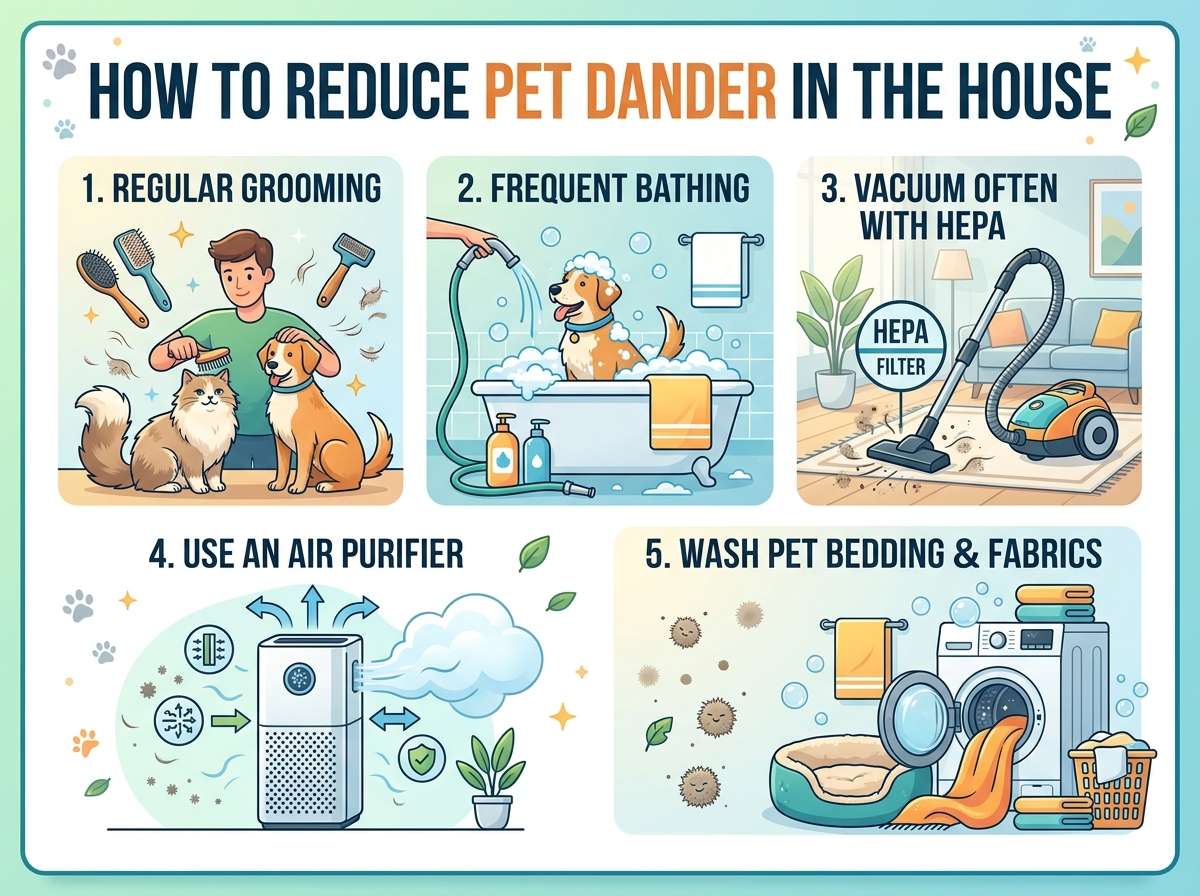
The best way to fight pet dander is to stop it at the source. Regular grooming is your most powerful tool for reducing the amount of dander your pet produces in the first place.
Brush your pet frequently. How often? Well, it depends on your animal. Dogs and cats with long hair need brushing several times a week. Short-haired pets can get away with once or twice a week, but more is always better. When you brush your pet, you’re removing loose hair and skin before it falls all over your house. Plus, your pet will probably enjoy the attention.
Here’s a pro tip: brush your pet outside if you can. This keeps all that loose hair and dander from floating into your home in the first place. If the weather doesn’t cooperate, brush them in a bathroom or kitchen with a hard floor that’s easy to clean up afterward.
Invest in a good brush or comb. There are lots of options out there – slicker brushes, undercoat rakes, grooming mitts, and more. Different pets need different tools, so look for what works best for your specific animal. A quality grooming tool makes the job easier and way more effective.
Bath time also helps. Regular baths (typically once a month for dogs, less often for cats since they’re naturally clean) wash away dead skin cells and reduce the amount of dander floating around. Use warm water and a gentle pet shampoo. Avoid human shampoo because it can irritate their skin and actually make dander worse. After bathing, make sure you dry them completely – this prevents skin issues that lead to more dander.
Keep Your Floors Clean to Eliminate Settled Dander
Once dander settles on your floors, it just sits there waiting to be kicked back up into the air every time someone walks around. That’s why keeping floors clean is super important.
Vacuum regularly – and we’re talking at least twice a week if you have pets. A regular vacuum cleaner works okay, but a HEPA filter vacuum is way better. HEPA stands for High Efficiency Particulate Air, and these filters trap tiny particles like dander that regular vacuums let slip right back out.
Vacuum all the places your pet hangs out. That means the bedroom, living room, kitchen – anywhere your furry friend goes. Don’t forget corners, under furniture, and along baseboards where dander loves to hide and accumulate.
For hard floors like tile, wood, or laminate, sweep and damp mop them regularly. Dry sweeping just pushes dander around. A damp mop actually picks it up and removes it from your home. Sweep at least twice a week, and mop once a week or more if you have multiple pets.
Area rugs can look nice but they trap dander like crazy. If you have pets, consider removing area rugs or washing them frequently. If you love rugs, make sure they’re washable and throw them in the wash every couple of weeks. Dust them outside first to get the loose dander out before washing.
Tackle Your Furniture and Soft Surfaces
Your couch, chairs, and beds are basically dander magnets. Your pet sits on them, sleeps on them, and leaves behind skin cells everywhere. These soft surfaces need serious attention.
Vacuum all your furniture regularly. Use your HEPA vacuum with an upholstery attachment. Do this at least once a week, maybe twice if your pet spends a lot of time on your furniture. Get between cushions, under cushions, and all the crevices where dander hides.
Use washable furniture covers or throws. These are slipcovers you can throw in the washing machine, and they protect your furniture from dander buildup. Wash them every one to two weeks. This creates a barrier between your pet and your actual furniture, making cleanup way easier.
If your pet likes to sleep on your bed, use a washable bedspread or duvet cover that you can remove and wash frequently – at least once a week. Wash all your bedding in hot water if possible, since heat helps kill allergens and remove dander more effectively. Your mattress itself needs attention too. Every few weeks, run your vacuum with an upholstery attachment over your mattress to remove accumulated dander.
Don’t forget about other soft surfaces like curtains, drapes, and lampshades. These collect dander like you wouldn’t believe. Vacuum them regularly or take them down and wash them if possible. For heavy drapes that can’t go in the wash, hang them outside on a clothesline and shake them out vigorously to release trapped dander.
Control Your Home’s Air Quality
A lot of dander floats around in the air waiting to land on something. Improving your air quality helps trap it before it settles everywhere.
Use air purifiers with HEPA filters. These machines pull air through a filter that catches tiny particles like dander. Place them in the rooms where your pet spends the most time. Run them constantly or at least for several hours a day. They really do make a difference in how much dander floats around.
Change your HVAC system’s air filter regularly. Your home’s heating and cooling system has an air filter that gets clogged with dander over time. Check it monthly and replace it every one to three months depending on how many pets you have. A clogged filter doesn’t trap dander effectively, so keeping it fresh is important.
Consider upgrading to a higher-quality HVAC filter. Your system might come with a basic fiberglass filter, but you can buy upgraded filters with higher MERV ratings (that’s Minimum Efficiency Reporting Value). Higher MERV filters trap smaller particles, including dander. Just make sure your HVAC system can handle the higher-rated filter – some systems need the original filter type.
Keep your windows closed when possible to prevent outside pollutants from mixing with indoor dander. Use your air conditioning or heating to control temperature instead of opening windows. When you do open windows for fresh air, do it for just 15-20 minutes at a time rather than all day.
Let fresh air in strategically. Open windows when your pet isn’t in the room, like when they’re outside or in another part of the house. This prevents dander from blowing in right near your pet. Early morning and evening are good times when there’s usually less outdoor pollution.
Make Your Bedroom a Dander-Free Zone
Your bedroom is where you spend a third of your life, and it’s where you’re most exposed to allergens when you’re trying to sleep. Keep dander out of this space as much as possible.
Keep your pet out of the bedroom, especially out of the bed. Yes, it’s hard to resist those puppy dog eyes, but pet-free bedrooms make a huge difference in reducing dander exposure while you sleep. This one change can help people with pet allergies sleep better and breathe easier.
Use an air purifier in your bedroom and run it overnight while you sleep. This catches any dander that does make it into the space. Replace the filter according to the manufacturer’s instructions so it works effectively.
Wash all your bedding in hot water once a week. This includes sheets, pillowcases, comforters, and mattress covers. Hot water is better at removing allergens than cold water. Dry everything in a hot dryer if possible – heat helps eliminate allergens that washing alone might miss.
Vacuum your bedroom floor and under the bed regularly. Dander travels into bedrooms on your clothes and skin even if your pet doesn’t come in here. Vacuuming at least once a week keeps dander buildup minimal. Make extra sure to get under the bed where dander settles and accumulates.
Don’t Forget About Your Car
Your car is basically a moving pet dander trap. If your pet rides with you, the enclosed space concentrates dander particles. This can be especially tough for people with allergies.
Vacuum your car regularly. At least once a month, break out the portable vacuum and clean the seats, floor, and trunk. Use a HEPA filter vacuum if possible. Pay special attention to the carpeted areas where dander settles.
Use a car seat protector or blanket if your pet sits on the seats. This protects your car’s interior and gives you something you can throw in the wash. Wash it every couple of weeks.
Keep the car windows cracked open while you’re driving if it’s safe to do so. This lets some of the dander-filled air escape instead of circulating back to you. Obviously, don’t do this if it’s unsafe or if your pet could jump out.
Use your car’s air filter. Just like your home’s HVAC system, your car’s air filter gets clogged with dander. Replace it according to your car’s maintenance schedule, or more often if you frequently have pets in the vehicle.
Clean Your Pet’s Living Space
Your pet’s bed, crate, or favorite sleeping spot needs regular cleaning too. These areas can become dander central.
Wash your pet’s bed or bedding weekly in hot water if it’s removable. If it’s not washable, vacuum it thoroughly at least twice a week and consider replacing it if it becomes too dander-laden.
Clean any pet crates regularly. Wipe them down with a damp cloth and vacuum out the corners where dander accumulates. If there’s a removable mat or padding, wash it regularly.
For outdoor pet houses or shelters, hose them down and let them dry completely once a week. This removes accumulated dander and keeps the space fresher. While outdoor pets shed less dander into your home, it’s still important to manage it.
Use Air Filters Actively
Beyond your HVAC system, portable air filters deserve their own attention because they’re so effective at controlling dander.
Buy quality HEPA air purifiers. These don’t have to be expensive, but cheap ones don’t work well. Look for models with real HEPA filters and good reviews. Some companies make portable units for single rooms while others make larger units for whole homes.
Place air purifiers strategically. Put them in bedrooms, living rooms, and anywhere else you spend lots of time. The bedroom is the most important spot, especially if your pet isn’t allowed in there but dander still travels in somehow.
Run them constantly. The more air you’re filtering, the less dander stays in the air. If running 24/7 seems expensive, at least run them for several hours a day, particularly at night when you sleep.
Replace filters on schedule. Check the manufacturer’s recommendations and replace filters regularly. A clogged filter doesn’t trap dander, so staying on top of replacements is key. Mark your calendar as a reminder.
Consider a combination approach. Use air purifiers in high-traffic areas and your bedroom, upgrade your HVAC filter, and keep portable units in any other rooms where you spend time. Layering different air-filtering strategies works better than relying on just one.
Manage Your Pet’s Health and Skin
Healthy pets with healthy skin produce less dander. Skin problems make dander worse, so taking care of your pet’s skin is crucial.
Feed your pet quality food. A good diet supports healthy skin and coat. Look for pet foods with omega fatty acids – these actually help reduce excess dander by improving skin health. Talk to your vet about the best food for your specific pet.
Make sure your pet stays hydrated. Dry skin produces more dander, so fresh water should always be available. Some pets actually drink more if you use a water fountain that keeps water moving and fresh.
Watch for skin problems. If your pet scratches excessively, has red patches, or seems uncomfortable, see a vet. Skin conditions make dander production go through the roof. Getting skin issues treated quickly reduces dander significantly.
Use medicated pet shampoos if recommended by your vet. Some pets benefit from special shampoos that help with skin health and reduce dander. Never use these without vet approval though, since wrong use can backfire.
Keep your pet parasite-free. Fleas and mites irritate skin and cause excessive scratching, which leads to more dander. Use your vet’s recommended parasite prevention regularly.
Create a Cleaning Schedule and Stick to It
This is maybe the most important part – actually doing all this stuff consistently. Dander keeps coming back, so you need a routine.
Make a weekly cleaning list. Include vacuuming with a HEPA filter, mopping hard floors, washing pet bedding, vacuuming furniture, and washing bathroom towels your pet uses. Do these things every single week without fail.
Add monthly deeper cleaning. Once a month, do more intensive tasks like washing window treatments, deep cleaning your car, washing your pet’s crate or bed thoroughly, and replacing HVAC filters.
Schedule grooming appointments. Mark your calendar for regular grooming – weekly or twice weekly depending on your pet. Make it automatic so you don’t forget.
Set phone reminders. Use your phone to remind you when it’s time to vacuum, clean, or groom. Most people don’t forget to clean because they’re lazy – they just forget. Reminders help tons.
Get your family involved. Assign cleaning tasks to different people so it’s not all on you. A pet is everyone’s responsibility, so everyone should help keep dander under control.
Use Natural and Safe Dander Reducers
Beyond cleaning, there are products specifically designed to help with dander.
Try pet dander sprays. These products are designed to reduce dander on your pet’s coat. Spray them on between baths according to directions. They help but work best when combined with regular grooming and bathing.
Use furniture sprays. Some sprays are designed to reduce dander on furniture and fabric. These aren’t a replacement for vacuuming, but they can help as part of your overall routine.
Try enzymatic cleaners for soft surfaces. These break down the proteins in dander and other allergens. Use them on furniture, rugs, and other soft surfaces according to product directions.
Be careful with essential oils. While some people recommend essential oils for dander, be really careful around pets. Many essential oils are toxic to dogs and cats. Always check with your vet before using any essential oil products around your pet.
Consult with your vet about dietary supplements. Some supplements are supposed to help with skin and coat health, which could reduce dander. Your vet can recommend safe options for your specific pet.
Deal With Dander in Different Seasons
Pet shedding and dander production can increase in certain seasons, so your approach might need adjusting.
Increase grooming in heavy shedding seasons. Many pets shed more heavily at specific times of the year. Step up your brushing and bathing frequency when you notice extra shedding.
Use dander-reducing tools more often. When shedding increases, use your grooming tools more frequently. A few extra brushing sessions a week during heavy shedding seasons makes a real difference.
Run air purifiers longer. When dander production increases, run your air purifiers more continuously. Running them 24/7 during peak shedding season helps control the extra dander floating around.
Adjust your cleaning schedule. Deep clean more often during heavy shedding periods. Vacuum an extra time per week and wash bedding more frequently.
Special Situations and Extra Tips
Some living situations require extra dander control strategies.
For apartments, focus on air purifiers since you can’t always control ventilation. Also, keep your pet out of hallways and common areas as much as possible to avoid complaints from neighbors about dander.
If you have severe allergies, ask your roommates or family members to help with pet grooming and cleaning. The more people handling dander removal, the less you have to deal with.
For multi-pet households, the dander problem multiplies. You might need multiple air purifiers, more frequent vacuuming, and possibly different grooming schedules for different pets. Don’t try to do everything at once – prioritize the rooms where you spend the most time.
If you live with someone who is very sensitive to pet dander, take extra precautions. Use air purifiers in shared spaces, enforce strict pet-free zones in bedrooms, and keep grooming and cleaning on a really tight schedule.
The Bottom Line
Reducing pet dander in your home is totally doable. You don’t need to get rid of your beloved pet – you just need to be consistent and strategic about managing the dander they produce.
Start with the biggest impact items: regular grooming, frequent vacuuming with a HEPA filter, and an air purifier in your bedroom. Add the other strategies based on your situation and what works best for your home.
Remember that this is an ongoing process, not something you fix once and forget about. Dander keeps coming, so you need consistent cleaning and grooming. But if you stick with a good routine, you’ll notice significant improvement in air quality, fewer allergy symptoms, and a cleaner, healthier home.
Your pet brings so much joy and companionship. With the right strategies, you can keep that joy while also keeping dander under control. Start today, stick with your plan, and breathe easier knowing you’re creating a healthier home for everyone.
Hi, I’m Mary, the founder of PetGadgetPro.com. I’m a passionate pet lover with a special place in my heart for dogs and cats. I share practical advice and honest insights on pet gear to help pet parents make better choices. My dedicated research team studies products in depth, and our writers create reviews using trusted, authentic sources—so you can feel confident choosing the best for your pets.