How to Remove a Dog’s Skin Tag?
Your furry friend means the world to you. You pet them every day, give them treats, and make sure they’re happy. But one day, you notice something odd on their skin. It looks like a tiny bump or growth hanging from their body. You wonder what it is. Could it be a skin tag?
Dog skin tags are super common. They happen to dogs of all ages, sizes, and breeds. The good news is they’re usually nothing to worry about. The even better news is you have options to remove them. Let’s dive into everything you need to know about dog skin tags and how to get rid of them safely.
What Are Dog Skin Tags, Anyway?
A skin tag is a small, benign growth that hangs from your dog’s skin. Think of it like a tiny piece of flesh attached by a thin stalk. Most skin tags are soft, floppy, and painless. They don’t hurt your dog, and they’re definitely not dangerous.
These growths are made up of skin cells and blood vessels. They’re totally harmless. Your vet won’t be alarmed to see one. In fact, your vet will probably tell you it’s nothing to stress about.
Skin tags look different depending on where they pop up on your dog’s body. Some might be flesh-colored. Others could be darker, like pink or brown. Some tags are tiny, like the size of a pea. Others grow bigger, maybe the size of a grape or even larger.
The funny thing about skin tags is that we don’t always know exactly why dogs get them. Vets think they might be linked to friction on the skin, genetics, or just the natural aging process. Older dogs get them more often than younger ones. But really, any dog can develop one at any time.
Why Do Dogs Get Skin Tags?
Dogs are active animals. They run, jump, play, and roll around. All that movement creates friction on their skin. When skin rubs against skin, or fur rubs against skin, it can lead to irritation. Over time, this irritation might develop into a skin tag.
Some dog breeds seem more prone to skin tags than others. Older dogs, heavier dogs, and dogs with wrinkly skin face higher risk. Bulldogs, pugs, and other breeds with lots of skin folds get them more often. This makes sense because their skin touches itself more frequently.
Your dog’s genetics play a role too. If your dog’s parents had skin tags, your dog might be more likely to get them. Think of it like inheriting your parent’s curly hair or tall height.
Skin tags can also pop up due to hormonal changes. Female dogs might get them during certain stages of their life. Age affects hormones, so older dogs might develop more tags as they get older.
The location matters too. Skin tags usually show up in areas where friction happens. You’ll often find them on the neck, armpits, groin, or areas where the skin has lots of folds. Basically, anywhere two pieces of skin touch frequently.
How to Spot Skin Tags on Your Dog
The best way to protect your dog is to know what you’re looking for. Regular checks help you catch skin tags early. Here’s how to spot them:
Look for hanging growths. Skin tags have a distinctive look. They hang from the skin like a tiny pendant on a necklace. You’ll usually see them attached by a thin stalk or base. This thin connection is what makes them unique compared to other skin issues.
Check common areas. Skin tags love certain spots. Run your hands along your dog’s neck, armpits, groin, and any skin folds. These areas get the most friction and are prime real estate for skin tag growth.
Feel your dog’s skin. During your regular petting sessions, pay attention to how their skin feels. You might notice a small bump or growth you hadn’t felt before. Your hands are great tools for finding these things.
Look for multiple tags. If you find one skin tag, look for others. Dogs sometimes develop several at once. Finding one early means checking carefully for more.
Take note of the color. Most skin tags are the same color as your dog’s skin. But some might be darker or slightly different in appearance. Don’t assume it’s a skin tag if it looks very strange or different from normal skin.
Watch for changes. If you notice a tag growing quickly, changing color, or bleeding, contact your vet. These signs might mean something else is going on and you need professional help.
The Difference Between Skin Tags and Other Skin Problems
Not every bump on your dog’s skin is a skin tag. Some growths look similar but are actually different issues. It’s crucial to tell them apart because they need different treatments.
Warts on dogs are viral growths. They have a bumpy, cauliflower-like appearance. They’re not smooth like skin tags. Warts are contagious between dogs, while skin tags are not. If your dog has warts, they’ll likely need different treatment.
Moles are flat spots on your dog’s skin. They don’t hang from the body like skin tags do. Moles usually don’t grow or change much over time. They’re basically just pigmented areas.
Cysts are hard lumps under the skin. They’re not attached by a stalk like skin tags. Cysts feel solid when you touch them. Skin tags feel soft and moveable.
Tumors or cancerous growths are more serious. They grow faster than skin tags, feel harder, and might bleed or change appearance. These always need vet attention right away.
Abscesses are infected areas that swell and fill with pus. They’re usually painful for your dog. Your dog might lick or bite at them. This is definitely not a skin tag and needs medical care.
When you find something on your dog’s skin, if you’re unsure what it is, show it to your vet. Vets can identify skin tags and rule out anything serious in just one quick visit.
Should You Remove Your Dog’s Skin Tag?
Here’s the real question: do you need to remove skin tags at all?
The answer is: not really. Skin tags won’t hurt your dog. They don’t get infected. They don’t cause pain. Your dog probably doesn’t even know they’re there. So from a health standpoint, removing them isn’t medically necessary.
But there are reasons you might want to remove them anyway. Some pet owners remove skin tags for cosmetic reasons. They just want their dog to look perfect. Other owners remove tags because they keep getting caught or irritated. If a tag is in a spot where your dog’s collar rubs it, removal makes sense.
Sometimes a skin tag grows in a location where it could get hurt. For example, a tag near your dog’s eye or on their paws might get bumped or torn. In these cases, removal prevents future problems.
The bottom line is this: removing skin tags is optional, not necessary. It’s your choice as a pet owner. But if you decide to remove one, you have several options. Let’s talk about them.
Safe Methods to Remove Dog Skin Tags
If you’ve decided to remove your dog’s skin tag, you have choices. Some methods you can do at home. Others require a vet’s help. Let’s explore all your options.
Method One: Vet Removal (The Safest Option)
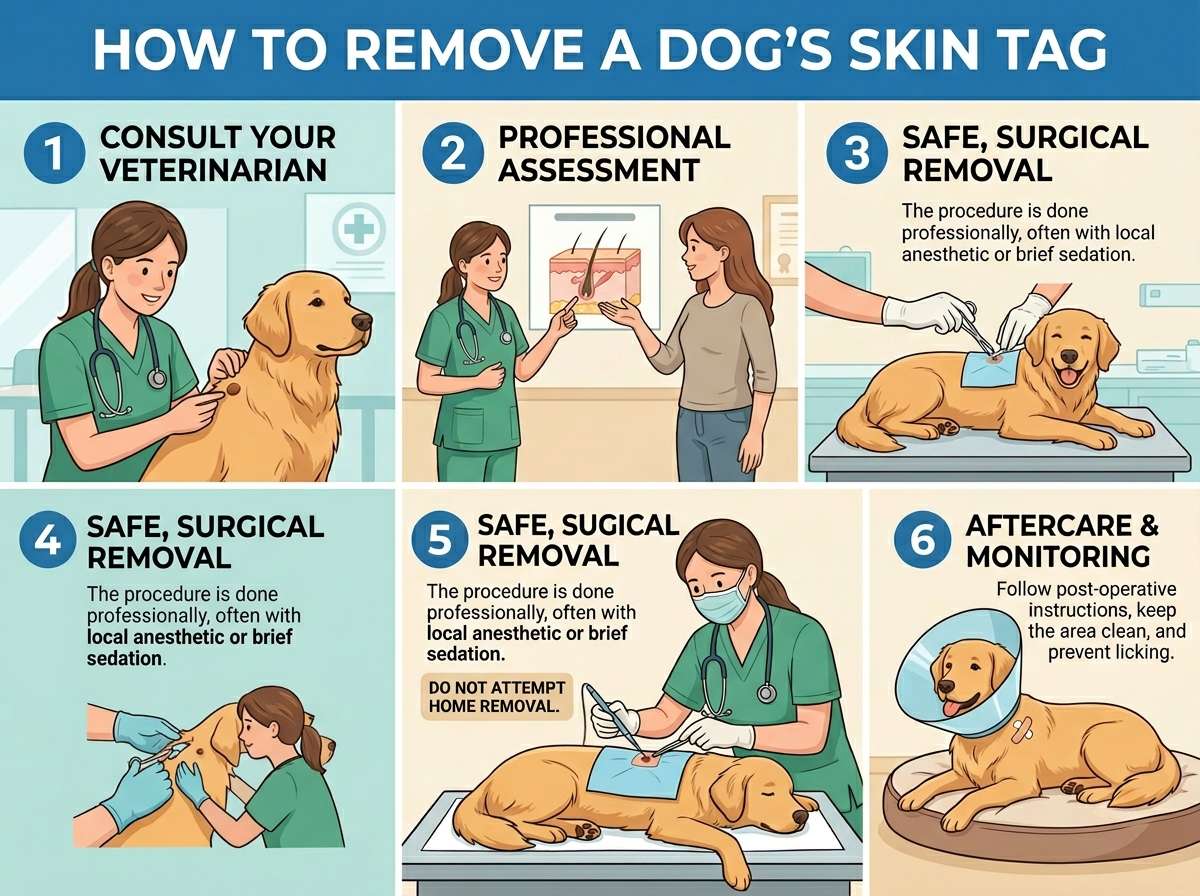
Taking your dog to the vet is the safest way to remove a skin tag. Your vet has training and proper equipment. They know exactly how to do it without causing your dog pain or leaving a scar.
Your vet will examine the tag first to confirm it’s really a skin tag and not something else. Then they’ll use a proper removal technique. Most vets use surgical scissors or a laser to remove the tag cleanly.
The procedure is usually quick. It might take just a few minutes. Your vet might use a local anesthetic so your dog doesn’t feel anything. Some vets don’t even use anesthesia if the tag is small and your dog is calm.
After removal, your vet will check the area to make sure it’s clean. They’ll make sure there’s no bleeding or infection risk. Some vets might prescribe antibiotics or suggest an anti-lick collar so your dog doesn’t bother the spot while it heals.
The cost varies depending on your vet and where you live. A simple removal might cost anywhere from twenty to one hundred dollars or more. Your vet can give you a price estimate before the procedure.
This method is best if your dog is older, if the tag is in a sensitive area, or if you want the safest possible outcome.
Method Two: Ligation (Cutting Off the Blood Supply)
Ligation sounds fancy, but it’s actually simple. The idea is to tie a tight knot around the base of the skin tag. This cuts off the blood supply. Without blood, the tag dies and falls off naturally over time.
Some people use dental floss, fishing line, or special medical thread for this. You tie it very tightly around the thin stalk at the base of the tag. You need to pull it tight enough to prevent blood flow but not so tight that you hurt your dog.
After you tie it, the tag will start to shrivel up over the next few days or weeks. It might take one to three weeks for the tag to fully fall off. Once it falls off, the skin will heal naturally.
The downside? Some dogs get annoyed by the tied knot. They might lick it or try to chew it off. You’ll need to watch closely and possibly use an anti-lick collar. This method also requires more patience since the tag doesn’t disappear immediately.
If you try this method, here’s what to do:
- Clean the area around the tag with warm water
- Tie the thread or floss very tightly around the base
- Check it daily for signs of infection
- Be ready to stop if your dog gets too irritated
- Wait for the tag to fall off naturally
If the tag doesn’t fall off after three weeks, or if it gets red or swollen, contact your vet.
Method Three: Apple Cider Vinegar
Some people swear by apple cider vinegar for removing skin tags. The idea is that the acid in the vinegar breaks down the tissue and causes the tag to fall off. But here’s the thing: there’s not much scientific proof this actually works on dogs.
If you want to try it anyway, here’s the basic approach:
- Soak a cotton ball in apple cider vinegar
- Hold it on the skin tag for a few minutes
- Do this once or twice daily
The problem is that apple cider vinegar can irritate your dog’s skin. If your dog has sensitive skin, this might cause redness or discomfort. Your dog might also lick the area and ingest the vinegar, which isn’t ideal.
This method is risky, especially on your dog’s face or sensitive areas. Most vets don’t recommend it. If you do try it, watch your dog closely for any signs of irritation.
Method Four: Tea Tree Oil (Use with Extreme Caution)
Tea tree oil has antimicrobial properties. Some people think it can help with skin growths. But here’s a major warning: tea tree oil can be toxic to dogs if they ingest it or if it gets into their system.
Dogs have sensitive skin. Tea tree oil can burn or irritate their skin. If your dog licks the oil, it could make them sick. Most veterinarians advise against using tea tree oil on dogs, especially in areas your dog can reach and lick.
Unless your vet specifically recommends it, skip this method entirely. It’s not worth the risk.
Method Five: Garlic or Onion (Don’t Do This)
You might read online that garlic or onions can remove skin tags. Here’s the truth: don’t do this. Garlic and onions are toxic to dogs. They can damage your dog’s red blood cells and cause serious health problems.
Using garlic or onions on your dog’s skin is not only ineffective but potentially dangerous. If your dog licks it, they could get poisoned. This is one home remedy to completely avoid.
When You Should Never Try Home Removal
Some situations call for professional vet care, period. Don’t attempt home removal if:
The skin tag is near the eyes or ears. This area is too sensitive. A mistake here could hurt your dog’s eyesight or hearing. Let your vet handle it.
The tag is bleeding or looks infected. If it’s already damaged, it needs professional care. Infection can spread if not treated properly.
Your dog is very young or very old. Young puppies and senior dogs might not handle home removal well. Their skin heals differently and might be more fragile.
Your dog has health problems. If your dog has immune issues, bleeding disorders, or other conditions, let your vet decide how to proceed.
The tag is very large. Bigger tags need more careful removal. Vets can handle large tags safely. Home methods might not work well.
Your dog is aggressive or anxious about being touched there. If your dog won’t sit still or gets defensive, don’t force it. The stress isn’t worth it, and you might hurt your dog.
You’re just not sure what it is. When in doubt, ask your vet. Better safe than sorry.
Aftercare: Helping Your Dog Heal
Once you’ve removed a skin tag, the healing process begins. Proper aftercare keeps the area clean and prevents infection.
Keep it clean. Gently wash the area with warm water and mild soap. Do this once or twice daily. Pat it dry with a clean cloth. Never rub.
Watch for infection. Signs of infection include redness, swelling, discharge, or a bad smell. If you see any of these, contact your vet immediately.
Prevent licking. This is huge. Dogs want to lick wounds. But licking can cause infection and slow healing. Use an anti-lick collar or Elizabethan collar if needed. Your vet might recommend this.
Avoid baths. For the first few days after removal, skip regular baths. You don’t want the area soaking in water. Wait until your vet says it’s okay.
Check regularly. Look at the spot each day. Make sure it’s healing normally. The area should get smaller and less red over time.
No rough play. For a few days, keep your dog calm. Rough play could re-open the wound or cause bleeding.
Follow vet instructions. If your vet gave you antibiotics or special care instructions, follow them exactly. They know your dog’s situation best.
Prevention: Stop Skin Tags Before They Start
Okay, so you’ve removed a skin tag. But what about preventing new ones from showing up?
Keep your dog’s skin healthy. Good nutrition supports healthy skin. Feed your dog a high-quality diet with enough protein and omega-3 fatty acids. These nutrients support skin health.
Bathe your dog regularly. Clean skin is healthy skin. Regular baths remove dirt and help you spot new growths early. Use a gentle dog shampoo that doesn’t dry out their skin.
Brush your dog’s coat. Regular brushing improves circulation and reduces friction. It also helps you check their skin more often.
Maintain a healthy weight. Overweight dogs have more skin folds and more friction. Keeping your dog at a healthy weight reduces skin issues. Plus, it’s good for their overall health.
Check skin regularly. Make it part of your routine. Pet your dog and feel their skin. Look for new bumps or growths. Catching issues early is always better.
Reduce collar friction. If a skin tag was where a collar rubbed, adjust your dog’s collar. It should fit snugly but not tight. Change collar types if needed.
Keep skin folds dry. If your dog has lots of skin folds, keep them dry. Moisture in folds causes problems. Gently dry these areas after baths.
Control allergies. Allergies cause itching and scratching. Scratching irritates skin and can lead to growths. If your dog has allergies, work with your vet to control them.
Regular vet checkups. During yearly visits, your vet can check your dog’s skin. They can spot potential problems early and give you tips for prevention.
When to Worry About Skin Changes
Not every skin change is a skin tag. Some things actually do need immediate attention.
Call your vet if you notice:
- Growths that grow very quickly
- Areas that bleed or discharge pus
- Skin that’s hot, swollen, or painful
- Changes in color or appearance of existing growths
- Growths that spread or multiply rapidly
- Any growth that seems to bother your dog
These signs might mean something more serious than a skin tag. Your vet needs to check it out.
The Bottom Line on Dog Skin Tags
Dog skin tags are common, harmless, and nothing to panic about. They happen to lots of dogs, especially as they age. Most skin tags don’t cause any problems.
If you decide to remove a skin tag, you have options. Vet removal is safest and most effective. Other methods like ligation might work but require more patience. Home remedies are risky and often ineffective.
The most important thing is knowing your dog’s skin. Check regularly. Notice changes. When in doubt, ask your vet. They’re your partner in keeping your dog healthy and happy.
Remember: your dog loves you for who you are, wrinkles and all. Your dog will love them just as much with or without skin tags. But if something bothers you or seems uncomfortable for your pup, now you know what to do about it.
Your dog is lucky to have an owner who cares enough to learn about their health. That’s what really matters. Keep loving your furry friend, keep checking their skin, and enjoy the journey together.
Have questions about your dog’s skin tags? Talk to your vet. They know your dog best and can give you personalized advice. And if you found this helpful, share it with other dog lovers you know. Spreading knowledge helps all our furry friends stay happy and healthy.

Hi, I’m Mary, the founder of PetGadgetPro.com. I’m a passionate pet lover with a special place in my heart for dogs and cats. I share practical advice and honest insights on pet gear to help pet parents make better choices. My dedicated research team studies products in depth, and our writers create reviews using trusted, authentic sources—so you can feel confident choosing the best for your pets.