
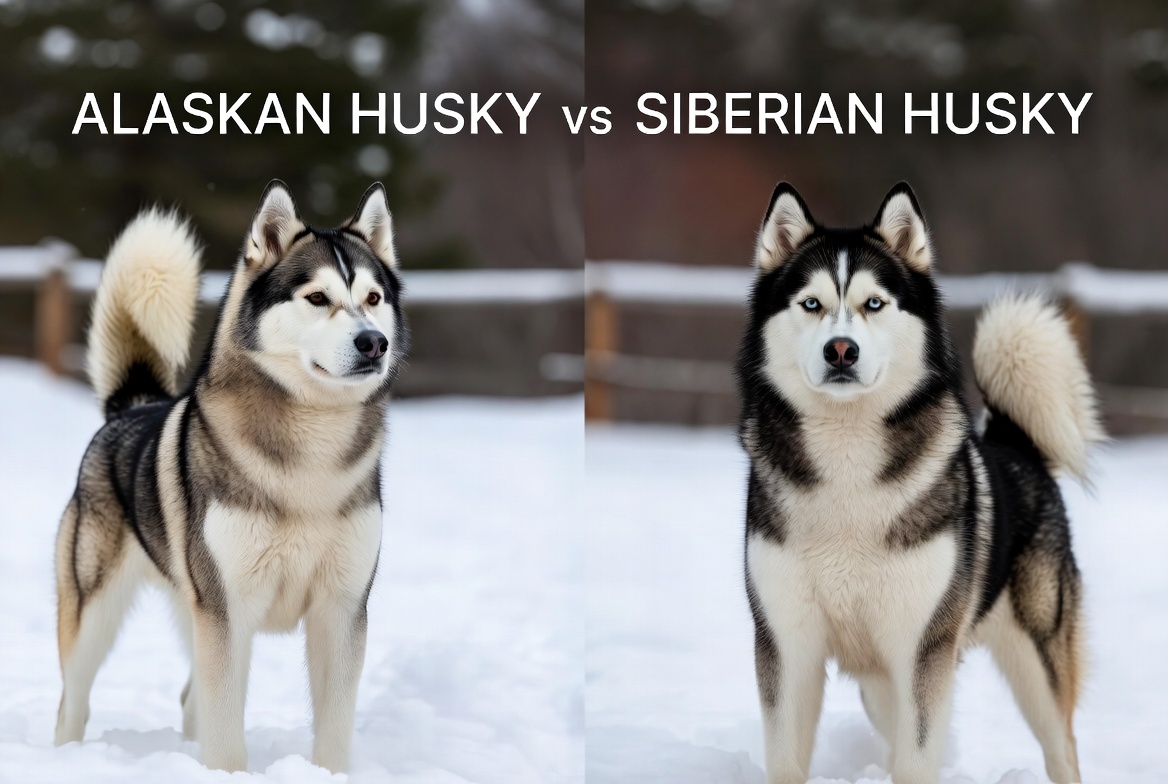
Alaskan Husky vs Siberian Husky
If you’re thinking about getting a husky, you probably have a lot of questions. Should you get an Alaskan Husky or a Siberian Husky? These two breeds look similar at first glance. But they have real differences that matter. Let me break down everything you need to know about these amazing dogs.
Why People Get Confused Between These Breeds
Here’s the thing about huskies. They both have striking eyes, thick coats, and loads of energy. People often mix them up. The truth is simple: they aren’t the same dog. An Alaskan Husky is a working dog bred for speed and endurance. A Siberian Husky is a purebred that was developed as a sled dog too. But they came from different places and have different purposes.
Think of it this way. Both breeds pull sleds. Both breeds love cold weather. But beyond that, they’re actually quite different dogs. Let’s dig into what makes each one special.
The Origin Story of the Alaskan Husky
The Alaskan Husky has an interesting background. This breed came from Alaska. People bred them specifically to run fast and go long distances. Sled dog racers wanted the best dogs possible for their teams. So they mixed different breeds together to create the perfect racing dog.
Alaskan Huskies aren’t purebreds. They’re a type of dog designed for a job. You might find Malamute in their bloodline. You might find pointer breeds mixed in. Some have German Shepherd ancestry. The key point is that breeders focused on performance, not on looks or pedigree papers.
This breed became famous in the sled dog world. Racers loved them because they could go incredibly fast. They had the right body type for speed. Their drive to run was intense. These dogs wanted to pull and race more than anything else. That’s what they were built for.
The Alaskan Husky is still uncommon as a family pet. Most of these dogs work as sled dogs or racers. You’ll find them competing in famous races. You’ll see them pulling mushers through snow. That’s their natural home.
The Origin Story of the Siberian Husky
The Siberian Husky has a different story. These dogs came from Siberia, which is in Russia. The Chukchi people bred these dogs for centuries. They needed dogs that could handle cold weather. They needed dogs that could pull sleds across ice and snow. But they also needed dogs that could live in their homes and be part of the family.
Siberian Huskies were registered as a breed early on. They had a breed standard. This standard described exactly what these dogs should look like and act like. The American Kennel Club recognized the Siberian Husky as an official breed. Today, you can get purebred Siberian Huskies from breeders. They have pedigree papers and known bloodlines.
Siberian Huskies became popular as pets. They’re friendly and smart. They do well in families. Of course, they still have that strong sled dog drive. But they can adapt to life as a companion dog. That’s why you see so many Siberian Huskies as family pets.
Physical Differences Between the Two Breeds
Now let’s talk about how they look. This is where things get interesting.
Size and Build
Alaskan Huskies are usually medium-sized dogs. They typically weigh between 35 and 60 pounds. They’re lean and muscular. Their bodies are built for speed and efficiency. They have long legs relative to their body size. This helps them run faster and cover more ground.
Siberian Huskies are also medium-sized. Most weigh between 35 and 60 pounds too. But their build is different. They have a more compact, sturdy frame. They’re built for pulling power rather than pure speed. Their bodies look stockier and more solid.
Facial Features
This is an easy way to tell them apart sometimes. Alaskan Huskies have varied faces. Some have pointy, narrow faces. Some have rounder faces. Their features differ because they’re mixed breeds. There’s no standard look required.
Siberian Huskies have a very specific face shape. They have a wedge-shaped head. Their faces are balanced and symmetrical. Their eyes are set at a particular angle. All purebred Siberian Huskies look similar to each other in this way.
Eye Color
Both breeds can have striking eye colors. You’ll see blue eyes in both breeds. You’ll see brown eyes too. Some dogs have one blue eye and one brown eye. This is called heterochromia. Both breeds can have this trait.
Coat and Color
Both breeds have thick, double coats. They shed a lot. I mean a lot. If you get either dog, be ready for fur everywhere. But their coats can have different patterns and colors.
Alaskan Huskies come in many colors. You’ll see black, white, red, brown, and gray. Their patterns are diverse. There’s no set standard for their appearance.
Siberian Huskies have more specific color patterns. They come in black, red, gray, and sable. Their markings are often bold and clear. Many have white blazes on their faces. The breed standard describes specific acceptable colors and patterns.
Temperament and Personality
Let’s talk about what these dogs are actually like to live with. This matters way more than looks.
Energy Levels
Both breeds have incredible energy. This isn’t a small difference between them. These aren’t couch potato dogs. If you want a calm, quiet dog, keep looking.
Alaskan Huskies have insane amounts of energy. They were bred to run long distances at high speeds. That drive doesn’t turn off. These dogs need to work. They need to run. They need to have a job to do. If you don’t give them an outlet, they get frustrated and destructive.
Siberian Huskies also have tons of energy. They need hours of exercise every day. They want to run and play. They love cold weather activities. But they can adapt better to a more normal life than Alaskan Huskies. Many families manage their energy through regular exercise and play.
Drive and Focus
Alaskan Huskies have a single-minded focus. They want to run. When they’re in a sled team, nothing else matters. This intensity is amazing for racing. It’s challenging for a family home. These dogs have prey drive too. They might chase small animals. They’re workers first and companions second.
Siberian Huskies are more balanced. They love to run and play. But they can also be loving family members. They bond with their people. They want to be part of the family. They have prey drive too, but it’s less intense than in Alaskan Huskies. They’re friendlier and more social overall.
Trainability
Both breeds are smart. They’re intelligent and quick learners. But they have independent streaks. They weren’t bred to be obedient. They were bred to solve problems on their own during long sled runs.
Alaskan Huskies can be stubborn. They listen to commands when they want to. Training them requires patience and consistency. A strong recall is important. You can’t let them off-leash in unsecured areas. They’ll chase anything interesting and forget you exist.
Siberian Huskies are also independent. They’ll challenge you on commands. But they’re generally easier to work with than Alaskan Huskies. Many Siberian Huskies enjoy training and learn quickly. Positive reinforcement works well with these dogs.
Social Behavior
This is an important difference. Alaskan Huskies are often dog-aggressive. They’re competitive. When they see other dogs, they might want to fight. This is part of their breeding. Racers bred them to have strong pack dynamics and competitive natures. A single Alaskan Husky might be fine. But multiple males often don’t get along.
Siberian Huskies are friendlier. They typically like other dogs. They were bred to live in packs. They get along with their family and with other dogs usually. This makes them better for multi-dog homes. It makes them safer around strange dogs at the park.
Friendliness to People
Both breeds are friendly to people. They love their families. They want attention and affection. Neither breed makes a good guard dog. They’ll greet strangers with enthusiasm, not aggression.
Alaskan Huskies can be aloof. They might not care much about your emotions. They’re driven by the job, not by people-pleasing.
Siberian Huskies are more people-oriented. They want to be involved in family activities. They love getting attention. They’ll follow you from room to room. They’re more likely to cuddle with you on the couch.
Exercise and Activity Needs
Let’s be real about what these dogs need. If you can’t commit to exercise, don’t get either breed.
Alaskan Husky Exercise
An Alaskan Husky needs a lot of exercise. We’re talking multiple hours every day. They need to run. A walk around the block won’t cut it. These dogs need to sprint and play hard. They need activities that let them use their speed and endurance.
Many Alaskan Huskies live on sled dog farms. They pull sleds in winter. In summer, they might run on training equipment. Some owners use bikes to let dogs run alongside. Others use dog parks, but always on-leash to prevent escape.
If you live in a city apartment, an Alaskan Husky is not for you. These dogs need space. They need to run. They can develop serious behavioral problems without proper exercise.
Siberian Husky Exercise
Siberian Huskies also need tons of exercise. Most need at least two hours per day. Some need more. This is a serious commitment.
Here’s the difference though. Siberian Huskies can adapt better to different living situations. A big yard helps. Regular running helps. Playing fetch helps. But you can have a Siberian Husky in a city if you’re dedicated to exercise.
Many families with Siberian Huskies go hiking, running, or biking with their dogs. Some run them in races. Some just make sure they get long walks and playtime daily. It’s possible to meet their needs without being a professional racer.
Activities They Love
Both breeds enjoy sled dog sports. Both love running in snow. Both enjoy pulling carts or sleds in winter.
Alaskan Huskies excel at racing. They dominate sled dog competitions. They live for these events.
Siberian Huskies enjoy the same activities but can do more. They can be therapy dogs. They can hike with families. They can participate in obedience competitions. They’re more versatile.
Health and Lifespan
Let’s talk about what you need to know for their health.
Lifespan
Alaskan Huskies typically live 12 to 15 years. That’s a long commitment. These dogs are generally healthy when properly bred and exercised.
Siberian Huskies live about 12 to 14 years. They also live long, healthy lives on average.
Common Health Issues
Both breeds can experience hip dysplasia. This is a problem with the hip joint. Reputable breeders test their dogs for this before breeding.
Siberian Huskies sometimes have eye problems. Progressive retinal atrophy can develop. Cataracts can form. Always get your Siberian Husky’s eyes checked by a veterinarian.
Both breeds can get thyroid problems. Regular vet checkups catch these issues.
Alaskan Huskies bred for racing sometimes have injuries from running and training. These aren’t genetic issues but results of their work.
Vet Care
Both breeds need regular veterinary care. Yearly checkups are important. Dental care matters too. These dogs need vaccinations and preventative medicine like all dogs.
Make sure your vet is familiar with northern breeds. They have specific needs. They handle heat differently than other breeds. They need proper exercise guidance.
Grooming and Maintenance
Both breeds have thick coats. Get ready for grooming.
Shedding
Oh, the shedding. Both breeds shed heavily. During shedding season, fur covers everything. You’ll find it on furniture, clothes, and floors. Some people use vacuum sealers to manage it. Others just accept their new life covered in dog hair.
You need a good brush. A slicker brush or undercoat rake works well. Brush your dog regularly. This helps manage the shed. It keeps their coat healthy.
Bathing them too often is bad. Their double coat can get damaged. Bathe them a few times per year when they need it. Use dog shampoo, not human shampoo.
Nail Trimming
Both breeds need regular nail trims. Their nails grow quickly. Long nails can hurt their feet. Trim them every few weeks. Some groomers do this. Some owners do it at home.
Ear Care
Check their ears regularly. These dogs have floppy ear sections that can trap dirt. Clean them gently with a cotton ball. Watch for infections. If their ears smell bad or look red, see your vet.
Training Tips for Both Breeds
Training takes time and patience with huskies.
Start Young
Puppies are easier to train than adults. Start basic commands as soon as you bring them home. Sit, stay, come, and down are essentials. Use treats and praise. These dogs respond well to positive reinforcement.
Consistency Matters
Everyone in your family needs to use the same commands and rules. If you sometimes allow jumping and sometimes don’t, the dog gets confused. Consistency is key.
Recall Training
This is super important. Both breeds have prey drive. They might run off. Teach a solid recall command. This takes time. Practice in safe areas. Never assume your husky will come back if called.
Leash Training
These dogs pull hard on leash. Start leash training early. Use a front-clip harness. This reduces pulling. Practice loose-leash walking.
Socialization
Expose puppies to different people, places, and experiences. This helps them become well-adjusted adults. Visit the vet, the pet store, the park. Let them meet new people.
Which Breed Should You Choose?
This depends on your lifestyle.
Choose an Alaskan Husky if:
You’re a very active person. You want a working dog. You have experience with sled dogs. You live in a cold climate. You have time for several hours of exercise daily. You want a dog focused on performance.
Choose a Siberian Husky if:
You want a loving family companion. You’re active but not extreme. You can give them 1 to 3 hours of exercise daily. You want a dog that’s good with families. You want a dog that can be both a working animal and a pet. You like the idea of a recognized breed with a standard appearance.
Don’t choose either if:
You can’t commit to hours of daily exercise. You live in a hot climate. You want a dog that comes instantly when called. You can’t handle heavy shedding. You have small pets or cats that might trigger prey drive. You want a couch potato dog.
Cost Considerations
Both breeds cost money upfront and ongoing.
Purchase Price
Alaskan Huskies from working lines cost $500 to $1,500. Pet-quality Siberian Huskies cost $600 to $1,500. Show-quality Siberian Huskies from good breeders cost $1,000 to $3,000.
Always buy from responsible breeders. Avoid puppy mills and backyard breeders.
Food Costs
Both breeds eat a lot. They’re active dogs. They need quality food. Expect to spend $50 to $100 per month on food.
Vet Bills
Regular checkups cost money. Emergencies cost more. Budget for vet care. These dogs live long lives. You’ll need vet visits throughout those years.
Exercise Equipment
You might need a good leash, harness, collar, and toys. You might want sled equipment if you race. Budget for these items.
Living Situations
Think about where you live.
Cold Climate Living
Both breeds thrive in cold weather. Snow and cold don’t bother them. Their double coats insulate them. This is where they’re happiest.
Moderate Climate Living
Siberian Huskies can live in moderate climates with proper care. You need to exercise them early morning or evening when it’s cool. You need air conditioning. They can do okay with effort.
Alaskan Huskies struggle in moderate climates. They’re not great in warm areas. They might overheat.
Hot Climate Living
Don’t get either breed in a truly hot climate. They weren’t built for heat. They’ll suffer.
The Escape Artist Problem
Both breeds are famous escape artists. Huskies dig under fences. They jump over them. They find gaps you didn’t know existed.
You need a high fence. Six feet is better than four feet. Bury the fence deep into the ground. Check for gaps regularly. Don’t trust them in unsecured areas.
Your husky will try to escape. It’s not personal. It’s just their nature. They want to roam and explore. You need to prevent this for their safety.
Living with Your Husky
Owning a husky is rewarding but challenging.
They Love You
Huskies bond deeply with their families. They follow you around. They want to be near you. They’re affectionate and loyal.
They’re Independent
Huskies think for themselves. They don’t live to please you. They do things because they want to. This can be frustrating. It’s also what makes them special.
They Need Jobs
Huskies do best when they have purpose. It could be pulling a sled. It could be going on runs with you. It could be learning tricks. Give them something to work toward.
They’re Escape Artists
As mentioned, they’ll try to get away. Keep them secure. Watch them carefully.
They Shed Constantly
Your home will have dog hair. Invest in good vacuum cleaner. Lint rollers become your best friends.
Making Your Decision
Think hard about this choice. Both breeds are amazing dogs. Both need active families. Both need commitment.
Visit breeders. Meet the dogs. Talk to people who own them. Spend time with the breed before getting one.
Think about your lifestyle. Can you really give these dogs what they need? Be honest with yourself. If you can’t commit, that’s okay. There are other breeds better suited for you.
If you can commit, you’ll have an incredible dog. A husky will challenge you. A husky will make you laugh. A husky will be your loyal friend.
Final Thoughts
The difference between an Alaskan Husky and a Siberian Husky matters. The Alaskan Husky is a working sled dog. The Siberian Husky is a purebred that can be a pet or a working dog.
Neither is perfect for everyone. Both need active owners who understand their nature. Both need exercise, training, and commitment.
If you’re ready for the challenge, you’ll love your husky. These dogs have amazing personalities. They’re smart, funny, and loyal. They’ll enrich your life in ways you never expected.
Do your homework. Research both breeds carefully. Talk to owners. Visit breeders. Make an informed decision. Your future husky will thank you for it.
Remember, getting a dog is a long-term commitment. These dogs live 12 to 15 years. Make sure you’re ready for that journey. If you are, a husky might be your perfect match.

Hi, I’m Mary, the founder of PetGadgetPro.com. I’m a passionate pet lover with a special place in my heart for dogs and cats. I share practical advice and honest insights on pet gear to help pet parents make better choices. My dedicated research team studies products in depth, and our writers create reviews using trusted, authentic sources—so you can feel confident choosing the best for your pets.