How to Discourage Cats From Pooping in Your Yard
If you’re dealing with cat poop in your yard, you’re not alone. This is one of the most frustrating problems yard owners face. Stray cats and neighborhood felines treat your outdoor space like their personal litter box. The smell is awful. The cleanup is gross. And it keeps happening no matter what you do.
The good news? You can fix this. You don’t need to hurt the cats. You don’t need expensive solutions. You just need to understand why they do it and then make your yard less appealing to them.
Let’s talk about how to get cats to stop pooping in your yard.
Why Cats Choose Your Yard as Their Bathroom
Cats are choosy animals. They don’t just pick any spot. They want the perfect bathroom. Your yard probably has what they’re looking for.
Cats need soft, loose soil or sand. They dig, do their business, and cover it up. They love areas with good drainage. They want privacy. They like places away from their food and water. Most of all, they want consistency. If they’ve used your yard once, they’ll come back again and again.
Your yard might be ideal for cats because it has loose mulch, garden beds, or sandy soil. The fencing creates a safe space. No one bothers them there. They feel secure. Once a cat establishes your yard as a latrine, it becomes an outdoor toilet with their scent marking. Other cats smell it and join in.
This cycle continues until you break it.
Step 1: Remove the Invitation
Your first job is to make your yard less inviting as a cat bathroom.
Fix the Soil and Mulch
Cats dig in soft ground. Remove or cover any loose soil, sand, or mulch piles. This is the easiest thing you can do right now.
If you have garden beds, cover them with chicken wire or netting. Cats hate digging through metal mesh. Leave a little slack so it doesn’t look awkward, but make it impossible for them to dig down. Once they try a few times and fail, they’ll move on to someone else’s yard.
The key is making digging painful or impossible. Cats are smart. They understand consequences. After a few bad experiences trying to dig in your yard, they’ll look for an easier target. Your goal is to be the hardest yard on the block.
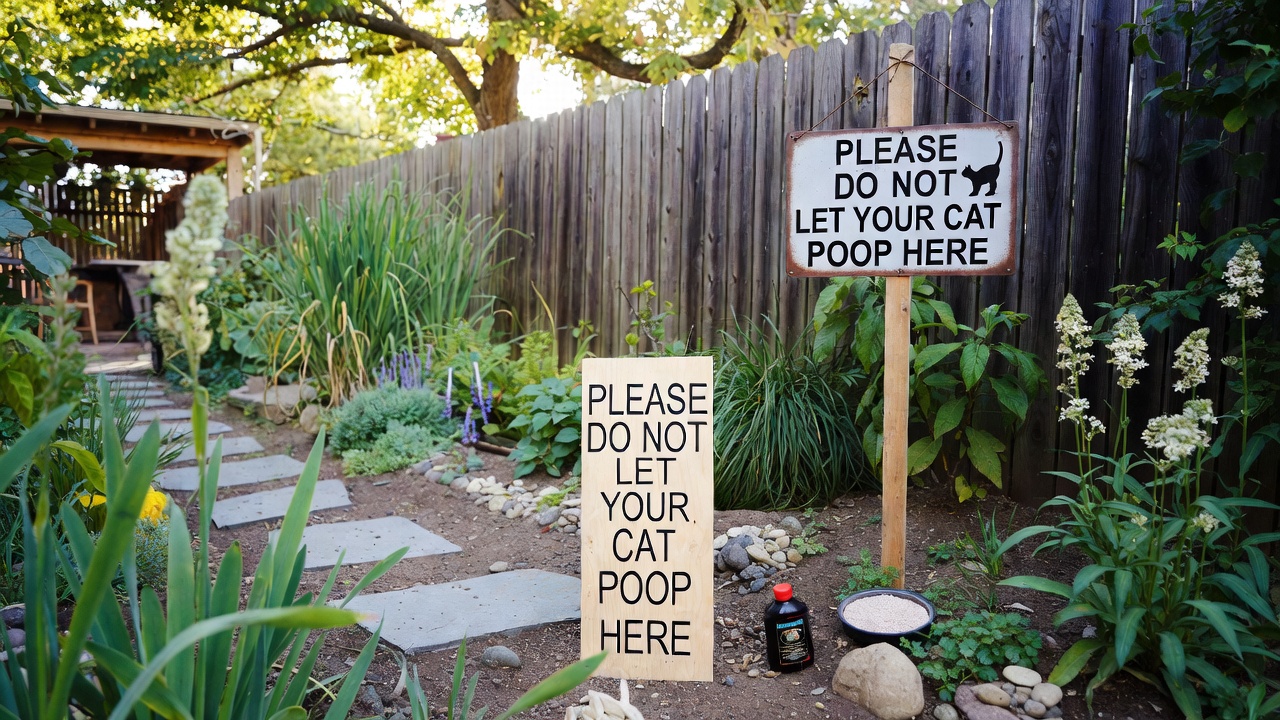
Bark mulch and wood chips are cat magnets. Replace them with larger rocks, pebbles, or river stones. Cats won’t use these because they hurt their paws. The uncomfortable ground surface makes your yard undesirable. Smooth river rocks are great. Large decorative stones work too. The point is creating discomfort underfoot.
When you visit garden centers, ask for large landscaping rocks or decorative stones. These come in many sizes and colors. Pick ones that match your yard’s look. Your yard stays beautiful while becoming hostile to cats.
Keep Dirt Covered
Any freshly turned soil invites cats. If you’re doing garden work, cover the area immediately after turning it over. Use landscape fabric or netting. Don’t leave exposed earth sitting around.
Think about your garden beds like cat bathrooms under construction. The moment you disturb the soil, it becomes perfect for cats. Disturbed soil is loose and easy to dig in. It’s like putting up a welcome sign.
Prevent this by planning ahead. Before you start any garden work, have barriers ready. Set up netting before you break ground. This way, the moment you finish digging, it’s protected. No window of opportunity for cats.
Remove Mulch Alternatives
Sometimes people use mulch replacements that cats still find appealing. Avoid these:
- Shredded bark (too similar to regular mulch)
- Fine wood chips (cats can dig through these)
- Sand and sandy soil (perfect for cat digging)
- Pea gravel (can be pushed aside easily)
Focus on medium or large rocks. River rocks between one and three inches are ideal. Smooth stones work better than jagged ones because they still look nice in your yard. You get function and appearance.
Better Garden Solutions
Beyond just rocks, consider raised garden beds with hardscaping. Raised beds keep cats out better than ground-level beds. Add edging around any remaining soft areas. Create a layered defense. Each layer makes your yard less attractive to cats.
If you have trees with exposed root systems, cover these areas too. Cats will use them if they’re soft enough. Netting over root zones protects them.
Step 2: Use Scent Deterrents
Cats rely on smell. Use this against them. A cat’s nose is incredibly powerful. They experience the world through scent. By using strong smells, you can make your yard unbearable for them. The cat litter box isn’t something they’ll visit if your yard smells bad.
Citrus Smells
Cats hate citrus. They dislike oranges, lemons, limes, and grapefruits. This is one of the most reliable deterrents. Scatter citrus peels around your yard, especially in the problem areas. The smell repels them. As a bonus, the peels break down and improve your soil.
You can also use citrus-based sprays. Spray them on problem spots and around garden beds. Reapply after rain. This works because cats naturally avoid citrus scents in nature.
Make your own citrus spray by blending orange peels with water. Strain out the solids. Pour the liquid into a spray bottle. Use this to spray your garden beds daily. The smell creates an invisible fence cats won’t cross.
Buy citrus spray concentrate if you want easier application. These products contain essential citrus oils. Mix them with water according to directions. Spray generously. One bottle covers a large yard for several weeks.
Coffee Grounds
Used coffee grounds work great. Cats dislike the strong smell. Sprinkle them around your yard. Many gardeners love this because the grounds feed your plants too. You get two benefits at once.
Save your used coffee grounds from your morning coffee maker. Let them dry completely. Scatter them around problem areas. Reapply every two weeks or after rain. The smell fades over time as the grounds break down.
Coffee grounds also help with soil structure. They add organic matter. Plants love them. You’re solving a cat problem while improving your garden. It’s a win-win solution.
Pepper and Spicy Smells
Cats hate pepper. Black pepper, cayenne pepper, and chili powder all work. Sprinkle these around your yard. The smell irritates their noses. Mix pepper with water to make a spray. Cover your whole yard with it.
For a spicy spray, mix one tablespoon of hot pepper powder with one quart of water. Let it sit overnight. Spray it around your yard. Reapply weekly. The heat bothers cats’ sensitive noses. They’ll avoid the area.
Garlic also bothers cats. Plant garlic around your yard’s edges. It repels cats and you get garlic for cooking. Garlic has a pungent smell cats find overwhelming. Break up garlic cloves and scatter them around problem zones.
Fresh garlic works better than powder. The smell is stronger. Plant cloves in fall. They’ll grow through the spring. You’ll have fresh garlic and pest control. Cats hate walking past garlic plants.
Ammonia Scent
Cats think ammonia smells like urine from bigger animals. Soak rags in ammonia and place them around your yard. This makes cats nervous. They think a large predator lives there.
Ammonia triggers survival instinct. Cats fear larger predators. The smell signals danger. They’ll move to a safer area.
Be careful with ammonia. Use it outside only. Don’t let it touch your skin. Wear gloves when handling it. Keep it away from children and pets. Even though it repels cats, it’s still a chemical. Handle it safely.
Replace ammonia-soaked rags every week or after rain. The smell evaporates quickly. Consistent application is key. Cats must believe a predator lives in your yard. One whiff of ammonia isn’t enough. They need consistent danger signals.
Commercial Deterrent Sprays
Many stores sell cat repellent sprays. These contain predator urine or other animal scents. Spray them on problem areas. Reapply often, especially after rain. Some work better than others, so you might try a few brands.
Predator urine is effective because it triggers fear. Cats flee from areas smelling like coyotes or foxes. Commercial products bottled urine or replicate its scent. These are worth trying if home remedies aren’t working.
Follow product directions carefully. Most need weekly reapplication. Some need more frequent use. Read labels before buying. Good products cost between fifteen and forty dollars per bottle.
Planting Scent-Based Repellents
Grow plants that repel cats naturally. These provide ongoing protection without constant reapplication. Good options include:
- Mint (cats dislike the strong mint smell)
- Lavender (fragrant to humans, unpleasant to cats)
- Rosemary (another aromatic herb cats avoid)
- Rue (an ancient repellent plant)
- Pennyroyal (strongly scented mint family plant)
Plant these around your yard’s perimeter and near garden beds. They create a scent barrier. As they grow, the barrier strengthens. You’ll have beautiful smelling plants and cat protection.
Step 3: Create Physical Barriers
Some cats don’t respond to smell alone. They need physical obstacles. Physical barriers work because they make your yard difficult to access. Cats avoid effort. If another yard is easier, they’ll go there.
Install Fencing
If cats jump over your fence, add extensions to make it taller. Cats can jump high, so aim for at least six feet. Add a fence topper that angles inward. Cats won’t climb over because they can’t get a grip.
Fence toppers are inexpensive additions. They look like angled metal strips. Cats jump on the fence and the angled top catches them. They can’t get traction to climb higher. They slide back down. After a few attempts, they stop trying.
A cat fence roller is another option. It’s a spinning cylinder you attach to the top of your fence. When cats try to climb, the roller spins and they fall. They quickly learn your fence is impossible to climb.
These rollers cost between fifty and two hundred dollars. Installation takes an afternoon. Once installed, they work forever. Many people find them worth the investment.
Check your fence condition. Cats exploit weak spots. Fix holes. Repair damage. Cats will squeeze through small openings. Make your fence solid.
Use Netting and Mesh
Lay chicken wire flat on the ground in problem areas. Pin it down with stakes. Cats hate walking on it. Their paws get uncomfortable. They avoid the area.
You can also use bird netting or plastic mesh. Cover garden beds and soft soil. Cats won’t dig through it.
Install netting at ground level around garden beds. Use garden staples to hold it down. Cats can’t dig through it. They can’t push it aside. It stays secure.
Don’t stretch netting too tight. Leave slack. When cats step on it, the slack should absorb their weight. Tight netting might let them push through. Slack netting feels unstable and uncomfortable.
Spiky or Pointy Obstacles
Place plastic spikes or spike mats in problem areas. These look like little hills with sharp points. Cats won’t walk on them. They feel dangerous. Even one painful paw experience teaches cats to stay away.
Spike mats are humane. They’re uncomfortable but not injurious. A cat touches one, feels the discomfort, and moves elsewhere. They learn your yard is painful.
Arrange spike mats throughout problem areas. Cover at least the spots where you’ve seen cat poop. One or two mats isn’t enough. Cats will dig in the gap between mats.
Paint spike mats to match your yard. Black ones blend with dark soil. Brown ones match mulch. Green ones work in grassy areas. You’re protecting your yard while keeping it attractive.
Underground Barriers
Some cat problem solvers install underground fencing. It works for keeping things in and out. Underground barriers prevent digging completely.
This is expensive and labor-intensive. You dig down two feet and install mesh or metal barriers. Cats can’t dig below the barrier. This stops digging entirely.
For most people, surface-level barriers are sufficient. But if you have serious problems, underground barriers are effective.
Combining Barriers
Use multiple barrier types. A fence plus netting plus spike mats is nearly impossible for cats to overcome. Layered defenses work best.
Think about how a cat would invade your yard:
- Jump over the fence? The topper stops that.
- Dig in the soil? The netting prevents it.
- Walk on the ground? The spikes hurt.
Each barrier closes one escape route. Together, they make your yard a fortress.
Step 4: Motion and Sound Deterrents
Cats get nervous when they can’t predict what will happen. Use this to your advantage.
Motion-Activated Sprinklers
These are surprisingly effective. When a cat enters your yard, a sensor triggers water. The sudden spray scares the cat away. They learn not to come back.
Motion-activated sprinklers cost between thirty and one hundred dollars. They work day and night. They need a water source, but that’s usually easy to set up. Many people swear by these.
Noise Makers
Cats don’t like sudden loud sounds. Motion-activated noise makers exist. Some play sounds. Others create vibrations. When a cat enters, the noise startles them. They leave quickly.
Ultrasonic Devices
These devices emit high-frequency sounds that bother cats but humans can’t hear. Cats find them annoying. They avoid areas with these devices.
Some ultrasonic devices also include motion sensors. They activate when cats approach. These work best when you have one or two problem cats. They’re less effective in areas with many stray cats.
Step 5: Remove Food Sources
Hungry cats hunt for food. If your yard has food, cats stay around.
Secure Garbage
Put your trash in a sealed container. Don’t leave bags sitting out. Cats tip over trash cans looking for food. Once they find snacks in your yard, they’ll keep coming back.
Use trash cans with locking lids. Store them in a garage or shed when possible. Never leave food waste lying around.
Clean Up Fallen Fruit and Seeds
Bird seed on the ground attracts cats. Fallen fruit from trees brings them in. These food sources keep cats in your yard.
Rake up fallen leaves and seeds. Clean up dropped fruit. Keep your yard clean. No snacks means fewer reasons for cats to stay.
Don’t Leave Pet Food Outside
If you feed outdoor pets, bring their food inside after eating time. Don’t leave bowls out. Cats will eat the food. Once they know free food appears, they’ll camp out in your yard.
Step 6: Manage Your Landscaping
Your landscape choices influence whether cats visit. The layout of your yard determines how attractive it is to cats. Think like a cat. Where would feel safest and most private? That’s where they’ll go.
Avoid Dense Shrubs and Hiding Spots
Cats love dense bushes and tall grass. These provide hiding spots. They can do their business and escape if threatened. Remove or trim dense vegetation.
Trim shrubs so people can see underneath. Don’t cut them to the ground, but open them up. If someone could see a cat hiding under the shrub, the shrub is open enough.
Cats use tall grass as a bathroom because it hides them. They can see predators approaching but stay hidden themselves. Short grass removes this safety. They become vulnerable.
Keep your grass short. Mow regularly. Cats prefer longer grass, but they’ll use short grass if nothing else is available. Short grass also gives them less cover. They feel exposed. Most cats would rather go somewhere safer.
Remove Water Sources
Some cats are drawn to yards with water. Birdbaths, fountains, and puddles attract them. Remove standing water. Make sure your yard doesn’t stay wet.
If you have a birdbath, empty it daily or use a moving water fountain. Moving water is harder for cats to drink from. Better yet, bring the birdbath in at night. Cats are more active in evening and night. Removing water then matters most.
Check for puddles. Fix drainage issues. Level low spots where water collects. Cats find wet areas relaxing. They’ll hang out in puddles during hot weather. Dry your yard and you remove one attraction.
Dripping faucets and hoses create water sources. Fix leaks. Coil hoses so water doesn’t drip from them. Every bit of water removed makes your yard less appealing.
Plant Cat-Repelling Plants
Some plants naturally repel cats. Plant these around your yard:
- Rosemary – A fragrant herb with strong smell cats dislike. Plant it in clusters around garden beds.
- Rue – An ancient plant used for centuries to repel cats. It has a distinctive smell and interesting blue-green foliage.
- Lavender – Beautiful purple flowers with strong fragrance. Humans love it, cats hate it.
- Coleus canina (also called cat repellent plant) – Specifically bred to repel cats. The plant itself bothers them.
- Marigolds – Bright flowers that cats find unpleasant. Plant them throughout your yard.
- Scaredy-cat plant – Another name for coleus canina. Extremely effective against cats.
- Mint – Grows aggressively and repels cats. Plant in contained areas or it’ll spread everywhere.
- Pennyroyal – A mint family plant with strong scent. Grows well in most climates.
Plant these in clusters, not single plants scattered everywhere. Groups are more effective. Plant them in front of garden beds, along fence lines, and in problem areas.
These plants create a living barrier. As they grow, the barrier strengthens. Your yard becomes progressively less appealing to cats.
Choose plants that grow well in your climate. Ask at garden centers what works in your area. Different regions support different plants. Local knowledge matters.
Create Visual Barriers
Cats sometimes avoid areas they can’t see clearly. Use shrubs and fencing to block sightlines. If a cat can’t see the full yard, it feels less safe.
Plant visual barriers that still let humans see through. Use landscaping creatively. Bamboo screens, tall grasses, or dense shrubs create the effect without blocking your view entirely.
Step 7: Use Humane Trapping and Relocation
If nothing else works, you might need to trap the cats.
How Trapping Works
Humane traps catch cats without hurting them. They look like boxes with a door. You put bait inside. The cat enters and the door closes. The cat stays safe inside until you release it.
Contact your local animal control or a cat rescue group. They can help you trap and relocate cats. Never attempt to relocate cats yourself. It’s illegal in many places. These organizations know the right way to do it.
Working with Professionals
Animal control officers and rescue groups have experience. They trap humanely. They either find the cat a home or return it to its community if it’s a feral cat. This is better than hurting the cat.
Some areas have trap-neuter-return programs. These programs catch wild cats, have them fixed so they can’t breed, and return them to your area. This stops the population from growing without harming anyone.
Step 8: Combine Multiple Methods
One deterrent might not work. Combine several methods for best results.
Use scent deterrents plus physical barriers. Add motion-activated sprinklers. Remove food sources. Combine all these and cats will likely go somewhere else.
Cats test boundaries. If one method isn’t working, they’ll try again. Multiple layers of defense work better than single solutions.
Think of it like this: one fence is easy to climb. One fence with spikes is harder. A fence with spikes, plus ammonia smell, plus motion sprinklers, plus covered soil is nearly impossible. Most cats will pick an easier target.
Step 9: Keep Your Yard Maintained
Maintenance prevents cats from returning.
Regular Cleaning
If cats do poop in your yard, clean it immediately. Use a shovel and bag. Throw it away. Don’t leave it sitting.
Clean the spot with disinfectant. Cats have a strong sense of smell. If they smell their own waste, they’ll return. Remove all scent traces.
Reapply Deterrents Regularly
Rain washes away sprays and powders. Reapply them weekly or after rain. Citrus peels dry out. Replace them. Coffee grounds break down. Add more.
Maintenance seems boring, but it’s crucial. Consistent deterrents work better than one-time applications.
Check Barriers Monthly
Fencing gets damaged. Netting tears. Spikes get buried. Check everything monthly. Fix problems immediately. A broken barrier is useless.
Step 10: Talk to Your Neighbors
Your neighbors might have the same problem. Working together helps.
Share Solutions
If you’ve found something that works, tell your neighbors. If they fix their yards too, fewer cats stay in the area.
Identify Problem Cats
Talk about which cats are causing problems. If your neighbor is feeding strays, ask them to stop. Feeding strays keeps them in the area.
Support Community Solutions
Some neighborhoods work together on trap-neuter-return programs. Support these efforts. They reduce the wild cat population humanely.
What NOT to Do
Avoid these things. They don’t work or they’re harmful.
Don’t Use Poison
Never poison cats. It’s cruel. It’s illegal. It harms the environment. Poison isn’t humane and it causes suffering.
Don’t Use Traps That Hurt Cats
Some traps are designed to injure or kill. Never use these. Always use humane traps.
Don’t Ignore the Problem
Don’t hope it goes away. It won’t. Cats will keep coming back. Start addressing it now.
Don’t Use Only One Method
One deterrent rarely works alone. Use multiple methods together.
Don’t Give Up Too Quickly
Results take time. Some cats take weeks to understand your yard isn’t safe anymore. Keep using deterrents for at least one month before deciding something doesn’t work.
How Long Does This Take?
You’re probably wondering when this stops.
Results vary. Some people see improvement in days. Others take weeks. It depends on how many cats you have, how established the problem is, and which methods you use.
Most people see significant improvement within two to four weeks if they use multiple methods consistently. Keep going for at least a month before changing your approach.
Summary: Your Action Plan
Here’s what to do right now:
- Cover loose soil with chicken wire or replace it with rocks
- Spray citrus spray around your yard
- Scatter citrus peels and coffee grounds
- Install motion-activated sprinklers if possible
- Clean up any existing cat poop
- Remove food sources from your yard
- Trim dense vegetation
- Plant cat-repelling plants around garden beds
- Secure your trash cans
- Reapply deterrents weekly
Start with these steps. If you still have problems after a month, add more methods. Most people solve this problem using a combination of scent deterrents, physical barriers, and motion devices.
Why Your Yard Matters
Your yard is your space. You should be able to enjoy it without dealing with cat waste. You deserve a clean yard where you can sit outside without worrying about stepping in poop. Getting cats to stop is reasonable. It’s fair. It’s your yard.
This problem is fixable. You have many options. You don’t need to accept cat poop in your yard. Start today. Pick one or two methods and begin. Once you see the first results, you’ll feel motivated to continue.
Final Thoughts
Cat poop in your yard is annoying, but it’s solvable. Most cats aren’t trying to bother you. They just need a bathroom and yours seemed perfect. By making your yard less attractive and adding obstacles, you guide them somewhere else.
You can do this humanely. You can do it without hurting anyone. You just need patience and consistency. Start today. Your yard will be clean again soon.
The cats will find another yard, but that’s not your problem. Your job is protecting your own space. Do it kindly. Do it consistently. You’ll win this battle.
Good luck. Your cat-free yard is coming.

Hi, I’m Mary, the founder of PetGadgetPro.com. I’m a passionate pet lover with a special place in my heart for dogs and cats. I share practical advice and honest insights on pet gear to help pet parents make better choices. My dedicated research team studies products in depth, and our writers create reviews using trusted, authentic sources—so you can feel confident choosing the best for your pets.