Why Is Pet Dander Bad for Allergies?
If you’ve ever loved a dog or cat but ended up sneezing, itching, and feeling miserable around them, you’re not alone. Millions of people struggle with pet allergies every single day. The main culprit behind these reactions is something called pet dander, and it’s way more powerful than most people realize. Let’s dig into why pet dander causes so much trouble for people with allergies and what you can actually do about it.
What Exactly Is Pet Dander?
Pet dander is basically dead skin cells that fall off your furry friends. Just like you shed skin cells every single day (we all do!), cats and dogs shed millions of tiny skin flakes constantly. These flakes are so small that you can’t see them with your naked eye, but they’re floating around in the air, landing on furniture, and clinging to everything your pet touches.
The tricky part? Pet dander isn’t just about skin cells. These tiny particles also carry proteins from your pet’s saliva, urine, and oil glands. These proteins are the real troublemakers that trigger allergic reactions in people.
When people talk about cat dander or dog dander causing allergies, they’re referring to this whole package of dead skin cells mixed with these protein-packed secretions. It sounds kind of gross (because it is!), but it’s a totally natural part of having a furry pet in your home.
How Does Pet Dander Cause Allergic Reactions?
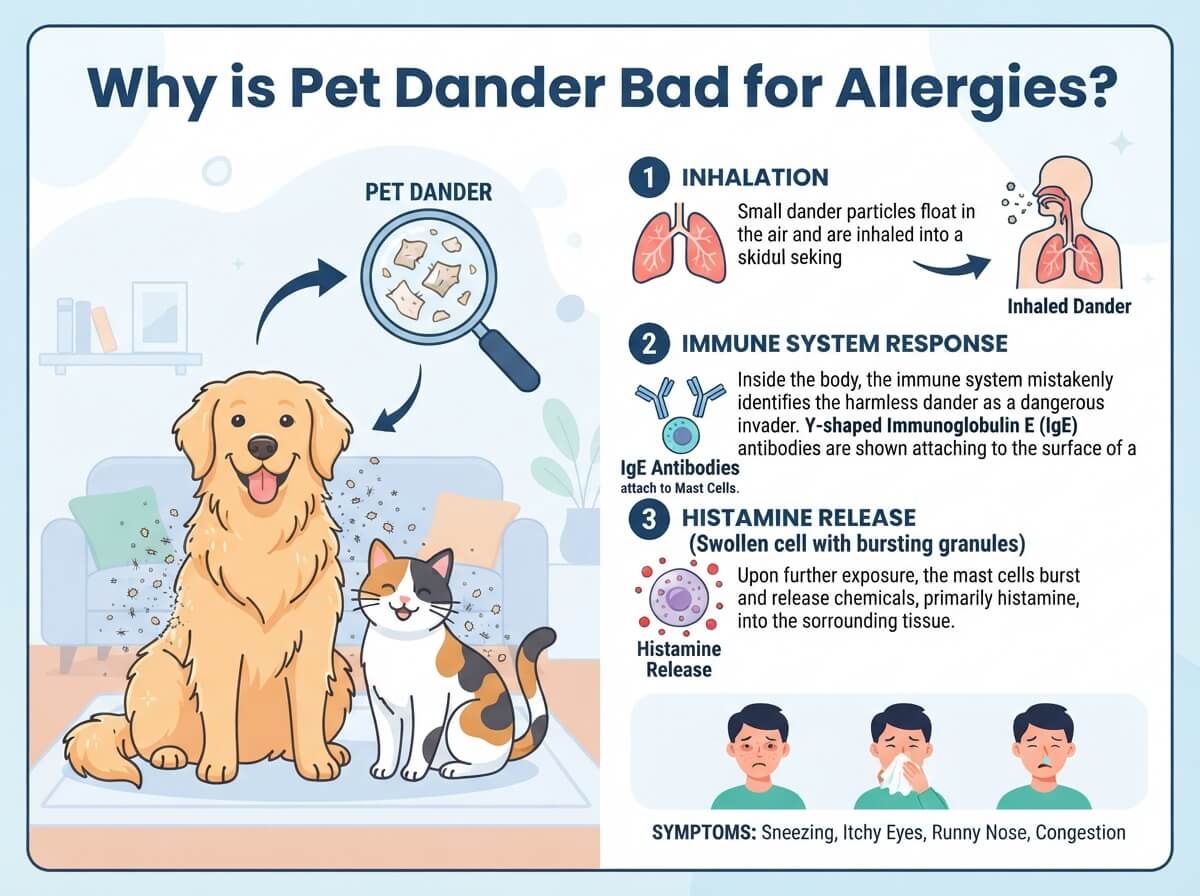
Here’s the thing: pet dander doesn’t actually hurt your body. Your immune system just thinks it’s dangerous and overreacts to protect you. When you breathe in pet dander, your immune system sees those proteins as invaders and springs into action.
Your body’s defense system makes something called immunoglobulin E (IgE) antibodies. These antibodies attach to cells in your nose, lungs, and skin. When these cells encounter pet dander proteins again, they release chemicals like histamine. Histamine is what makes you feel itchy, causes swelling, and triggers sneezing and runny noses.
This whole process happens fast. Sometimes you’ll feel symptoms within minutes of being near a pet. Other times, you might feel fine at first, but then symptoms build up over hours or days if you spend lots of time with an animal.
The Size Problem: Why Pet Dander Travels So Easily
One massive reason pet dander causes so many problems is how incredibly tiny it is. We’re talking about particles that measure just a few microns across. To put that in perspective, a human hair is about 75 microns wide. Pet dander is way, way smaller.
Because these particles are so small, they don’t fall straight down to the ground like bigger dust particles do. Instead, they float around in the air, hanging there for hours or even days. They get kicked up into the air when you vacuum, when your pet walks across a room, when you change bedding, or even just when you’re moving around your house.
This floating nature means pet dander can spread to every corner of your home. It gets into your bedding, your couch cushions, your car, and even travels with you on your clothes. People with pet allergies often react in places where they’ve never even owned a pet because dander hitches a ride on other people’s clothing.
Why Some Pets Cause More Trouble Than Others
Not all pets trigger allergies equally. Dogs and cats are the biggest culprits because people spend so much time close to them, but the amount of dander they produce varies.
Cats actually cause more allergic reactions than dogs for most people. Cat saliva and oil glands produce the protein Fel d 1, which is incredibly strong at triggering allergies. Just a tiny amount of this protein can cause reactions in sensitive people. Dogs produce a similar protein called Can f 1, but most people react less severely to dogs than to cats.
Rabbits, guinea pigs, hamsters, and birds all shed dander too. Even “hairless” or “hypoallergenic” pets still produce these proteins. You can’t truly find a pet that doesn’t trigger allergies in people who are sensitive enough.
Physical Symptoms: What Pet Dander Allergies Feel Like
When pet dander sets off your allergic reactions, you might experience a bunch of different symptoms. These typically show up in your nose and eyes first, but they can spread throughout your whole body.
Your nose might get stuffy and itchy. You might sneeze a lot—sometimes dozens of times in a row. Post-nasal drip often happens too, where mucus runs down the back of your throat. This drainage can make your throat sore and lead to coughing, especially at night.
Your eyes tend to get itchy, watery, and red. You might feel like you have something stuck in your eye, even though you don’t. Rubbing your eyes only makes things worse and can lead to further irritation.
Some people develop skin reactions like hives or eczema flare-ups. Your skin might feel itchy, break out in bumps, or get red and inflamed. These reactions happen most often in spots where you pet touches your skin or where dander settles on your body.
In more serious cases, people experience asthma symptoms. Your chest might feel tight, you might wheeze when breathing, or you could feel short of breath. Asthma symptoms from pet allergies can be pretty scary and definitely warrant a trip to your doctor.
The Dust Mite Connection
Here’s something that really multiplies the problem: pet dander actually brings dust mites into your home. Dust mites feed on dead skin cells, and pet dander gives them an all-you-can-eat buffet. When you have pets, you typically have way more dust mites than homes without animals.
Both pet dander proteins and dust mite droppings trigger allergies. So someone with a pet allergy might actually be reacting to a combination of both. This makes the allergic reaction stronger and means your home ends up being doubly problematic for your allergies.
Why Pet Allergies Can Get Worse Over Time
Something interesting happens with pet allergies: they can get stronger the longer you’re exposed to a pet. When you first spend time around a pet, you might have mild symptoms. But as time goes on, your immune system learns to recognize pet dander more readily, and your reactions can intensify.
This process is called sensitization. Each time you’re exposed to pet dander, your immune system gets better at recognizing it and cranking up your allergic response. That’s why someone might love a pet at first and gradually find themselves unable to tolerate being in the same room as the animal.
Conversely, some people go through a process called desensitization. Constant low-level exposure to pet allergens can sometimes make your immune system less reactive. You might notice your allergies getting slightly better over time if you live with a pet. However, this doesn’t happen for everyone, and it’s not reliable enough to count on.
It’s Not About How Much Hair Your Pet Has
A common myth is that pet allergies are about pet hair. People think less-hairy pets cause fewer allergies. This is mostly wrong. Remember, pet dander (dead skin cells and proteins) is the problem, not the hair itself.
Long-haired pets shed more noticeable hair, sure. But they also shed plenty of dander mixed in with that hair. Short-haired pets shed less visible hair but still release tons of dander particles into the air. A completely hairless cat still triggers allergies because it still produces all those problematic proteins.
The reason long-haired pets sometimes seem to cause fewer problems is that the hair itself can trap some dander particles. But this doesn’t solve the problem—it just delays it. Dander still gets released eventually, especially when the pet sheds, grooms itself, or lies on furniture.
How Dander Accumulates in Your Home
When dander gets into your house, it doesn’t just disappear. It accumulates and gets trapped in lots of places. Your furniture becomes a storage depot for dander. Carpets hold onto dander particles like crazy. Bedding, curtains, and clothing all trap dander over time.
Heating and cooling systems circulate dander throughout your entire home. Every time your furnace or air conditioner kicks on, it’s potentially spreading pet allergens from room to room. Ductwork collects dander, which then gets distributed everywhere.
This accumulation means that even if you keep your pet out of certain rooms, you’ll still find pet allergens there. The dander has already spread. This is why people with pet allergies often react to allergic reactions even when they’re not directly with a pet.
Differences Between Acute and Chronic Pet Allergies
Some people only react when they’re actually around a pet. They’ll visit a friend with cats and develop symptoms that fade away once they leave. This is acute allergy exposure.
Other people live with the symptoms constantly because they have a pet at home. They develop chronic allergic reactions that never fully go away. Their nose stays stuffy, they’re always a little itchy, and they just live with low-level symptoms all the time. Some people don’t even realize how bad their allergy is until they spend time away from their pet and notice their symptoms disappearing.
Chronic exposure can be harder on your body. Your immune system stays activated constantly. This can lead to inflammation that damages your airways over time and makes you more prone to sinus infections and ear infections.
Why Your Immune System Overreacts
The big question is: why does your immune system react so strongly to harmless proteins in pet dander? Genetics play a huge role. If your parents had allergies, you’re way more likely to develop allergies too.
Your environment matters as well. People who grow up around pets sometimes develop stronger tolerance. Those who rarely encounter pets might have bigger reactions when they finally do. Your overall health, stress levels, and exposure to other allergens all affect how serious your pet allergies become.
Some researchers think that allergies are actually your immune system getting confused about what’s dangerous. Pet dander isn’t actually harmful, but your body’s defense system mistakenly treats it like a threat and mounts an aggressive response.
Managing Pet Allergies: What Actually Works
If you love pets but have allergies, you’re not completely stuck. Lots of strategies can help you reduce your exposure to pet dander and make living with a pet more bearable.
Vacuuming regularly with a HEPA filter helps trap dander particles instead of spreading them around. HEPA filters are specifically designed to catch tiny particles like pet dander. Regular vacuuming makes a real difference, though you’ll need to vacuum much more often than people without pets.
Air purifiers with HEPA filters can pull pet dander out of the air. They work best in bedrooms and other spaces where you spend lots of time. Running them continuously helps control dander levels.
Wash your hands after petting your animal. Don’t touch your face until after you’ve washed up. This stops dander from getting into your eyes and nose. Keep your pet out of your bedroom so you have at least one dander-free zone where you can sleep peacefully.
Bathing your pet regularly reduces the amount of dander they shed. A weekly bath can cut down on dander by a lot. Use lukewarm water and pet-safe shampoo. Regular grooming also helps—brush your pet outside to remove dead skin before it falls all over your house.
Wear a mask when you’re around your pet if your allergies are severe. This sounds extreme, but it actually works pretty well for people with serious reactions. The mask prevents you from breathing in dander particles.
When You Should See a Doctor
If your pet allergies are mild, you might just live with the sneezing and itchiness. But if they’re seriously affecting your life, it’s time to talk to a doctor.
Your doctor can test you to confirm you actually have a pet allergy. Skin prick tests and blood tests can identify exactly which pet proteins you’re reacting to. Knowing this helps you figure out your best options.
Doctors can prescribe antihistamine medications, decongestants, or nasal corticosteroids to help manage symptoms. These medications can make a huge difference in how you feel.
For severe allergies, allergy shots (immunotherapy) might be an option. These work slowly to reduce your immune system’s reaction to pet allergens over time. It takes months or years, but some people find they can finally live comfortably with their pets after getting allergy shots.
Should You Give Up Your Pet?
This is the hardest question for people who love their pets but have severe allergies. Only you can make this decision. Some people decide that the relationship with their pet is worth living with allergy symptoms. Others find that their health improves so much when they rehome their pet that they know they made the right choice.
If you’re not ready to give up your pet, focus on the management strategies above. They really can make a difference. If your symptoms are severe and nothing helps, though, rehoming might genuinely be the best option for your health.
The Bottom Line
Pet dander causes allergies because it carries proteins that your immune system treats as a threat. These proteins are incredibly small and spread everywhere in your home, accumulating in furniture, bedding, and air. They trigger your immune system to release histamine, which causes all those miserable allergy symptoms like sneezing, itching, and congestion.
The good news is that you’re not helpless. You can manage pet allergies through regular cleaning, air purifiers, regular pet bathing, and medical treatments. Talk to your doctor about what works best for your specific situation.
If you keep your pet or not, understanding why pet dander causes allergies helps you take the right steps to protect your health. Your body’s reaction is real, it’s frustrating, but it’s also manageable with the right approach.