Why Does My Dog Hate Wearing a Collar?
Have you ever noticed your dog acting completely different when you bring out that collar? Maybe they run and hide, tuck their tail, or put on their most sad and guilty face. If your furry friend seems to despise wearing a collar, you’re not alone. Tons of dog owners deal with this exact problem every single day. Your dog might hate their collar for many different reasons. Some dogs hate the physical sensation. Others hate how they feel restricted. Some dogs have bad memories connected to collars. The good news? You can help your dog feel better about wearing one. This guide breaks down all the reasons why your dog might hate their collar. We’ll also share practical tips to help your dog learn to enjoy it. Let’s dig in.
Your Dog Feels Physical Discomfort From the Collar
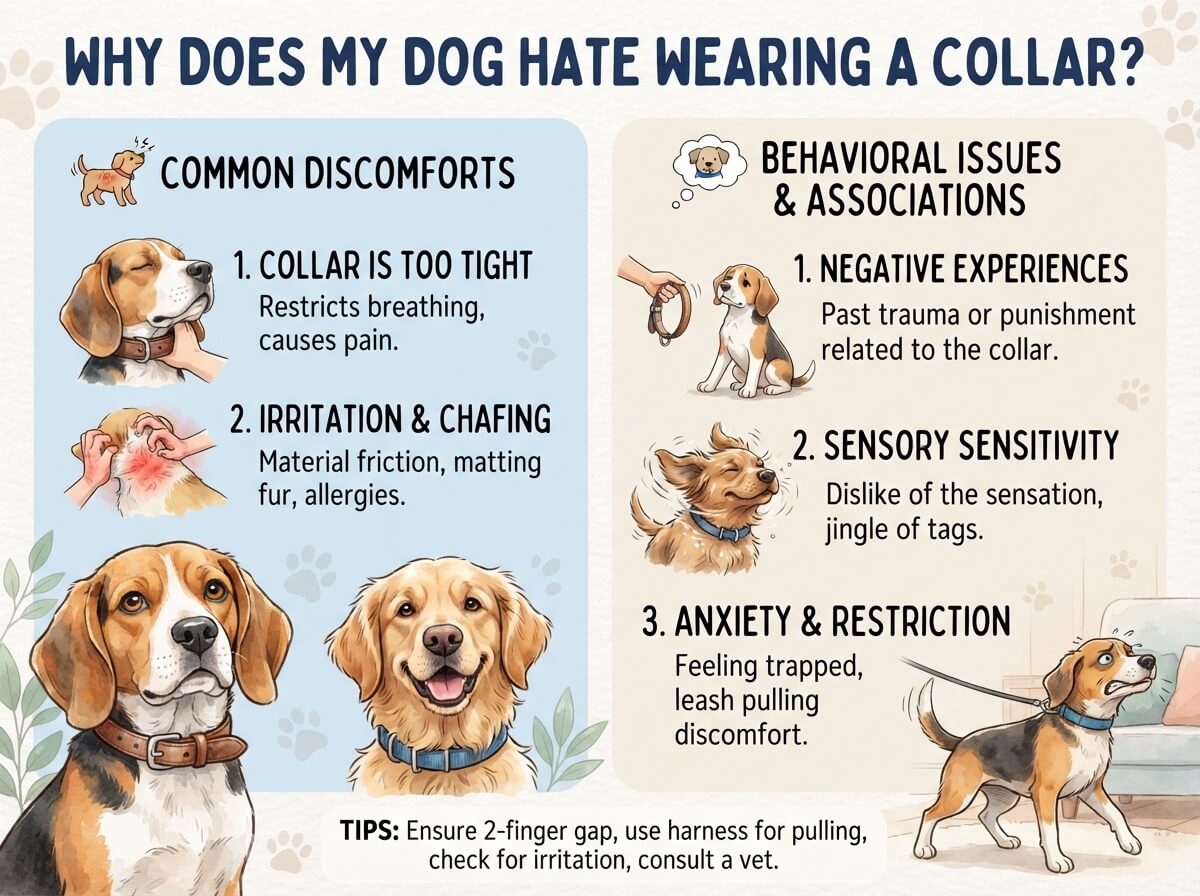
The most common reason dogs hate collars comes down to basic comfort. Think about how you’d feel if someone put a tight band around your neck all day. Not great, right? A collar that doesn’t fit properly causes real pain for your dog. If the collar sits too tight, it pinches the skin on your dog’s neck. It can make it hard for your dog to breathe easily. Your dog’s neck has tons of nerve endings, so even slight pressure bothers them a lot. Many dog owners make the mistake of choosing collars that are too snug. They think a tight collar keeps their dog safer. Actually, the opposite happens. A collar that’s too tight makes your dog hate wearing it. Your dog becomes anxious and stressed out whenever collar time arrives. The material matters too. Some collars use cheap, scratchy material that irritates your dog’s skin. Your dog has sensitive skin under their fur. That rough fabric rubs the wrong way and creates real discomfort. Your dog’s neck develops irritation or raw patches from constant rubbing. Check if your dog’s collar fits properly right now. You should be able to slide two fingers underneath the collar easily. No more, no less. If you can’t fit two fingers, the collar is way too tight. If you can fit your whole hand, the collar is too loose. The weight of the collar matters as well. Some collars are thick and heavy. Small dogs especially hate wearing heavy collars. It feels like they’re dragging something around all day. Lighter collar options work much better for dogs that hate the weight and bulk.
Collar Anxiety Stems From Past Trauma and Bad Memories
Dogs remember things. If your dog had a scary or painful experience with a collar, they’ll never forget it. Maybe a past owner put on a collar too tight. Maybe they got the collar caught on something and panicked. Maybe something painful happened while they wore the collar. These bad memories create collar anxiety that lasts for years. Your dog sees the collar coming and immediately feels scared. They don’t understand why something bad happened before, so they assume it’ll happen again. Dogs that came from rescue situations often carry collar trauma. They don’t know what happened in their past life. But their body remembers. Their instincts tell them that collars mean danger or pain is coming. Your dog’s brain actually works like a computer file. Once it saves a bad memory, it replays that file over and over. Your dog genuinely believes the collar will hurt them, even if it won’t. That’s not your dog being difficult. That’s your dog protecting themselves based on what they learned before. Some dogs also hate collars because someone used the collar to punish them. Maybe an owner yanked the collar hard when the dog did something wrong. Your dog now connects the collar with getting in trouble. The collar means punishment is coming. Your dog runs away because they’re trying to protect themselves. Breaking this pattern takes patience and time. Your dog needs to learn that the collar means something good now. New positive experiences slowly replace the old scary ones. This process doesn’t happen overnight, but it works.
Sensitivity Issues Make Collar Wearing Unbearable
Some dogs are just more sensitive than others. They feel things more intensely. A collar that one dog doesn’t even notice bothers a sensitive dog all day long. Sensitive dogs might have allergic reactions to collar materials. Metal collars can cause reactions in dogs with metal sensitivities. Nylon or synthetic materials trigger irritation in some dogs. Your dog might be trying to tell you that the collar material itself is the problem. Touch sensitivity is another huge factor. Some dogs hate being touched around their neck area. They feel vulnerable there. A collar tightens around that vulnerable spot and creates instant discomfort. Your dog’s instincts kick in and tell them something dangerous is happening. Texture sensitivity plays a role too. A bumpy or ridged collar feels weird and wrong to a sensitive dog. Smooth collars feel better. Your dog might spend all day trying to shake off a textured collar because it bothers them constantly. The sound of the collar can bother sensitive dogs as well. Metal tags jingle and clink. Some dogs find these sounds stressful. The constant jingling drives them crazy. They shake their head and scratch at their neck, trying to make the sound stop. Dogs with anxiety disorders often develop collar aversion. Their nervous system is already activated. Adding a collar increases their stress level even more. For an anxious dog, the collar feels like one more threat in an already scary world.
The Collar Triggers Stress About Loss of Freedom
Dogs don’t like feeling trapped or restricted. A collar feels like a direct loss of control to your dog. They can’t move their neck freely. They can’t turn around as easily. Something is holding them in place. This restriction stress hits especially hard for dogs that spent time roaming free. Dogs that lived outside or had a lot of freedom before suddenly wearing a collar struggle with the adjustment. Their body reacts like it’s being held captive. The leash connection makes it worse. When your dog wears a collar, they know a leash comes next. Your dog loses the ability to run where they want. They lose the choice to explore. A leash attached to the collar represents complete loss of autonomy to your dog. Some dogs have a high need for freedom and control. These dogs hate anything that limits their movement. A collar absolutely triggers their resistance. They’ll fight the collar, shake it off, and do anything to get it away. This feeling gets stronger when you first put the collar on. Your dog feels the collar tighten. Their body tenses up. They feel trapped immediately. That initial stress reaction makes many dogs panic and try to get away.
Your Dog Doesn’t Understand What This Strange Thing Is
If your dog didn’t grow up wearing a collar, they don’t understand what it is. It’s just a weird object suddenly appearing around their neck. Your dog has no context for why this thing is there. Young puppies sometimes hate collars because they’re new and confusing. The puppy doesn’t know what’s happening. Something is squeezing their neck. Their instincts tell them to get away from it. Older dogs that never wore collars face the same confusion. They spent their whole life moving freely. Suddenly there’s something around their neck. Your dog thinks something is attacking them or hurting them. Dogs learn through repetition and positive experiences. Without either of those things, your dog stays confused and scared. The collar stays scary because nothing good has ever happened when wearing it. The unfamiliar nature creates a barrier. Your dog’s brain categorizes the collar as “unsafe” because it’s unknown. Your dog’s survival instincts take over. They avoid the collar at all costs.
Collar-Related Health Problems Need Attention
Sometimes dogs hate collars because something medical is actually wrong. Your dog might have a thyroid problem that makes their neck extra sensitive. They might have skin conditions that get worse when wearing a collar. Neck injuries create collar sensitivity. If your dog had any kind of neck injury or surgery, they might hate anything touching that area. The collar puts pressure on an already painful spot. Your dog naturally resists wearing it. Enlarged lymph nodes or thyroid issues make the neck area tender. A collar pressing against these tender areas causes real pain. Your dog isn’t being stubborn. Your dog is hurting. Ear infections and skin infections sometimes spread to the neck area. An infected or inflamed neck makes collar-wearing painful. Your dog tries to get away from anything touching the affected area. If your dog suddenly starts hating a collar they used to wear, visit your vet. Something might have changed with your dog’s health. Your vet can check for problems you can’t see.
Dogs Hate Restrictive Collars That Limit Movement
Not all collars are created equal. Restrictive collars that limit neck movement bother dogs way more than others. Chain collars and choke collars traumatize many dogs. These collars tighten when your dog pulls. Your dog learns that wearing the collar means pain is possible. Even when the collar isn’t tightening, your dog expects it to hurt. Heavy metal collars restrict movement and feel uncomfortable. Your dog’s neck muscles get tired from supporting the extra weight. The collar pulls on the neck constantly. Your dog develops neck tension and soreness. Rigid collars keep the neck locked in one position. Your dog can’t turn their head fully. They can’t move their neck naturally. Dogs need to move their neck to feel comfortable and safe. A rigid collar prevents that. Collars that dig into the neck when your dog moves create constant pressure and irritation. As your dog moves around, the collar scrapes their skin. By the end of the day, your dog’s neck is raw and irritated.
Age Makes a Difference in Collar Acceptance
Puppies and adult dogs experience collars differently. Puppies that grow up wearing collars from a young age adjust more easily. Their brains are still developing. They learn to accept the collar as normal. Adult dogs that never wore collars take longer to adjust. Their brains are set in their ways. New experiences feel scary and wrong. They resist change more than puppies do. Senior dogs sometimes develop collar issues they didn’t have before. Arthritis in the neck makes collars uncomfortable. Age-related skin changes make the collar irritating. Senior dogs have less patience for discomfort. Very young puppies haven’t learned to accept restraint yet. Their instincts tell them to escape from anything holding them in place. Many puppies hate collars at first. They grow out of it with patience and positive experiences. The age at which your dog first experiences a collar matters too. Dogs introduced to collars early adapt faster. Dogs that first wear a collar at an older age struggle more. They’re basically learning that collars are okay, but their instincts fight against this lesson.
Start With Proper Collar Selection and Fitting
Picking the right collar makes a huge difference. Your dog’s comfort depends on making good choices. Flat collars work best for most dogs. They’re simple, comfortable, and don’t restrict movement. Flat collars distribute pressure evenly around the neck. Your dog feels less constriction with a flat collar. Soft material collars feel better than stiff ones. Neoprene, nylon, and leather collars are usually more comfortable. Avoid rough or scratchy materials that irritate your dog’s skin. Adjustable collars let you find the perfect fit. As your dog grows or your needs change, you can adjust the size easily. The perfect fit keeps your dog comfortable without being too loose. Lightweight collars work better than heavy ones. Your dog doesn’t feel like they’re dragging something around. Lightweight collars feel less restrictive and less noticeable. Check the collar fitting regularly. As your dog grows or gains weight, the fit changes. A collar that fits perfectly now might be too tight next month. Stay on top of the fit.
Create Positive Associations With the Collar
Your dog can learn to like their collar. Positive experiences replace negative feelings over time. Start by leaving the collar in a place where your dog spends time. Let your dog investigate it. Let your dog sniff it and get used to seeing it. The collar stops feeling like a threat when your dog gets familiar with it. Hold the collar near your dog’s face and give treats. Your dog starts connecting the collar with good things. Do this many times before actually putting the collar on. Put the collar on for just a few seconds, then take it off immediately. Give a treat right after you remove it. Your dog learns that wearing the collar leads to treats and rewards. Gradually increase the time your dog wears the collar. Start with five seconds, then ten, then thirty. Let your dog go at their own pace. Never force the process. Play with your dog while they’re wearing the collar. Make it a fun, positive experience. Your dog forgets about hating the collar when they’re having fun playing. Reward your dog heavily for wearing the collar. Treats, praise, playtime—whatever your dog loves. Your dog’s brain starts associating the collar with rewards instead of punishment.
Practice Patience and Consistent Training
Breaking collar hate takes time. Your dog’s feelings didn’t develop overnight. They won’t change overnight either. Stay calm and patient. Your dog picks up on your frustration. If you get angry about the collar situation, your dog becomes more stressed. Keep things positive and relaxed. Practice the collar routine regularly. Consistency helps your dog’s brain form new patterns. Do the positive collar introduction every single day, even if it’s just for a few minutes. Don’t force the collar on your dog. Forcing creates more trauma and fear. Let your dog learn at their own pace. Your dog will get there with patience. Celebrate small wins. If your dog tolerates the collar for five seconds longer than yesterday, that’s progress. Acknowledge it with praise and treats. These small victories add up. Keep sessions short and sweet. Long training sessions frustrate dogs and create negative associations. Five to ten minutes is plenty. End on a positive note.
Know When to Ask for Professional Help
Some dogs need extra help overcoming collar aversion. A professional dog trainer or behaviorist can provide specialized guidance. Trainers have experience with collar-averse dogs. They know techniques that work when basic methods don’t. They can identify problems you might miss. A behaviorist can figure out if anxiety or past trauma is the root cause. They develop treatment plans specific to your dog’s situation. Your vet can rule out medical issues that make collar-wearing painful. They can recommend alternative collar styles if needed. Professional help costs money, but it’s worth it for dogs that severely hate collars. These dogs need specialized support.
Alternative Solutions for Collar-Hating Dogs
Sometimes your dog just won’t tolerate a traditional collar. You have options. Harnesses distribute pressure across your dog’s body instead of concentrating it on the neck. Many dogs that hate collars accept harnesses. Harnesses feel less restrictive and more comfortable. Head halters give you control without putting pressure on the neck. Your dog wears the halter on their face instead. Some dogs like this better than collars. Breakaway collars release when your dog pulls hard. Dogs feel less trapped because they can escape if needed. This can help dogs that hate the trapped feeling. GPS collar alternatives work for dogs that absolutely won’t wear collars. Microchipping provides permanent identification. It’s not the same as a collar, but it keeps your dog safe.
The Bottom Line: Your Dog Isn’t Being Difficult
Your dog hates their collar for a reason. Your dog isn’t being stubborn or difficult. Your dog is communicating that something is wrong. Maybe the collar is uncomfortable. Maybe it brings back bad memories. Maybe your dog has a medical issue. Maybe your dog just needs time to adjust. The key is figuring out which reason applies to your specific dog. Then you can address that specific problem. Work with your dog patiently. Use positive reinforcement. Make wearing the collar a good experience. Your dog will come around eventually. Remember that every dog is different. What works for one dog might not work for another. Stay flexible and keep trying different approaches. Your dog depends on you to help them through this. With patience, understanding, and the right strategy, your collar-hating dog can learn to accept their collar. It takes time, but it absolutely can happen.