Dog Leash vs Retractable Leash
If you own a dog, you already know how much a simple walk can turn into a tug-of-war, a tangle of cords, or a fun stroll in the park. A lot of that comes down to one small piece of gear: the leash. Walk into any pet store and you’ll see two main types staring back at you — the classic dog leash and the retractable leash. Both look easy to use. Both promise a happy walk. But they work in very different ways, and the one you pick can affect your dog’s safety, your control, and even your daily stress level.
In this post, we’ll break down both options in plain, simple terms. No fancy jargon, no confusing pet-speak. Just a real, honest look at how each leash works, where each one shines, and where each one falls short. By the end, you’ll know exactly which leash fits your dog, your lifestyle, and your walking habits.
What Is a Standard Dog Leash?
A standard leash is the classic setup most of us grew up with. It’s a fixed-length strap, usually made from nylon, leather, or rope, with a clip on one end and a handle on the other. You hold the handle, clip the other end to your dog’s collar or harness, and off you go. The length stays the same the whole walk — usually somewhere between four and six feet.
There’s nothing complicated about it, and that’s the whole point. It’s simple, sturdy, and built to last. Many trainers call this the “traditional leash” or “fixed leash,” and it’s the go-to tool for obedience training, leash walking practice, and everyday dog walking.
What Is a Retractable Leash?
A retractable leash looks different right away. Instead of a flat strap, it usually has a thin cord or ribbon that winds in and out of a plastic handle, kind of like a tape measure. Press the button, and the leash extends, giving your dog more room to roam. Release the button, and it locks in place. Let go again, and the cord winds back in on its own.
These leashes can stretch anywhere from ten feet all the way up to twenty-six feet or more, depending on the brand and model. The idea behind them is freedom. Your dog gets to sniff around, explore a wider patch of grass, and move at their own pace instead of staying glued to your side.
The Core Difference: Control vs Freedom
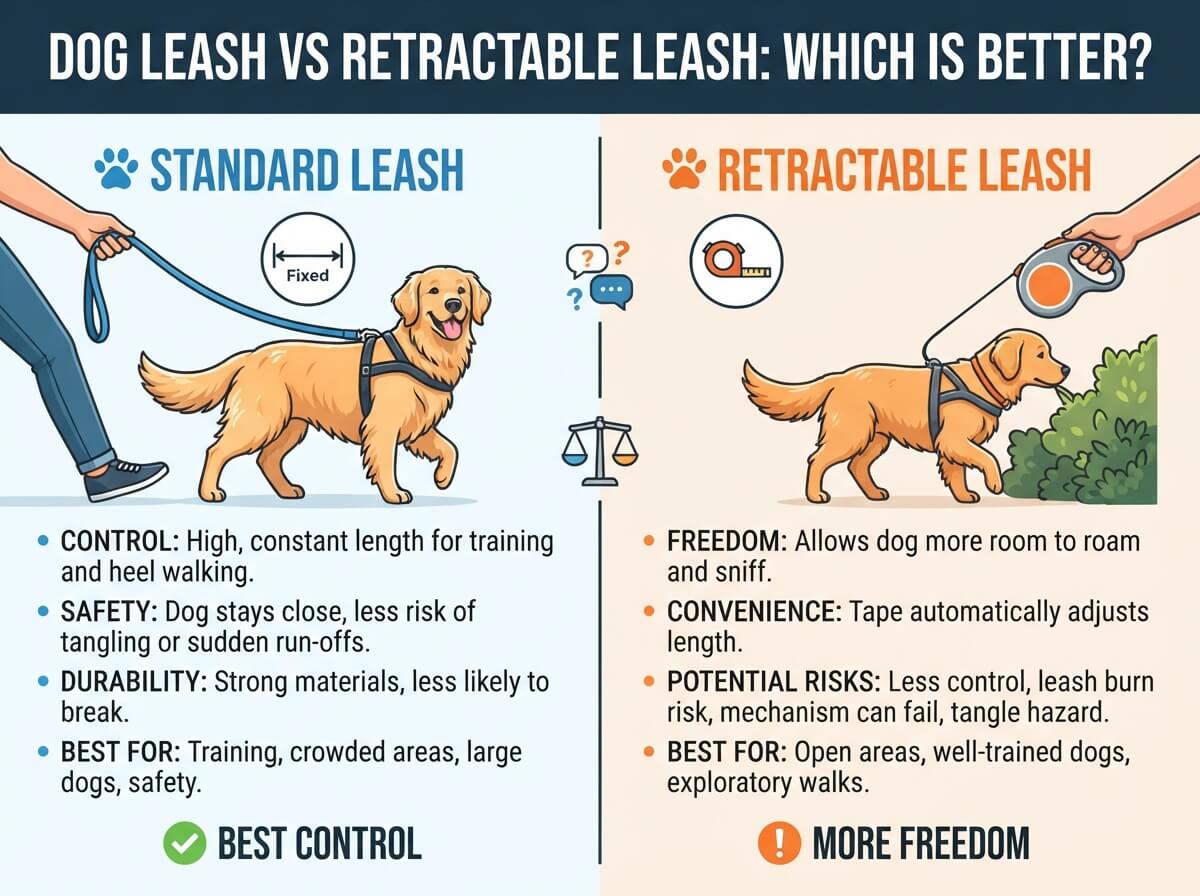
Here’s the heart of the whole debate. A standard leash is all about control. You know exactly how far your dog can go, and you can react fast if something unexpected happens, like another dog running up or a squirrel darting across the path.
A retractable leash is all about freedom. Your dog gets space to explore, sniff, and wander a bit, which many dogs genuinely love. But that freedom comes with a trade-off: less immediate control, especially when your dog is at the far end of the cord.
Neither idea is wrong. It really comes down to your dog’s personality, your walking environment, and how much control you need in a given moment.
Pros of a Standard Dog Leash
1. Better Control in Tight Situations
Because the leash length stays fixed, you always know exactly where your dog is. This matters a lot on busy sidewalks, near roads, or in crowded parks where quick reactions can prevent accidents.
2. Easier for Training
Most professional dog trainers recommend a standard leash for basic obedience work and loose-leash walking practice. A fixed length helps your dog learn to stay close and follow cues, which builds good walking habits early on.
3. Safer Around Traffic
Cars, bikes, and scooters move fast, and a long retractable cord gives your dog too much room to dart into danger. A short, fixed leash keeps your furry friend close and out of harm’s way near roads.
4. Stronger and More Durable
Standard leashes, especially ones made from leather or thick nylon, tend to hold up well over time. They resist chewing, fraying, and general wear better than the thin cords found on most retractable models.
5. Lower Risk of Injury
Thin retractable cords can cause rope burns, cuts, or even finger injuries if they get wrapped around a hand, leg, or ankle. A flat, wide standard leash is gentler on your skin and easier to grip safely.
Cons of a Standard Dog Leash
Of course, no tool is perfect. Standard leashes do have a few downsides:
- Less room for your dog to explore or sniff around freely.
- Can feel restrictive for dogs who love open, spacious walks.
- Not ideal if you want your dog to run ahead a little during off-leash-style training in a safe, open area.
Pros of a Retractable Leash
1. More Freedom for Your Dog
Dogs are naturally curious. They love to sniff, wander, and explore their surroundings. A retractable leash gives them the space to do that without letting them go completely off-leash.
2. Great for Open, Low-Traffic Areas
If you’re walking in a quiet park, an open field, or a wide trail with few people around, a retractable leash lets your dog enjoy extra space safely.
3. Adjustable Length
Most retractable leashes let you lock the cord at different lengths. This gives you a mix of freedom and control, since you can shorten it instantly when needed.
4. Good for Bathroom Breaks
If you just need your dog to step off to the side and do their business, the extra length of a retractable leash can be handy without needing a full off-leash setup.
Cons of a Retractable Leash
This is where things get a bit more serious, and it’s worth paying close attention:
1. Slower Reaction Time
If your dog suddenly bolts toward another animal, a person, or the street, you have far less control over what happens in that first second or two, since the cord has already given them distance.
2. Higher Injury Risk
Thin cords can snap, cause burns, or even cut skin if they wrap around a leg or hand. Vets and trainers have reported cases of serious injuries linked to retractable leashes, including cuts and even finger amputations in rare, extreme cases.
3. Harder to Use Around Other Dogs
If your dog is far away on a long cord and another dog approaches, it’s tough to reel them in fast enough to avoid a tense or unsafe encounter.
4. Not Great for Training
Because the leash constantly extends and retracts, it doesn’t teach a dog to walk calmly beside you. This can actually work against loose-leash walking training.
5. Mechanical Failures Happen
Plastic handles can crack, locking mechanisms can jam, and cords can snap under sudden pressure, especially with larger, stronger dogs.
Which One Is Safer?
If we’re talking pure safety, a standard leash usually wins. It gives you fast, reliable control, and it’s much less likely to cause injury to you or your dog. Vets and trainers, in general, lean toward standard leashes for daily walks, especially in cities, near traffic, or in busy public spaces.
That said, a retractable leash isn’t automatically unsafe. Used correctly, in the right setting, with a well-trained dog, it can be a fine tool. The real risk comes from using it in the wrong place, like a crowded sidewalk or near a busy road, where quick control matters most.
Which One Is Better for Training?
For training purposes, a standard leash is the clear winner. Puppy training, obedience classes, and loose-leash walking all rely on consistent, close contact between you and your dog. A fixed leash helps your dog learn boundaries and pay attention to your movements and cues.
Retractable leashes, on the other hand, can actually confuse a dog that’s still learning leash manners, since the constant back-and-forth stretch sends mixed signals about how far they’re allowed to go.
Which One Fits Your Dog’s Personality?
Every dog is different, so it helps to think about your own dog’s temperament before picking a leash:
- Calm, well-trained dogs often do fine with a retractable leash in open spaces.
- Energetic or reactive dogs usually do better with a standard leash for tighter control.
- Puppies still learning leash manners should stick with a standard leash during training.
- Senior dogs who walk slowly and steadily can sometimes enjoy the extra freedom of a retractable leash on quiet trails.
Which One Fits Your Environment?
Where you walk matters just as much as your dog’s personality.
- City streets and busy sidewalks: standard leash, hands down.
- Crowded dog parks: standard leash, since sudden dog-to-dog interactions need fast control.
- Quiet trails or open fields: retractable leash can work well here.
- Backyard or private open space: retractable leash gives a nice middle ground between full freedom and full control.
Tips for Using a Standard Leash the Right Way
- Keep it short enough that your dog stays close in crowded areas.
- Use a comfortable, padded handle to avoid hand strain on long walks.
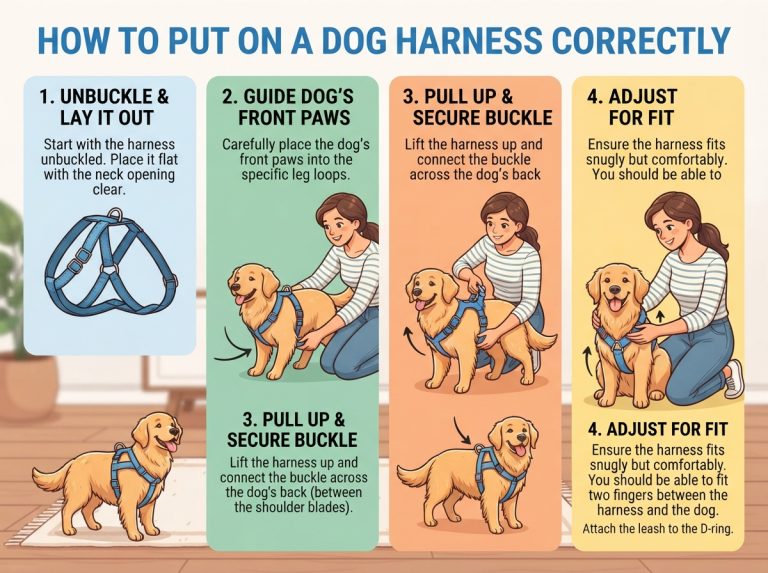
- Pair it with a well-fitted harness for extra control and comfort.
- Practice loose-leash walking regularly to build good habits.
Tips for Using a Retractable Leash Safely
- Only use it in open, low-traffic areas.
- Keep the cord locked at a shorter length near roads or crowds.
- Never wrap the cord around your hand, leg, or any body part.
- Reel your dog in early if you spot another dog, person, or vehicle approaching.
- Check the locking mechanism regularly for wear or damage.
Can You Use Both?
Actually, yes, and a lot of dog owners do exactly this. Many people keep a standard leash for daily walks, training sessions, and busy areas, then bring out the retractable leash for relaxed walks in the park or quiet trails. This way, you get the best of both worlds: strong control when you need it, and extra freedom when it’s safe to enjoy it.
What Do Vets and Trainers Usually Recommend?
Most professional trainers lean toward standard leashes, especially for young dogs, reactive dogs, or anyone still working on basic leash manners. Vets often point out the injury risks tied to retractable leashes, particularly the thin cord types, and recommend flat, wide straps instead for everyday safety.
That said, plenty of trainers agree that retractable leashes have their place too, as long as they’re used thoughtfully and in the right setting. The general advice usually sounds like this: build good habits with a standard leash first, then bring in a retractable leash later as a bonus tool for open-space freedom, not as a full replacement.
Final Verdict: Which One Is Better?
So, after all this, which leash actually wins? Honestly, it depends on what you need most.
If safety, control, and training are your top priorities, especially in busy areas or with a young or reactive dog, a standard leash is the smarter, more reliable pick. It’s sturdy, predictable, and gives you fast control when it matters most.
If you’re after more freedom for a calm, well-trained dog in open, quiet spaces, a retractable leash can add a nice bit of variety to your walks, as long as you use it carefully and in the right setting.
For most dog owners, especially beginners, a standard leash should be the main, everyday tool. Once your dog has solid leash manners and you understand how to use a retractable leash safely, you can bring it in as a fun extra for relaxed outings.
Quick Comparison Table
| Feature | Standard Leash | Retractable Leash |
|---|---|---|
| Control | High | Lower |
| Safety | Higher | Lower risk if used correctly |
| Best for training | Yes | No |
| Freedom for dog | Limited | High |
| Best environment | Busy areas, traffic | Open, quiet spaces |
| Durability | Strong | Moderate |
| Beginner-friendly | Yes | Needs experience |
Wrapping It Up
At the end of the day, both leashes have a place in a dog owner’s toolkit. A standard leash gives you strong, steady control and builds better walking habits, especially for beginners and young dogs. A retractable leash offers a taste of freedom, best saved for calm, open settings with a well-behaved dog.
Think about your dog’s personality, your usual walking spots, and how much control you need on a typical day. That’s really the simplest way to land on the right leash for you and your furry companion. And if you’re still unsure, starting with a standard leash is almost always the safer, smarter first step.