How to Remove Pet Dander From Carpet?
If you share your home with a cat or a dog, you already know the joy they bring. But along with the cuddles and wagging tails comes something less fun: pet dander. Tiny flecks of dead skin float off your furry friend and settle deep into your carpet fibers. They build up fast, and they trigger allergies, sneezing fits, and itchy eyes for many people.
The good news? You don’t need to get rid of your pet or rip out your carpet to fix this problem. With the right steps, tools, and a bit of routine care, you can keep your carpet clean and your air fresh. This guide walks you through everything you need to know, in plain and simple language, so you can start today.
What Exactly Is Pet Dander?
Pet dander is made up of tiny, tiny skin cells that pets shed all the time, just like humans do. These flakes are so small that they float in the air and land on every surface in your home, especially carpet. Carpet fibers act like a magnet, trapping dander along with pet hair, dust, saliva proteins, and dirt.
Unlike pet hair, which you can see and pick up easily, dander is nearly invisible. That’s what makes it tricky to deal with. It sinks deep into carpet padding and hides between fibers, so a quick vacuum pass often isn’t enough to clear it out.
Why Pet Dander in Carpet Is a Big Deal
Pet dander isn’t just a minor annoyance. Here’s why it matters:
- It’s a top trigger for indoor allergies and asthma flare-ups
- It carries a sticky protein that clings to fabric and carpet fibers
- It builds up over time, even in homes with short-haired pets
- It can affect people who don’t even have a known pet allergy, especially with long-term exposure
- It often mixes with dust mites, making air quality worse
If anyone in your house sneezes a lot, has watery eyes, or struggles with allergy symptoms indoors, dander buildup in your carpet could be a major reason.
Signs Your Carpet Has a Dander Problem
Before jumping into cleaning methods, it helps to know the warning signs. Watch out for:
- A musty or animal-like smell coming from carpeted rooms
- Frequent sneezing or itchy eyes when walking on carpet
- Visible dust or flaky bits when you run your hand across the carpet
- Pets scratching a lot near carpeted areas (this can point to shared allergens)
- Family members with allergies feeling worse indoors than outdoors
If you notice two or more of these, it’s time for a deep clean.
Tools and Supplies You’ll Need
Gathering the right supplies ahead of time makes the whole cleaning process smoother. Here’s a simple checklist:
- A vacuum with a HEPA filter
- Baking soda
- White vinegar
- A spray bottle
- Rubber gloves or a rubber broom
- A carpet brush or stiff-bristle brush
- An enzyme cleaner made for pet stains and allergens
- A steam cleaner or carpet shampooer (rental or owned)
- Microfiber cloths
- An air purifier with a HEPA filter (optional but helpful)
You don’t need every single item on this list to get started, but having a few of these on hand will make your cleaning routine far more effective.
Step-by-Step Guide to Remove Pet Dander From Carpet
Step 1: Brush the Carpet First
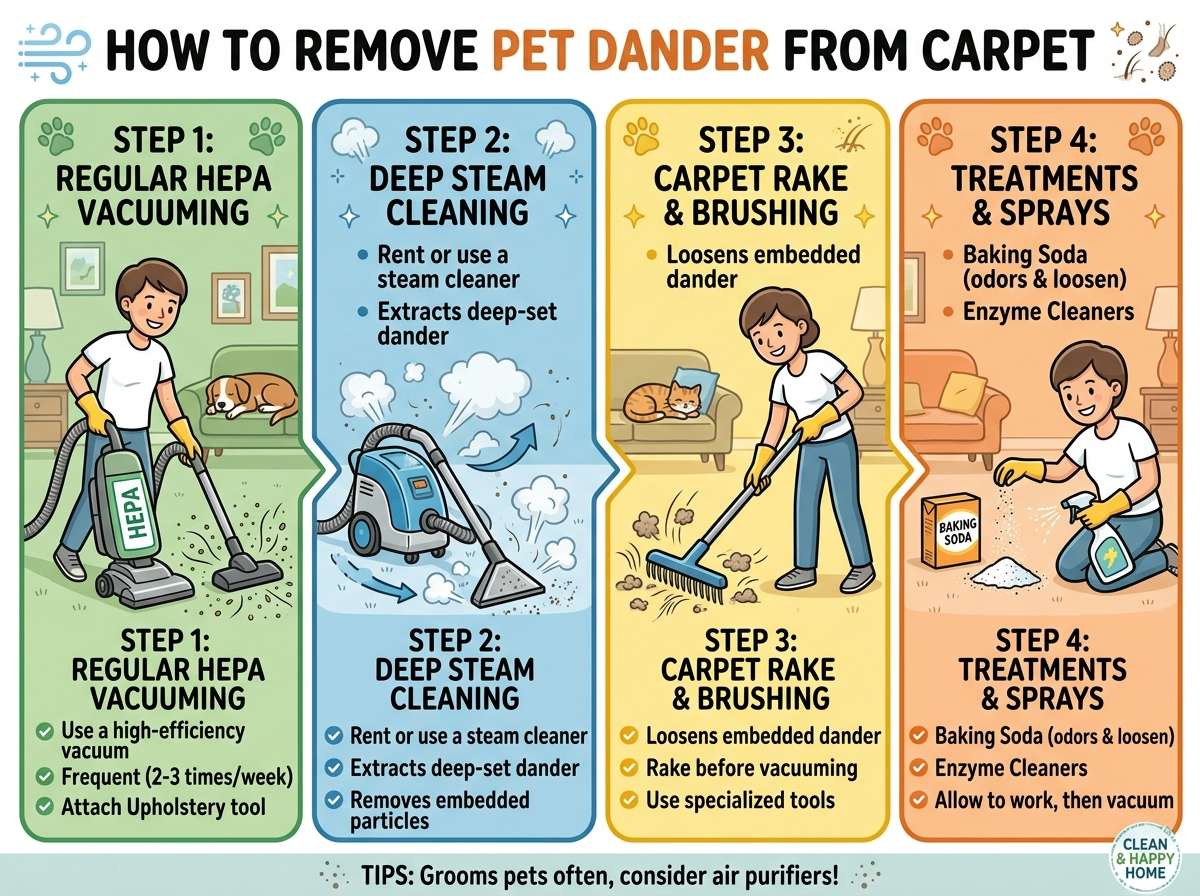
Before you even turn on the vacuum, grab a stiff-bristle brush or a rubber broom and go over the carpet in short strokes. This loosens dander and hair that’s stuck deep in the fibers. Brushing lifts particles up to the surface, making them much easier for your vacuum to pick up later.
Work in small sections and use back-and-forth motions. For thicker carpets, press a little harder so the bristles reach down to the base of the fibers.
Step 2: Vacuum With a HEPA Filter
A regular vacuum can actually make dander problems worse by blowing tiny particles back into the air. That’s why a vacuum with a HEPA filter matters so much. These filters trap microscopic allergens instead of releasing them back into your living space.
Go slow. Rushing through vacuuming means missing the fine particles that sit deep inside the carpet. Pass over each area multiple times, moving in different directions (forward, backward, then side to side) to loosen and lift stubborn dander.
Pay extra attention to spots where your pet naps, plays, or spends most of its time. These areas usually carry the highest dander levels.
Step 3: Sprinkle Baking Soda and Let It Sit
Baking soda is a natural deodorizer and mild cleaner that helps pull dander and odor out of carpet fibers. Sprinkle a generous layer across the carpet, focusing on high-traffic pet zones.
Let it sit for at least 15 minutes, though leaving it overnight works even better for deep buildup. The baking soda absorbs odors and loosens particles clinging to the fibers, so your next vacuum pass picks up much more.
After the waiting time is up, vacuum thoroughly again with your HEPA-filter vacuum.
Step 4: Use a Vinegar and Water Spray for Extra Cleaning
Mix equal parts white vinegar and water in a spray bottle. Vinegar breaks down the proteins found in pet dander and helps neutralize odors naturally, without harsh chemicals.
Lightly mist the carpet (don’t soak it) and let it air dry, or use a fan to speed things along. Avoid using this method on carpets made from delicate or natural fibers like wool, since vinegar can affect certain materials. Always test a small hidden spot first.
Step 5: Apply an Enzyme Cleaner for Deep Stains and Allergens
For carpets with heavy dander buildup, pet stains, or lingering odor, an enzyme-based cleaner is worth the investment. These cleaners contain natural enzymes that break down organic material, including dander proteins, urine residue, and saliva marks.
Follow the instructions on the bottle. Most enzyme cleaners need to sit for a set amount of time to work properly, so patience really pays off here. Once it’s done its job, blot the area with a clean cloth rather than rubbing, which can push residue deeper into the fibers.
Step 6: Steam Clean for the Deepest Results
Steam cleaning is one of the most effective ways to pull dander out from deep inside carpet padding. The heat and moisture loosen stuck-on particles and kill dust mites and bacteria at the same time.
You can rent a steam cleaner from most hardware or grocery stores, or use your own carpet shampooer if you have one. Move slowly over each section, and avoid soaking the carpet too much, since excess moisture can lead to mold growth if it doesn’t dry fully.
Open windows or run a fan afterward to help the carpet dry quickly and completely.
Step 7: Dry the Carpet Completely
Damp carpet becomes a breeding ground for mold and dust mites, both of which make allergy symptoms even worse. After any wet cleaning method, make sure the area dries fully before letting pets or people walk on it again.
Use fans, open windows, or a dehumidifier to speed up drying time. Most carpets take anywhere from a few hours to a full day to dry completely, depending on humidity levels in your home.
Daily and Weekly Habits That Keep Dander Under Control
Deep cleaning matters, but small daily habits make an even bigger difference over time. Here are simple routines to build into your schedule:
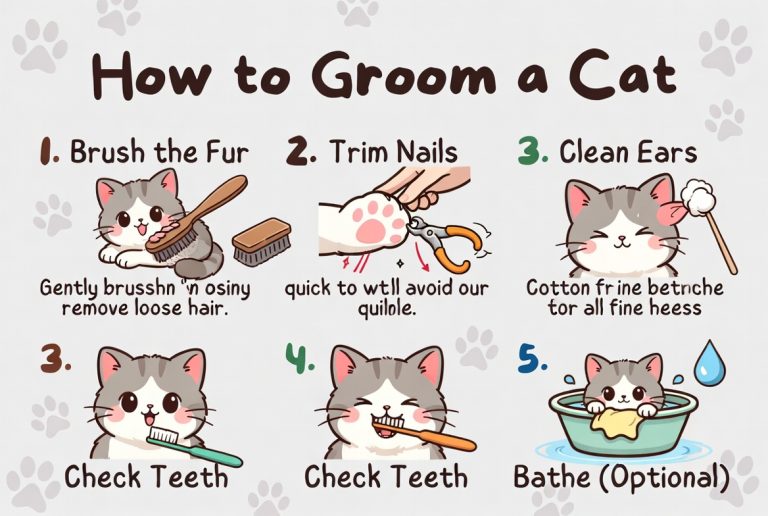
Brush Your Pet Regularly
The less loose hair and dander your pet carries around, the less ends up on your carpet. Brushing your dog or cat outside, a few times a week, removes dead hair and skin flakes before they ever reach your floors.
Bathe Your Pet on a Schedule
Regular baths (roughly every four to six weeks for most pets, though this varies by breed and coat type) help reduce the amount of dander your pet sheds. Use a gentle, pet-safe shampoo, since bathing too often can dry out their skin and actually increase dander production.
Vacuum at Least Twice a Week
Set a routine and stick to it. Homes with pets need more frequent vacuuming than pet-free homes. Twice a week is a solid baseline, though homes with multiple pets or heavy shedders may need daily vacuuming during peak shedding seasons.
Wash Pet Bedding Often
Your pet’s bed collects just as much dander as your carpet does. Wash it weekly in hot water to cut down on allergens spreading around the house.
Keep Pets Off Certain Areas
Setting up pet-free zones, especially bedrooms, gives allergy sufferers a break from constant dander exposure. This small step alone can drastically improve sleep quality for allergy-prone family members.
Use an Air Purifier
An air purifier with a true HEPA filter captures airborne dander before it settles back into your carpet. Running it in high-traffic pet areas keeps allergen levels much lower between deep cleanings.
Change Air Filters Regularly
Your home’s HVAC filter also traps airborne dander. Swap it out often, roughly every one to three months, to keep your whole home’s air quality in check.
Natural Remedies vs Store-Bought Products
Many pet owners want to avoid harsh chemicals, especially in homes with kids or pets who spend a lot of time on the floor. Here’s a quick comparison of natural and commercial options:
Natural remedies like baking soda and vinegar are affordable, safe, and easy to find. They work well for regular maintenance and light buildup, but they may not fully tackle deep, long-term dander accumulation on their own.
Store-bought enzyme cleaners and allergen sprays are built specifically to break down pet dander proteins. They tend to work faster and go deeper into carpet fibers, making them a smart choice for homes with severe allergy issues or heavy pet traffic.
A combination of both often gives the best results: use natural methods for weekly upkeep, and bring in stronger commercial products for monthly deep cleans.
Common Mistakes to Avoid
- Skipping the brushing step: Vacuuming alone often misses dander trapped deep in fibers.
- Using a vacuum without a HEPA filter: This can spread allergens back into the air instead of removing them.
- Soaking the carpet during wet cleaning: Too much moisture invites mold and mildew.
- Ignoring carpet padding: Dander sinks below the surface fibers and settles in the padding underneath, so occasional deep steam cleaning is important.
- Forgetting about furniture and curtains: Dander doesn’t stay only on the floor. It spreads onto couches, curtains, and other fabric surfaces too, so clean those regularly as well.
- Not washing pet bedding often enough: This becomes a constant dander source that keeps re-contaminating your clean carpet.
When to Call in Professional Carpet Cleaners
Sometimes DIY methods aren’t enough, especially in homes with multiple pets, thick carpet padding, or family members with severe allergies. Professional carpet cleaners use industrial-grade steam machines and specialized allergen treatments that go deeper than most home equipment can reach.
Consider booking a professional cleaning at least once or twice a year, even if you keep up with regular home maintenance. This resets your carpet and clears out buildup that daily habits simply can’t fully remove.
Signs It’s Time to Replace the Carpet
In some cases, no amount of cleaning fully solves the problem, especially with older carpet that has years of dander embedded deep in the padding. Watch for these signs:
- Persistent odor that returns no matter how often you clean
- Allergy symptoms that don’t improve even after deep cleaning
- Visible wear, matting, or staining that won’t lift
- Carpet padding that feels damp or smells musty even when dry
If your carpet checks several of these boxes, switching to a low-pile carpet, hard flooring, or an allergy-friendly rug might be worth exploring for long-term relief.
Final Thoughts
Living happily with pets and keeping your carpet dander-free is absolutely possible with a bit of consistency. Brushing, vacuuming with a HEPA filter, using natural and enzyme-based cleaners, and steam cleaning regularly all work together to keep allergens at bay. Add in simple daily habits like grooming your pet and washing their bedding, and you’ll notice a real difference in both air quality and how your carpet feels underfoot.
Your pet brings so much joy into your home, and with the right cleaning routine, you don’t have to trade that joy for sneezes and itchy eyes. A little effort goes a long way toward a fresher, cleaner, and healthier living space for both you and your furry companion.
Hi, I’m Mary, the founder of PetGadgetPro.com. I’m a passionate pet lover with a special place in my heart for dogs and cats. I share practical advice and honest insights on pet gear to help pet parents make better choices. My dedicated research team studies products in depth, and our writers create reviews using trusted, authentic sources—so you can feel confident choosing the best for your pets.