How to Bathe a Dog Properly?
Bathing your dog doesn’t have to feel like a wrestling match. With the right approach, you can make it a calm, clean experience that leaves your furry friend fresh and happy. This guide walks you through everything you need to know about dog bathing, from prep work to drying off.
Why Regular Dog Bathing Matters
Your dog’s skin needs care just like yours does. Regular washing removes dirt, dead hair, and oils that build up in your pet’s coat. A clean dog also smells better and stays healthier. Most dogs need a bath every four to twelve weeks, but this depends on their breed and lifestyle. A dog that plays in the mud daily might need more frequent washing than one that stays mostly indoors.
Bathing also gives you a chance to check your dog’s skin for problems. You can spot rashes, bumps, or other issues that might need a vet’s attention. Think of bath time as a health check mixed with a cleaning session.
Get Your Supplies Ready Before You Start
Preparation makes the job easier. Gather everything you need before you bring your dog to the tub. You don’t want to leave your wet pup alone while you hunt for a towel.
Essential supplies for dog grooming and bathing:
- Dog shampoo (not human shampoo)
- A brush or comb
- Warm water
- Towels (lots of them)
- A non-slip mat
- Washcloth or soft sponge
- Dog conditioner (optional)
- Treat rewards
Dog shampoo matters. Human shampoo has a different pH and can irritate your dog’s skin. Dogs need gentle, specially made cleaners. You can find many options at pet stores, from basic formulas to ones made for specific coat types or skin conditions.
Get a good brush too. Brushing your dog before the bath removes loose hair and mats. This step saves you headaches later and helps your dog’s coat dry faster. A mat-free dog is an easier dog to bathe.
Brush Your Dog Before Bath Time
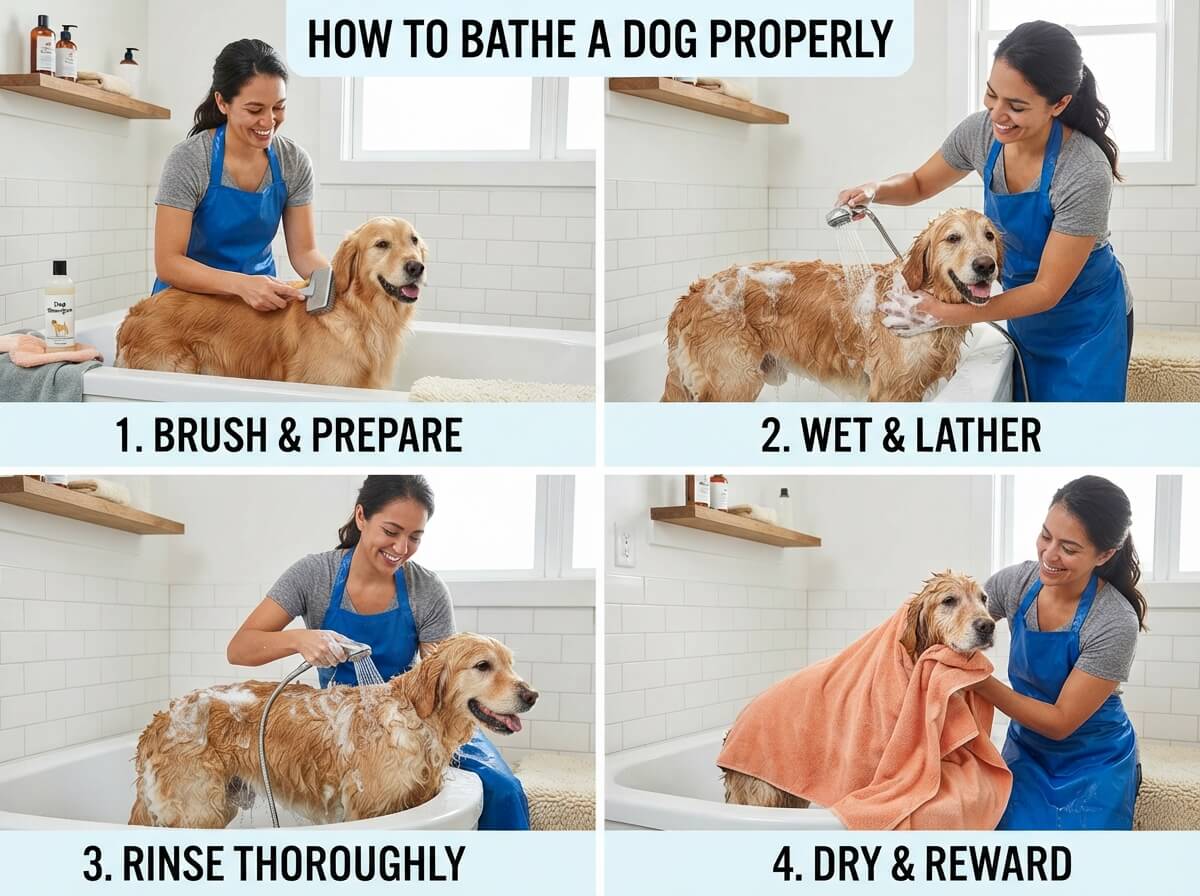
Don’t skip the brushing step. Your dog’s coat needs a good brush-through before water touches it. This removes loose fur, tangles, and mats that water will only tighten.
Start at the head and work toward the tail. Brush in the direction the hair grows. Use gentle strokes and take your time around sensitive areas like the belly and behind the ears. If you find mats, work them out slowly. Pulling hurts and stresses your dog.
This prep work takes fifteen to thirty minutes depending on your dog’s coat type. Longer coats and fluffier breeds need more attention. Once you finish brushing, your dog is ready for water.
Check the Water Temperature
Temperature matters for your dog’s comfort and safety. Test the water with your elbow before you start. It should feel warm, not hot. Warm water opens your dog’s pores and helps shampoo work better. Hot water dries out skin and can burn sensitive areas.
Fill your tub or basin with a few inches of warm water. You want enough to work with but not so much that it overwhelms your dog. A nervous dog feels safer in shallow water. You can always add more as you go.
Keep fresh warm water nearby for rinsing. You’ll use a lot of it to remove all the shampoo.
Start the Bath: Head to Tail Method
Bring your dog to the tub slowly. Use a calm voice and encourage them with treats. Some dogs take to water right away. Others need patience and positive experiences.
Place your dog in the tub on the non-slip mat. This prevents slipping and gives them confidence. Wet their body gradually, starting with the legs and moving up. Avoid the face and ears at first. Many dogs tolerate body washing better than face washing.
Pour water slowly over your dog’s back and sides. Let them adjust to the sensation. Talk to them in a soothing voice. Your calm energy helps your dog relax.
Once their body is wet, apply shampoo. Use the amount recommended on the bottle, usually a quarter to half cup depending on your dog’s size. Rub the shampoo into their coat using circular motions. Work it in thoroughly so it reaches the skin underneath.
Pay attention to:
- Behind the ears
- The belly
- Between the toes
- Under the tail
- Around the back legs
These spots trap dirt and oil, so they need extra attention during any dog grooming session. Keep lathering and scrubbing until you see bubbles across your dog’s whole body.
Wash the Face and Ears Carefully
The face needs gentle care. Avoid getting water or shampoo directly in your dog’s eyes, nose, or ears. These areas irritate easily.
Use a damp washcloth to clean the face. Wipe gently around the eyes, nose, and muzzle. If your dog has wrinkles or folds, make sure you clean between them. Dirt and moisture hide in these spots and can cause infections.
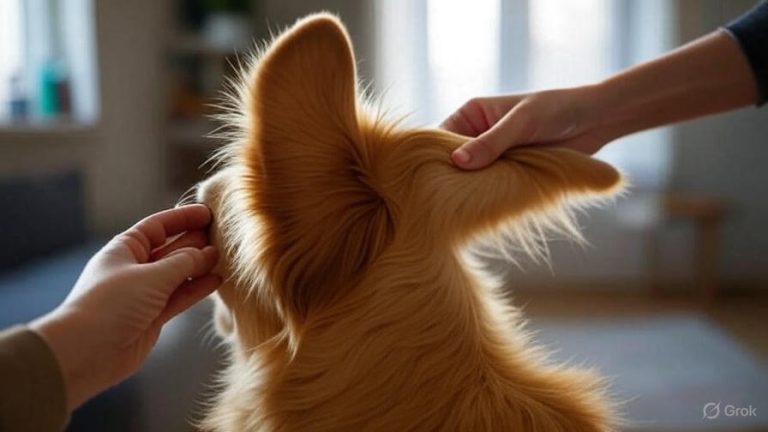
For the ears, use a washcloth or cotton ball dampened with plain water. Wipe the outer ear and inside the flap, but don’t push anything deep into the ear canal. An ear flush or ear cleaner made for dogs works well if your dog’s ears get dirty often.
The face washing is the part most dogs dislike, so keep it quick. Have treats ready to reward brave behavior.
Rinse Completely Every Time
Rinsing is just as important as washing. Any shampoo left in your dog’s coat causes itching and irritation. Rinse thoroughly from head to tail.
Use lukewarm water and pour it slowly over your dog’s body. Start at the head and work downward. Pour water along the hair growth to help shampoo rinse out. Check behind the ears, between the toes, and under the belly where suds hide.
Keep rinsing until the water runs clear with no bubbles. This takes longer than you might think. Run your fingers through the coat to check for any remaining soap. When the water feels slick, that’s usually shampoo. When it feels squeaky, you’re done.
Conditioning Your Dog’s Coat
Conditioner is optional but helpful, especially for dogs with dry skin or long coats. A good conditioner makes combing easier and adds shine to the fur.
Apply conditioner the same way you applied shampoo. Massage it into the coat and let it sit for five minutes. Then rinse it out completely, just like the shampoo. Don’t skip the conditioning rinse. Leftover conditioner feels greasy.
Drying Your Dog Properly
Drying is just as important as washing. Wet dogs get cold and can develop skin problems if left damp too long.
Start with towels. Get your dog out of the tub and onto a towel. Use soft, absorbent towels and squeeze the water out of their coat. Don’t rub roughly; this tangles hair and irritates skin. Gently squeeze each section of their body.
A pet towel or microfiber cloth works great for dog drying. These absorb more water than regular towels. Some owners wrap their dogs in towels for a few minutes to let the fabric soak up moisture.
After toweling, you have two choices: air dry or use a pet dryer. Air drying works fine for most dogs but takes several hours. A pet hair dryer speeds up the process and helps prevent matting in long-coated breeds.
If you use a dryer, keep it on a low heat setting. High heat damages hair and burns sensitive skin. Keep the nozzle a few inches away from your dog’s body. Work in sections and dry thoroughly.
Brush your dog’s coat while it’s still damp if they have long or curly fur. This prevents mats from forming as the coat dries. Use a wide-tooth comb first, then a finer brush.
Tips for Different Coat Types
Dogs come in many coat varieties, and each type needs slightly different care during bathing.
Short-haired dogs dry quickly and need less brushing. Focus on rinsing thoroughly to remove all shampoo from their skin.
Long-haired dogs need extra brushing before and after the bath. Tangles become stubborn when wet. Consider using a conditioning spray to help with combing. Long coats need thorough drying to prevent skin issues underneath.
Curly or wiry coats shed less but tangle easily. Use a conditioner designed for these coat types. Brush carefully to maintain the curl pattern. A professional groomer can help if you’re unsure.
Double-coated dogs like huskies or golden retrievers have thick undercoats. These dogs shed heavily and need thorough brushing before bathing. Use a high-velocity dryer if possible to speed up drying. Wet undercoats take forever to dry and can cause skin problems.
Common Mistakes to Avoid When Bathing Dogs
Learning what not to do prevents problems and makes bathing easier.
Skip the pre-bath brush. Wet mats become cement-like and are painful to remove. Always brush first.
Use human shampoo. This damages your dog’s skin and coat. Stick to dog-specific products.
Rush the rinsing. Leftover shampoo causes itching and flaking. Take your time rinsing.
Bathe too frequently. Over-bathing dries out skin. Stick to every four to twelve weeks unless your dog gets dirty.
Use water that’s too hot. This burns skin and causes discomfort. Test the temperature first.
Ignore your dog’s stress signals. If your dog panics, take a break. Forcing them makes future baths harder.
Forget treats and praise. Positive reinforcement makes your dog cooperate better next time.
How to Handle a Nervous or Difficult Dog
Some dogs hate baths. A bad experience early in life often causes this fear. You can help your dog feel better about washing.
Start slow. Before attempting a full bath, let your dog get used to the tub or shower area. Put them in the empty tub with treats and praise. Let water run nearby so they hear it.
Next, wet their paws with a small amount of water. Reward calm behavior with treats. Gradually increase the amount of water and praise progress.
Use a helper if possible. One person can hold your dog while the other washes. Some dogs feel safer with two people managing the process.
Keep sessions short. A quick, efficient bath stresses anxious dogs less than a long, drawn-out one.
Try bathing at a different time or place. Some dogs prefer a shower to a tub. Others do better in a professional grooming facility with someone trained to handle nervous pets.
Post-Bath Care and Grooming
Bath time doesn’t end when your dog is dry. A few extra steps complete the grooming process.
Brush your dog’s coat once it’s completely dry. This removes final mats and tangles and distributes natural oils throughout their fur. It also gives you a chance to check for any skin issues you might have missed during the bath.
Trim nails after bathing. Wet nails are softer and easier to cut. Use a dog nail trimmer and be careful not to cut into the pink part inside the nail. If you’re unsure, a groomer can help.
Clean your dog’s ears one more time if needed. Use a cotton ball and ear cleaner made for dogs.
Check between the toes for any dirt or debris. Dried-on mud between toes can cause irritation.
Reward your dog with treats and playtime. This creates positive associations with bathing. A dog that enjoyed the experience cooperates better next time.
How Often Should You Bathe Your Dog
The bathing schedule depends on several factors. Active dogs that play outside daily need baths every two to four weeks. Dogs that stay indoors most of the time can go longer, often six to twelve weeks.
Ask your vet if your dog has any skin conditions. Some dogs need medicated baths more frequently. Others with sensitive skin do better with less frequent washing.
Your dog’s breed and coat type matter too. Heavy-shedding breeds benefit from regular washing to remove loose fur. Dogs with oily coats might need more frequent baths. Dogs with dry skin might need less.
Watch your dog for signs they need a bath. A smelly coat, visible dirt, or dull fur all suggest it’s time for washing. Trust your nose and your instincts.
Equipment That Makes Dog Bathing Easier
Investing in the right tools makes the job simpler and safer.
A grooming table or elevated tub puts your dog at a comfortable height. This saves your back and gives you better control. Non-slip surfaces prevent your dog from slipping and reduce anxiety.
A dog shower attachment fits over your regular showerhead. This gives you better water control and uses less water than filling a tub.
A grooming loop or restraint helps keep small dogs in place during bathing. Never leave your dog unattended when using a restraint.
Ear plugs or a solution that prevents water from entering ears protect dogs prone to ear infections. Ask your vet about these products.
Professional Grooming as an Alternative
You don’t have to bathe your dog yourself. Professional groomers have training and experience with all breeds and temperaments. A groomer handles nervous, aggressive, or difficult dogs safely.
Professional bathing works well if your dog is large, has a complicated coat, or hates baths. Groomers also offer services like nail trimming, ear cleaning, and hair trimming.
The cost varies based on your dog’s size and coat condition. Expect to pay anywhere from thirty to over a hundred dollars depending on your location and the groomer’s experience.
Even if you use a groomer, learning to bathe your dog at home is useful. You can do quick cleanups between professional appointments.
Bathing Dogs with Medical Conditions
Dogs with arthritis, hip dysplasia, or mobility issues need special care during bathing. Make sure they can stand safely in the tub. A non-slip mat is essential.
Consider using a grooming table with a loop to help your dog stand. Water shouldn’t be too hot or cold, as extreme temperatures bother dogs with pain or inflammation.
Ask your vet about medicated shampoos if your dog has skin conditions like allergies or fungal infections. These medical products treat problems while you bathe.
Dogs with heart problems or other serious conditions might need shorter, cooler baths to reduce stress on their system. Always check with your vet about bathing if your dog has health issues.
Final Thoughts on Dog Bathing
Bathing your dog is an essential part of pet care. It keeps their coat healthy, prevents skin problems, and gives you a chance to bond with your furry friend. With patience and the right approach, even nervous dogs learn to tolerate baths.
Remember to take your time, use the right products, and reward good behavior. Every dog is different. What works for one might not work for another. Stay flexible and adjust your technique based on your individual dog’s needs.
Soon enough, you’ll have a clean, fresh-smelling dog that’s healthier and happier. And that makes all the effort worthwhile. Happy bathing!