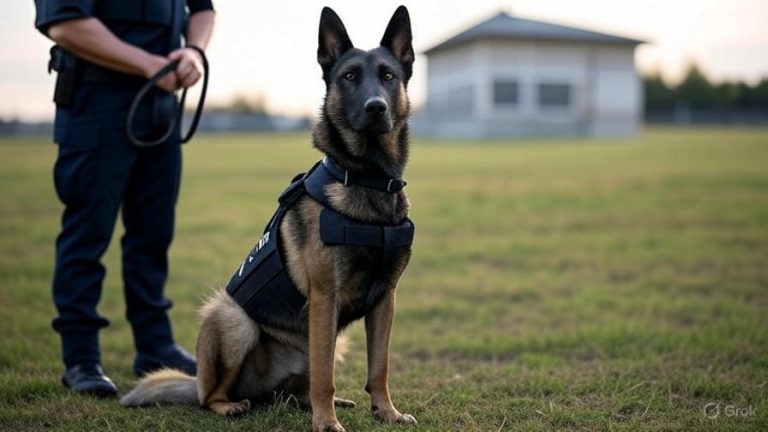
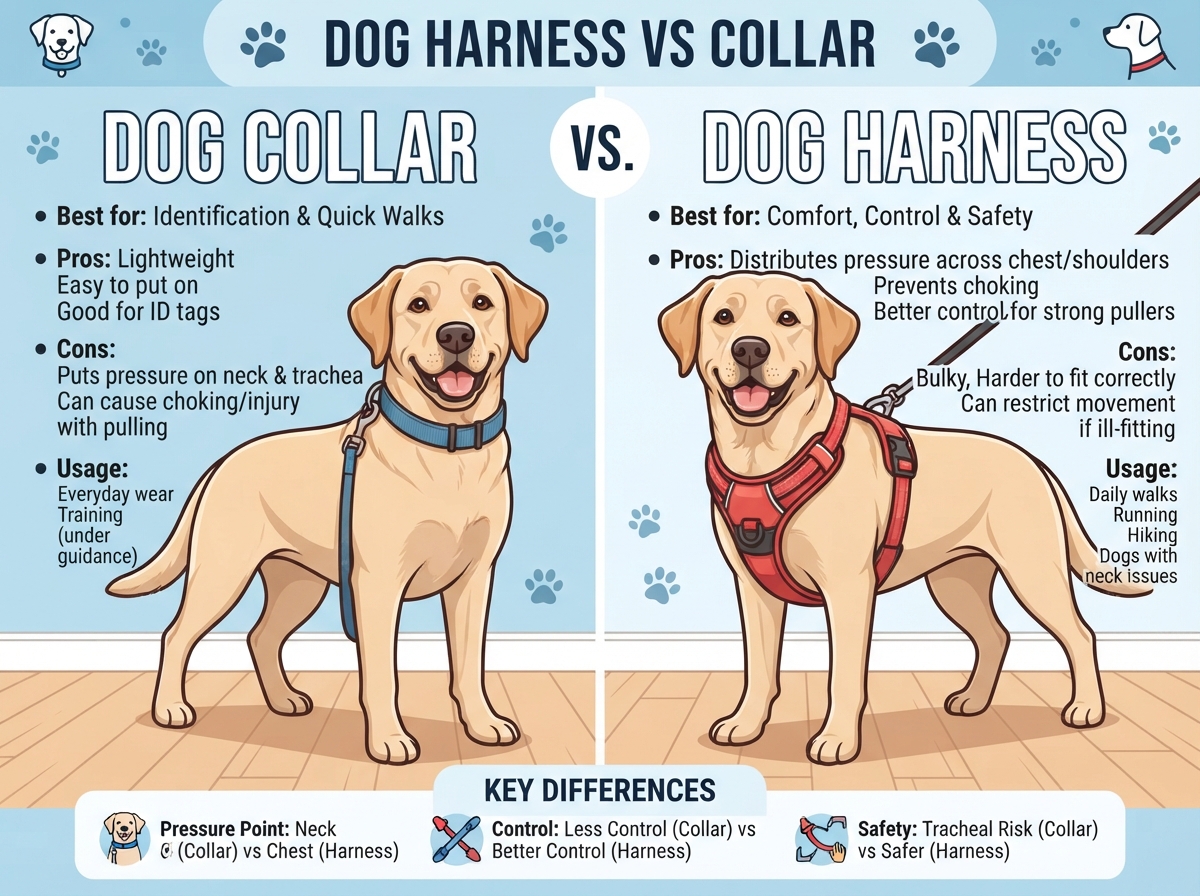
Dog Harness vs Collar
If you’ve got a dog, you’ve probably wondered whether a harness or collar works better for your furry friend. This question pops up in dog parks, on social media, and in conversations with other pet owners all the time. The truth is, both tools have real advantages, and the best choice depends on your specific situation.
Let me walk you through everything you need to know about these two popular walking options so you can make the smartest decision for your dog.
What’s the Real Difference Between These Two?
A collar wraps around your dog’s neck, sitting snugly against the throat and upper neck area. This simple band comes in endless styles, colors, and materials. Most people think of collars when they picture a dog on a leash because they’re the traditional choice.
A harness, on the other hand, wraps around your dog’s body using straps that typically go across the chest, sides, and sometimes the back. The leash attachment point varies depending on the harness type. Some clip at the chest, others at the back, and some even have dual attachment points.
Both tools serve the same basic job: they give you a way to control your dog while walking. But how they work and what they offer your dog are quite different.
The Collar Approach: Classic and Simple
Collars have been around forever because they work. They’re easy to put on, take off, and they don’t require any special fitting. You can grab a collar and hit the road in seconds.
One big reason people stick with collars is that they keep your dog’s ID tags and rabies tag in one familiar spot. Tags hang right there where vets and neighbors can spot them. If your dog runs off, those tags become crucial for getting your pup back home safely.
Collars also give you instant access to your dog’s neck area. If your dog needs medication applied to the skin, gets a tick removed, or needs the vet to check their lymph nodes, a collar doesn’t get in the way. There’s nothing covering the neck area that the vet might need to move or work around.
But collars have some real downsides that many people overlook. When your dog pulls hard on the leash, the force goes directly to their neck and throat. This can damage the trachea (the windpipe), especially if your dog pulls regularly or during training. Small breeds, senior dogs, and dogs with existing breathing problems feel this effect most intensely.
Some dogs develop collapsing trachea from years of collar pulling. This condition causes coughing and breathing trouble that doesn’t go away easily. Once the trachea collapses, your dog deals with it for life.
Collars also don’t give you great control over a strong puller. If a big dog suddenly lunges forward, the collar slides toward one side of the neck. Your dog can twist around, slip out, or pull with more force. This is why training classes often recommend different equipment for dogs that pull hard during walks.
The Harness Approach: Body-Wide Support
Harnesses distribute the pulling force across your dog’s chest, shoulders, and back instead of focusing it all on the neck. This design eliminates the throat pressure problem right away. Your dog can pull without any risk to their windpipe or trachea.
This makes harnesses an excellent choice for dogs with breathing issues, collapsed trachea, neck problems, or breeds prone to these conditions. Dogs with flat faces, like Bulldogs and Pugs, breathe through challenges already, so a harness keeps them safer during exercise.
Harnesses also give you better control. When your dog pulls, you’re directing their whole body, not just their neck. A front-clip harness gently turns your dog’s body toward you when they pull, making it harder for them to keep lunging forward. This actually discourages pulling better than a collar does. No pain or discomfort involved, just a gentle redirect that teaches your dog that pulling doesn’t work.
For large breeds and strong pullers, a harness changes the entire walking experience. You get more power, better control, and your dog gets more comfort. Many dog trainers recommend harnesses specifically for dogs that haven’t learned to walk politely on a leash yet.
Harnesses work wonderfully for senior dogs too. As dogs age, their joints get sensitive. A harness supports their body as they move, and you can help them up stairs or into vehicles by lifting the harness straps instead of pulling their neck.
Yet harnesses aren’t perfect either. They’re bulkier than collars, so they take a bit longer to put on and remove. Some dogs need time to get used to the feeling of straps around their body. Dogs with sensitive skin sometimes get irritation from harness rub if the fit isn’t quite right.
You’ll also need to buy harnesses sized specifically for your dog. Unlike collars, which work with simple adjustments, harnesses require proper fitting. A too-loose harness won’t give you control, and a too-tight one creates discomfort. Getting the right size means measuring your dog’s chest and neck correctly.
Size and Breed Matter More Than You Think
Different dogs benefit from different equipment based on their body shape and size.
Small breeds and toy dogs often work well with collars. These little dogs don’t pull with massive force, so the neck pressure issue matters less. A collar keeps everything simple and accessible. However, tiny dogs with shorter snouts, like Chihuahuas with breathing tendencies, still benefit from harnesses.
Medium dogs are in the middle ground. They can handle collars, but if they’re pullers, a harness makes life easier for both of you. Many medium-breed dogs pull less than large breeds, so either option works if your dog has solid leash manners.
Large and giant breeds almost always benefit from harnesses. A 60-pound dog pulling on a collar creates serious neck pressure. Labs, Golden Retrievers, German Shepherds, and similar breeds pull with real force. A harness becomes almost essential for safe, pleasant walks. The difference in control and comfort is obvious.
Flat-faced breeds like Bulldogs, Pugs, Boxers, and Boston Terriers absolutely should wear harnesses. These dogs already struggle to breathe normally. Adding collar pressure makes their breathing worse during exercise. Harnesses keep these breeds safer and let them enjoy walks without struggling for air.
Dogs with thick, fluffy coats sometimes get skin irritation under harnesses because moisture gets trapped. These dogs might do better with collars for daily wear, though a harness still works for active walks if you dry them off after.
Health Problems Make Your Decision Easier
Some dogs have health issues that make one option clearly better than the other.
If your dog has any kind of heart condition, a harness is safer. Heart problems mean your vet wants to minimize stress on the cardiovascular system. Collar pressure during pulling puts extra strain on the heart. A harness avoids this issue completely.
Thyroid problems also point toward harnesses. The thyroid sits in the neck area, and regular collar pressure can cause inflammation or additional discomfort for dogs dealing with thyroid issues already.
Spinal problems, back pain, or intervertebral disc disease cases need careful consideration. Some dogs with back problems do better with harnesses because the support helps their spine. Talk to your vet about the best option for your specific dog.
Older dogs with joint pain, arthritis, or mobility issues benefit from harnesses. You can support their back end or help them climb stairs using the harness. This support improves their quality of life during their senior years.
Anxiety or fear-based behaviors sometimes change with equipment choice. Some anxious dogs feel calmer in a harness because the snug fit provides comfort. Other dogs feel more secure with a collar. Observe your dog’s behavior with both options if they’re nervous or fearful.
Training and Control Differences
Your training goals also affect which tool works better for your situation.
If you’re teaching your dog to walk without pulling, a front-clip harness is your secret weapon. The way it redirects your dog’s body makes pulling ineffective. Your dog learns faster that tugging on the leash doesn’t accomplish anything. Within weeks, many dogs improve their leash manners significantly.
Collars require more traditional training approaches. You need to teach your dog to walk beside you using treats, practice, and patience. Collars work perfectly fine for training, but the process takes longer with strong pullers.
Recall training works well with both options. The important thing is consistency in your training approach, not the equipment you use.
For dogs learning basic obedience, either option works. The leash is just a safety tool while your dog learns the behaviors you want. Your training method matters more than whether you use a harness or collar.
Safety Concerns You Should Know About
Collar safety goes beyond the pulling problem. Regular collars can catch on things. If your dog gets their collar caught on a branch, fence, or another object while running, they can choke or injure themselves seriously. This is especially dangerous for dogs left outside unsupervised.
Many pet owners use breakaway collars for this reason. These collars have a buckle that releases under pressure, preventing choking if the collar gets caught. They’re inexpensive and solve this safety problem neatly.
Harnesses have their own safety consideration. Escape artists and clever dogs sometimes figure out how to slip out of poorly fitted harnesses. You need to make sure the fit is snug enough that your dog can’t back out of it. Measure twice and test the fit before trusting a new harness completely.
Another safety point: never leave a harness on an unsupervised dog for extended periods. Harnesses can wear on the skin, and dogs sometimes get tangled if left alone wearing them.
The Comfort Factor for Your Dog
Dogs feel harnesses and collars differently. Some dogs barely notice a well-fitted collar. Others find even loose collars irritating and spend the whole walk aware of something around their neck.
Harnesses feel bulkier and take adjustment. Many dogs need a few wearing sessions to get comfortable with the straps and buckles. Once they adjust though, most dogs forget about the harness and focus on the walk.
Temperature matters too. In hot weather, harnesses can trap more heat against your dog’s body. Your dog gets warmer faster in a harness than a collar. Short walks are fine, but longer summer adventures might feel uncomfortable in a full-coverage harness.
Your dog’s individual personality comes into play. Sensitive dogs might object to harnesses initially. Bold, confident dogs often don’t care what you put on them. Watch your dog’s behavior and adjust based on their comfort level.
Making Your Final Decision
Start by thinking about your dog’s specific needs. What’s their size, age, and health status? Do they pull? Do they have any breathing or neck problems? The answers to these questions point you toward the best choice.
For healthy dogs without pulling issues, collars work great. They’re simple, classic, and perfectly safe.
For pullers, large breeds, senior dogs, or dogs with health problems, harnesses make sense. The control and comfort improvements are significant.
Many dog owners use both. They wear a collar for casual time at home or short neighborhood strolls. They switch to a harness for serious hikes, trips to the dog park, or situations where they need maximum control.
You can also use a collar for ID tags and wear a harness for walking. Clip the harness over the collar so your dog has both the identity tags and the equipment benefits.
The best equipment is the one your dog actually wears willingly and that keeps both of you safe and happy. Test both options if you can. Borrow a friend’s harness to see how your dog responds before buying your own.
Final Thoughts
Neither harnesses nor collars are perfect for every situation. Both have benefits and drawbacks. Your job is matching the right tool to your dog’s specific needs, size, age, and behavior.
A collar works well for calm, well-trained dogs. A harness serves better for pullers, large breeds, senior dogs, and dogs with health problems. Many successful dog owners use both tools for different situations.
Stop worrying about which one is “correct.” Instead, focus on what makes your dog comfortable, keeps them safe, and makes your walks enjoyable. That’s the real goal of any walking equipment. When your dog walks happily beside you and you’re not battling their pulling, you’ve found the right solution for your pup.
Hi, I’m Mary, the founder of PetGadgetPro.com. I’m a passionate pet lover with a special place in my heart for dogs and cats. I share practical advice and honest insights on pet gear to help pet parents make better choices. My dedicated research team studies products in depth, and our writers create reviews using trusted, authentic sources—so you can feel confident choosing the best for your pets.