How Many Cat Beds Do I Need?
So you’ve got a cat (or maybe a few), and you’re wondering how many cat beds to actually buy. This is a question that more cat owners ask than you might think. The answer isn’t just “one and done” — it’s a bit more nuanced than that. Let’s break down everything you need to know about cat beds, how many your feline friend really needs, and why the number matters more than you realize.
The Short Answer
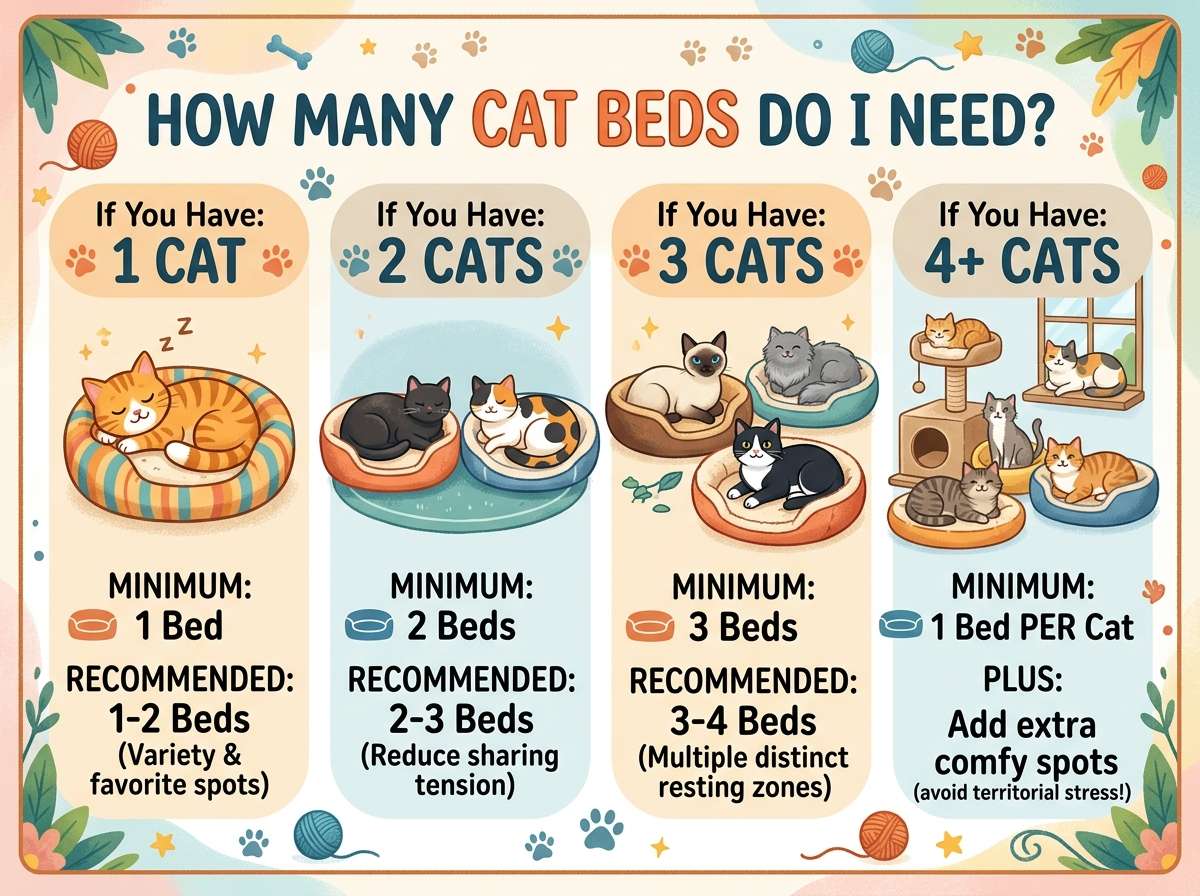
Most cats do well with at least two to three cat beds scattered around your home. Some cat owners find that four or five beds work even better. The exact number depends on a few things: how big your house is, how many cats you have, and what your cat’s personality is like. But here’s the real truth — most cats benefit from having multiple sleeping spots available to them throughout the day.
Why Multiple Cat Beds Make Sense
Your cat isn’t just napping in one spot all day long. Cats are creatures of habit, sure, but they also love having options. Think about how you might sleep in different rooms depending on the time of year, the temperature, or just your mood. Cats do something similar.
A cat bed in the sunny living room window becomes their favorite afternoon nap spot. A cozy enclosed bed in the bedroom gives them a safe space at night. A raised bed in the corner of the kitchen means they can keep an eye on you while you cook. When you provide multiple cat beds, you’re giving your pet choices. This simple act makes your cat happier and more content.
Cats also like to switch up their sleeping spots based on the time of day. Morning might call for a sunny window perch. Afternoon heat sends them to a cooler, shaded spot. Evening time? They might want something enclosed and cozy. By having several cat beds in different locations, you’re setting your cat up for comfort throughout the day.
The One-Cat Household
If you have a single cat, two to three beds is a solid starting point. Here’s why this works well:
The bedroom bed. Cats often want to sleep where their humans are at night. A cat bed in your bedroom gives your cat a comfortable place to rest without jumping on your head at 3 AM. Some cats will love sleeping on the bed with you, and that’s fine. But having a dedicated cat bed nearby gives them an alternative if they get too warm or just want their own space.
The living room or main area bed. This is where your cat might spend time during the day. A bed in the living room, den, or wherever you hang out most gives your cat a spot to stay close while you do your thing. Cats like being near their people, even if they’re just sleeping.
The bonus bed. A third bed could go in a sunny window, a quiet corner, or anywhere else your cat seems to gravitate. This gives your cat maximum flexibility.
For a single cat in a smaller home, you might get away with just two beds. For a single cat in a larger house with multiple rooms, three or even four beds spread throughout different areas makes a lot of sense.
Multiple Cats and Bed Strategy
When you’ve got two or more cats, the math changes a bit. Cat behavior experts often recommend having at least as many beds as you have cats, or even one more. So if you have two cats, aim for three beds. Three cats? Four beds is smart.
Why? Cats have territories. Even cats that get along need their own space sometimes. If two cats share a bed, they might be happy together. But if both want the same bed at the same time, one cat might get stressed or feel like they need to guard it. Multiple beds eliminate this tension.
Also, cats have different preferences. One cat might love the enclosed, cave-like bed. Another cat might prefer an open, raised platform where they can see everything. A third cat might be all about that sunny window spot. When you have multiple cat beds, each cat can pick the one that suits their personality best.
If your cats are close and snuggle together regularly, they might willingly share a bed. But it’s still good to have extra beds available. If a conflict ever develops or one cat gets sick and needs isolation, those extra beds become invaluable.
What About Cat Bed Types?
The type of bed you choose also plays a role in how many you might want. Let’s talk about the different styles:
Enclosed beds. These are perfect for anxious cats or cats that like to feel secure. They have walls and a roof, creating a den-like space. Many cats love these because they feel protected. You might want one or two of these in different areas of your home.
Open beds. These are like little cushions or mats on the ground. Cats can jump in and out easily, and they can see their surroundings. Some cats prefer these because they like to keep an eye on things. Open beds are great in high-traffic areas where your cat wants to stay aware of activity.
Elevated beds. Cats love height. Elevated beds give cats a perch where they can look out windows or watch the household from above. These beds often have a frame that lifts them off the ground. An elevated bed in different rooms gives your cat multiple vantage points throughout your home.
Window perches. If your cat loves sunbathing, window perches are game-changers. These attach to windows and give cats the best spot in the house for warmth and people-watching. You might have one on a main window and another on a secondary window.
Donut or bagel beds. These circular beds have raised edges that cats love to rest their heads on. They’re enclosed enough to feel cozy but open enough for cats to see out. Many cats find these beds irresistible.
When you mix these bed types throughout your home, you’re offering variety. Your cat gets to experience different types of comfort, and you’re addressing different cat behaviors and preferences.
Room-by-Room Bed Placement
Let’s think about where to actually put your cat beds. A good strategy is to place beds in rooms where your family spends time and in areas where your cat naturally gravitates.
Bedroom. A cat bed in the bedroom makes sense for most households. Even if your cat doesn’t always sleep there, having the option available is good. This could be an enclosed bed for security or an open bed for easy movement.
Living room. This is usually a high-traffic family zone. Your cat wants to be near the action. A comfortable bed in the living room or family room lets your cat rest while staying connected to their humans.
Kitchen or dining area. Some cats like to hang out in the kitchen, watching food prep and waiting for dropped snacks (we don’t judge). A bed in this area works for those curious cats.
Home office or workspace. If you work from home, your cat might want to be in the room with you. A bed on the floor or an elevated perch gives them a spot to relax while you work.
Bathroom. This might seem odd, but some cats like bathrooms. They’re often quiet and cool. If your cat spends time in the bathroom, a small bed there is fine.
Sunroom or area with windows. If you have a room that gets lots of natural light, this is prime real estate for a cat bed. Cats love sunbathing, and a window perch or elevated bed in a sunny spot becomes a favorite.
Laundry room or utility area. Some cats feel safe in quieter, more removed spaces. A bed in a utility area gives them an escape hatch when they want peace and quiet.
You don’t need a bed in every single room. Just aim for beds in areas where your cat spends time and where your family is most active.
Seasonal Considerations
Cat sleeping preferences can shift with the seasons. In warmer months, cats look for cooler spots. In cooler months, they want cozy, warm beds. This is another reason multiple beds are helpful.
During hot months, you might find your cat prefers the cool tile floor in the kitchen or a bed in a shaded, breezy area. Having beds in these cooler spots gives your cat options. Some cat beds are made with cooling materials, which work great for summer comfort.
When it gets cooler, your cat might want enclosed, insulated beds that trap warmth. A fleece-lined bed or a cave-style bed becomes more appealing. Having these cozy options available means your cat can always find the right temperature zone.
In moderate seasons like spring and fall, your cat might bounce between warm and cool spots throughout the day. Multiple beds mean your cat never has to choose between comfort and their preferred sleeping location.
Quality vs. Quantity
You don’t need fancy beds. Honestly, cats don’t care if a bed costs five dollars or fifty dollars. What matters is comfort, location, and cleanliness. A simple cushion works just as well as an expensive designer pet bed if your cat likes it.
That said, investing in a few quality beds is smart. Look for beds with washable covers, since you’ll want to clean them regularly. Beds that hold their shape and don’t flatten out after a few weeks are worth it.
You can get basic cat beds inexpensively, especially if you shop during sales or buy from budget-friendly retailers. Having three solid, affordable beds is better than having one expensive bed. Your cat will use them all.
Some cat owners get creative too. A soft blanket in a cardboard box can work as a cat bed. Cats actually love boxes, even plain ones. So if you want to save money, don’t rule out simple options.
The Reality Check
Here’s the honest truth: your cat might pick one favorite bed and ignore the others. That happens. But here’s the thing — even if your cat has a favorite, having backup beds matters. If that favorite bed needs washing, your cat has alternatives. If you need to isolate one cat due to illness, extra beds make that easier.
Also, cats change their minds. A bed your cat ignored for months might suddenly become their new favorite. Having multiple beds means you’re prepared for these shifts in preference.
And if you ever get another cat, you’re already set up with beds for them. If you move to a new home, having multiple beds helps you recreate a comfortable environment faster.
Signs Your Cat Might Need More Beds
Watch for clues that your current setup isn’t cutting it. If you see your cat climbing into small spaces like closets or cubbies regularly, they might be looking for more bed options. If your cat seems restless or moves from spot to spot a lot without settling, they might want more choices.
If you have multiple cats and you notice them competing for the same bed frequently, add more beds. If a cat gets stressed when another cat is near their preferred sleeping spot, extra beds reduce conflict.
If you find your cat sleeping in uncomfortable places like cold tile or the hard floor when other beds are available, the location might be the issue. They want that spot for a reason — maybe it’s cooler, quieter, or in a better viewing area. A bed in that location might solve the problem.
Maintenance and Cleanliness
Having multiple beds means thinking about cleaning. You want to wash cat bed covers regularly to keep them fresh and remove dander, fur, and odors. If you only have one bed, you might be stuck waiting for it to dry after washing.
With multiple beds, you can rotate. Wash one while your cat uses another. This keeps your cat always having a clean, fresh bed available. It’s one of those hidden benefits of having several beds instead of just one.
The Bottom Line
For most single-cat households, two to three beds is the sweet spot. For multiple-cat homes, aim for at least as many beds as cats, or one more. Spread these beds throughout your home in places where your cat naturally spends time. Mix up bed types to address different cat preferences. Keep them clean and comfortable.
Your cat will tell you if you’ve got the right number. If your cat seems content, has favorite beds in different areas, and isn’t fighting over sleeping spots, you’re probably in good shape. If your cat still seems to want more options or you’re seeing signs of stress around beds, add one more.
Remember, cat beds don’t have to break the bank. Affordable, practical beds in good locations serve your cat just as well as expensive ones. What matters is giving your feline friend choices and comfort throughout their day.
Think of cat beds like the furniture in your own home. You wouldn’t want to sleep in the same spot, in the same position, every single day. Neither does your cat. By providing multiple beds, you’re not just solving a practical problem — you’re enhancing your cat’s quality of life.
So go ahead and set up those two or three cat beds. Put one in the bedroom, one in the main living area, and one in a sunny spot or quiet corner. Watch your cat gravitate to their favorite spots. Adjust as needed based on what you observe. Your cat will thank you by being happier, more relaxed, and more content.
Cat beds are one of those simple solutions that have a big impact. They’re affordable, easy to set up, and they make a real difference in how much your cat enjoys their home. Start with the basics, add more if you need to, and you’ll quickly figure out the perfect number for your unique feline friend.

Hi, I’m Mary, the founder of PetGadgetPro.com. I’m a passionate pet lover with a special place in my heart for dogs and cats. I share practical advice and honest insights on pet gear to help pet parents make better choices. My dedicated research team studies products in depth, and our writers create reviews using trusted, authentic sources—so you can feel confident choosing the best for your pets.