How Often Should Air Purifier Filters Be Changed?
If you’ve got an air purifier sitting in your home, you’re probably wondering when you need to swap out those filters. It’s one of those questions that doesn’t have a simple answer, but don’t worry—we’re going to break it down into easy-to-understand pieces so you can keep your air clean without overthinking it.
Why Filter Changes Matter More Than You Think
Air purifier maintenance isn’t just something to check off your to-do list. When you run an air purifier, it works hard to trap dust, pollen, pet hair, and other junk floating around your space. As your filter catches all these particles, it gradually gets clogged. A dirty filter can’t work as well as a clean one, and in some cases, it stops working properly altogether.
Think of it like a sponge. A fresh sponge soaks up water fast, but after you use it for a while, it gets full. You need to clean it or replace it to keep it working right. The same thing happens with air purifier filters.
Keeping up with filter changes means your purifier runs at peak performance. Your home’s air quality stays better. You breathe cleaner air. Your family stays healthier. It’s really that important.
The Basic Rule of Thumb for Filter Replacement
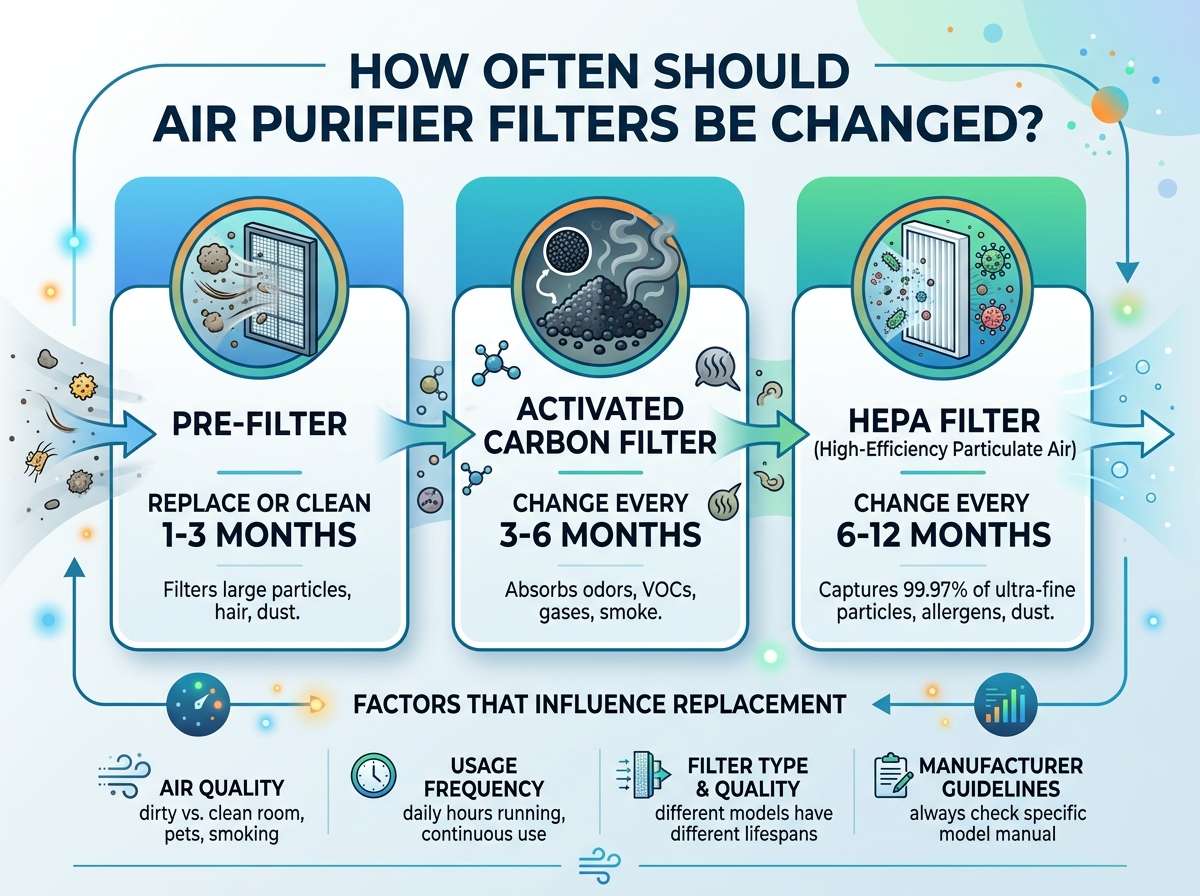
Most air purifiers need new filters between every three months and one year. But this depends on a bunch of different factors specific to your home and lifestyle.
Here’s the thing: there’s no magic number that works for everyone. Your neighbor might change their filters every three months, while you might only need to do it twice a year. It all comes down to how much your purifier actually has to work.
Start by checking what the manufacturer recommends. Open up your purifier’s manual or visit the company’s website. They give specific guidance based on testing they’ve done with their own products. This is always a great starting point.
Factors That Change How Often You Need New Filters
How Big Is Your Space?
The size of the room matters a ton. A small bedroom has way less air to clean than an open living room. Your purifier covers a certain area, listed as its Clean Air Delivery Rate (CADR). This number tells you how much air it can clean per minute.
If you run your purifier in a space that’s way bigger than it’s made for, the filter works overtime. It gets dirtier faster. You’ll find yourself changing it more often.
Running your purifier in the right-sized room means the filter lasts longer and works better. Make sure you know what area your machine covers before you buy it.
Air Quality Around You
Where you live affects everything. People living near busy roads deal with more pollution. Folks in dusty areas have extra particles floating around. If you’re near a desert or live somewhere with lots of dust storms, your filter gets gunked up quicker.
Even if you’re not near major pollution sources, construction projects nearby can kick up dust. Wildfires in neighboring areas can send smoke your way. Seasonal changes bring different air quality challenges throughout the year.
Check your local air quality index regularly. If it’s often “unhealthy” or “very unhealthy,” your filter’s working way harder than someone living with good air quality. Plan for more frequent changes.
Pets and Their Impact
Do you have cats or dogs? They shed like crazy. Pet hair gets everywhere, and your air purifier catches a lot of it. If you’ve got multiple pets, multiply that by the number of animals.
People with pets typically change their filters twice as often as people without them. Some change them every two to three months instead of six to twelve months. Pets create extra work for your purifier, and there’s no way around it.
The best part? Regular filter changes help keep pet odors down too. It’s a win for your air quality and your home’s smell.
Allergies and Health Issues
If someone in your home has bad allergies or respiratory issues like asthma, keeping up with filter changes becomes even more important. Changing filters on a regular basis rather than waiting until the last minute helps manage their symptoms.
When filters get really dirty, they can’t trap as many allergens. This means more pollen, dust mites, and other irritants stay in your air. People with health concerns need cleaner air more than anyone else.
How Often Do You Actually Run It?
This seems obvious, but lots of people don’t think about it. If you run your purifier 24/7, the filter works hard every single day. If you only run it a few hours a day, the filter doesn’t accumulate as much stuff.
Some people run their purifier just at night. Others keep it going all day long. Heavy users will need to swap filters more often than casual users.
The type of filter matters too. HEPA filters (High-Efficiency Particulate Air) last longer than basic filters, but they cost more money upfront. Activated charcoal filters catch odors but might need changing more often depending on your needs.
Different Filter Types and Their Lifespans
HEPA Filters
HEPA filters are the gold standard. These things can trap 99.97% of particles that are 0.3 micrometers or larger. That’s tiny. We’re talking about stuff you can’t even see.
Most HEPA filters last between six months and one year with regular use. Some models claim longer lifespans, up to two years, but this depends on your air quality and how much you run the unit.
The good news is that HEPA filters are worth the investment. They do the best job of any filter type, and they last a reasonable amount of time.
Activated Charcoal Filters
Charcoal filters handle smells and gases. They work great if you’re dealing with cooking odors, cigarette smoke, or chemical fumes. However, they don’t trap physical particles like dust as well as HEPA filters do.
These filters typically need changing every three to six months. They can get saturated with odors faster than HEPA filters get stuffed with particles.
Many purifiers use activated charcoal as a pre-filter before the HEPA layer. This combination works really well because you get odor control plus particle removal.
Pre-Filters
Pre-filters catch the big stuff. We’re talking about dust bunnies, pet hair, and visible debris. They work like a bouncer for your HEPA filter—they keep the major junk from reaching it.
Pre-filters can last longer than other layers, sometimes three to six months or even a year. Some people wash and reuse them instead of throwing them away, which saves money.
Multi-Layer Filters
Lots of modern purifiers have filters with multiple layers. You might have a pre-filter, a HEPA layer, and a charcoal layer all working together. Each layer tackles different stuff.
With multi-layer filters, the entire filter usually needs replacing at the same time. You can’t just swap one layer. The manufacturer times these filters so all layers wear out around the same time. Most last six to twelve months.
How to Know When It’s Time to Change Your Filter
Visual Inspection
The easiest way to know if your filter needs changing is to look at it. Open up your purifier and take a look at the filter.
A clean filter looks white or off-white. It’s not stuck with gunk. You can see it’s still doing its job. A filter that’s ready for replacement looks gray, brown, or downright black. Dust and junk stick all over it.
If you see a heavily discolored filter, it’s definitely time for a new one. Don’t wait around thinking it still has life left in it.
Reduced Air Flow
When a filter gets clogged, your purifier starts running louder. The motor has to work harder to push air through a dirty filter. You might notice the fan sounds more intense than usual.
Another sign is reduced air coming out of your purifier. Put your hand near the outlet and feel the air. Compare it to what it felt like when the unit was new. If the flow is noticeably weaker, the filter’s probably clogged.
Some purifiers have a fan speed that you set manually. If you normally run it on low speed but now you need to crank it to high speed to get the same results, that’s a sign the filter needs changing.
Check the Filter Indicator Light
Modern purifiers come with filter indicator lights. This is incredibly helpful because you don’t have to guess. The light tells you exactly when to change your filter.
These lights work by measuring air flow or by using a timer. They know when the filter’s getting too clogged to work well. When the light comes on, take it seriously and grab a replacement.
Don’t ignore the light thinking you’ll do it later. These sensors help you stay on top of maintenance without any confusion.
Count the Days
Keep a simple calendar note about when you put a new filter in. Then count the days until it’s time to change it again. For example, if your manual says to change it every six months, put a reminder on your phone for six months from the install date.
This works great for people who don’t notice visible signs of filter clogging. It’s especially useful if your air quality is pretty good and filters don’t get visibly dirty fast.
Feel the Filter Weight
This sounds weird, but it works. A new filter weighs less. A filter that’s collected tons of dust and particles weighs noticeably more. If you pick up your filter and it feels heavy compared to a fresh one, you know it’s loaded with stuff.
Signs You’re Changing Filters Too Often
Sometimes people go overboard and change filters more than needed. This wastes money and isn’t necessary.
If your filter still looks mostly white and you’re changing it every month, you’re probably doing too much. Unless you have a doctor’s orders or severe environmental issues, monthly changes are rare.
If your purifier cost a fortune and you’re worried about using it, relax. These machines are meant to be used. Running them constantly doesn’t destroy them. Change the filters on a normal schedule and stop second-guessing yourself.
Some people get paranoid about air quality and want to change everything as often as possible. That’s understandable, but it’s not necessary for most homes. Stick to the manufacturer’s recommendations.
Steps to Change Your Air Purifier Filter
Step One: Turn It Off
Before you do anything, unplug your purifier or turn it off completely. You don’t want it running while you’re working on it.
Step Two: Find the Filter
Open up your purifier’s casing. Usually there’s a panel that pops off or unscrews. Check your manual if you can’t figure out how to open it. The filter is inside, and it’s usually pretty obvious once you look.
Step Three: Remove the Old One
Pull out the old filter. Be prepared for it to be dusty. You might kick up some particles into the air. Some people do this outside to avoid spreading dust around their home. That’s smart thinking if you want to keep your indoor air clean while you’re working on the purifier.
Don’t touch the HEPA filter material itself if you can avoid it. The mesh can tear if you handle it rough. Grab it by the edges or the frame instead.
Step Four: Clean the Inside
While you’ve got the purifier open, wipe out the inside with a damp cloth. Dust collects in there too. You’re already changing the filter, so you might as well clean everything.
Use a soft cloth so you don’t scratch anything. Avoid getting water in any electrical parts or motors.
Step Five: Install the New Filter
Slide the new filter in place. Make sure it sits flat and doesn’t have any gaps around the edges. A filter that’s not seated properly won’t work as well.
Most filters only go in one way. If you struggle to fit it, check the manual or look for arrows on the filter itself. These point you in the right direction.
Step Six: Close It Up
Put the panel back on and secure it. Make sure everything’s tight. Check your filter indicator light if your unit has one. Some purifiers automatically reset the light when you install a new filter. Some need you to hold a button for a few seconds.
Step Seven: Turn It Back On
Plug in your purifier or turn it back on. Let it run for a few minutes and make sure it’s working right. Listen for normal operating sounds. Feel for good air flow.
That’s it. You’ve successfully changed your filter.
Money-Saving Tips for Filter Maintenance
Buy Filters in Bulk
Replacement filters aren’t cheap. If you buy them one at a time, you pay more. Check online retailers and see if buying multiple filters at once saves money.
Some companies offer subscription services where they send you new filters on a regular schedule. This guarantees you’ll have them when you need them, and sometimes the subscription price is lower than buying separately.
Compare Brands Before Buying
Not all replacement filters cost the same. The manufacturer’s filters are usually most expensive. Third-party filters made to fit your model might be cheaper and work just as well.
Read reviews before buying off-brand filters. Make sure people say they fit right and perform similarly to the original. A cheap filter that doesn’t work isn’t a deal at all.
Take Care of Pre-Filters
If your purifier has a washable pre-filter, clean it regularly instead of replacing it. Most pre-filters handle washing well. Rinse it under water, let it dry completely, and pop it back in.
Cleaning a pre-filter every month or two keeps it working longer. You might only need to replace it once a year instead of several times. That saves serious cash over time.
Run Your Purifier Smartly
You can extend filter life by running your purifier intelligently. Run it on low speed when air quality is decent. Crank it up to high speed when you really need the cleaning power.
Run it less when you’re not home. Your purifier doesn’t need to clean empty rooms. Set a timer so it shuts off automatically. You save electricity and extend filter life.
Get a Humidifier or Dehumidifier
This sounds unrelated, but controlling humidity helps your purifier work better. Very dry air and very humid air both reduce purifier efficiency. Keep humidity between 30% and 50% if you can.
A balanced humidity level means your filter doesn’t have to work as hard. Your filter lasts longer and your air stays better balanced overall.
Keeping Track of Filter Changes
Use a Spreadsheet
Keep a simple spreadsheet showing when you installed each filter. Write down the date and note anything important, like why you changed it early (construction, guests, pets, etc.).
Over time, you’ll see patterns. You’ll know exactly how often your filters need changing under normal circumstances.
Set Phone Reminders
Use your phone’s calendar or reminder app. Set alerts for when you need to check your filter or replace it. Don’t rely on memory.
Set the reminder a week before your estimated change date. That gives you time to order a replacement if you’re out. You won’t get caught without a filter when it’s time.
Label Your New Filters
Write the installation date on the filter itself with a permanent marker. Just a quick date on the frame is enough. When you look at it later, you’ll know instantly how long it’s been in there.
Join Online Communities
Look for air quality forums or groups on social media. People discuss their experiences with different purifiers and filters. You’ll get real-world advice from actual users who’ve figured out the best schedules.
Common Mistakes People Make
Ignoring Filter Indicator Lights
Some people get an indicator light and ignore it. They think the light’s wrong or they’re not ready to spend money yet. This is a mistake. The light exists for a reason. Trust it and change your filter.
Using the Same Filter Too Long
People sometimes try to stretch filter life way beyond what’s recommended. They think the filter still looks okay so it must still work. A filter that looks dirty is already struggling.
Waiting too long to change a filter means your purifier’s working at reduced efficiency. You’re not getting the air quality you paid for. Just change it on schedule.
Not Checking What Your Unit Needs
Everyone’s air purifier is different. What works for your friend’s purifier might not apply to yours. Read your manual. That’s where the real answers live.
Never Cleaning Around the Unit
Filter changes only work if dirty air can reach your purifier in the first place. If your unit is surrounded by clutter, air can’t flow freely to it.
Keep the area around your purifier clear. Don’t put it in a corner blocked by furniture. Let it do its job right.
Forgetting Filter Maintenance Completely
The worst mistake is buying a purifier and never thinking about it again. New filters don’t magically appear. If you don’t keep up with maintenance, your purifier becomes useless.
It’s like buying a car and never changing the oil. Eventually, it quits working. Stay on top of your filter changes.
Final Thoughts on Air Purifier Filter Changes
Changing your air purifier filter isn’t rocket science. It’s a simple task that takes maybe five minutes of your time. Do it on a regular schedule and you’ll get clean air for years to come.
Start with what the manufacturer recommends. Then pay attention to how your filter looks and performs. After a while, you’ll develop a feel for how often your specific setup needs filter changes.
Most people find they need to change their filters somewhere between three and twelve months. Where you fall in that range depends on your home, your environment, and how much you use your purifier.
Keep the task simple. Don’t overthink it. Get a new filter when the old one looks dirty or your indicator light tells you to. Your home’s air quality will stay great, and your purifier will keep running like new.
The small effort you put into regular filter maintenance pays off big in air quality and family health. It’s one of those easy wins that makes a real difference in your home environment. Do it regularly, and you’ll never have to stress about dirty air again.
Hi, I’m Mary, the founder of PetGadgetPro.com. I’m a passionate pet lover with a special place in my heart for dogs and cats. I share practical advice and honest insights on pet gear to help pet parents make better choices. My dedicated research team studies products in depth, and our writers create reviews using trusted, authentic sources—so you can feel confident choosing the best for your pets.