5 Best Grooming Routine For Indoor Cats In 2026
As an Amazon Associate we earn from qualifying purchases.
A good grooming routine helps an indoor cat keep a clean, smooth coat and fewer loose hairs around the home. Indoor cats do not always get the natural wear that outdoor cats get, so their fur can build up with dead hair, dander and small tangles.
Regular brushing also gives you a chance to check the skin and coat for changes, such as flakes, bald patches or small bumps. This guide is for beginners who want to understand the best grooming routine for indoor cats and which tools fit that routine.
The five products covered here are all grooming tools sold for cats, mostly brushes, combs and one silicone massager. They share one main goal: removing loose fur and keeping the coat comfortable. This comparison rests on the listed features, the typical use of each product type and general grooming knowledge, not on personal testing. Short-haired, long-haired and double-coated cats each need slightly different tools, so the best choice depends on your cat’s coat.
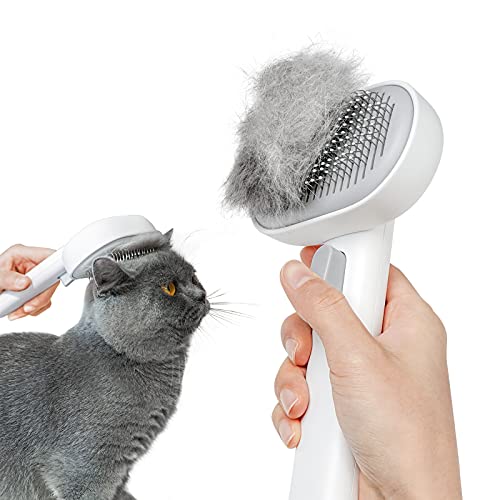


1. Aumuca Cat Brush: best for heavy shedding and thick undercoats
The Aumuca Cat Brush is a self-cleaning brush with metal pins. It is sold for shedding and suits cats with medium, long or thick coats. The brand also positions it for dogs and rabbits, but this review focuses on cat use.
Who it suits
This brush suits owners of indoor cats that shed a lot or have a dense undercoat. It is a sturdier option for people who want a tool that can reach below the top layer of fur. For example, a cat with a thick winter coat may need this kind of reach, while a short-haired cat with light shedding may not. Owners of very sensitive or thin-skinned cats may want a softer tool.
Key features in simple words
The pins have rounded rubber tips, so the brush is meant to massage the skin without scratching it. The pins are bent at about 150 degrees, which helps them reach deeper into the coat. The listing also says the wire bristles are thicker than many similar brushes, which suggests they are less likely to bend over time.
A release button on the handle pushes a plate out. This pulls the hair off the pins so you do not have to pick it out by hand. A silicone loop strap is included for hanging the brush and protecting the pins.
Daily use and results
In everyday use, a brush like this usually takes a few minutes per session. Most of the work is done in the first few strokes, when the undercoat hair comes loose. Brushing in short sessions, a few times a week or more during shedding seasons, is often easier for both you and your cat than one long session. Owners usually notice the most hair on the brush during seasonal coat changes.
Ease of use
The self-cleaning button makes cleanup quick. The handle is the standard size for a grooming brush. Because the pins are metal, brushing takes some care, especially around the belly and armpits where skin is thin. Hold the brush lightly, follow the direction of hair growth, and stop if your cat shows signs of discomfort, such as twitching, flattened ears or turning to swat.
Value for money
At the listed price, this is a moderately priced brush with a useful feature set. The included replacement or refund policy adds some reassurance. The listing describes the seller as a strong seller, which may suggest many buyers have used it. Check the current price and policy on the listing before you buy, since both can change.
Pros
- Self-cleaning button removes hair from the pins quickly.
- Bent pins are designed to reach the undercoat.
- Rounded rubber tips are meant to protect the skin.
- Includes a strap to hang the brush and protect the pins.
Cons
- Metal pins may feel too firm for very sensitive cats.
- Requires more care than a soft brush on thin skin.
- Not designed specifically for cats, as the listing also mentions dogs and rabbits.
2. Cat Brush by YiEFUR: best soft brush for everyday gentle grooming
The YiEFUR Cat Brush is a self-cleaning brush with soft-tipped bristles. It is sold for both long-haired and short-haired cats. It is a gentle option for regular brushing rather than heavy undercoat work.
Many new cat owners start with a soft brush because it feels less intimidating to both person and pet. This brush fits that role well. It is best understood as a comfort-focused tool for routine care, not a complete grooming kit.
Who it suits
This brush suits owners who want a comfortable, low-effort routine for indoor cats. It is a good match for cats with short or medium coats and for people who are new to grooming. A calm cat that already enjoys being touched will often accept it more easily.
Owners of cats with dense undercoats may need a firmer tool in addition. A soft brush can still be useful for finishing a session, smoothing the top coat, and keeping the cat used to being brushed.
Key features in simple words
The bristles have soft tips, which help loosen small tangles without digging in hard. The handle is made of soft silicone with a curved shape, so the grip stays comfortable during longer sessions. The listing describes the bristles as gentle enough for a relaxing massage.
A push button releases the fur from the bristles. The listing says this saves you from picking hair out between the bristles by hand. The materials are described as durable and free of toxins and chemicals.
Daily use and results
In everyday use, this brush works best as a regular maintenance tool. A few short sessions each week can keep loose hair under control. Sessions of five to ten minutes are often enough for a cat that tolerates brushing well, though each cat is different.
For heavy shedding, owners often need to brush more often or pair it with a firmer tool. Watching how much hair comes off in each session can show if the current routine is keeping up.
Ease of use
The silicone handle and self-cleaning button make this brush simple to use. Beginners often find it easy to hold and control. There are few parts to clean, which keeps the routine quick.
Brushing in the direction of fur growth, and stopping if the cat shows signs of discomfort, helps keep sessions pleasant. Short, calm sessions tend to work better than long ones.
Value for money
At the listed price, this is one of the lower-cost options in this group. For a simple, everyday brush, that makes it an accessible starting point. Its value depends on if your cat needs a soft tool or a firmer one.
If your cat has a thick undercoat, a lower price will not help much if the brush does not remove the hair you need it to. Matching the tool to your cat’s coat is the best way to get value from any purchase.
Pros
- Soft tips are gentle for everyday brushing.
- Silicone handle is comfortable and easy to grip.
- Self-cleaning button makes cleanup quick.
- Low price makes it an easy first purchase.
Cons
- Soft bristles may not remove dense undercoat as well as firmer brushes.
- Heavy shedding may need more frequent sessions.
- Few details are given about bristle length or density.
3. PetPals Cat Grooming Massager: best for self-grooming and cat trees
The PetPals Cat Grooming Massager is a silicone massager with flexible bands. It attaches to furniture and cat trees so the cat can rub against it. It is designed to let the cat groom itself rather than relying on the owner.
Many cats already rub their cheeks and sides on corners, posts and doorframes. This product works with that habit by placing a grooming surface exactly where the cat likes to press. The idea is to add a little extra grooming help between your own brushing sessions.
Who it suits
This massager suits owners who want to support self-grooming between brushing sessions. It works well for cats that already like to rub on posts, table legs or chair legs. If your cat tends to rub on a particular corner of the sofa, that spot is a good place to start.
It is less useful for owners who need a tool for hands-on grooming. Long-haired cats, or cats that shed heavily during seasonal changes, usually still need regular brushing by a person. This device can complement that routine but rarely replaces it.
Key features in simple words
The adjustable bands wrap around posts, furniture legs and door frames. They are meant to hold the massager in place so it does not slide when the cat leans into it. Check the band size against the thickest object you plan to use it on before buying.
The soft silicone bristles are meant to collect loose fur and give a massaging feel. Built-in catnip pockets are included to attract the cat to the device. Catnip is a common lure, but some cats do not respond to it at all.
The silicone is described as easy to rinse and sanitize, which helps keep the surface hygienic. The product is sold as a set of two pieces, so one can be placed in each favorite spot. Two units let you test different locations without buying a second set.
Daily use and results
In daily life, the massager works best when placed where the cat already spends time. A spot near a sleeping area or a window perch is often more successful than a random corner. Moving it a short distance can sometimes make a noticeable difference.
Results depend on how often the cat chooses to use it. Some cats rub on it daily, while others only glance at it. It does not remove deep undercoat in the same way a hands-on brush can, so keep a regular brushing routine in place.
Ease of use
Setup is simple, since the bands wrap around most round or square legs. You usually need only a few minutes to fasten each unit and check that it feels secure. Tighten the band again if it shifts after a few days.
Cleaning is straightforward because the silicone can be rinsed directly. Wipe away collected fur from the bristles every few days to keep the surface working well. The main effort is finding the right spot for placement.
Value for money
At the listed price, the set offers two units and a catnip feature. The value depends on if your cat uses it regularly. A device that sits unused is poor value, so consider your cat’s habits before buying.
The listing describes the seller as a moderate seller, so buyer feedback may vary. Read recent reviews and check the return policy before ordering. Doing so helps you decide if the purchase fits your budget and needs.
Pros
- Adjustable bands fit many furniture shapes.
- Silicone is easy to rinse and keep clean.
- Catnip pockets can encourage use.
- Supports self-grooming between brushing sessions.
Cons
- Does not replace hands-on brushing for heavy shedding or deep undercoat.
- Cats that do not like rubbing on objects may ignore it.
- Placement takes some trial and error to find a cat’s favorite spot.
4. Pretty Paw Cat Brush: best gentle option for sensitive cats
The Pretty Paw Cat Brush is an undercoat brush with soft plastic bristles. It is sold for indoor cats with short or long hair. It focuses on calm, gentle sessions for cats that dislike firm tools.
Many cats react badly to brushes that scrape or pull. A gentle option like this one can make grooming feel less like a struggle. Owners often find that a calm cat is easier to groom consistently.
Who it suits
This brush suits owners of sensitive cats or cats that get nervous during grooming. It also fits owners of short-haired cats who need a quick routine. It is less suited to cats with severe mats or felted fur.
For example, a cat that flinches at metal combs may tolerate soft plastic bristles better. A cat with a thick, tangled coat, however, will likely need a tool with more reach and grip. Matching the brush to the coat type is the simplest way to avoid disappointment.
Key features in simple words
The soft plastic bristles are meant to massage the skin without pulling. The undercoat design is intended to lift loose fur during coat changes. The listing says it works without forceful combing or tugging.
There is no release button. Hair is removed by hand after each use. The grip is described as ergonomic, which means it is shaped to fit the hand.
Because the bristles are soft, the brush relies on repeated light strokes rather than force. Owners should expect to go over the same area a few times. This gentle approach is the main trade-off for a calmer experience.
Daily use and results
In everyday use, a short routine of two to five minutes is what the listing describes for short-haired cats. Long-haired cats may need more time to release light tangles. The brush is best for upkeep rather than for removing large mats.
A practical approach is to brush a few times a week and keep sessions short. Stopping before a cat becomes restless helps build a positive habit. Results depend on coat type, season and how often the brush is used.
Ease of use
The brush is simple to hold and use. Because there is no button, cleanup takes a little more effort. Owners who prefer quick cleanup may find this a drawback.
Hair usually needs to be pulled off the bristles by hand or with a small tool after each session. Doing this promptly keeps the brush working well. A quick wipe-down routine makes this step faster.
Value for money
At the listed price, this is an affordable gentle brush. Its value comes mainly from comfort for sensitive cats. Owners who need a self-cleaning feature may prefer a different option.
Since the brush does one job well, it is a sensible purchase for owners who want a simple everyday tool. Owners who need several tools for different tasks may find better value in a multi-piece set.
Pros
- Soft plastic bristles suit sensitive cats.
- Undercoat design lifts loose fur during shedding seasons.
- Simple, quick routine for short-haired cats.
- Affordable price for a gentle everyday brush.
Cons
- No self-cleaning button, so hair must be removed by hand.
- Not intended for severe mats or felted areas.
- Soft bristles may be less effective on thick undercoats.
5. Grooming Brush Kit: best all-in-one set for varied grooming needs
The Grooming Brush Kit is a set of five tools for shedding, tangles and general care. It includes combs, a dematting rake, a flea comb, a rubber brush and a nail clipper. It suits owners who want one set to cover several tasks.
Instead of buying several separate tools, owners can keep everything in one place. This can simplify the grooming routine. It also helps owners learn how different tools handle different problems.
Who it suits
This kit suits owners of indoor long-haired cats who need several tools for different jobs. It also fits beginners who want to learn which tool does which job. It may be more than a simple routine needs for short-haired cats.
For example, an owner with a long-haired cat that sheds heavily may use the rake and comb often. An owner of a short-haired cat may only need the rubber brush. In that case, a single brush may be the more practical choice.
Key features in simple words
The needle comb is designed to untangle hair. The dematting rake is meant to remove loose dead hair from the coat. The flea comb is used to check for and remove dirt. The soft rubber brush is for massage and light bathing.
The listing describes the teeth as rounded and sturdy, so they are meant to glide through fur without pulling. A nail clipper is also included for basic nail care. The kit is described as self-cleaning, though the exact mechanism is not detailed.
Because the kit covers so many tasks, owners should check that each tool fits their cat’s coat. A rake designed for dense undercoats may be too much for a fine-coated cat. Reading the listing carefully before use helps prevent mismatched tools.
Daily use and results
In everyday use, owners tend to use one or two tools per session. The comb and rake are usually for longer hair, while the rubber brush is for quick touch-ups. The kit covers a wide range of needs, but each tool is simpler than a specialist brush.
Many owners find that the comb works well for checking the coat, while the rake handles heavier shedding. Results depend on the cat’s coat, season and how regularly the tools are used. Sessions should stay short and calm, especially for a cat new to grooming.
Ease of use
Having several tools in one set makes it easy to switch tasks. Beginners may need a short learning period to know which tool to use first. Cleaning each piece after use takes a little more time than a single brush.
A simple habit helps here. Owners can set the tools out in the order they plan to use them, then clean each piece once the session ends. Storing the set in one case keeps everything within reach.
Value for money
At the listed price, the kit offers five tools in one purchase. Buying them separately would usually cost more, though that depends on each tool’s quality. The seller is described as a moderate seller, so buyer feedback may vary.
Owners who only need one tool may not benefit from the full set. Those who want variety in a single purchase will likely get more practical use from it. Checking recent buyer feedback before ordering is a sensible step.
Pros
- Five tools cover combing, dematting, flea checks, massage and nail care.
- Rounded teeth are meant to glide through fur gently.
- Good choice for beginners who want one set to learn from.
- Includes a nail clipper for basic nail care.
Cons
- More tools means more pieces to clean and store.
- Beginners may need time to learn which tool to use first.
- Individual tools are simpler than specialist brushes for a single task.
Comparison insights: how the five products differ
The five products differ mainly in how they work and who they suit. Two are firm brushes for shedding, one is a soft everyday brush, one is a self-grooming massager and one is a multi-tool kit. Each does a different job, so the best choice depends on your cat.
In terms of performance, the Aumuca brush is the strongest option for thick undercoat. Its firmer bristles reach down through dense fur to loosen loose hair. The Grooming Brush Kit covers the widest range of tasks, since it includes tools for brushing, combing and detangling. The softer brushes are better for sensitive cats but may need more sessions to match the results of firmer tools.
In terms of ease of use, the self-cleaning brushes save the most time after each session. A press of a button releases the hair that has collected between the bristles, so there is less to pull off by hand.
The Pretty Paw brush requires hand cleanup, which takes a little more time but has fewer parts to wear out. The PetPals massager is simple to set up but depends on the cat’s willingness to use it. The kit asks for more learning and more cleaning, because each tool has its own technique.
In terms of value for money, the lower-priced brushes offer a simple starting point for owners who only need basic grooming. The kit can be good value if you need several tools, since you get more than one item for a single purchase. The PetPals set gives two units but only helps if your cat uses them. The right value depends on how much each feature matters to you, not on the price tag alone.
Buying guide: key factors explained in plain words
The first factor to consider is your cat’s coat. Short coats need less work, while long or thick coats need tools that reach the undercoat. Check how much your cat sheds before you choose a brush. Watch for loose hair on furniture and clothing over a few days to get a realistic sense of the amount.
The second factor is your cat’s temperament. Some cats enjoy firm brushing, while others prefer a soft touch. A sensitive cat may react badly to metal pins, so a soft tool is often the safer start. Introduce any new tool in short sessions, and stop if your cat shows signs of stress such as flattened ears or a twitching tail.
The third factor is cleaning. A self-cleaning button saves time, but it adds a moving part that may need care over time. A simple brush without a button is easy to maintain, though you will need to pull hair off by hand. Choose the option that matches how much time you want to spend after each session.
The fourth factor is the type of tool. Brushes are for hands-on grooming, combs help with tangles, massagers support self-grooming and kits offer variety. Many owners use more than one tool in a routine, such as a soft brush for daily care and a comb for knots. Think about which tasks you need most often before you decide.
The fifth factor is your budget. A lower price is a good start, but it should not be the only reason to buy. Think about how often you will use the tool and if it fits your routine. A tool that sits unused in a drawer offers little value, no matter how low its price.
Who should buy these products
If your cat has thick fur and sheds heavily, the Aumuca Cat Brush is a good match. It suits owners who want a sturdy, self-cleaning brush for the undercoat. Heavy shedding often shows up as fur on sofas, bedding and clothing, so a tool that pulls out loose undercoat can make a visible difference. Owners of very sensitive cats should consider a softer tool first.
If you want a gentle everyday brush for a short- or medium-haired cat, the YiEFUR Cat Brush fits well. It suits beginners who want an easy, low-cost routine. Short sessions of two or three minutes can be enough to keep loose hair under control between coat changes. It may need help from a firmer brush during heavy shedding.
If your cat likes to rub on furniture, the PetPals Cat Grooming Massager can support self-grooming. It suits owners who want the cat to groom itself between sessions. Many cats enjoy the gentle contact, which can make the tool feel like play rather than a chore. It does not replace hands-on brushing for deep coats.
If your cat is sensitive or nervous during grooming, the Pretty Paw Cat Brush is a calm option. It suits short-haired cats and light upkeep. Keep sessions brief and stop before your cat becomes stressed. It is less suited to severe mats, and owners should expect to clean hair by hand.
If you want one set to cover several tasks, the Grooming Brush Kit offers the most variety. It suits owners of long-haired cats who need combing, dematting and nail care. Each tool has a different job, so the kit rewards owners who take time to learn them. Beginners should expect to learn which tool to use first.
Final verdict
No single product covers every need, so the best choice depends on your cat’s coat and temperament. For heavy shedding, the Aumuca Cat Brush is the sturdiest option in this group. For gentle, everyday care, the YiEFUR and Pretty Paw brushes are easier starting points.
For cats that enjoy rubbing on furniture, the PetPals massager can support a routine. For owners who want a wide range of tools, the Grooming Brush Kit offers the most variety. In short, a simple routine often works best, with one main brush and one optional extra tool. Start with the brush that matches your cat’s coat, then add other tools only if your cat needs them.
Frequently Asked Questions about indoor cat grooming
How often should I groom an indoor cat?
Many indoor cats do well with brushing a few times a week. Cats with long or thick coats may need more frequent sessions. Increase brushing during seasonal coat changes, when shedding is heavier. Watching for loose fur on your hands or furniture is a simple way to judge how often your cat needs brushing.
Do indoor cats really need grooming if they stay inside?
Yes, indoor cats still shed and can develop tangles and dander. They do not get the same natural wear that outdoor cats get. Regular brushing helps keep the coat clean and reduces loose hair around the home. It also gives you a regular chance to check the skin and coat for changes.
Is a metal-pin brush safe for my cat’s skin?
A brush with rounded tips is designed to be gentler on the skin. Still, sensitive cats may dislike firm pins. Start with light strokes, watch your cat’s reaction, and switch to a softer tool if needed. Stop if your cat flinches, tenses or tries to leave.
Can a cat grooming massager replace brushing?
A massager can support self-grooming between sessions. It usually does not replace hands-on brushing, especially for deep undercoat. Most owners use it as an extra tool rather than the only one. Think of it as a helper for light upkeep rather than a full grooming solution.
What should I do if my cat has a serious mat?
Do not force a comb through a severe mat, as this can hurt the skin. Many owners gently work at the edges with a suitable tool or ask a professional groomer or vet for help. Soft brushes are generally not designed for large mats. Patience matters more than speed, and a calm, short session is safer than a long, forced one.

Hi, I’m Mary, the founder of PetGadgetPro.com. I’m a passionate pet lover with a special place in my heart for dogs and cats. I share practical advice and honest insights on pet gear to help pet parents make better choices. My dedicated research team studies products in depth, and our writers create reviews using trusted, authentic sources—so you can feel confident choosing the best for your pets.