Training Collar vs Regular Collar
If you own a dog, you’ve probably seen different types of collars at the pet store or on walks around your neighborhood. The collar your dog wears is more than just a fashion statement—it plays a big role in how you train and control your pet. Two main options stand out: training collars and regular collars. But which one is right for your furry friend?
This guide breaks down the differences between these two collar types so you can make the best choice for your dog’s needs.
What Exactly Is a Regular Collar?
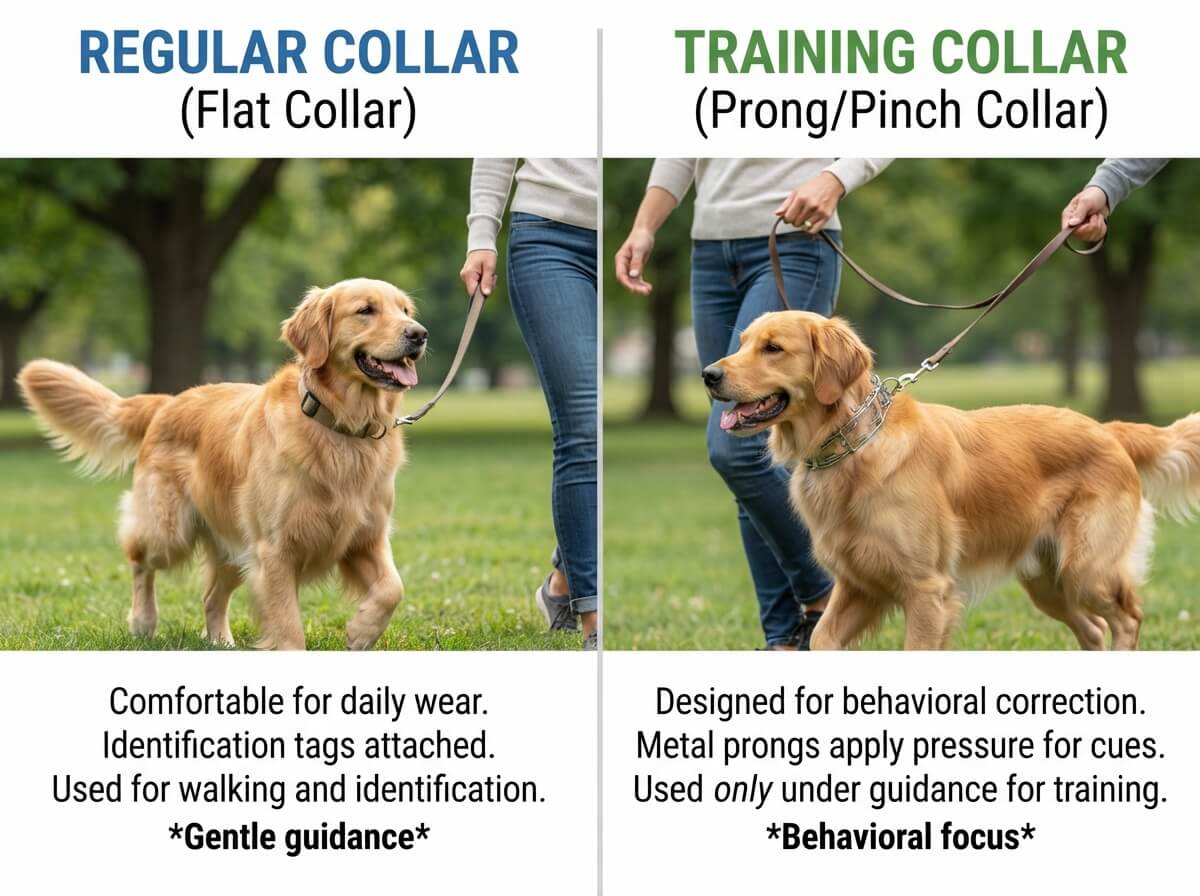
A regular collar is what most dog owners think of when they picture a dog wearing a collar. It’s a simple band that wraps around your dog’s neck and fastens with a buckle or a quick-release clip. Your dog’s ID tag and license tag hang from the attachment ring on the front.
Regular collars come in tons of materials and styles. You can find them made from nylon, leather, canvas, or even soft fabric. They come in different colors and patterns—everything from bright pink to classic black. Some have fun designs like plaid or polka dots. Others are plain and simple.
The main purpose of a regular collar is to hold your dog’s tags and to give you something to attach a leash to during walks. They’re comfortable for most dogs and feel natural to wear all day long. Many dog owners keep a regular collar on their pets even when they’re home.
Types of Regular Collars
Standard flat collars come with a buckle that lets you adjust the fit as your dog grows. Many of these have a quick-release feature so you can take the collar off fast if something gets caught.
Rolled collars are thinner and sit against your dog’s neck differently. People who have long-haired dogs often prefer these because they don’t flatten the fur as much.
Martingale collars have two rings and slip over your dog’s head. When your dog pulls, the collar tightens just enough to stop them from backing out of it, but it doesn’t choke them like a choke chain would.
What Are Training Collars?
Training collars are designed for a specific job: teaching your dog to obey commands during training sessions. They give you more control and feedback than regular collars do. When your dog does something you want to correct, the training collar delivers a signal to get your dog’s attention and reinforce the lesson.
Training collars work through different methods depending on the type. Some give a slight vibration. Others make a sound. Some deliver a small electrical stimulation. Each method is meant to interrupt your dog’s behavior and redirect their attention back to you.
Many people use training collars during specific training periods, then switch back to a regular collar once the dog learns the commands. Others keep both types on hand for different situations.
Different Types of Training Collars Explained
Vibration Collars
Vibration collars buzz against your dog’s neck. The vibration gets your dog’s attention without causing any pain or discomfort. This type works best for dogs who respond well to sensations and get excited easily.
When you press a button on the remote, the collar vibrates. This signals your dog that they did something wrong or need to redirect their focus. Over time, your dog learns to connect the vibration with the behavior you want to stop.
Sound-Based Training Collars
These collars beep or make a clicking sound when you activate them. The noise catches your dog’s attention and interrupts whatever behavior they’re doing at that moment.
Sound-based collars work great for dogs with good hearing and for training in quieter environments. In loud places like parks, your dog might not hear the sound as well, which makes them less effective.
E-Collars (Electronic Collars)
E-collars send a small electrical stimulation to your dog’s neck. The level of stimulation ranges from very mild to strong, and you can control it with a remote. This gives you precise feedback to your dog during training.
Many trainers use e-collars because they work quickly and you can give clear signals from a distance. Your dog can be off-leash, and you still have control through the collar. This type requires careful training and proper use to avoid hurting or scaring your dog.
Why Dog Owners Use Training Collars
Better Control at a Distance
With a training collar, you can correct your dog from far away. If your dog runs off at the dog park, you don’t need to chase them. You can use the remote to get their attention and bring them back to you.
Regular collars only work if you can reach your dog or if they’re on a leash. This limits your control options, especially if your dog likes to roam.
Faster Results in Training
Training collars often produce results faster than other training methods. Your dog gets an immediate signal that tells them they did something wrong. They start to make the connection between their action and the consequence right away.
If you’re teaching your dog not to chase cars or to come when called, a training collar can speed up the learning process. This faster feedback means your dog picks up commands quicker.
Useful for Strong-Willed Dogs
Some dogs have stubborn personalities and don’t respond well to gentle training methods. Training collars give these dogs a signal they can’t ignore. Once a strong-willed dog understands what the collar means, they usually respect the command more consistently.
Help with Safety Issues
If your dog has dangerous behaviors like chasing traffic or running toward aggressive dogs, a training collar can give you the control you need to keep them safe. You can interrupt risky behaviors before they turn into emergencies.
Real Drawbacks of Training Collars
They Require Proper Training
You can’t just put a training collar on your dog and hope for the best. You need to learn how to use it correctly. If you use it wrong, you can confuse your dog or even hurt them. Many trainers recommend taking a class or working with a professional when using these collars.
Potential for Misuse
Because training collars deliver a correction, it’s easy to use them too harshly if you get frustrated. Some people shock their dogs too much or too hard, which causes fear, anxiety, or aggression. Your dog might start to fear you instead of respect you.
Safety Concerns
If your dog has heart problems or other health issues, electrical stimulation could be risky. You should always check with your vet before using a training collar on an older dog or one with medical problems.
Cost
Training collars cost more than regular collars. Good quality models run anywhere from fifty to several hundred dollars. If you’re on a tight budget, the price might be a barrier.
Not Ideal for Long-Term Wear
Most training collars aren’t comfortable to wear all day long. They work best for training sessions that last thirty minutes to an hour. Wearing one constantly can cause neck irritation or sores.
Why Regular Collars Work for Most Dogs
Simple and Safe
Regular collars are straightforward. You put them on, attach a leash, and go for a walk. There’s no remote to learn, no settings to adjust, no risk of hurting your dog with incorrect use. They’re safe for all dogs, regardless of age or health status.
Comfortable for Daily Wear
Dogs can wear regular collars all day without discomfort. Your dog gets used to the feeling and won’t even notice it’s there. This makes it easy to keep their ID tags on them at all times.
Less Expensive
Regular collars cost way less than training collars. You can buy a quality leather or nylon collar for twenty to fifty dollars. This price range is affordable for most dog owners.
Good for Basic Control
For casual walks and everyday life, a regular collar gives you plenty of control. You hold a leash attached to the collar, and your dog walks beside you. This simple setup works fine for most owners and most dogs.
Works with Positive Training Methods
If you like to train your dog using treats and praise, a regular collar works perfectly fine. You don’t need a training collar to teach basic commands. Lots of dogs learn “sit,” “stay,” and “come” using only positive reinforcement and regular collars.
When Should You Use a Training Collar?
A training collar makes sense in certain situations:
When your dog has specific behavior problems like aggression or excessive barking that regular training hasn’t fixed, a training collar can give you the tool to interrupt the behavior and redirect your dog’s attention.
If you need to work your dog off-leash in open spaces and you need reliable control, a training collar lets you correct your dog from a distance without using a long leash.
When your dog shows dangerous behaviors like chasing traffic or running toward unfamiliar dogs, a training collar can help you prevent accidents and keep your pet safe.
If you’re training your dog for a specific job like hunting or protection work, trainers often use training collars to communicate clear commands across distances.
When you’ve tried other methods and nothing else seems to work with your dog’s stubborn personality, a training collar might be your next step.
When a Regular Collar Is Better
A regular collar is the right choice in most everyday situations:
For puppies still learning to wear a collar, start with a regular collar. It’s less intimidating and lets them get comfortable with the feeling of wearing something around their neck.
If you’re teaching basic obedience at home or in a training class, a regular collar works great alongside treats and praise. Your dog doesn’t need anything stronger to learn these simple commands.
For dogs with anxiety or fear issues, a training collar might make things worse. A regular collar is safer and gentler for these sensitive pups.
If your dog is older, has heart problems, or has other health concerns, stick with a regular collar. The risk of using a training collar isn’t worth it.
For casual daily walks, hikes, and trips to the dog park, a regular collar is all you need. Most dogs behave well enough on leash with a regular collar once they learn basic commands.
For dogs with calm, easygoing personalities that respond well to positive reinforcement, a regular collar is perfectly adequate.
Important Safety Tips for Both Types
Fit Matters
Whether you choose a training collar or regular collar, make sure it fits properly. A collar that’s too tight can choke your dog. A collar that’s too loose can slip off. You should be able to fit one or two fingers between the collar and your dog’s neck.
Check Regularly
As your dog grows, their collar needs to grow too. Check the fit every few weeks to make sure it still works for your dog’s size.
Combine with a Harness for Security
Many owners use both a collar and a harness during walks. The harness gives backup control, and if the collar slips, the harness catches your dog. This setup is especially smart for small dogs or dogs who are escape artists.
Supervise Collar Wear
Don’t leave a training collar on your dog unsupervised. If your dog gets the collar caught on something, it could hurt them. Take the collar off when your dog plays with other dogs or when they’re home alone.
Never Use as Punishment
Whether you use a training collar or a regular collar, never use it as a punishment tool out of anger. Training collars should deliver consistent, controlled signals only during planned training sessions. Getting angry and jerking a regular collar is unfair to your dog and damages your relationship.
How to Pick the Right Collar for Your Dog
Start by thinking about your dog’s personality, size, age, and health. Ask yourself what you want to achieve with your dog. Are you teaching basic commands? Fixing behavior problems? Just taking casual walks?
Talk to your vet about your dog’s health. If your dog has any medical issues, get your vet’s opinion before using a training collar.
If you think a training collar might help, find a certified professional trainer who uses them. Never buy a training collar and start using it without proper instruction. A good trainer can teach you how to use it correctly and safely.
Start with a regular collar if you’re unsure. Most dogs do great with just a regular collar and consistent training. You can always add a training collar later if regular methods don’t work.
Remember that the collar is just a tool. The real training happens through your patience, consistency, and leadership. The best collar in the world won’t teach your dog commands if you don’t put in the effort to train.
Common Myths About Training Collars
Myth: Training collars are cruel. Truth: When used correctly by someone who knows what they’re doing, modern training collars are safe tools. Misuse causes problems, but the collar itself isn’t cruel.
Myth: You can never use a regular collar to fix behavior problems. Truth: Many dogs respond well to regular training methods using a regular collar. Training collars aren’t the only option.
Myth: All trainers recommend training collars. Truth: Some trainers prefer positive reinforcement methods with regular collars. Different trainers use different approaches.
Myth: Training collars teach your dog to fear you. Truth: When introduced properly and used correctly, training collars teach your dog to respect commands. Fear happens when trainers use them incorrectly or harshly.
Final Thoughts
The choice between a training collar and a regular collar depends on your specific situation. For most dogs and most owners, a regular collar works perfectly fine. It’s safe, affordable, and comfortable for daily wear.
Training collars are specialized tools that work best in specific situations where other methods haven’t solved the problem. If you decide to use one, get proper instruction and use it carefully.
Whatever collar you choose, remember that the collar itself doesn’t train your dog. Your consistency, patience, and training methods do the real work. Use the right tool for your dog’s needs, treat your pet with kindness, and you’ll build a strong relationship based on trust and clear communication.
Your dog’s safety and happiness should guide your choice. Take time to think about what your dog needs, talk to professionals if you’re unsure, and make the decision that feels right for your unique pet.