How to Stop Dog Hair Shedding Everywhere?
Dog hair everywhere. It’s on your clothes, your furniture, your floors, and somehow even in your coffee. If you own a dog, you know the struggle is real. Excessive shedding doesn’t just look messy—it can also affect your home’s cleanliness and trigger allergies in your family members. The good news? You can actually control how much fur your dog leaves around your house.
This guide walks you through practical, tested methods to reduce dog shedding. We’ll cover everything from grooming techniques to diet changes, so you can finally enjoy your furniture without it looking like it’s made of dog hair.
Why Dogs Shed Their Fur in the First Place
Before we tackle the solutions, let’s talk about why your dog sheds. Dogs shed their coats for several reasons, and understanding these reasons helps you take the right action.
Dogs naturally lose old, damaged, or excess hair. Their bodies replace old fur with new growth throughout the year. This shedding process is completely normal and healthy. Your dog isn’t doing it to annoy you—their body just works this way.
Seasonal changes trigger heavier shedding in many dogs. When temperatures shift from cold to warm or warm to cold, dogs shed more fur to adjust their coat density. This is why you might notice your dog leaving more hair behind during spring and fall.
Stress also causes dogs to shed more than usual. If your dog feels anxious, scared, or overly excited, their body responds by shedding extra fur. Life changes, loud noises, or new environments can all trigger stress shedding.
Health problems play a role too. If your dog has skin allergies, parasites, or hormonal imbalances, they’ll shed excessively. Certain medical conditions make dogs lose patches of hair or shed throughout their entire coat. If your dog’s shedding seems extreme, talk to your veterinarian to rule out health issues.
Diet directly impacts coat quality. A dog eating poor-quality food often has dry, brittle hair that sheds more easily. Dogs need proper nutrition to maintain healthy skin and fur.
Some dog breeds are simply heavier shedders than others. German Shepherds, Labradors, Golden Retrievers, and Huskies shed constantly. Short-haired breeds typically shed less than long-haired breeds, though this isn’t always the case.
Regular Brushing: Your First Line of Defense
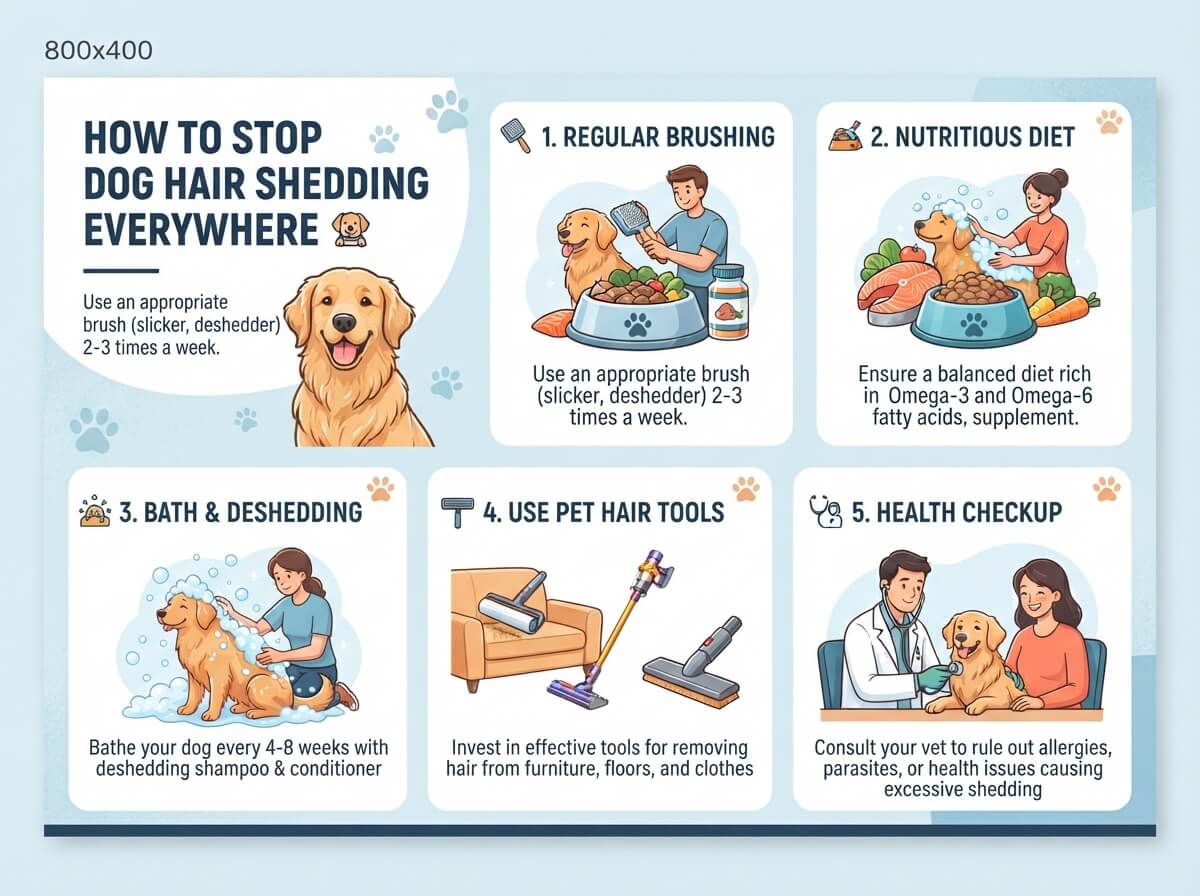
The most effective weapon against dog shedding is simple: brush your dog regularly. This might seem obvious, but many dog owners skip this step, and that’s where problems start.
When you brush your dog, you remove loose hair before it falls out onto your furniture. Think of brushing as catching the shed hair early. The fur is coming out anyway—brushing just helps you control where it ends up.
Start with the right brush for your dog’s coat type. Slicker brushes work well for long-haired dogs and dogs with thick coats. These brushes have fine, short wires close together. They dig deeper into the undercoat and pull out dead hair effectively.
For double-coated breeds like Huskies or Malamutes, use a de-shedding tool. These tools are specifically designed to remove the dense undercoat without cutting the topcoat. They do an amazing job of pulling out massive amounts of loose hair that would otherwise end up on your floor.
Bristle brushes work best for short-haired dogs. The wider-spaced bristles remove loose hair from the top coat without irritating the skin underneath. These brushes give a good massage too, which your dog will enjoy.
Rubber curry brushes are excellent for all coat types and most dogs love the sensation. These soft, flexible tools remove loose hair while feeling like a gentle massage. They’re perfect if your dog gets nervous during grooming.
Brush your dog at least two or three times weekly for regular shedders. During heavy shedding seasons, brush daily if possible. A five-minute daily session prevents far more shedding than a long session once a week.
The best time to brush is outdoors. All that loose hair blows away naturally instead of floating around your house. Your dog also stays calmer when brushed outside, as they’re in familiar surroundings.
Bath Time and Drying: A Powerful Shedding Reduction Tool
Bathing your dog helps reduce shedding significantly. During a bath, warm water loosens dead hair, and the shampoo helps separate loose fur from the coat. A good bath session removes more hair than days of brushing.
Use a high-velocity dog dryer after bathing, not a regular human hair dryer. Human hair dryers don’t have enough force to remove all the loose hair. Dog dryers blow out massive amounts of loose fur that brushing alone would miss.
The high-velocity dryer creates air pressure that forces loose hair out of the coat. Your dog will look fluffier after drying, but that’s actually dead hair being blown out of their fur. Then you simply brush out the remaining loose strands.
Bath your dog every four to eight weeks for regular maintenance. If your dog sheds heavily, bathe them every four weeks. For lighter shedders, once every eight weeks works fine.
Don’t bathe your dog too frequently though. Over-bathing strips natural oils from their skin and can actually make shedding worse. You’re looking for a balance that keeps the coat healthy while removing loose fur.
Choose a dog-specific shampoo. Human shampoo messes with your dog’s skin pH balance and can cause excessive shedding and irritation. Dog shampoos are formulated to be gentler on their unique skin needs.
Oatmeal-based shampoos and medicated shampoos can help if your dog has itchy skin. Itching leads to scratching, which increases shedding. By reducing itching, you reduce the damage to their coat.
Nutrition: The Foundation of Healthy Fur
Your dog’s diet affects their coat more than most dog owners realize. Poor nutrition leads to dry, brittle hair that sheds excessively. Quality food builds a strong, healthy coat that sheds normally.
Feed your dog high-quality protein. Hair is made of protein, so your dog needs plenty of it for coat growth. Look for dog food with real meat as the first ingredient, not meat by-products or grain fillers.
Omega-3 and omega-6 fatty acids directly improve coat health. These healthy fats reduce inflammation in the skin, decrease itching, and create a shinier, stronger coat. Fish oil supplements or foods containing fish meal provide these essential fats.
Biotin is a B-vitamin that strengthens hair and skin. Some dogs benefit from biotin supplements, especially those with weak or brittle coats. Talk to your vet about whether your dog would benefit from biotin added to their diet.
Zinc supports skin health and coat growth. Dogs deficient in zinc often shed excessively and develop dry, flaky skin. Quality dog foods include adequate zinc, but sometimes supplements help.
Vitamin E protects skin cells and supports coat health. This antioxidant reduces inflammation and improves skin function. Many premium dog foods include vitamin E, but some dogs benefit from additional supplementation.
Avoid cheap dog food filled with fillers and low-quality ingredients. These foods don’t provide the nutrition your dog needs for a healthy coat. Invest in better food, and you’ll see improvements in shedding within weeks.
Consider adding natural supplements to your dog’s diet. Coconut oil, salmon oil, and sweet potato are all beneficial for coat health. Start with small amounts and consult your vet about proper dosing for your dog’s size.
Professional Grooming: Let the Experts Help
Professional groomers have tools and expertise that help reduce shedding dramatically. A single professional grooming session removes more loose hair than weeks of home brushing.
Professional de-shedding treatments use specialized high-powered equipment designed specifically for removing the undercoat. These treatments are particularly valuable for double-coated breeds. After a professional de-shedding session, you’ll notice a dramatic reduction in home shedding for weeks.
Groomers can also identify skin problems and coat issues that you might miss. They spot allergic reactions, parasites, dry patches, and other conditions that contribute to excessive shedding. These professionals recommend products and treatments that address the root cause.
Professional bathing and drying removes far more loose hair than home bathing. Groomers use industrial-strength dryers and have techniques to efficiently blow out dead hair. This process is thorough and gets results you can’t match at home.
Visit a professional groomer every six to twelve weeks depending on your dog’s breed and shedding level. Poodles and non-shedding breeds need regular grooming for mat prevention, while heavy shedders benefit from professional de-shedding treatments.
Build a relationship with one groomer if possible. They learn your dog’s coat and can recommend the best grooming schedule for your specific dog’s needs.
Humidity and Environment: Create the Right Conditions
The air in your home affects how much your dog sheds. Dry air dries out skin and increases shedding. Humid air keeps skin healthier and reduces loose hair.
Use a humidifier during dry seasons. Aim for 30-50% humidity in your home. This level helps keep your dog’s skin hydrated and coat healthy. Bonus: better humidity also helps you and your family!
Keep your home temperature stable. Frequent temperature changes stress your dog’s body and trigger excess shedding. Consistent, moderate temperatures reduce environmental stress shedding.
Ensure good air circulation in your home. This actually helps move loose hair out of the space instead of letting it settle on furniture. Open windows when weather permits, or use fans to improve air flow.
Minimize stress in your dog’s environment. Create calm spaces where your dog feels safe and secure. Stressed dogs shed more, so reducing anxiety directly reduces shedding.
Health Check: When to See a Veterinarian
Sometimes excessive shedding signals a health problem that requires professional help. Knowing when to visit your vet helps catch problems early.
If your dog sheds in patches instead of evenly across their coat, that’s abnormal. Patchy hair loss often indicates allergies, fungal infections, or parasites. Your vet can diagnose and treat these issues.
Excessive itching and scratching combined with shedding suggest skin allergies or parasites. Your dog might have fleas, mites, or a skin allergy requiring treatment. Don’t wait on this—address it quickly to prevent further damage.
If your dog suddenly increases shedding dramatically, a health issue might be responsible. Hormonal imbalances, thyroid problems, and other medical conditions cause sudden shedding increases. Your vet can run tests to identify the problem.
Red, inflamed, or flaky skin underneath the fur indicates skin disease. Conditions like seborrhea or dermatitis cause excessive shedding and require veterinary treatment.
If your dog seems lethargic or shows other signs of illness alongside increased shedding, schedule a vet visit immediately. Shedding sometimes accompanies serious health conditions.
Supplements That Actually Work
Beyond diet changes, specific supplements reduce shedding in many dogs. These work best when combined with other strategies like brushing and bathing.
Fish oil supplements provide omega-3 fatty acids that strengthen hair and reduce inflammation. Give fish oil consistently for six to eight weeks to see results. You’ll notice a shinier coat and less shedding.
Collagen supplements support skin elasticity and coat quality. Some dogs show dramatic improvements in shedding after taking collagen regularly. This works particularly well for older dogs.
Coconut oil can be added to your dog’s food or applied to the skin. This natural oil reduces inflammation, improves skin health, and decreases shedding. Start with small amounts to avoid digestive upset.
Skin and coat supplements specifically formulated for dogs combine multiple beneficial ingredients. These supplements include biotin, omega fatty acids, zinc, and vitamins all in one product.
Probiotics support gut health, which directly impacts coat quality. A healthier digestive system means better nutrient absorption and healthier skin. Some dogs show reduced shedding after probiotic supplementation.
Always talk to your vet before starting supplements. Some supplements interact with medications or aren’t appropriate for certain health conditions.
Clothing and Home Management
While you work on reducing shedding at the source, manage the hair that does shed.
Dog blankets on furniture protect your couch, chairs, and beds. Use washable blankets that contain shed hair. This prevents loose fur from getting into furniture fibers.
Place washable rugs in areas where your dog spends time. Loose hair settles on rugs instead of hardwood or tile floors. Wash these rugs regularly to remove trapped fur.
Use lint rollers and pet hair removal tools on furniture and clothing. These tools remove shed hair before it settles deep into fibers. Keep several lint rollers throughout your home for convenience.
Robot vacuums designed for pet hair help keep floors clean. These vacuums run regularly and pick up loose hair before it becomes a problem.
Air purifiers with HEPA filters capture pet hair and dander from the air. This helps reduce airborne shedding particles and improves air quality.
Quick Tips for Immediate Results
Want faster results? Try these quick strategies alongside the longer-term methods.
Brush your dog outside daily during heavy shedding seasons. This removes loose hair right at the source before it enters your home.
Feed your dog a salmon-based meal once weekly. The omega-3s in salmon improve coat quality quickly.
Give your dog a bath followed by high-velocity drying every two weeks during peak shedding season. This combination works faster than any other strategy.
Use a de-shedding tool two or three times weekly. These tools remove undercoat hair that regular brushes miss.
Add a small amount of coconut oil to your dog’s food. You’ll see coat improvements in just a few weeks.
Breeds That Shed Less
If you’re considering getting a new dog and shedding is a concern, some breeds shed significantly less.
Poodles shed minimally because their hair grows continuously without shedding. You’ll need regular grooming, but not constant hair cleanup.
Bichon Frises have a curly coat that traps loose hair. They shed, but you won’t find their fur all over your home.
Portuguese Water Dogs shed minimally and make excellent pets for people with allergies.
Schnauzers have wiry coats that shed less than traditional dog fur. They require regular grooming but not shedding management.
Shih Tzus have hair rather than fur, which sheds less dramatically. Regular brushing prevents matting but reduces loose hair problems.
Conclusion: Consistency Brings Results
Stopping dog hair from shedding everywhere requires consistent effort, not just one-time actions. The strategies in this guide work best when you combine several of them.
Start with regular brushing—it’s the easiest first step. Add professional grooming every few months. Improve your dog’s diet with quality food and supplements. These three strategies alone will dramatically reduce shedding.
Combine these with environmental control, proper bathing techniques, and veterinary care when needed. Within a few weeks, you’ll notice far less dog hair on your furniture and floors.
Your home will be cleaner, your dog will be healthier, and you’ll actually enjoy your furniture again. That’s worth the effort. Stick with these methods, stay consistent, and watch the shedding problem disappear.