How to Clean Pet Dander from Your Home?
If you share your living space with furry friends, you already know that pet dander can feel like an invisible enemy. It’s that stuff floating in the air, settling on your furniture, and making you sneeze unexpectedly. But here’s the good news: you can totally tackle this problem with the right approach and a little bit of effort.
Pet dander is basically dead skin cells that shed from your cats, dogs, birds, and other animals. It sounds gross, but it’s completely natural. The tricky part is that dander particles are super tiny, which means they can float around in the air and land on everything in your home. This creates challenges for anyone who wants to maintain a clean house.
In this guide, I’ll walk you through everything you need to know about removing pet dander from your home. You’ll learn what dander actually is, why it’s such a pain to deal with, and most importantly, how to get rid of it once and for all.
What Exactly Is Pet Dander and Why Should You Care?
Let’s start with the basics. Pet dander consists of microscopic flakes of dead skin that your pets naturally shed. When your dog scratches behind his ear or your cat grooms herself, she’s releasing these particles into the air. These tiny flakes then stick to furniture, carpets, curtains, and basically every surface in your home.
The reason this matters so much is that dander triggers allergies in many people. If you’re allergic to pets but you love your furry family members, managing dander becomes essential. Even if nobody in your home has allergies, cleaning dander helps keep your space fresher and healthier overall.
Dander particles are so small that they can remain airborne for hours. This means they travel throughout your entire home, settling in places you might not expect. They accumulate on ceiling fans, inside air ducts, and deep within your mattress. Over time, this buildup attracts dust mites and can make allergy symptoms worse.
How Pet Dander Spreads Throughout Your Home
Dander doesn’t just stay in one spot. It travels like tiny hitchhikers all over your house. When your pet moves around, dander kicks up from their fur and floats into the air. Air circulation in your home pushes these particles into every room, no matter how tightly you close doors.
Your pet also transfers dander directly onto surfaces every time they jump on the couch, walk across your bed, or rub against your legs. This is why you’ll find dander concentration highest in areas where your pets spend the most time.
Temperature changes and air movement from heating and cooling systems help spread dander even further. This is actually helpful information because it tells you where to focus your cleaning efforts first.
Start with Your Pet’s Grooming Routine
The most effective way to reduce dander in your home is to stop it at the source. This means focusing on your pet’s hygiene and grooming habits.
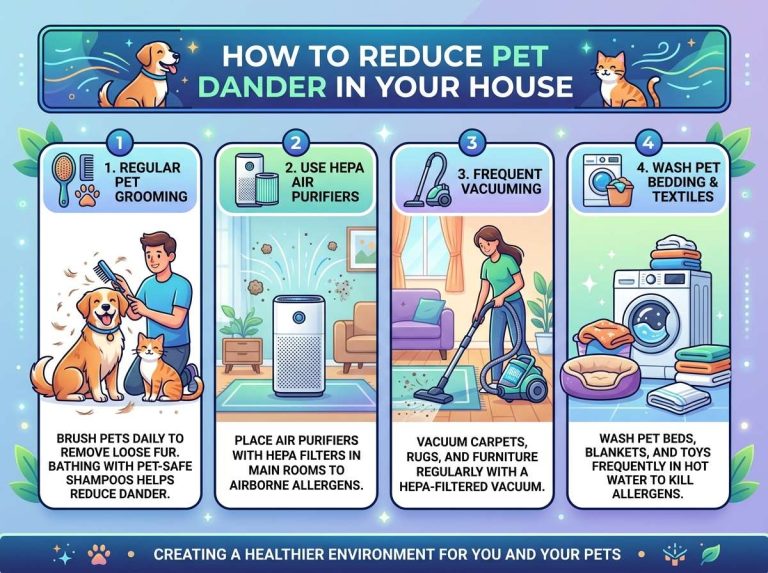
Brush your pet regularly. This is hands-down one of the best things you can do. Brushing removes loose fur and skin cells before they shed naturally into your home. Regular brushing sessions catch dander while it’s still attached to your pet, rather than letting it float free.
The frequency depends on your pet’s fur type. Long-haired dogs and cats need brushing several times each week, while short-haired pets do fine with weekly brushing. Some people brush daily during shedding season when the problem gets worse.
Invest in a good pet brush designed for your specific animal. Slicker brushes work great for long hair, while rubber curry brushes are perfect for short-haired pets. These tools trap loose fur and skin cells in the brush itself, so you can throw them away before the dander enters your home.
Bathe your pet regularly using warm water and pet-safe shampoo. Bathing loosens dead skin cells and washes them away. This reduces the amount of dander your pet carries around. How often you should bathe depends on your pet’s breed and activity level, but monthly baths work well for most pets.
Attack Fabric Surfaces Where Dander Hides
Fabric surfaces are dander magnets. Couches, chairs, beds, curtains, and rugs trap enormous amounts of pet allergens. That’s why tackling these areas makes a huge difference in your overall air quality.
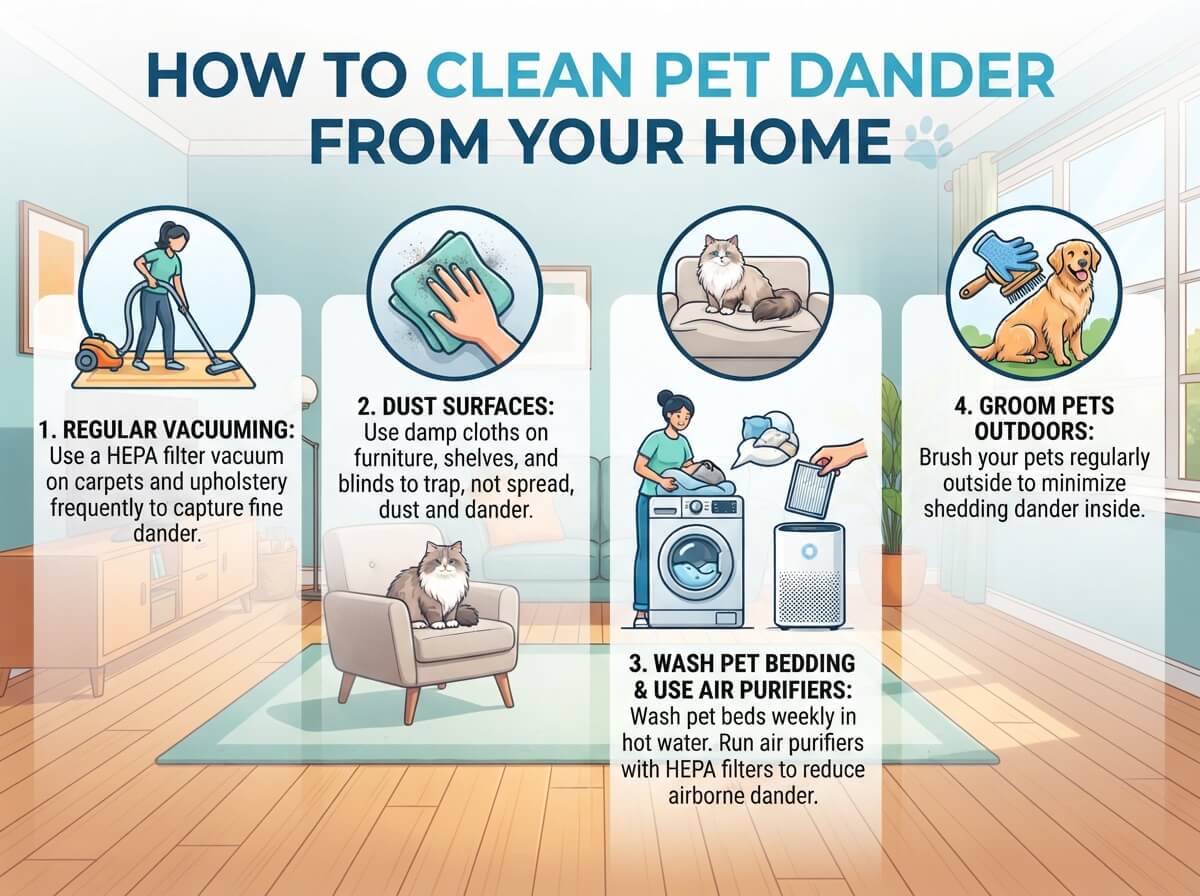
Start by vacuuming your carpets and area rugs at least twice weekly. Use a vacuum with a HEPA filter, which traps tiny dander particles instead of pushing them back into the air. Standard vacuums just stir up dander without removing it effectively.
For hardwood floors, mop regularly with a damp cloth. This captures dander instead of spreading it around. Dry sweeping creates clouds of allergens, so skip the broom in favor of mopping or using a damp microfiber cloth.
Wash your couch cushions, throw pillows, and blankets weekly. Pet dander loves to accumulate on these items because they touch your pet directly. Use hot water when possible, as heat helps kill allergens. Dry everything on high heat as well.
Your bedroom requires special attention since you spend so much time there. Wash your bedding weekly in hot water. If your pet sleeps on the bed, you’re dealing with concentrated dander exposure. Consider banning pets from the bedroom to create one dander-free sanctuary where you can truly relax.
Throw rugs should get washed monthly, while larger area rugs benefit from professional cleaning twice yearly. Between professional cleanings, vacuum thoroughly and sprinkle baking soda on the rug, let it sit for 15 minutes, then vacuum it up. Baking soda helps neutralize odors and capture some allergens.
Curtains and window treatments collect dander constantly. Wash curtains monthly or use washable curtain covers. If you have heavy drapes that can’t be washed easily, hang a portable garment steamer over them weekly to kill allergens.
Deep Clean Hard Surfaces Effectively
While fabric surfaces need constant attention, hard surfaces also require regular cleaning to keep dander from accumulating.
Dust all surfaces with a damp microfiber cloth rather than a dry duster. Dry dusting just moves allergens around the room. A damp cloth actually captures and removes dander. Work from top to bottom so dander falls onto surfaces you haven’t cleaned yet.
Wipe down walls, especially in areas where your pet frequents. Dander settles on walls more than most people realize. Pay special attention to corners and edges where air circulation patterns push particles to collect.
Clean ceiling fans, light fixtures, and vents weekly. These spots accumulate dander quickly because air moves through them constantly. Use an old pillowcase when cleaning ceiling fans. Slide the pillowcase over each blade, and the dander falls inside the pillowcase instead of onto your floor.
Don’t forget about door frames, baseboards, and shelves. These horizontal surfaces trap dander efficiently. Run a damp cloth along baseboards weekly and wipe down shelves that display items your pet can reach or jump on.
Invest in Air Purification Technology
An air purifier designed to capture pet allergens can make a huge difference in your home’s air quality. These machines work continuously to remove dander particles floating in the air.
HEPA filters are your best friend here. These filters trap particles as small as 0.3 microns, which easily catches pet dander. Run your air purifier in rooms where you spend the most time, or invest in multiple units for different areas.
Place an air purifier in your bedroom for sure. Sleeping in a dander-free environment helps allergies improve dramatically. Keep it running on high for several hours before bedtime so you wake up breathing cleaner air.
Air purifiers need filter replacements regularly, usually every three to six months depending on dander levels. Check the manufacturer’s recommendations and stick to the schedule. A clogged filter stops working effectively.
Use Cleaning Products That Target Pet Allergens
Regular cleaners help, but some products specifically target pet allergens and odors.
Enzymatic cleaners break down the proteins in pet dander, making them highly effective. These cleaners actually destroy allergens rather than just moving them around. Use them on furniture, carpets, and hard floors.
Fabric fresheners designed for pet homes work differently than standard air fresheners. They neutralize odors at the source and can help with allergen control. Spray lightly on soft surfaces and let dry.
Disinfectant sprays kill bacteria that grows around pet dander and urine accidents. A clean home is more resistant to accumulating dander, so don’t skip the disinfection step.
For stubborn dander buildup, enzymatic carpet cleaners or rental steam cleaners do wonders. These machines inject hot water and cleaning solution deep into fibers, then suck out moisture along with trapped dander. Using these once or twice yearly gives you a serious deep clean.
Don’t Forget About Air Vents and Ducts
Your home’s heating and cooling system circulates air throughout your space, and that air carries dander particles. If those ducts aren’t clean, they become holding tanks for allergens that get pushed into every room.
Change your furnace filter every month if you have pets. Standard filters miss dander particles, so upgrade to a HEPA-rated furnace filter. These trap allergens and improve air quality throughout your whole home.
Have your air ducts professionally cleaned every two to three years. Dander accumulates inside ducts where you can’t reach it, and professional cleaning removes that buildup. This is worth the investment if dander problems are severe.
Clean vents and registers regularly. Use a dry cloth to wipe the visible parts, then use your vacuum with a hose attachment to clean deeper into the vents. Don’t let dust bunnies pile up around air returns.
Create a Pet-Free Zone
While you love your pet, creating one area of your home that remains pet-free gives you a dander sanctuary. This works especially well for your bedroom.
Set up a baby gate or close a door to keep your pet out of your bedroom. Even one room without pet access gives your body time to recover from constant allergen exposure. Sleep improves when you’re not breathing dander particles all night.
This approach isn’t cruel to your pet—they’ll adjust quickly and still get plenty of time with you in other parts of your home. For many people, this single change makes more difference than anything else.
Wash Your Hands and Change Your Clothes
You become a dander delivery system when you spend time with your pet. After petting or playing with your animal, wash your hands thoroughly before touching your face or eyes. This prevents you from transferring dander to your respiratory system.
If you’ve had your pet on your lap or in your arms, change clothes before going to bed or sitting on furniture that’s hard to clean. Pet hair and dander stick to clothes easily and transfer to other surfaces.
This might sound extreme, but it makes a real difference, especially for people with significant allergies. Keep work clothes separate from home clothes so you don’t bring workplace germs back to your bedroom.
Try Natural Solutions for Extra Help
Some natural solutions work surprisingly well for managing pet dander without harsh chemicals.
Baking soda absorbs odors and traps allergens. Sprinkle it on carpets, let it sit for 15 minutes, then vacuum thoroughly. Repeat weekly for best results.
White vinegar mixed with water (equal parts) creates an effective surface cleaner that also kills allergens. Spray on hard surfaces and wipe clean.
Essential oils like eucalyptus and tea tree oil have natural antimicrobial properties. Add a few drops to your cleaning water to boost effectiveness. Never spray essential oils directly on your pet.
Diatomaceous earth food-grade powder can be sprinkled on carpets and furniture. This natural substance damages dander particles at the microscopic level. Let it sit for 15 minutes before vacuuming. Only use food-grade versions, never the pool variety.
Keep Your Pet’s Living Area Extra Clean
Your pet spends time in certain spots more than others. These areas need more frequent cleaning than the rest of your home.
Wash pet bedding weekly in hot water. Dander accumulates heavily on any surface your pet regularly lies on. Machine wash pet beds, blankets, and cushions with hot water and pet-safe detergent.
Vacuum pet crates and carriers regularly. These enclosed spaces trap concentrated dander. Remove the padding if possible and wash separately.
Clean your pet’s food and water bowls daily. While this isn’t about dander, it prevents bacteria growth that makes allergies worse.
Wipe down your pet’s toys weekly, especially stuffed toys that trap dander like crazy. Hard toys can go in the dishwasher on a gentle cycle.
Make a Cleaning Schedule and Stick to It
Consistency beats intensity when fighting pet dander. Establish a regular schedule and follow it religiously.
Daily tasks: Vacuum high-traffic areas and wipe surfaces where your pet spends time.
Weekly tasks: Wash all bedding, mop hard floors, clean furniture with a damp cloth, and brush your pet thoroughly.
Monthly tasks: Wash curtains or vacuum them heavily, deep clean all rugs, and change furnace filters.
Quarterly tasks: Professional carpet cleaning or rental steam cleaner.
Having a schedule prevents dander from building up to overwhelming levels. Regular maintenance is always easier than trying to recover from massive accumulation.
When to Consider Professional Help
Sometimes dander problems need professional solutions. If you’ve tried everything and still struggle, hiring professionals might be your answer.
Professional carpet cleaning companies use industrial-strength equipment and pet-specific cleaning solutions. They can extract dander from deep within carpet fibers that home vacuums can’t reach.
Air duct cleaning services remove the dander that hides in your ventilation system. This dramatically improves air quality throughout your whole home.
Professional pest control can help if dust mites have become a problem. Dust mites feed on dander, so controlling them helps reduce the dander feast.
Final Thoughts on Managing Pet Dander
Living with pets and managing dander is totally doable. It requires commitment and consistency, but the results are worth it. You get to keep your beloved animal companions while maintaining a clean, healthy home.
The best approach combines several strategies: regular pet grooming, thorough household cleaning, air purification, and creating pet-free zones. No single solution works alone, but together they create a comprehensive dander management system.
Start by implementing the changes that feel most doable for your situation. Build momentum with small wins, then add more strategies as you get comfortable. Before long, pet dander becomes a minor annoyance instead of a major problem.
Your home can be both pet-friendly and clean. It just takes the right knowledge and a little bit of elbow grease. Now go forth and enjoy your pets while keeping that dander under control!