How Often Should You Replace a Dog Harness?
If you use a harness to walk your dog every day, you already know how much it goes through. It gets pulled, stretched, rained on, and dragged across the ground more times than you can count. So it makes sense to ask this question: how often should you replace a dog harness?
The short answer is that most harnesses need a fresh replacement every six months to a year, but this really depends on how often you use it, what it’s made of, and how your dog treats it. A dog that pulls hard on the leash or loves to roll in mud will wear out a harness much faster than a calm dog who strolls around the block once a day.
In this guide, we will break down everything you need to know about harness lifespan, the warning signs of a worn-out harness, and simple ways to make your gear last longer. By the end, you will know exactly when it’s time to toss the old one and grab a new one.
Why Harness Replacement Actually Matters
A harness is not just a fashion item for your pup. It is safety gear. Just like a car seatbelt, it needs to work properly every single time you use it. A weak strap or a cracked buckle can snap at the worst moment, like when your dog spots a squirrel and bolts across a busy street.
Dogs rely on their harness to keep them safe near roads, on hikes, or in crowded parks. If the fabric is thin, the stitching is loose, or the clips are rusty, that harness is no longer doing its job. This is not something to ignore, because a broken harness can lead to a lost dog, an injury, or even a dangerous accident.
Think about how many times a harness gets stretched during a normal walk. Your dog pulls forward, sits down, rolls in the grass, and jumps up to greet another dog. Each of these small movements adds a bit of stress to the material. Over time, that stress adds up and weakens the harness, even if it looks fine from the outside.
Average Lifespan of a Dog Harness
There is no single number that fits every dog, but here is a rough guide based on how often the harness gets used.
Daily use (walked once or more per day): Expect to replace it every six to nine months. Daily wear from walking, running, and general movement puts a lot of strain on the fabric and stitching.
A few times a week: A harness used three or four times a week can usually last around one year before it needs a swap.
Occasional use (weekend walks or trips): If your dog only wears the harness now and then, it might last up to two years, as long as it’s stored properly and stays dry.
Active dogs, hikers, and pullers: Dogs that pull hard, run a lot, or go on rough trails will chew through a harness faster. These dogs might need a new one every four to six months.
Keep in mind these are just averages. The real answer comes down to inspecting the harness itself, not just counting months on a calendar.
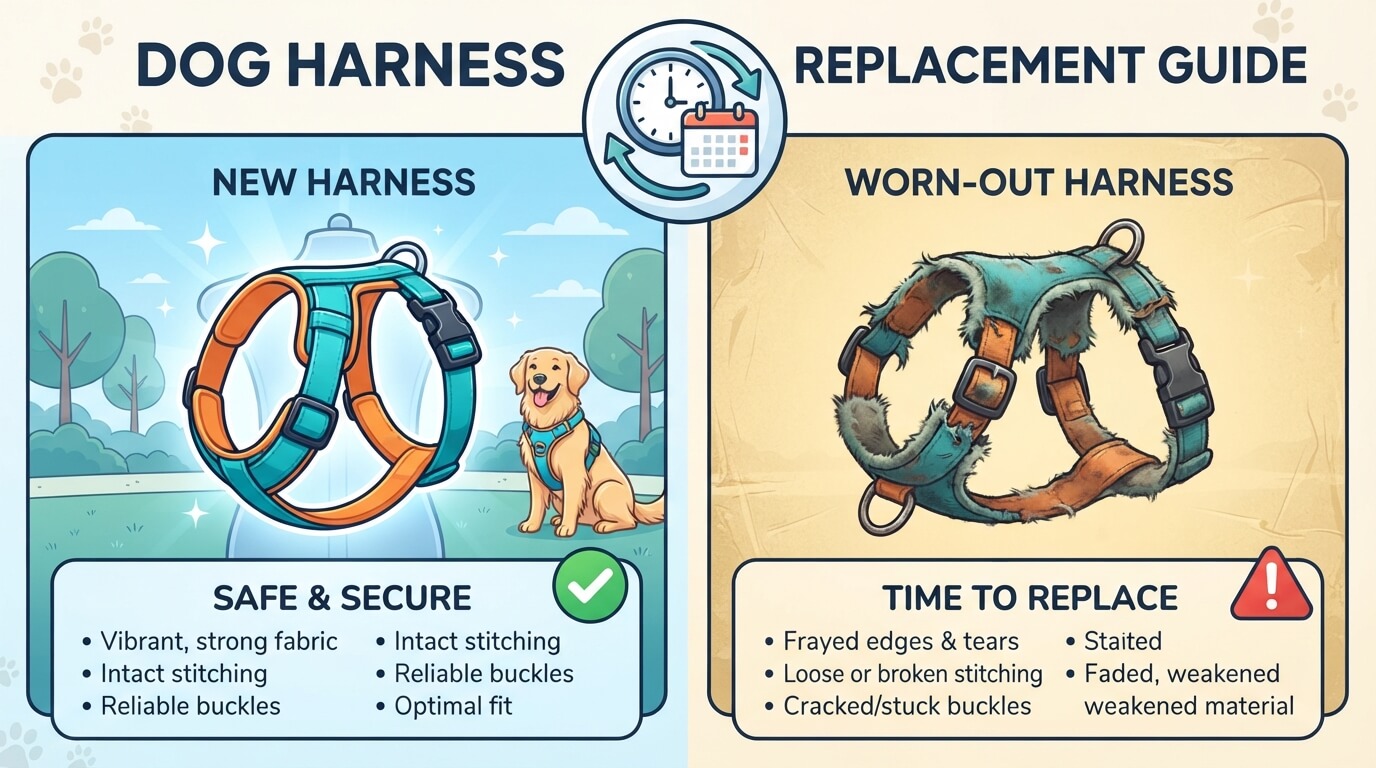
Signs Your Dog’s Harness Needs Replacing
Instead of guessing, the best way to know if a harness is done is to look closely at it. Here are the clearest signs that tell you it’s time for a new one.
Frayed or Fuzzy Straps
Run your fingers along the straps. If you feel loose threads, fuzzy edges, or thin spots, the fabric is breaking down. Frayed straps lose their strength quickly and can snap without warning.
Cracked or Stiff Buckles
Plastic buckles can dry out, crack, or become brittle over time, especially if the harness sits in the sun a lot. Try clicking the buckle a few times. If it feels loose, sticky, or doesn’t snap firmly into place, that buckle can fail during a walk.
Rust on Metal Clips
Metal D-rings and clips can rust if they get wet often and don’t dry properly. Rust weakens metal and makes it more likely to bend or break under pressure.
Stretched-Out Fabric
Nylon and other synthetic fabrics can stretch after months of pulling and tugging. If the harness feels loose even after you tighten it all the way, the material has lost its shape and support.
Loose Stitching
Flip the harness over and check the seams. Loose threads or gaps in the stitching are a big red flag. Stitching holds the whole harness together, so any weakness here puts your dog at real risk.
Bad Smell That Won’t Go Away
A harness that smells bad even after washing has likely soaked up sweat, dirt, and bacteria deep into the padding. This isn’t just gross, it can also irritate your dog’s skin over time.
Poor Fit
Dogs change shape as they grow, gain weight, lose weight, or build muscle. A harness that used to fit snugly might now be too tight or too loose. Either way, a poor fit means the harness isn’t spreading pressure evenly across your dog’s body, which can cause chafing or discomfort.
Visible Holes or Tears
This one is obvious, but worth mentioning. Any hole, rip, or tear in the main body of the harness is a sign that it needs to go. Even a small tear can grow bigger with regular use.
Factors That Affect How Long a Harness Lasts
A few key things decide how fast your harness wears down. Knowing these can help you plan ahead and catch problems before they become dangerous.
Material Quality
Cheap harnesses made with thin fabric tend to wear out fast. Higher quality materials like reinforced nylon, ripstop fabric, or genuine leather usually hold up much longer, even with heavy use. Spending a bit more upfront on a well-made harness often saves money in the long run because you won’t need to replace it as often.
How Often Your Dog Wears It
This one is simple: more use means faster wear. A harness worn for one short walk a day will last much longer than one worn for hours during hikes, runs, or trips to the dog park.
Your Dog’s Activity Level
Active, energetic dogs put more stress on their gear. Dogs that jump, dig, roll around, or pull hard on the leash will break down a harness faster than a calm, easygoing dog.
Weather Exposure
Rain, snow, mud, and direct sun all take a toll on harness material. Sun exposure especially can cause fading and weaken fibers over time, a process called UV degradation. If your dog spends a lot of time outside in harsh weather, expect the harness to wear out sooner.
Washing and Cleaning Habits
Believe it or not, how you clean the harness matters too. Washing it too often with harsh detergent can break down fabric fibers, while never washing it lets dirt and bacteria build up and weaken the material from the inside. A gentle wash every few weeks strikes the right balance.
Growth Changes in Puppies
Puppies grow fast, and a harness that fits well one month might be too small just a short while later. Puppy owners often need to size up several times before their dog reaches full growth, so replacement happens more due to sizing than actual wear.
Storage Conditions
Leaving a harness outside, in a hot car, or in a damp bag can speed up damage. Storing it in a cool, dry spot after each use helps the material stay strong for longer.
How to Check Harness Safety at Home
You don’t need any special tools to check if a harness is still safe. A quick monthly inspection routine can catch problems early, before they turn into an emergency on a walk.
Start by laying the harness flat and looking at every strap from end to end. Check for fraying, thinning, or discoloration. Next, test each buckle by clicking it in and out a few times, paying attention to how firm it feels. Then check the stitching along every seam, especially near the D-rings where the leash clips on, since this spot takes the most pressure.
After that, smell the harness. If it smells musty or sour even after cleaning, bacteria may be trapped deep in the padding. Finally, put the harness on your dog and check the fit. It should sit snug but not tight, with enough room to slide two fingers comfortably underneath the strap.
If everything passes this check, the harness is likely still safe to use. If even one part fails, it’s time to think about a replacement, even if the harness still looks okay overall.
Types of Harnesses and Their Durability
Not all harnesses are built the same, and the type you pick affects how long it lasts.
Nylon Harnesses
These are the most common type. Nylon is lightweight, affordable, and fairly durable, though it can fray and stretch faster than other materials, especially with daily heavy use.
Leather Harnesses
Leather harnesses tend to last much longer if cared for properly. They soften and mold to your dog’s body over time, but they need regular conditioning to avoid cracking and drying out.
Mesh Harnesses
Mesh is soft, breathable, and great for small dogs or hot weather. It’s comfortable, but it usually wears out faster than nylon or leather since the fabric is thinner and less reinforced.
Padded Harnesses
Padded harnesses offer more comfort and better pressure distribution, which is great for dogs that pull. The padding itself can flatten or lose shape over time, so it’s worth checking the cushion regularly for signs of wear.
Step-In Harnesses
These are easy to put on and take off, but the straps around the legs can wear down faster due to constant rubbing against fur and skin.
Each type has its pros and cons, so the best choice really depends on your dog’s size, activity level, and how much you’re willing to spend on upkeep.
Tips to Make Your Dog’s Harness Last Longer
A little care goes a long way in stretching the life of your dog’s harness. Here are some simple habits that help.
Rinse off mud and dirt right after a walk instead of letting it dry into the fabric. Hand wash the harness every few weeks using mild soap and cool water, then let it air dry completely before storing it. Avoid tossing it in a hot dryer, since heat can warp buckles and weaken fibers.
Keep two harnesses on rotation if your dog wears one daily. This gives each harness time to dry out and rest between uses, which reduces overall wear. Store the harness somewhere dry and shaded, away from direct sunlight, since UV rays can slowly damage the material even indoors near a sunny window.
Check the fit every few months, especially with growing puppies or dogs going through weight changes. A harness that fits properly puts less strain on the seams and buckles, which helps it last longer overall.
Puppy Harnesses vs Adult Dog Harnesses
Puppies need a different approach compared to adult dogs. Since puppies grow quickly, their harness needs change often, sometimes every couple of months during the fastest growth stages. Buying an adjustable harness with plenty of room to grow can save you from having to buy a brand new one too soon.
Adult dogs, on the other hand, usually stay the same size, so replacement becomes more about wear and tear rather than fit. Once a dog reaches full size, you can focus mainly on checking the straps, stitching, and buckles rather than worrying about growth spurts.
It also helps to know that puppy skin is more sensitive, so a soft, well-fitted harness matters even more at this stage to avoid chafing or irritation.
When to Replace the Harness Immediately
Some situations call for an instant replacement, no waiting around. If your dog has ever slipped out of the harness during a walk, that is a serious sign the fit or structure has failed and needs fixing right away. A snapped buckle, torn strap, or ripped D-ring should also be treated as an emergency replacement, not something to patch up temporarily.
If your dog has grown out of the current size, don’t try to squeeze them into a harness that’s too small, since this can restrict breathing and movement. And if you notice any chemical smell, damage from chewing, or signs of mold from being left wet too long, replace the harness right away rather than risking your dog’s health.
Cost vs Safety: Why Timely Replacement Is Worth It
Some pet owners hold onto an old harness to save a bit of money, but this can backfire in a big way. A broken harness during a walk near traffic can lead to a much bigger cost than the price of a new one, both financially and emotionally.
Investing in a slightly higher quality harness from the start often means fewer replacements overall, saving money in the long run. And replacing a harness on a regular schedule, rather than waiting until it completely falls apart, keeps your dog safer during every walk, hike, or outdoor adventure.
Think of harness replacement as routine maintenance, similar to changing the oil in a car or replacing worn-out shoes. It’s a small cost that prevents much bigger problems down the road.
Quick Checklist for Harness Replacement
Here’s a simple list you can use every month to decide if it’s time for a new harness.
- Straps show fraying, thinning, or fuzzy edges
- Buckles feel loose, cracked, or don’t click firmly
- Metal clips show rust or bending
- Fabric feels stretched out even when tightened
- Stitching looks loose or has visible gaps
- Bad smell remains even after washing
- Harness no longer fits snugly on your dog
- Any holes, rips, or tears are visible
- Your dog has slipped out of it before
If you check off two or more of these, it’s time to shop for a replacement.
Frequently Asked Questions
How long does a nylon dog harness usually last? With daily use, a nylon harness typically lasts around six months to a year. Lighter use can stretch that lifespan closer to two years.
Can I just repair a torn harness instead of replacing it? Small repairs might work for minor issues, but anything involving the main straps, buckles, or D-rings should not be patched up. These are the parts that carry the most weight and stress, so a full replacement is the safer route.
Does harness color or brand affect how long it lasts? Not directly, but brand quality often reflects the strength of stitching and materials used. Darker colors may show wear less visibly, so it helps to check the fabric by touch, not just by look.
How do I know if my puppy’s harness is too small? If you can’t fit two fingers comfortably under any strap, or if the harness leaves marks on the skin after a walk, it’s time to size up.
Is it normal for a harness to smell after a few walks? A light smell after outdoor activity is normal and usually goes away with a wash. A strong or lingering smell, even after cleaning, often means bacteria has built up deep in the padding.
Final Thoughts
A dog harness might seem like a small piece of gear, but it plays a big role in keeping your furry friend safe every time you step outside. Checking it regularly, watching for wear signs, and replacing it on time isn’t just about following a schedule, it’s about protecting your dog from accidents that a worn-out harness could easily cause.
Set a reminder to check the harness every month, and don’t wait for it to completely fall apart before buying a new one. Your dog depends on that gear to stay safe, comfortable, and secure on every walk, run, or adventure you share together.