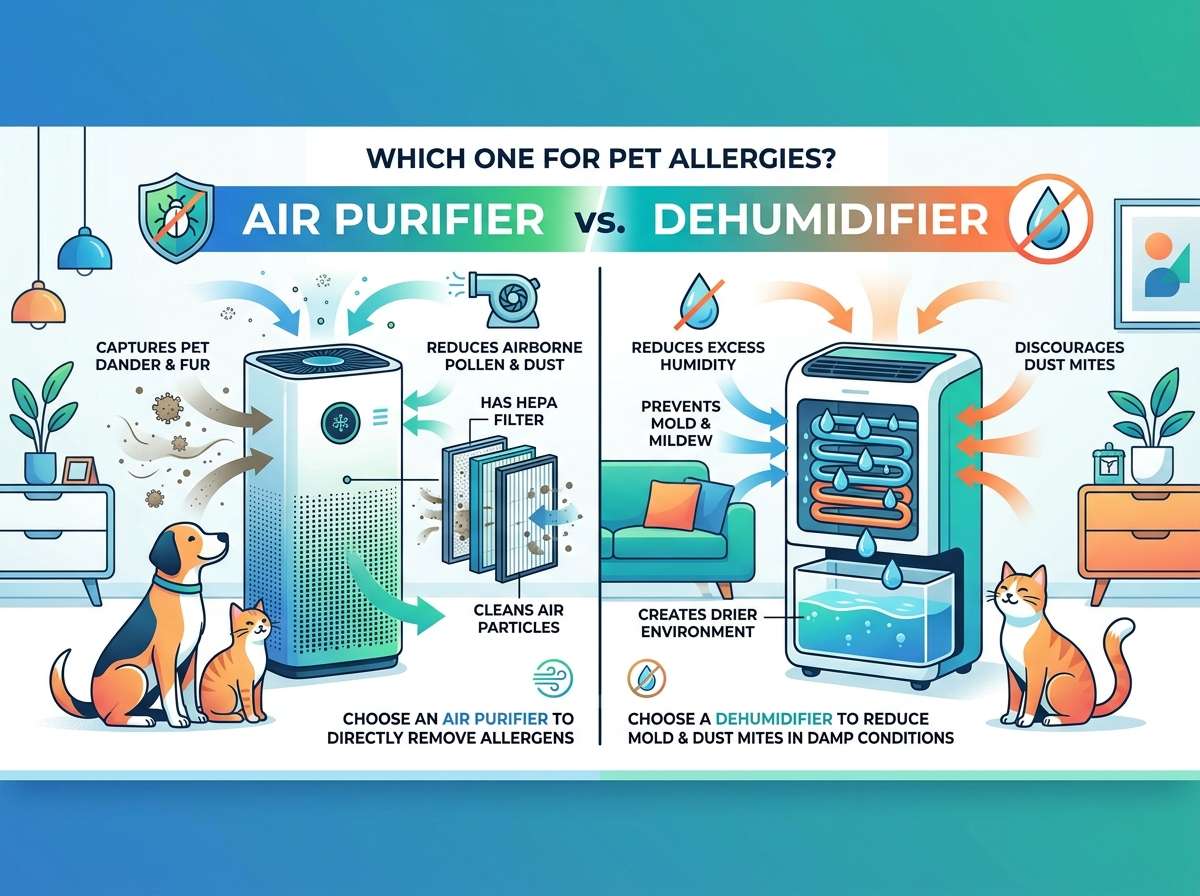
Air Purifier vs Dehumidifier for Pet Allergies
If you love your pets but hate the allergies that come with them, you’ve probably spent hours searching for solutions. The internet is full of gadgets and devices that promise to make your home a better place for people with pet allergies. Two names keep popping up: air purifiers and dehumidifiers. Both sound helpful, but they do totally different things. Let me break down what each one does and help you figure out which one is worth your money.
Why Do Pets Make Us Sneeze in the First Place?
Before we jump into solutions, let’s talk about what causes pet allergies. Most people think pet hair is the culprit, but that’s only part of the story. The real troublemakers are tiny proteins found in pet dander, saliva, and urine. These microscopic particles float around your home and land on your furniture, clothes, and basically everything else.
When you breathe in these particles, your immune system overreacts. Your body treats them like dangerous invaders and releases histamine, which causes sneezing, itching, watery eyes, and congestion. It’s annoying, uncomfortable, and can seriously affect your quality of life. The worst part is that these allergens stick around even after you clean.
What Is an Air Purifier and How Does It Work?
An air purifier is a machine that pulls air through filters to remove particles and pollutants. Think of it as a vacuum cleaner for the air in your room. These devices work by pulling in air, pushing it through one or more filters, and sending clean air back into your space.
Most air purifiers use filters made of fiberglass or other materials with tiny pores. The simplest type is a mechanical filter that works like a net, catching particles as air passes through. Some air purifiers have multiple stages of filtration to catch different sized particles.
The best air purifiers for pet allergies use HEPA filters. HEPA stands for High Efficiency Particulate Air. These filters can trap 99.97 percent of particles that are 0.3 micrometers or larger. Pet dander is small, but HEPA filters work great at grabbing it before it stays in your lungs.
Many air purifiers also have activated charcoal filters that soak up odors. If you have pets, you know pet smells are real. The charcoal layer helps eliminate that stale pet odor that builds up over time. Some modern air purifiers even use UV light or ionization to zap germs and other nasties.
The Benefits of Using an Air Purifier for Pet Allergies
Air purifiers are fantastic at reducing the things floating around in your air. If you deal with pet hair, dander, and dust, running an air purifier can make a real difference. Here are the main advantages:
Removes pet dander from the air: The whole job of an air purifier is to pull particles out of the air. Pet dander gets caught in the filters, so it never makes it into your nose and lungs. This directly attacks the source of your allergies.
Reduces pet odors: Those charcoal filters I mentioned work hard to remove smells. Your home will smell fresher and cleaner, which is a bonus for your family and guests.
Works fast: Air purifiers start working right away. Turn it on and within minutes it begins filtering the air. You’ll notice a difference quickly if dander is your main problem.
Portable and flexible: Most air purifiers are small enough to move around. You can put one in your bedroom, living room, or anywhere else where your pet spends time. You’re not stuck with a permanent installation.
Improves overall air quality: Beyond pet allergies, air purifiers catch dust, pollen, smoke, and other things floating around. If anyone in your family has asthma or respiratory issues, they’ll appreciate the cleaner air too.
Low maintenance after setup: Once you plug it in, you just let it run. Filter replacements happen once every few months or once a year depending on the model and how much you use it.
The Downsides of Air Purifiers
Air purifiers aren’t perfect. Here are some limits you should know about:
They only clean the air: This is the big one. Air purifiers make the air cleaner but they don’t change the conditions in your home. If your home has high humidity levels, an air purifier can’t fix that problem. They work on one thing: removing particles from the air.
Filters need replacing: Those HEPA filters that do all the work get full of particles and eventually stop working well. You have to replace them regularly, which costs money. A good replacement filter runs anywhere from thirty to over one hundred dollars depending on the purifier.
Loud noise: Some air purifiers sound like a fan running at full speed. If you like quiet, this could bother you. Smaller, quieter models tend to be less powerful.
Initial cost: Good air purifiers aren’t cheap. You’ll spend anywhere from one hundred to several hundred dollars for a decent model. Budget models exist but they don’t work as well.
Doesn’t address moisture problems: If your home is damp, an air purifier won’t solve that issue. In fact, high humidity makes allergen problems worse.
What Is a Dehumidifier and How Does It Work?
A dehumidifier is a machine that removes moisture from the air. It pulls humid air in, removes the water, and sends drier air back out. This sounds different from an air purifier because it is. Instead of filtering particles, it reduces humidity levels in your space.
Here’s how most dehumidifiers work: they pull in moist air and cool it down. When air cools, the moisture condenses into water droplets, kind of like how a mirror fogs up in a bathroom. The machine collects that water in a tank or channels it out through a drain hose. The dried air then gets warmed back up and released into your room.
Some dehumidifiers use a different method called desiccant drying, which uses special materials that absorb moisture. These tend to work better in cold spaces and are often smaller than the cooling type.
The Benefits of Using a Dehumidifier for Pet Allergies
You might wonder what humidity has to do with pet allergies. Turns out, quite a lot. Here’s why a dehumidifier could help:
Stops dust mites from thriving: Dust mites love humidity. They need moisture to survive and multiply. Dust mites are not the same as pet dander, but if you have pet allergies plus dust mite allergies, a dehumidifier helps with both. Keeping humidity below 50 percent slows down dust mite populations.
Reduces mold and mildew: Mold spores trigger allergic reactions and make asthma worse. A dehumidifier keeps your home dry enough that mold struggles to grow. This is huge if you live somewhere humid or damp.
Makes your home less hospitable to allergens: High humidity actually helps dust and dander float around longer and stick to surfaces better. Drier air means allergens settle faster and accumulate less effectively in your space.
Helps other allergic reactions: If you deal with multiple allergies, keeping humidity low helps with all of them. Mold, dust mites, and other moisture-loving allergens all get worse in humid environments.
Quieter operation: Many dehumidifiers run quieter than air purifiers because they don’t push air through filters as forcefully.
Long-lasting: Dehumidifiers don’t have filters to replace. A quality dehumidifier lasts for years with minimal maintenance. You just empty the water tank or run a drain hose.
The Downsides of Dehumidifiers
Dehumidifiers have real limitations when it comes to pet allergies specifically:
Doesn’t remove particles: A dehumidifier won’t get pet dander out of the air. It only deals with moisture. If your main problem is pet dander floating around, a dehumidifier won’t solve it. The dander will still be there, just slightly less active in the drier environment.
Doesn’t fix the immediate problem: Air purifiers work right away. Dehumidifiers take longer to make a real difference in how you feel. You have to run one for days or weeks to see allergy improvements.
Takes up space: Dehumidifiers are bulky. They’re bigger than most air purifiers and need a good spot to sit. You can’t just toss one in a closet.
Water management: Most dehumidifiers fill up with water and need emptying. Some have drain hoses that run to a sink or outside, but installation can be a hassle. Forgetting to empty the tank means the machine stops working.
Cost for continuous operation: Running a dehumidifier uses a fair amount of electricity. If you run it all the time in a humid climate, your electric bill goes up. This is more expensive than running an air purifier.
Limited impact on pet dander: While humidity does affect how allergens behave, it’s not a direct attack on the problem. You’re treating a symptom, not the source.
Air Purifier vs Dehumidifier: The Direct Comparison
Let’s put these side by side so you can see the differences clearly:
Tackles pet dander directly: Air purifiers win this round. They physically remove dander from the air. Dehumidifiers only make the environment less friendly for allergens to spread.
Stops moisture-related problems: Dehumidifiers dominate here. Air purifiers do nothing about humidity, dust mites, or mold. If these are your issues, you need a dehumidifier.
Speed of results: Air purifiers work faster. You’ll notice cleaner air within hours. Dehumidifiers take time to dry out a space and reduce allergen activity.
Energy costs: Dehumidifiers use more electricity. Air purifiers are more affordable to run daily.
Maintenance: Dehumidifiers are easier. No filter replacements needed. Air purifiers need new filters periodically.
Smell reduction: Air purifiers handle this with charcoal filters. Dehumidifiers don’t address odors at all.
Space and noise: Air purifiers are usually smaller and can be quieter. Dehumidifiers take up more room and often make more noise.
Should You Get One, Both, or Neither?
The answer depends on what’s actually causing your pet allergy problems and what other issues your home might have.
Get an air purifier if: Pet dander is your main problem. You sneeze when your cat or dog is in the room. You want quick relief. You don’t have significant moisture problems. You live in a dry climate or in a home with good ventilation. Your home smells like pets and you want that to improve. You want to improve air quality for other reasons like dust or pollen.
Get a dehumidifier if: Your home feels damp or sticky. Mold or mildew has shown up in your bathroom or basement. You have dust mite allergies in addition to pet allergies. You live in a humid climate or near the ocean. You’ve noticed that your allergies get worse when the air feels heavy and wet. You have pets and want to prevent mold growth.
Get both if: You have pet allergies and your home struggles with excess moisture. You live in a humid area and have pets. You want comprehensive allergy relief and improved air quality overall. Multiple people in your home have different allergen triggers. You have pets and respiratory issues and want maximum protection.
Get neither if: Your allergies are mild and manageable with other methods like medications. You keep your pet out of your bedroom and clean regularly. Your home has good airflow and stays naturally dry. You’re on a tight budget and medication works fine for you.
Other Things That Help Alongside These Devices
Whether you choose an air purifier, dehumidifier, or both, other habits matter too.
Vacuum regularly with a HEPA filter vacuum: Regular vacuums shoot small particles back into the air. HEPA filter vacuums trap them instead. Vacuum at least twice a week if you have pets.
Wash bedding often: Pet dander loves to hang out in your sheets and blankets. Wash them weekly in hot water if possible. This directly removes allergens you sleep with every night.
Use lint rollers and pet brushes: Brush your pet outside or in a bathroom with a good vent. This catches loose hair and dander before it spreads around your whole home.
Keep pets out of bedrooms: Your bedroom is where you spend eight hours resting and breathing. Keeping pets out of this space makes a huge difference in how well you sleep and how many allergies you get at night.
Clean surfaces regularly: Dust and pet dander settle on furniture, shelves, and other surfaces. Damp dusting (using a slightly wet cloth) traps particles instead of moving them around.
Open windows when weather allows: Fresh air exchange helps remove indoor allergens. On nice days, crack a window for fifteen minutes to let stale air escape.
Use air-filtering plants: Some plants like spider plants and snake plants actually filter air. They’re not a replacement for a real air purifier, but they help.
Groom your pet regularly: Regular bathing and brushing outside reduces the amount of loose dander in your home. Some pet shampoos are made specifically for pets with allergy-prone owners.
Making Your Final Decision
Think about your specific situation. What bothers you most? Is it sneezing when your pet walks by? Or does your home feel musty and damp? Do you wake up with a stuffy nose and itchy eyes? The answer to these questions points you toward the right solution.
Pet allergies are frustrating, but they’re manageable. You don’t have to choose between loving your pet and breathing well. Many people successfully live with pets despite allergies by using the right tools and habits.
An air purifier tackles the immediate problem of floating dander and particles. It works fast, handles odors, and improves overall air quality. If dander is your enemy, this is your solution.
A dehumidifier solves moisture problems that make allergies worse. It prevents mold, stops dust mites from thriving, and creates an environment where allergens can’t spread as easily. If you live somewhere humid or your home struggles with dampness, this helps.
The best choice is the one that matches your actual problems. Be honest about what triggers your allergies and what your home needs. Some of you will need an air purifier. Some will need a dehumidifier. Many will benefit from both. And some will find that combining either device with good cleaning habits and basic prevention works best.
Your pet brings joy to your life. You deserve to enjoy that without suffering from allergies. Whether you go with an air purifier, a dehumidifier, or both, taking action puts you on the path to feeling better.
Quick Reference: Which Device for What Problem
Problem: Pet dander in the air → Air purifier Problem: Pet odors → Air purifier Problem: High humidity → Dehumidifier Problem: Mold and mildew → Dehumidifier Problem: Dust mite allergies → Dehumidifier Problem: Multiple allergen sources → Both devices Problem: Stuffy nose with pets → Air purifier Problem: Damp, musty home → Dehumidifier Problem: Pet smell and dampness → Both devices Problem: Sleep disruption from pet allergies → Air purifier
Wrapping It Up
Air purifiers and dehumidifiers serve different purposes. Air purifiers remove floating particles like pet dander. Dehumidifiers remove moisture from the air. They’re not competitors. They’re tools for different jobs.
Your path forward depends on what’s actually making you miserable. If it’s pet dander, go for an air purifier. If it’s moisture and humidity, get a dehumidifier. If it’s both, both devices will help.
Don’t overthink this. Start with identifying your main problem, then pick the device that solves it. Your allergies will improve, you’ll breathe easier, and you’ll get to keep your furry friend. That’s a win worth pursuing.
Hi, I’m Mary, the founder of PetGadgetPro.com. I’m a passionate pet lover with a special place in my heart for dogs and cats. I share practical advice and honest insights on pet gear to help pet parents make better choices. My dedicated research team studies products in depth, and our writers create reviews using trusted, authentic sources—so you can feel confident choosing the best for your pets.